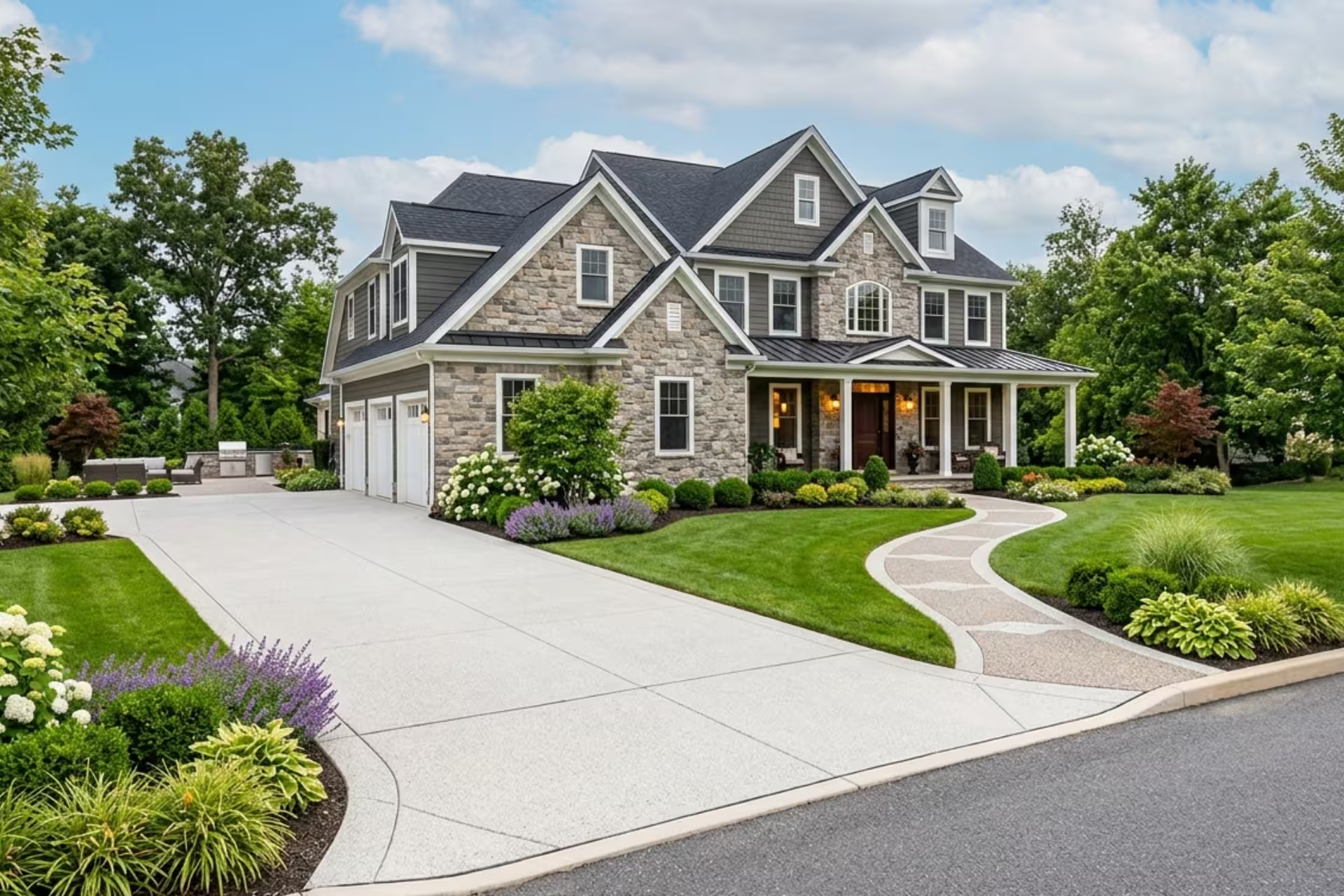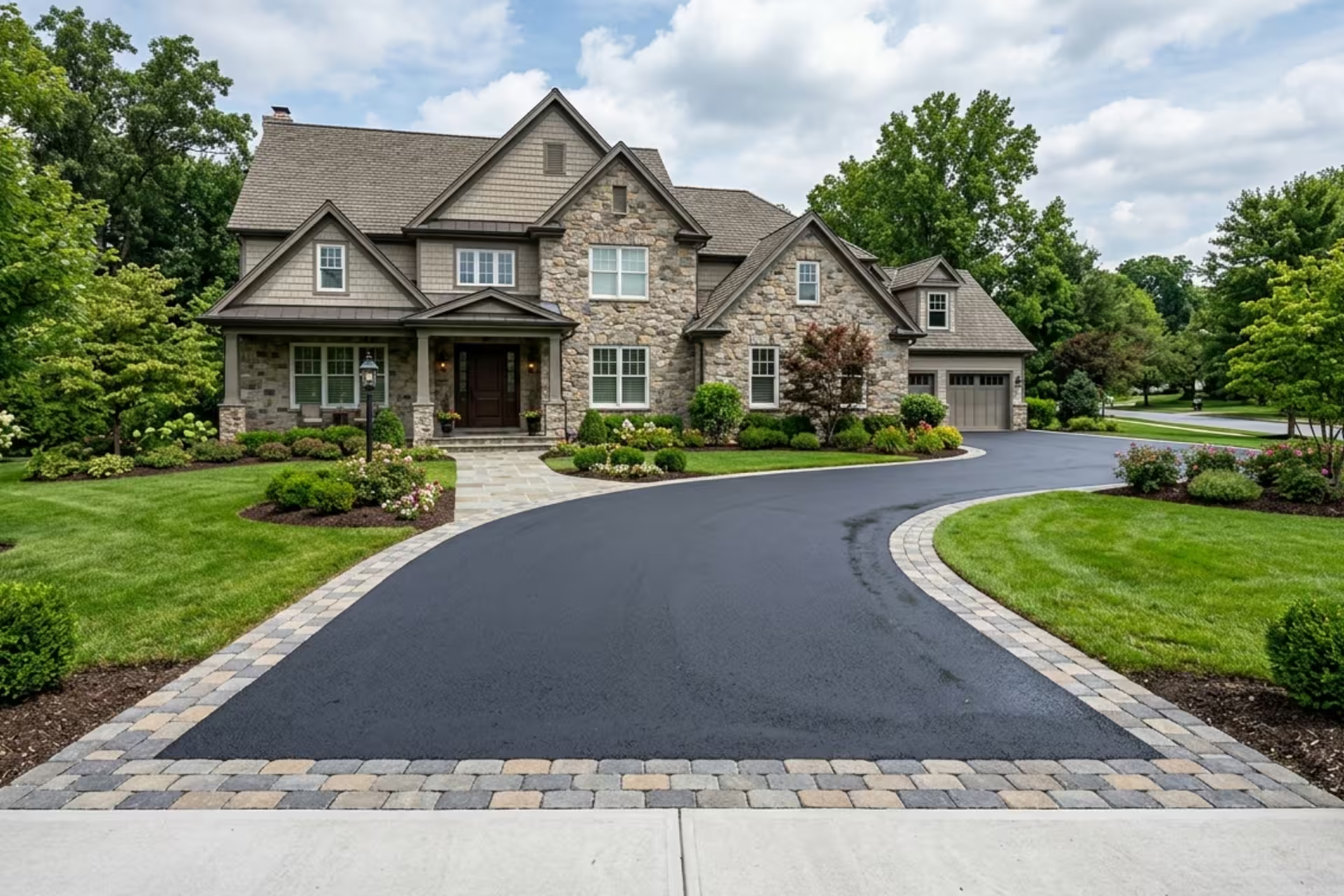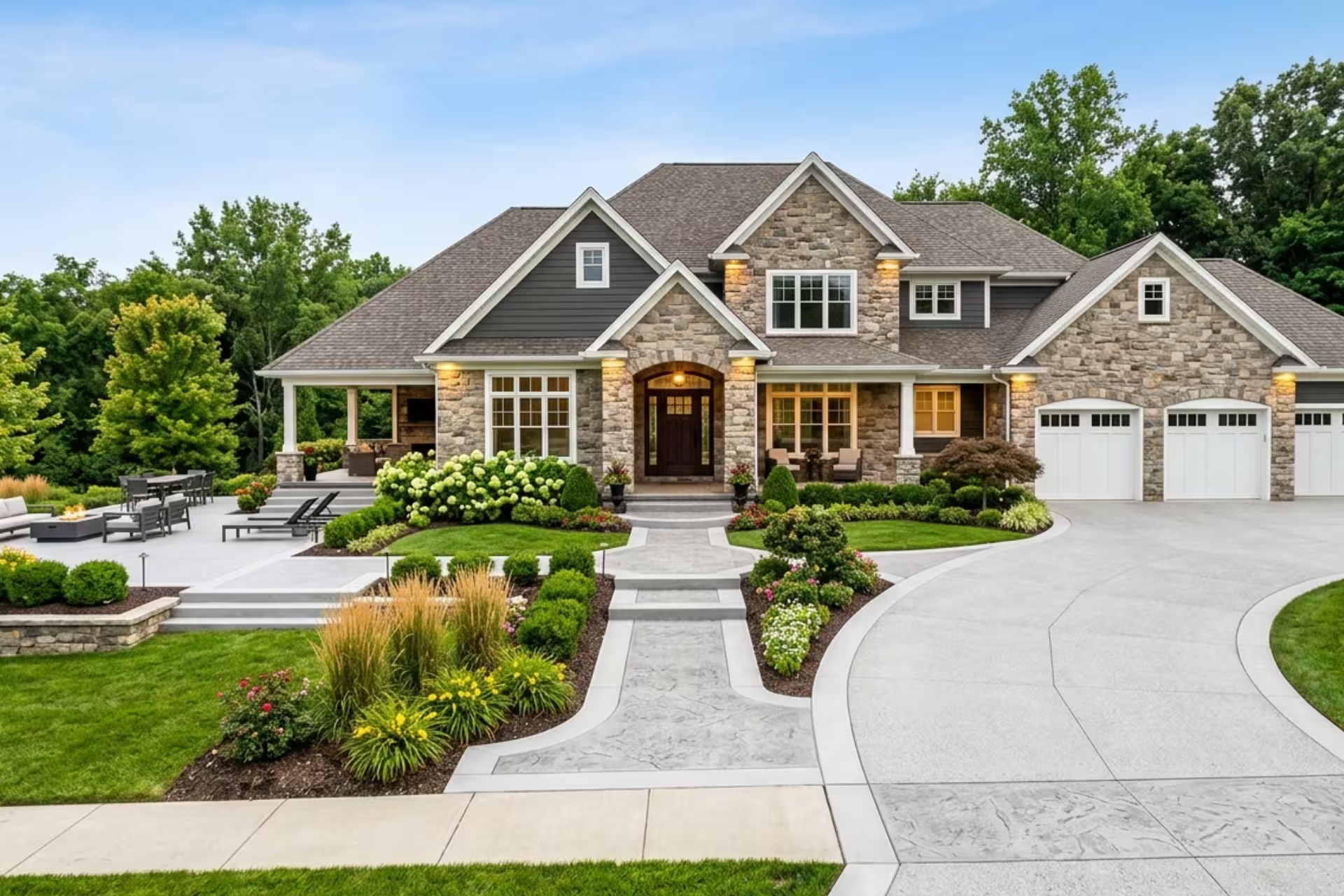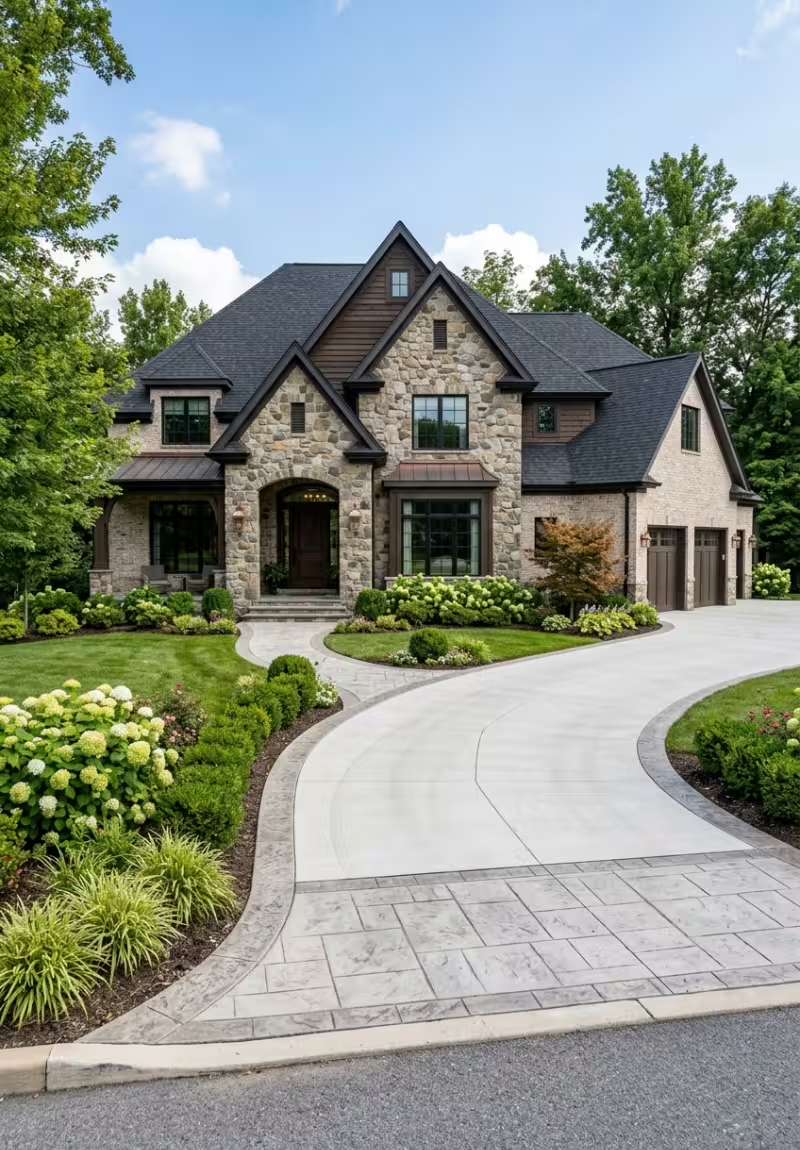
Choosing between concrete and asphalt paving is an important decision for any homeowner, business owner or property manager. Both materials can create durable, attractive and practical surfaces, but they offer different advantages depending on the project, budget, traffic level, appearance preferences and maintenance expectations.
Asphalt is commonly used for driveways, parking lots, private roads and commercial access areas because it provides a smooth blacktop surface and can be installed efficiently over large areas. Concrete is often selected for driveways, walkways, aprons, pads and high-use sections where a rigid, clean-looking surface is preferred.
American Paving & Concrete provides concrete and asphalt paving services throughout Pennsylvania. Our services include asphalt installation, driveway paving, commercial paving, asphalt repair, pavement maintenance, sealcoating and concrete paving. We help property owners select the right material and paving solution based on how the surface will be used.
What Is Asphalt Paving?
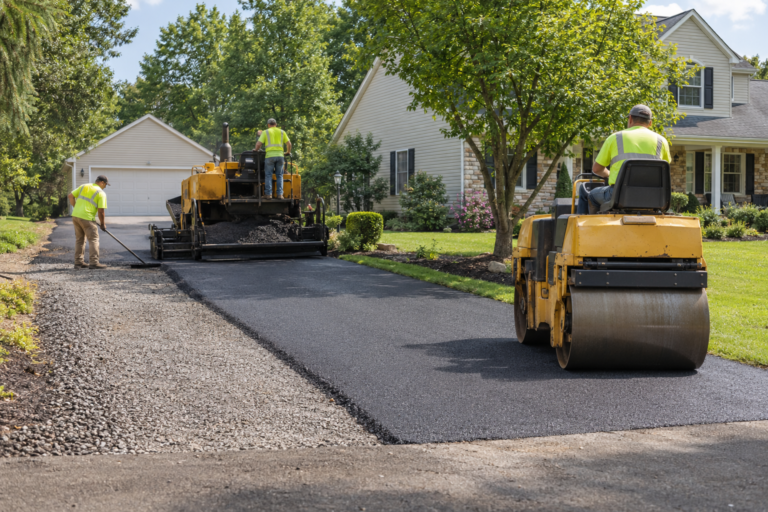
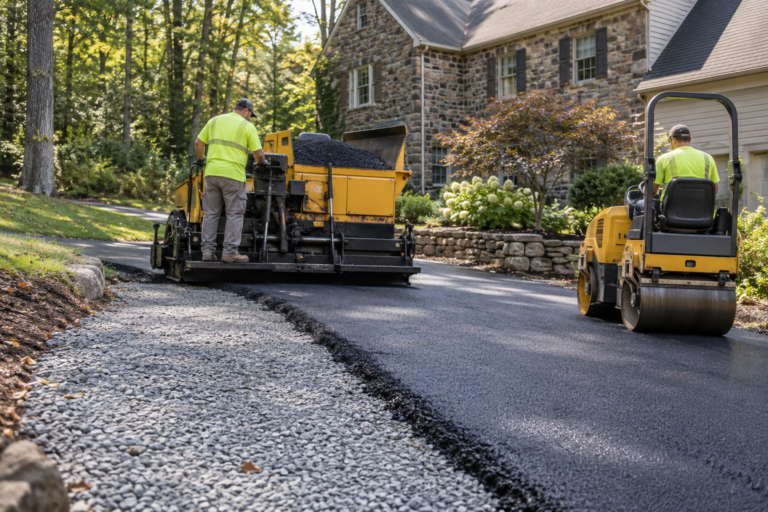
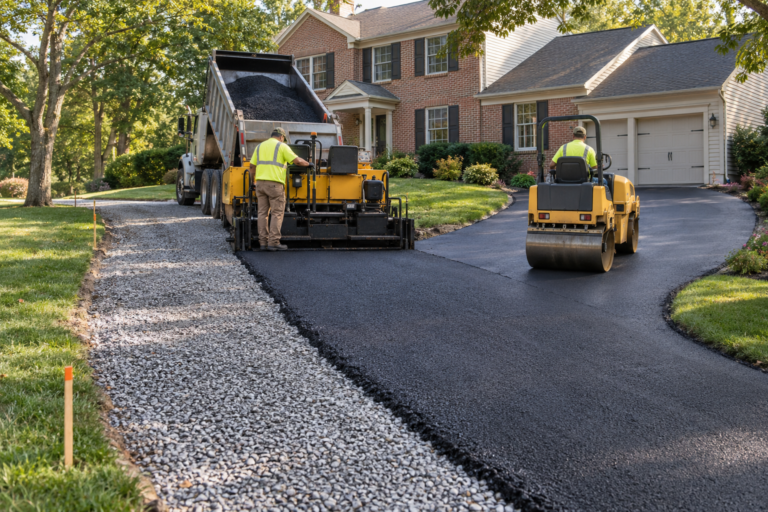
Asphalt paving creates a smooth surface using a mixture of aggregates and asphalt binder. The material is installed while hot, graded and compacted to produce a durable blacktop surface.
Asphalt is commonly used for:
- Residential driveways
- Commercial parking lots
- Private roads
- Drive lanes
- School yards
- Playgrounds
- Asphalt overlays
- Commercial access areas
One of asphalt’s main advantages is its flexibility. This can help the pavement respond to temperature changes and seasonal ground movement. Asphalt can also be repaired, resurfaced and sealcoated as it ages.
However, the quality of an asphalt surface depends heavily on its foundation. Proper excavation, base preparation, grading, drainage and compaction are essential for long-term performance.
What Is Concrete Paving?
Concrete paving uses a mixture of cement, aggregates and water that is poured into prepared forms and allowed to cure. Once hardened, it creates a rigid paved surface.
Concrete is commonly used for:
- Residential driveways
- Garage aprons
- Walkways
- Steps and entrance areas
- Concrete pads
- Commercial loading areas
- Dumpster pads
- High-use pavement sections
Concrete offers a clean and structured appearance. It can work particularly well around homes, garages, entrances and commercial buildings.
Like asphalt, concrete requires a properly prepared base. Thickness, reinforcement, control joints, drainage, finishing and curing all affect its performance.
Concrete and Asphalt Paving: Main Differences
Although both materials are used to create paved surfaces, they differ in appearance, cost, maintenance and performance.
Appearance
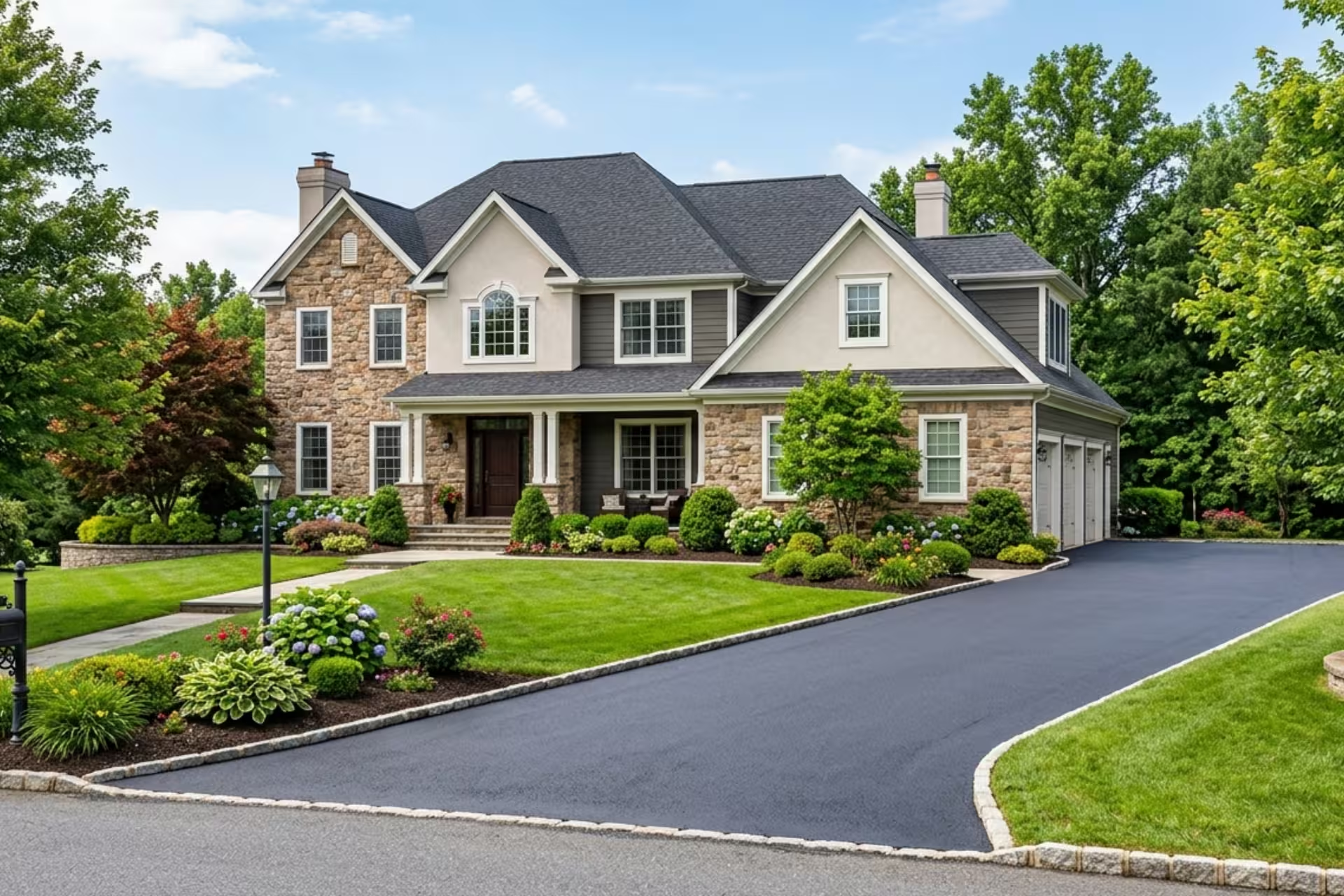
Asphalt creates a smooth, dark blacktop surface. It offers a uniform look that works well for driveways, roads and parking lots.
Concrete provides a lighter and more rigid-looking surface. It may complement homes and commercial buildings where a clean, defined finish is preferred.
Initial Cost
Asphalt frequently has a lower initial installation cost, especially for long driveways and large parking lots. Concrete may require a larger upfront investment because of its material, formwork, finishing and curing requirements.
Actual pricing depends on the size of the project, excavation, base preparation, thickness, drainage and site access.
Maintenance
Asphalt benefits from crack filling, pothole repair and sealcoating. Timely maintenance helps reduce water penetration and surface deterioration.
Concrete does not need asphalt-style sealcoating, but it should still be inspected for cracks, settlement, drainage problems and damaged joints.
Repairs
Asphalt is often easier to patch or resurface. An asphalt overlay may restore a worn surface when the base remains stable.
Concrete repairs can be more visible because matching the color and finish of an existing slab may be difficult. Severely damaged concrete sections may require removal and replacement.
When Asphalt Paving Is the Better Choice
Asphalt may be the better paving option when:
- You are paving a large driveway or parking lot
- You want a smooth blacktop appearance
- Initial project cost is an important consideration
- You want a surface that can be resurfaced later
- The property needs commercial parking or vehicle access
- Faster installation is a priority
- You are prepared to schedule regular asphalt maintenance
Asphalt is widely used for Pennsylvania driveways and parking lots because it provides practical performance when properly installed and maintained.
When Concrete Paving Is the Better Choice
Concrete may be the better option when:
- You want a lighter, more defined appearance
- The project is a walkway, apron or pad
- You need a rigid paved surface
- The area is close to a garage or building entrance
- You prefer concrete for architectural reasons
- The project includes a high-use commercial section
- Asphalt-style sealcoating is not desired
Some properties benefit from using both materials. For example, asphalt may be installed for the main driveway or parking lot while concrete is used for the garage apron, walkway, entrance or loading area.
Residential Concrete and Asphalt Paving
Homeowners can use asphalt and concrete in several ways around their properties.
Residential paving projects may include:
- Asphalt driveways
- Concrete driveways
- Blacktop driveway replacement
- Driveway resurfacing
- Concrete walkways
- Garage aprons
- Entrance paths
- Patios and paved areas
- Asphalt repairs
- Sealcoating
The right material depends on the size of the area, desired appearance, expected vehicle use, budget and maintenance preferences.
A professional inspection can help determine whether an existing driveway should be repaired, resurfaced or replaced.
Commercial Concrete and Asphalt Paving
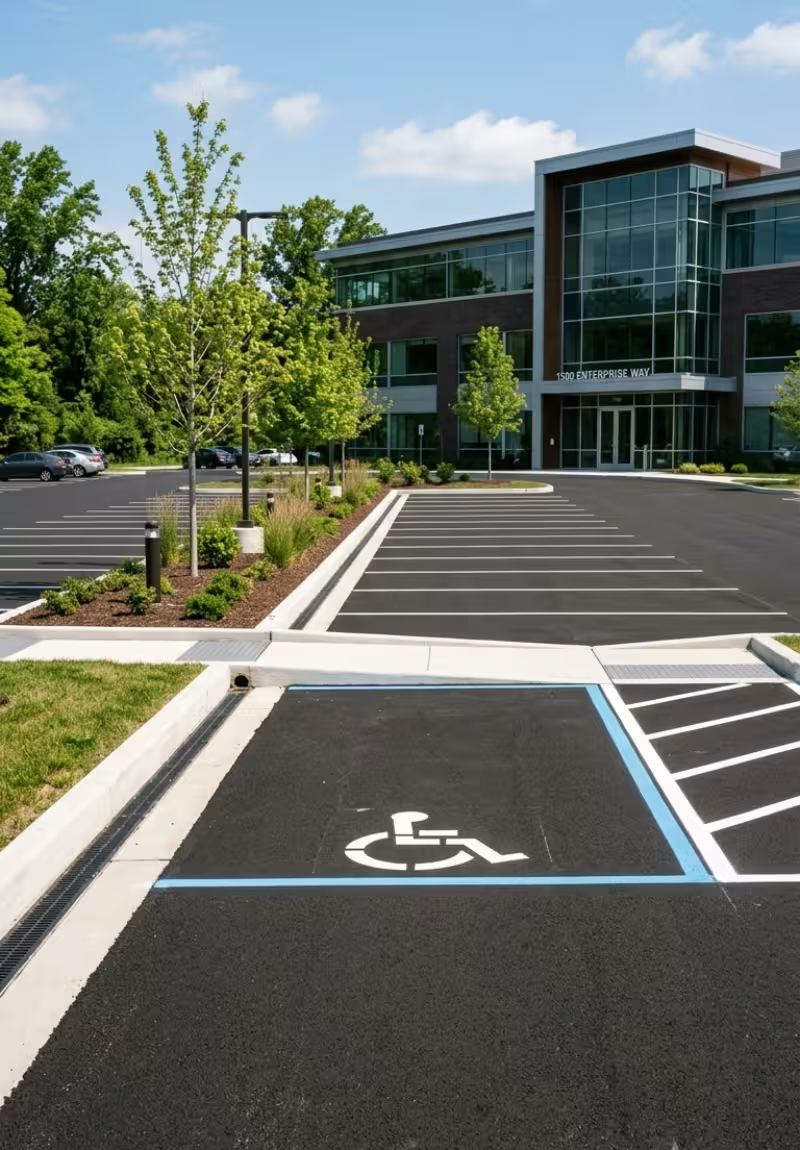
Commercial properties often use a combination of asphalt and concrete. Asphalt is practical for parking lots and drive lanes, while concrete may be selected for loading areas, entrances, walkways, dumpster pads and other heavily used sections.
Commercial paving projects may include:
- New parking lot installation
- Parking lot resurfacing
- Pothole repair
- Asphalt overlays
- Commercial drive lanes
- Concrete loading areas
- Walkways and entrance areas
- Sealcoating
- Crack filling
- Pavement maintenance
A properly paved commercial property creates a better impression and supports safer movement for customers, employees, tenants and delivery vehicles.
Why Base Preparation Matters
The visible surface is only part of a paving system. The base underneath provides the support needed to resist cracking, sinking and potholes.
Base preparation may include:
- Removing old pavement
- Excavating unstable material
- Installing crushed stone
- Compacting the base
- Correcting soft areas
- Establishing the proper grade
- Preparing edges
- Improving drainage
Installing asphalt or concrete over a weak base can lead to early failure. A professional paving contractor should explain how the foundation will be prepared before work begins.
Drainage for Concrete and Asphalt Pavement
Water is one of the greatest threats to paved surfaces. Standing water can enter asphalt cracks, weaken the base and contribute to potholes. Water around concrete can create settlement, freezing and drainage problems.
The paved surface should direct water away from:
- Garages
- Homes and foundations
- Commercial buildings
- Walkways
- Parking spaces
- Low areas
- Pavement edges
- Entrances and loading zones
Drainage should be evaluated before paving begins. Correcting the slope and grade during installation can help prevent recurring problems.
Concrete and Asphalt Paving Cost Factors
The price of a paving project depends on much more than the selected surface material.
Cost factors may include:
- Total paved area
- Existing surface condition
- Demolition and removal
- Excavation requirements
- Base preparation
- Asphalt or concrete thickness
- Reinforcement requirements
- Drainage correction
- Site access
- Residential or commercial use
- Finishing requirements
An on-site inspection is the best way to receive an accurate estimate. It allows the contractor to evaluate the property and recommend a paving solution based on actual conditions.
Choosing Concrete and Asphalt Contractors Near Me
When searching for concrete and asphalt paving near me, select a contractor that understands both materials. A company offering only one paving option may not always recommend the best surface for every part of the property.
Before hiring a contractor, ask:
- Do you install both asphalt and concrete?
- Do you handle residential and commercial work?
- Will you inspect the site before estimating?
- How will the base be prepared?
- How will drainage be addressed?
- Which material is best for this project?
- Do you provide asphalt repair and sealcoating?
- Can asphalt and concrete be combined?
- Will you provide a written estimate?
A knowledgeable paving contractor should explain the advantages and limitations of each option.
Get Concrete and Asphalt Paving in Pennsylvania
American Paving & Concrete provides professional concrete and asphalt paving services for homes and businesses throughout Pennsylvania. We install and maintain driveways, parking lots, paved access areas, walkways, aprons and commercial surfaces.
Our services include asphalt installation, residential asphalt paving, commercial paving, asphalt repair, asphalt maintenance, sealcoating and concrete paving.
To discuss your paving project or request a property assessment, contact American Paving & Concrete.
Call: (610) 477-3553
Email: info@americanpavingandconcrete.com
Website: https://americanpavingandconcrete.com/