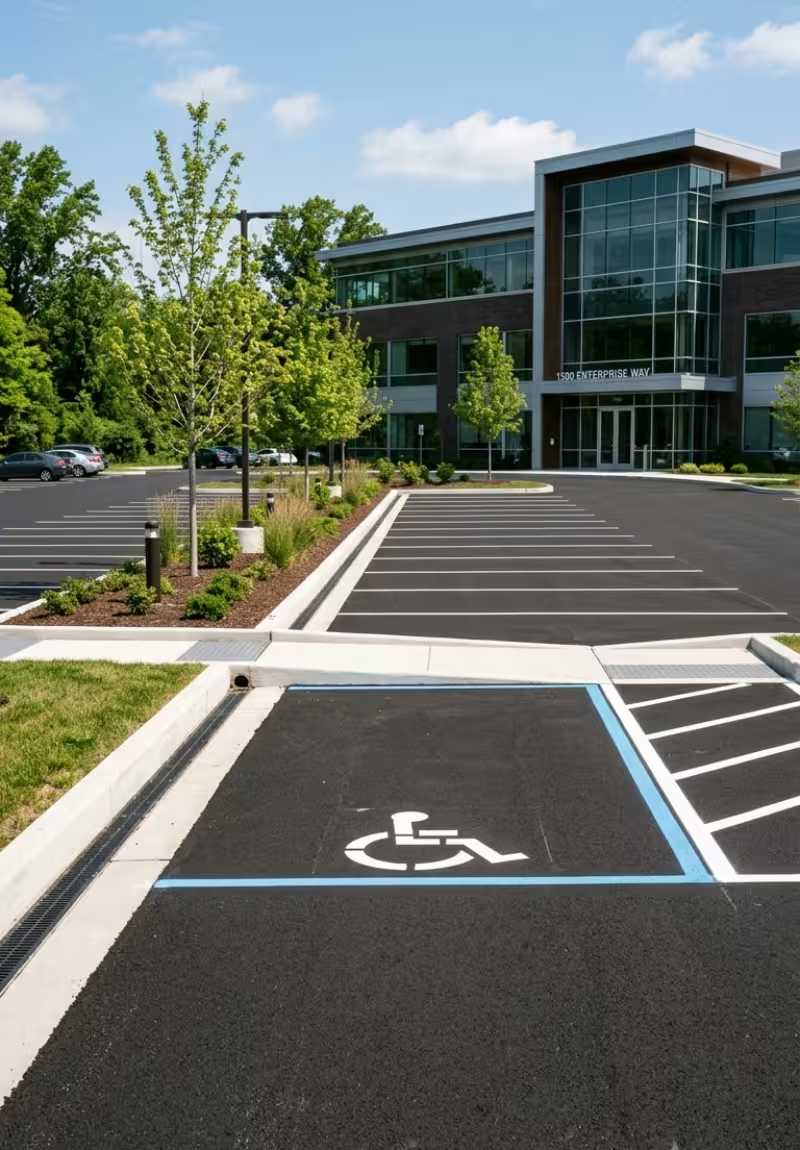
Asphalt concrete paving is one of the most widely used methods for constructing driveways, parking lots, roads, private lanes and commercial paved surfaces. Although people often use the words asphalt, blacktop and pavement interchangeably, asphalt concrete is the technical term for a paving mixture made from aggregates and asphalt binder.
When the material is designed, installed and compacted correctly, it creates a smooth, durable and practical surface for both residential and commercial properties. Its flexibility, repairability and ability to cover large areas make it a popular choice for Pennsylvania paving projects.
American Paving & Concrete provides asphalt concrete paving, asphalt installation, residential driveway paving, commercial parking lot paving, asphalt resurfacing, pavement repair, asphalt maintenance and sealcoating throughout Pennsylvania. Understanding how asphalt concrete works can help property owners make better decisions about installation, repair and long-term pavement care.
What Is Asphalt Concrete Paving?
Asphalt concrete paving involves installing a carefully designed mixture of stone, sand or gravel and asphalt binder. The aggregates provide strength and structure, while the asphalt binder holds the materials together and gives the pavement flexibility.
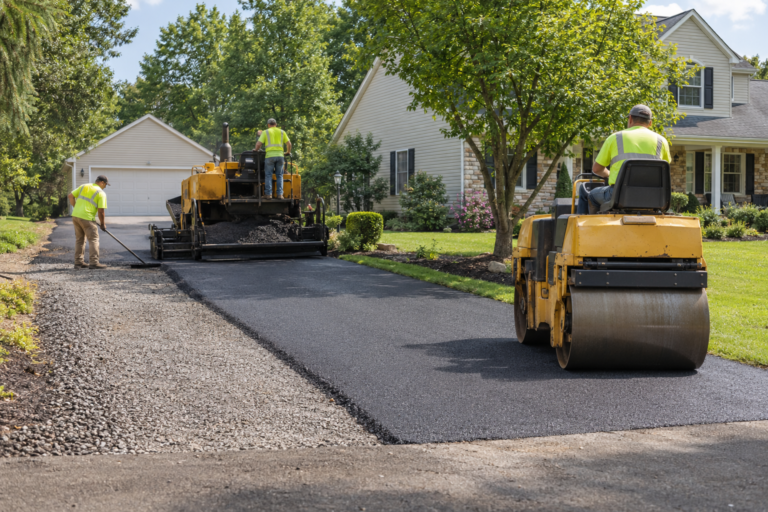
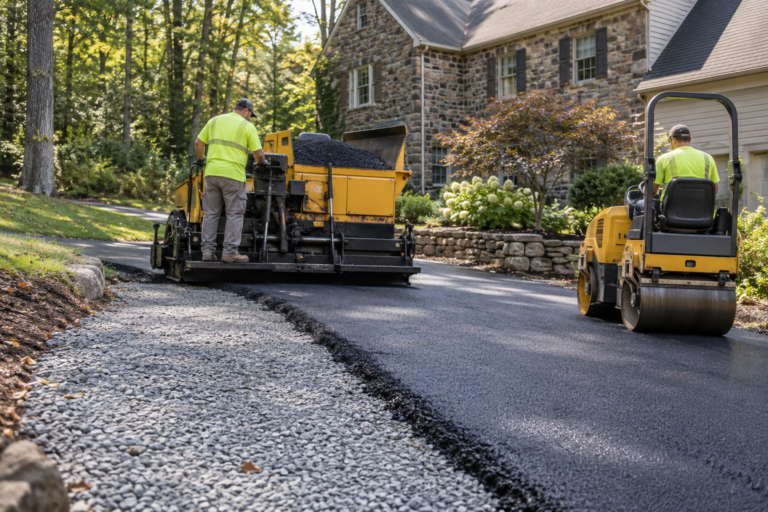
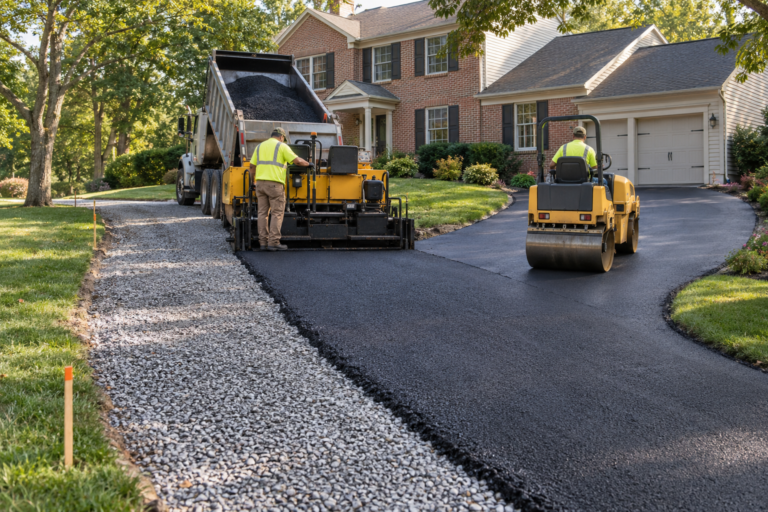
The mixture is typically produced at an asphalt plant and transported to the job site while hot. It is then placed over a prepared base, graded to the correct elevation and compacted with heavy equipment.
Once compacted and cooled, the asphalt forms a smooth paved surface suitable for regular vehicle traffic.
Asphalt concrete is commonly used for:
- Residential driveways
- Commercial parking lots
- Private roads
- Access lanes
- Drive aisles
- School and church parking areas
- Apartment complexes
- Industrial properties
- Asphalt overlays
- Pavement repairs
The final performance of the pavement depends on the quality of the material, the condition of the base, proper drainage, asphalt thickness and compaction.
Why Is It Called Asphalt Concrete?
The term asphalt concrete can be confusing because the material does not contain traditional cement concrete. In paving terminology, concrete refers to a composite material made by binding aggregates together.
In cement concrete, cement paste binds the aggregates. In asphalt concrete, asphalt binder performs that role.
The two materials are different in appearance and performance:
- Asphalt concrete is dark, flexible and installed while hot.
- Cement concrete is lighter, rigid and poured into forms.
- Asphalt can often be resurfaced or patched more easily.
- Concrete typically requires joints and a longer curing period.
- Asphalt is frequently used for roads, driveways and parking lots.
- Concrete is often used for slabs, aprons, sidewalks and pads.
Both can be effective paving materials when used for the right application.
How Asphalt Concrete Paving Works
A successful asphalt paving project involves several stages. Each stage affects how well the finished pavement performs.
Site Inspection
The paving contractor first inspects the property. This helps identify existing damage, drainage problems, soft ground, access limitations and the intended use of the pavement.
The contractor may evaluate:
- Existing asphalt condition
- Soil and base stability
- Water flow
- Vehicle traffic
- Heavy-load areas
- Pavement edges
- Elevation near buildings
- Connections to roads or garages
This information helps determine the correct paving approach.
Excavation and Surface Removal
If the project involves replacement or new construction, old pavement, soil or unstable material may need to be removed.
Excavation depth depends on:
- Soil condition
- Expected traffic
- Existing base material
- Required asphalt thickness
- Drainage needs
- Whether heavy vehicles will use the surface
Removing weak material helps create a stronger foundation.
Base Installation and Compaction
The base is one of the most important parts of asphalt concrete pavement. Crushed stone or another suitable aggregate is installed and compacted to create a stable supporting layer.
A properly prepared base helps:
- Distribute vehicle loads
- Reduce sinking
- Support the asphalt
- Improve drainage
- Limit movement
- Reduce premature cracking
Installing asphalt over a weak or poorly compacted base can lead to potholes, depressions and widespread cracking.
Grading and Drainage
Before asphalt is installed, the base is graded so water can move away from buildings, garages, parking spaces and low areas.
The finished pavement should not direct water toward:
- Foundations
- Garage doors
- Building entrances
- Walkways
- Neighboring properties
- Low sections of the parking lot
Proper grading is especially important in Pennsylvania because standing water can freeze during winter and contribute to pavement damage.
Asphalt Placement
Hot mix asphalt is delivered to the project and placed using paving equipment. Smaller residential areas may require a combination of paving machinery and handwork.
The asphalt must be installed at the correct temperature and thickness. If the material cools too much before compaction, it may not achieve the necessary density.
Asphalt Compaction
After placement, rollers compact the asphalt. Compaction removes air pockets and locks the aggregates together.
Proper compaction helps improve:
- Pavement strength
- Surface smoothness
- Water resistance
- Load-bearing ability
- Long-term performance
Insufficient compaction may cause the pavement to remain porous or unstable.
Cooling and Initial Use
Asphalt begins to harden as it cools. Compared with cement concrete, it can often be opened to traffic sooner.
The contractor should explain how long to wait before driving or parking on the new surface. Heavy vehicles, sharp turns and concentrated loads should be avoided until the pavement is ready.
Where Asphalt Concrete Paving Is Used
Asphalt concrete is suitable for many residential, commercial and institutional applications.
Residential Driveways
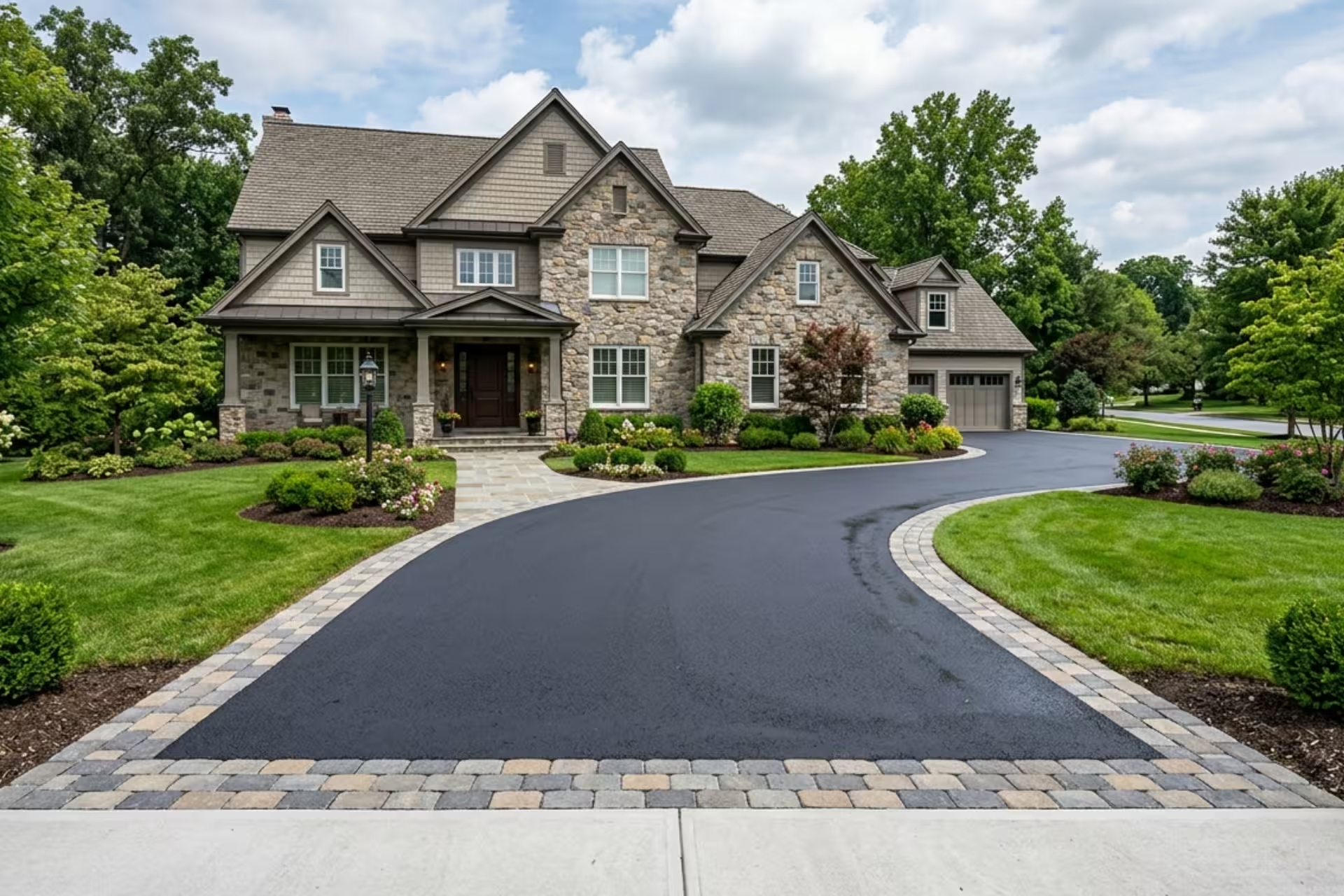
Asphalt concrete is frequently used for residential driveways because it creates a smooth surface and can cover long or wide areas efficiently.
An asphalt driveway may be appropriate for:
- New homes
- Existing driveway replacement
- Gravel driveway upgrades
- Long rural driveways
- Multi-vehicle parking areas
- Private access lanes
Homeowners can maintain asphalt through crack filling, repairs and sealcoating.
Commercial Parking Lots
Commercial parking lots must support frequent traffic, turning vehicles, delivery trucks and snow removal equipment. Asphalt concrete is a practical option because it can be installed over large areas and repaired as needed.
Commercial applications include:
- Retail parking lots
- Office buildings
- Medical properties
- Churches
- Apartment complexes
- Schools
- Warehouses
- Industrial facilities
The pavement design should reflect the type and amount of traffic expected.
Private Roads and Drive Lanes
Asphalt concrete can also be used for private roads, community access lanes and internal commercial driveways.
These projects may require additional attention to:
- Drainage
- Pavement width
- Base depth
- Vehicle weight
- Turning areas
- Road shoulders
- Traffic volume
A professional contractor can recommend a pavement structure based on site conditions.
Asphalt Resurfacing and Overlays
Asphalt concrete can be installed as an overlay over an existing asphalt surface. Resurfacing may be suitable when the base is still stable but the top layer is worn, faded or moderately cracked.
Before an overlay, the contractor may need to:
- Repair potholes
- Fill cracks
- Mill raised areas
- Correct low spots
- Clean the surface
- Improve drainage
- Apply a bonding material
Resurfacing can restore appearance and improve pavement performance without removing the entire paved structure.
Benefits of Asphalt Concrete Paving
Asphalt concrete offers several advantages for property owners.
Smooth Surface
Properly installed asphalt creates a smooth surface for driving, parking, walking and snow removal.
Faster Installation
Asphalt paving can often be completed and opened to traffic sooner than traditional concrete work.
Cost-Effective for Large Areas
For long driveways and large parking lots, asphalt often has a lower initial installation cost than cement concrete.
Flexible Pavement
Asphalt has some flexibility, which can help it respond to temperature changes and minor ground movement.
Repairable Surface
Cracks, potholes and damaged sections can often be patched. Worn pavement may also be resurfaced if the base remains stable.
Dark Appearance
Fresh asphalt provides a uniform blacktop appearance that can improve curb appeal and commercial presentation.
Limitations of Asphalt Concrete
Asphalt requires ongoing maintenance and is not the best material for every situation.
Potential considerations include:
- Cracks may develop over time
- Water can damage the base
- Sealcoating may be recommended
- Oil and fuel can affect the surface
- Heavy vehicles can damage weak pavement
- Unsupported edges may crumble
- Poor installation can lead to early failure
These issues can often be reduced through proper installation, drainage and maintenance.
Asphalt Concrete Repair Services
Even well-installed pavement eventually shows signs of wear. Timely repair can stop minor damage from spreading.
Common asphalt repair services include:
- Crack filling
- Pothole repair
- Surface patching
- Full-depth patching
- Edge repair
- Low spot correction
- Drainage repair
- Asphalt resurfacing
The correct repair depends on whether the damage is limited to the surface or extends into the base.
Asphalt Concrete Maintenance
Regular maintenance helps protect asphalt concrete pavement and extend its useful life.
Maintenance may include:
- Keeping the surface clean
- Filling cracks early
- Repairing potholes
- Correcting drainage
- Avoiding standing water
- Protecting pavement edges
- Applying sealcoating when appropriate
- Inspecting the surface after winter
Sealcoating can help protect the pavement from sunlight, moisture, road salt, oil and surface wear. However, it does not repair structural damage. Cracks and potholes should be fixed before sealcoating.
Asphalt Concrete Paving Cost Factors
The cost of asphalt concrete paving varies based on the size and condition of the project.
Important pricing factors include:
- Total square footage
- New installation or replacement
- Existing pavement removal
- Excavation requirements
- Base preparation
- Asphalt thickness
- Number of asphalt layers
- Drainage correction
- Site accessibility
- Residential or commercial use
- Local material costs
A small residential driveway and a heavy-use commercial parking lot require different pavement designs. An on-site estimate provides more accurate pricing than a general cost-per-square-foot figure.
How to Choose an Asphalt Concrete Paving Contractor
When searching for asphalt concrete paving near me, choose a contractor that evaluates the entire pavement system rather than focusing only on the visible surface.
Ask potential contractors:
- Do you inspect the base and drainage?
- What type of asphalt mix will be used?
- How thick will the asphalt be?
- How will the surface be compacted?
- Do you provide residential and commercial paving?
- Can you repair or resurface existing pavement?
- Do you offer sealcoating and maintenance?
- How long should the pavement remain unused?
- Will I receive a written estimate?
A dependable paving contractor should clearly explain the scope of work and why each step is necessary.
Schedule Asphalt Concrete Paving in Pennsylvania
American Paving & Concrete provides professional asphalt concrete paving for homeowners, business owners and property managers throughout Pennsylvania.
Our services include:
- New asphalt installation
- Residential driveway paving
- Commercial parking lot paving
- Asphalt resurfacing
- Pothole repair
- Pavement patching
- Asphalt maintenance
- Sealcoating
- Concrete paving
Whether you need a new driveway, a commercial parking lot or repairs to an existing paved surface, our team can inspect your property and recommend the right paving solution.
Call: (610) 477-3553
Email: info@americanpavingandconcrete.com