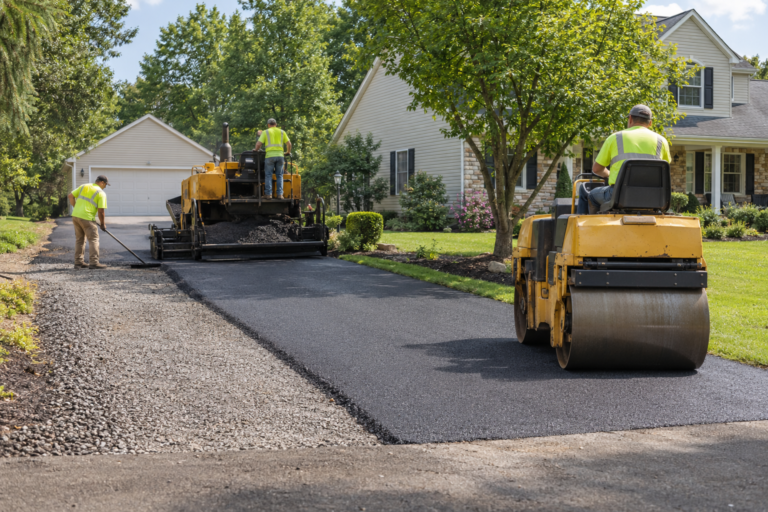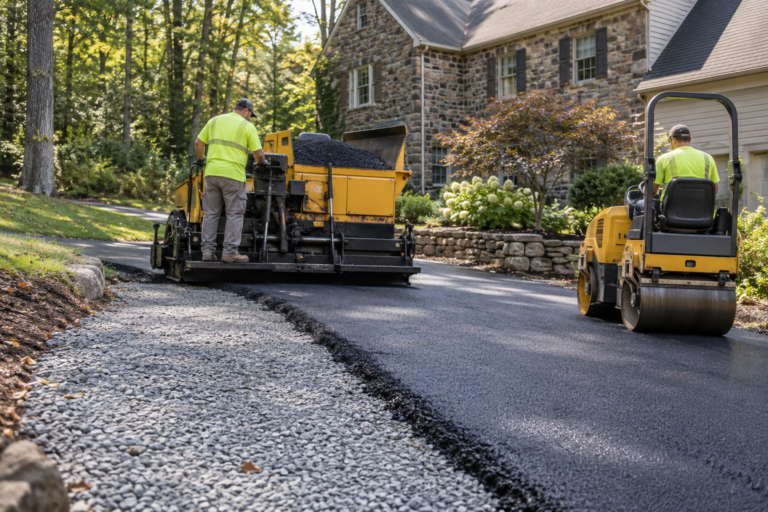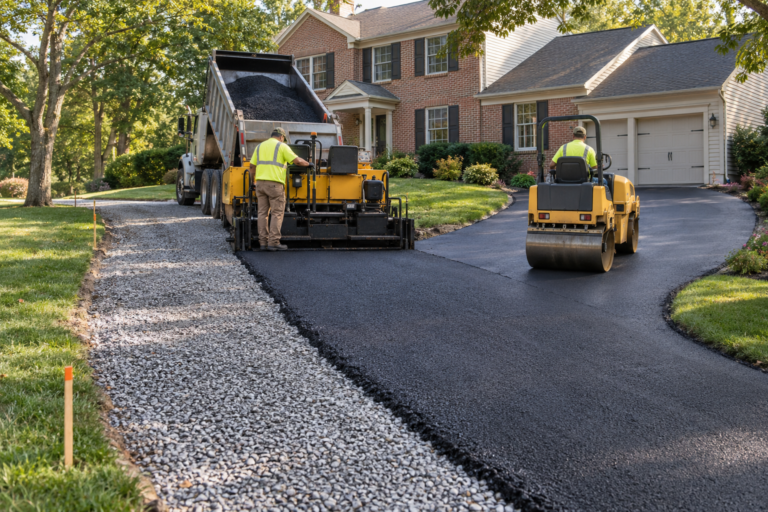
Damaged asphalt can affect vehicle access, drainage and the overall condition of a residential or commercial property. A small crack can allow water to enter the pavement, while an untreated pothole may continue breaking apart under traffic and seasonal weather.
Effective asphalt repair requires more than covering the visible damage. The pavement and supporting aggregate should be evaluated to determine why the failure occurred and whether it extends beneath the surface.
American Paving & Concrete provides professional asphalt repair services in Plumsteadville, Pennsylvania. We repair residential driveways, private lanes, parking areas, entrances and commercial asphalt surfaces.
Before recommending a repair, we assess the crack pattern, asphalt condition, base stability, drainage, pavement edges and expected vehicle use. This helps determine whether the surface needs crack filling, patching, full-depth repair, resurfacing or replacement.
Complete Asphalt Repair Services in Plumsteadville
Every asphalt problem requires a repair method suited to the depth, location and cause of the damage.
Our services may include:
- Pothole repair
- Asphalt crack filling
- Surface patching
- Full-depth asphalt repair
- Failed-patch replacement
- Driveway repair
- Private-lane repair
- Damaged-edge reconstruction
- Gravel-shoulder restoration
- Road-entrance repair
- Garage-transition repair
- Low-spot correction
- Sunken pavement repair
- Culvert-area repair
- Drainage-related repair
- Utility-cut repair
- Parking area repair
- Commercial entrance repair
- Resurfacing preparation
- Sealcoating preparation
A site inspection helps identify whether damage is limited to the asphalt surface or connected to weak supporting material.
Residential Asphalt Driveway Repair
Residential driveways can deteriorate because of water infiltration, vehicle traffic, freeze-thaw cycles, snow removal and unsupported pavement edges.
Our driveway paving and repair services may address:
- Isolated potholes
- Widening cracks
- Crumbling edges
- Sunken sections
- Failed patches
- Rough garage transitions
- Damaged road entrances
- Depressions that hold water
- Utility-trench settlement
- Asphalt breaking away beside gravel
Localized damage may be repairable when the surrounding pavement and aggregate base remain stable.
If deterioration affects most of the driveway, resurfacing or complete replacement may offer a more practical solution than numerous disconnected patches.
Pothole Repair in Plumsteadville
Potholes commonly develop when water enters pavement cracks and weakens the supporting base. Passing vehicles and seasonal temperature changes can then break apart the asphalt.
Professional pothole repair may include:
- Removing loose asphalt and debris.
- Cutting the damaged area back to stable pavement.
- Inspecting the aggregate base.
- Removing wet or unstable material.
- Installing and compacting replacement aggregate.
- Placing new asphalt.
- Compacting the repair.
- Finishing the patch edges.
Placing loose repair material into the visible hole may not provide a lasting solution if the base remains weak or saturated.
Recurring potholes should be evaluated for drainage problems, base failure and insufficient pavement strength.
Surface Patching
Surface patching may be suitable when damage is shallow and the supporting base remains stable.
It may address:
- Minor surface breakup
- Small failed sections
- Shallow depressions
- Limited edge deterioration
- Surface wear near entrances
- Damage around a previous repair
The affected surface should be properly cleaned and prepared before replacement asphalt is installed.
Surface patching is not appropriate for deep settlement, saturated aggregate or structural pavement failure.
Full-Depth Asphalt Repair
Full-depth repair removes damaged asphalt and unstable material beneath it.
The process may involve:
- Defining the failed area
- Saw-cutting or removing damaged pavement
- Excavating unsuitable aggregate
- Correcting soft areas
- Installing crushed stone
- Compacting the base in layers
- Restoring the required grade
- Placing replacement asphalt
- Compacting the repair
- Finishing the perimeter
This method may be appropriate for recurring potholes, deep settlement, alligator cracking, failed utility cuts and drainage-related pavement failure.
Asphalt Crack Repair
Cracks should be evaluated before water can enter and weaken the pavement structure.
Longitudinal cracks
These run in the same direction as the driveway or lane. They may result from joint separation, settlement or pavement movement.
Transverse cracks
These extend across the pavement and may develop because of temperature changes, shrinkage or base movement.
Edge cracks
Edge cracks occur near the pavement perimeter and may be associated with erosion, inadequate shoulder support or vehicles leaving the asphalt.
Alligator cracking
This interconnected pattern often indicates that the asphalt or base can no longer support expected traffic loads.
Isolated, non-structural cracks may be cleaned and filled. Widespread alligator cracking generally requires full-depth repair, resurfacing or replacement rather than crack filler alone.
Private-Lane Asphalt Repair
Long and shared private lanes may experience different stresses from short residential driveways.
Potential problems include:
- Edge deterioration
- Wheel-path settlement
- Potholes
- Drainage washouts
- Soft shoulders
- Damage at passing or turning areas
- Rough transitions
- Cracking caused by base movement
- Damage from delivery and service vehicles
Private-lane repairs should consider road width, runoff, shoulder support and the weight of vehicles using the pavement.
If the lane remains structurally stable, targeted repairs may preserve surrounding asphalt. Widespread base failure may require larger reconstruction sections.
Driveway Entrance Repair
The transition between a driveway and the adjoining road can deteriorate because of vehicle turning, snowplows, runoff and differences in pavement elevation.
Entrance damage may include:
- Broken asphalt edges
- Settlement
- Potholes
- Rough transitions
- Surface breakup
- Water collecting near the road
- Asphalt separating from adjoining pavement
Repair should create a stable transition without forming a raised edge or low area that interferes with drainage.
Asphalt Edge and Gravel-Shoulder Repair
Asphalt edges require adequate lateral support. Without it, the pavement can flex and crack when vehicles approach the perimeter.
Edge damage may be caused by:
- Missing shoulder material
- Water erosion
- Vehicles leaving the paved surface
- Snowplow activity
- Poor compaction
- Vegetation growth
- Weak underlying soil
Repair may involve removing loose asphalt, reconstructing the damaged edge and restoring compacted shoulder material.
Property owners should avoid repeatedly driving over unsupported pavement edges because this can accelerate cracking and breakup.
Culvert-Area Pavement Repair
Driveway pavement above or near a drainage culvert may crack or settle if water erodes supporting material or if the surrounding fill was not properly compacted.
Culvert-area damage should be assessed for:
- Settlement
- Erosion
- Pipe condition
- Water flow
- Shoulder stability
- Base-material loss
- Cracking above the culvert
- Damage at the driveway entrance
The repair method may require rebuilding the supporting aggregate and correcting water movement before replacement asphalt is installed.
Covering a settled culvert area with a thin asphalt layer may not resolve deeper movement.
Drainage-Related Asphalt Damage
Water is one of the most common causes of asphalt deterioration.
Poor drainage can contribute to:
- Standing water
- Base erosion
- Cracking
- Potholes
- Settlement
- Edge failure
- Ice accumulation
- Repeated patch failure
Drainage-related repair may include correcting low sections, improving the pavement slope, rebuilding damaged edges or restoring runoff paths where site conditions permit.
Repairing the surface without addressing the water source may allow damage to return.
Garage and Concrete-Apron Transitions
The joint between asphalt and a garage floor or concrete apron can deteriorate because the two materials respond differently to traffic and temperature changes.
Common problems include:
- Gaps
- Settlement
- Broken asphalt edges
- Rough vehicle transitions
- Water collection
- Failed patches
- Height differences
Repair should create a smooth transition while directing water away from the garage and surrounding structures.
Failed Asphalt Patch Replacement
Previous patches may fail when the original pavement problem remains unresolved.
Common causes include:
- Weak base material
- Water infiltration
- Poor compaction
- Insufficient repair depth
- Unstable patch edges
- Heavy traffic
- Freeze-thaw cycles
- Drainage problems
- Movement around utility cuts
The failed patch may need to be removed so the supporting material can be inspected and rebuilt.
Adding another thin layer over unstable pavement may conceal the damage without correcting it.
Commercial Asphalt Repair
American Paving & Concrete provides commercial paving and repair services for properties such as:
- Retail locations
- Offices
- Apartment properties
- Restaurants
- Churches
- Medical facilities
- Warehouses
- Storage properties
- Managed commercial sites
- Small industrial properties
Commercial repairs may include pothole repair, full-depth patching, entrance reconstruction, drainage correction and preparation for resurfacing or sealcoating.
When site conditions allow, repairs may be completed in planned sections to help maintain access.
Parking Area and Drive-Aisle Repair
Professional parking lot paving and repair may address:
- Potholes
- Failed patches
- Cracks
- Depressions
- Broken edges
- Entrance damage
- Drive-aisle failure
- Loading-area damage
- Drainage problems
- Utility-cut settlement
Commercial pavement should be evaluated according to traffic frequency, vehicle weight, turning movements and drainage.
Areas used by delivery or waste-removal vehicles may require deeper repairs than parking spaces used primarily by passenger vehicles.
Repair, Resurface or Replace?
The correct option depends on the condition of the asphalt and its supporting base.
Asphalt repair
Repair may be suitable for:
- Isolated potholes
- Individual cracks
- Small failed sections
- Limited settlement
- Damaged edges
- Localized drainage problems
Asphalt resurfacing
Resurfacing installs a new asphalt layer over prepared existing pavement.
It may be considered when:
- The base remains stable
- Surface deterioration is widespread
- Cracking is moderate
- Settlement is limited
- Failed sections can be repaired first
- Drainage remains functional
Asphalt replacement
Replacement may be necessary when:
- Alligator cracking is extensive
- Settlement affects large areas
- Potholes repeatedly return
- Numerous repairs have failed
- The base is unstable
- Asphalt is breaking apart
- Drainage requires major correction
When replacement is appropriate, professional asphalt installation allows the supporting base, grade and drainage to be rebuilt.
Asphalt Repair Before Sealcoating
Sealcoating is intended to protect stable asphalt from surface exposure. It does not repair structural damage.
Before sealcoating, pavement should be inspected for:
- Potholes
- Open cracks
- Failed patches
- Settlement
- Drainage problems
- Loose asphalt
- Edge damage
- Oil and fuel contamination
Required repairs should be completed before the coating is applied.
Maintaining Repaired Asphalt
Ongoing asphalt maintenance may help protect repaired pavement and identify new problems early.
Maintenance can include:
- Seasonal inspections
- Timely crack filling
- Drainage checks
- Edge maintenance
- Pothole repair
- Monitoring patched areas
- Cleaning vehicle-fluid spills
- Sealcoating when appropriate
- Resurfacing planning
Inspect asphalt after winter, heavy rainfall and noticeable surface movement.
Seasonal Pavement Damage
Asphalt in Plumsteadville is exposed to summer heat, rain, freezing temperatures, snow, ice, road salt and freeze-thaw cycles.
Water entering pavement cracks can weaken the supporting aggregate. When trapped moisture freezes and expands, cracking and potholes may become worse.
Snowplows can also damage raised edges, loose patches and unsupported pavement perimeters.
Proper repair, effective drainage and regular maintenance help asphalt withstand Pennsylvania’s changing seasons.
Asphalt Repair Cost Factors
The cost of asphalt repair depends on the size and depth of the damaged area and the preparation required underneath it.
Important factors include:
- Number of repair locations
- Total repair area
- Asphalt depth
- Base condition
- Excavation requirements
- Aggregate replacement
- Drainage correction
- Repair method
- Property access
- Commercial or residential use
- Vehicle weight
- Disposal requirements
- Project phasing
An on-site inspection provides a more accurate estimate than a general price based only on visible surface dimensions.
Asphalt Repair Throughout Bucks County
Plumsteadville is in Bucks County. The website’s Bucks County paving contractor page provides additional information about regional asphalt paving, repair, resurfacing and maintenance.
The recommended internal-linking structure is:
Asphalt Repair → Bucks County Paving → Plumsteadville Asphalt Repair
The principal Asphalt Repair and Bucks County pages should link back to this article using natural anchor text.
Why Choose American Paving & Concrete?
American Paving & Concrete provides:
- Residential and commercial asphalt repair
- Pothole and crack repair
- Surface and full-depth patching
- Driveway and private-lane repair
- Parking area repair
- Drainage evaluation
- Repair, resurfacing and replacement options
- Site-specific recommendations
- Professional paving equipment
- Licensed Pennsylvania contractor services
- Clear project communication
- Free project estimates
We evaluate the visible pavement damage and supporting structure before recommending a repair method.
Request an Asphalt Repair Estimate in Plumsteadville, PA
If your driveway, private lane, parking area or entrance has potholes, cracks, settlement or failed asphalt, contact American Paving & Concrete.
We can inspect the damaged pavement, explain the available options and prepare an estimate based on the required repair method.
Call: (610) 477-3553
Email: info@americanpavingandconcrete.com
Address: 2114 Dublin Pike, Quakertown, PA 18951
Online: Request a free asphalt repair estimate