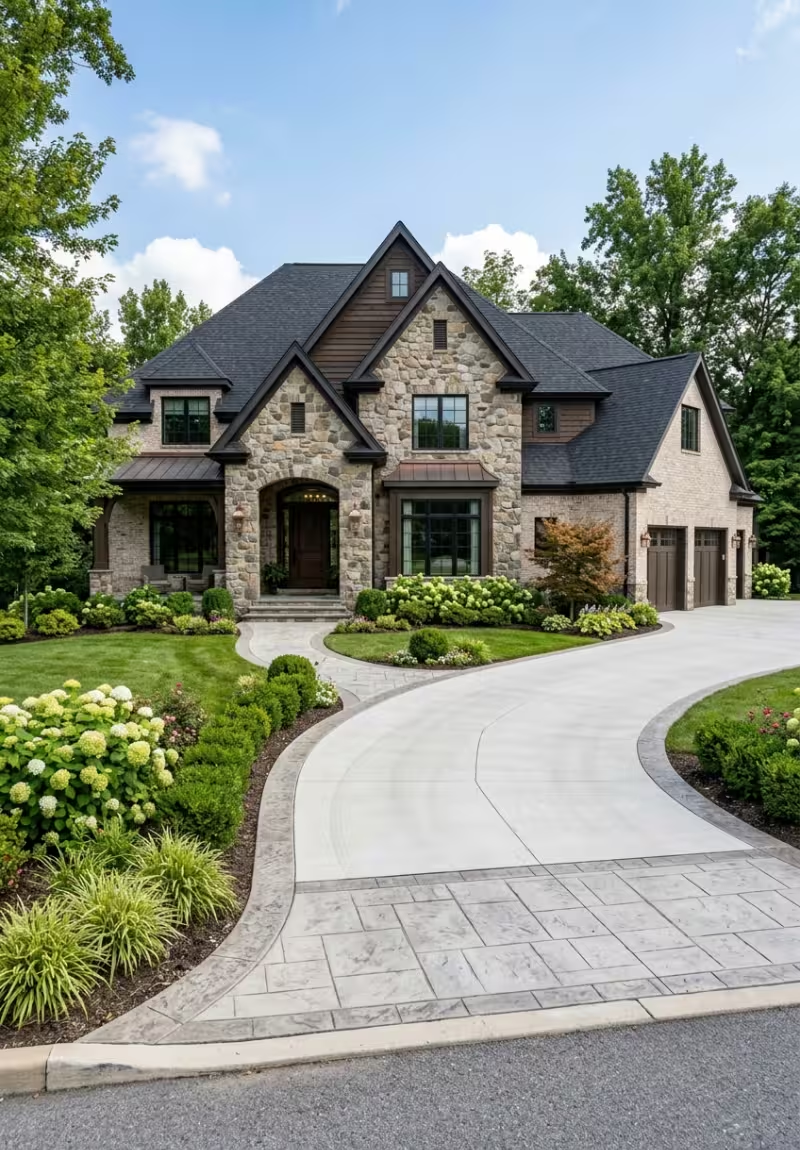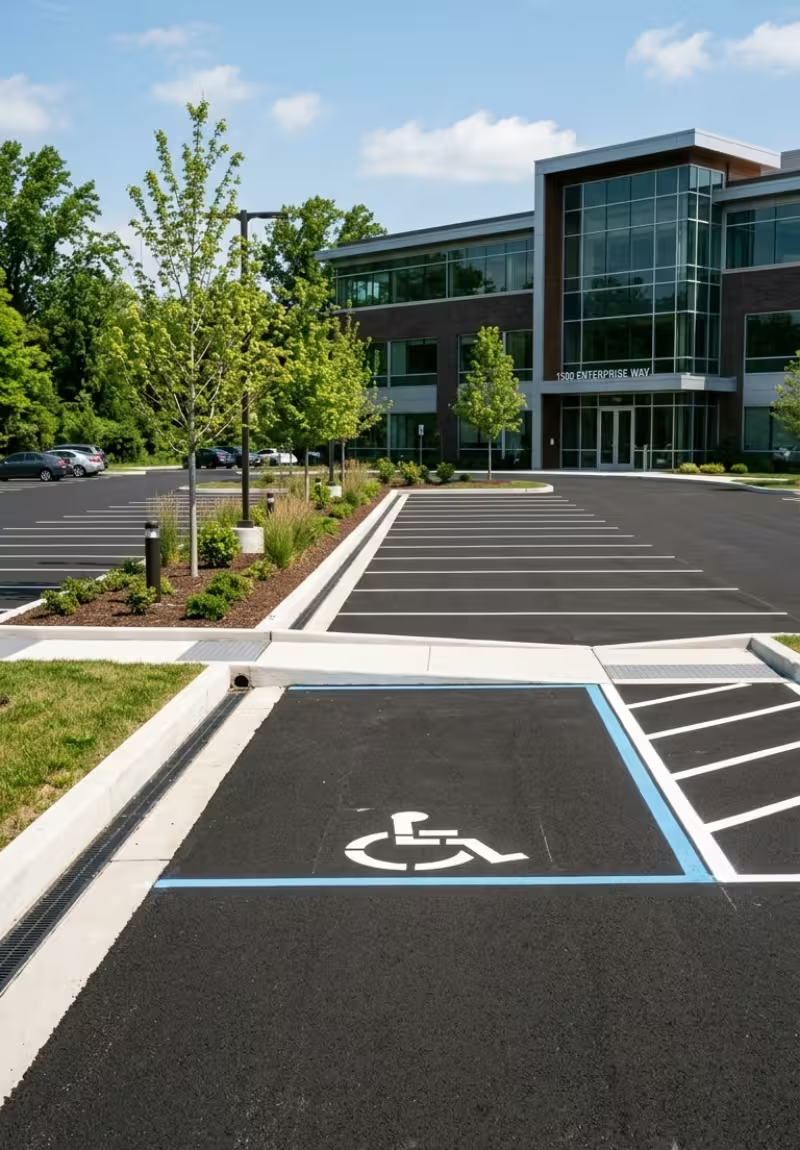
Concrete pavers and poured concrete can both create durable driveways, patios, walkways and commercial surfaces. Neither material has one guaranteed lifespan, however. Long-term performance depends on excavation, base construction, drainage, installation quality, traffic, weather and maintenance.
In many comparable exterior applications, properly installed concrete pavers can have an advantage in long-term service life and repairability. Individual pavers can move slightly with seasonal ground conditions and can be removed and replaced when damaged.
Poured concrete can also last for decades when installed over a stable base with suitable reinforcement, thickness, control joints, drainage and curing. Its main disadvantage is that cracks and settlement can be more difficult to repair without leaving a visible patch or replacing an entire section.
The best choice depends on the property, budget, intended use, desired appearance and willingness to perform maintenance.
Quick Answer: Pavers Usually Have the Repairability Advantage
Properly installed pavers frequently have the practical longevity advantage because:
- Individual units can tolerate limited movement
- Damaged pavers can be replaced separately
- Settled areas can sometimes be lifted and releveled
- Repairs can blend into the existing surface
- Joints divide the pavement into smaller flexible units
- Decorative appearance can be restored without replacing the entire area
Poured concrete may still be the better choice when:
- A continuous rigid surface is needed
- Heavy concentrated loads require engineered concrete
- A lower initial installation price is important
- Fewer joints are preferred
- Concrete pads, aprons or loading areas are required
- A simple broom-finished surface suits the property
American Paving & Concrete provides professional concrete paving for driveways, walkways, aprons, pads, entrances and commercial areas throughout Pennsylvania.
What Do “Pavers” and “Concrete” Mean?
The comparison can be confusing because many pavers are themselves manufactured from concrete.
Concrete pavers
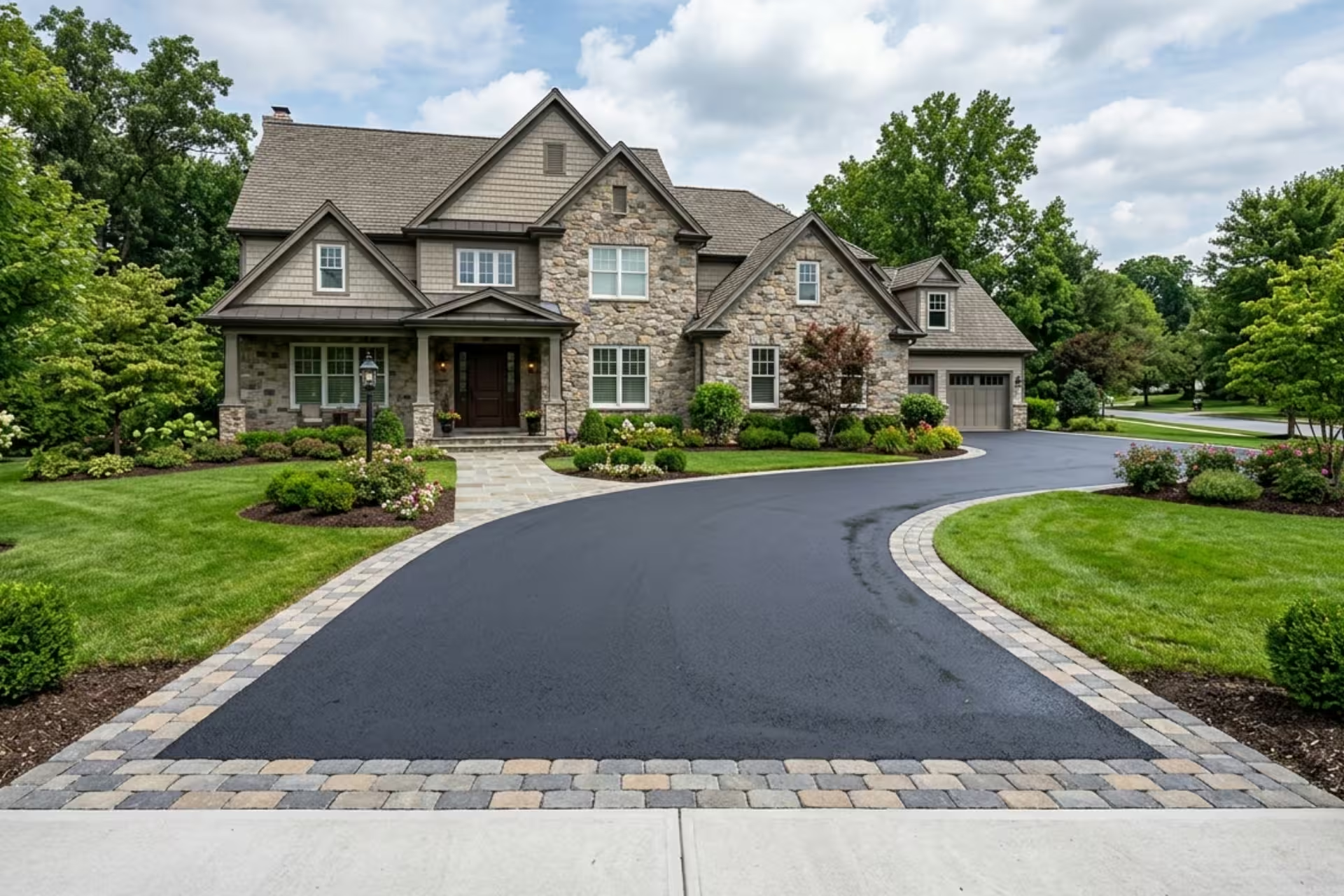
Concrete pavers are individual manufactured units installed in a planned pattern over a prepared aggregate and bedding layer.
A paver system typically includes:
- Compacted subgrade
- Crushed aggregate base
- Bedding material
- Individual paver units
- Joint material
- Edge restraints
- Drainage slope
The joints allow the surface to function as a system of connected but separate units.
Poured concrete
Poured concrete is placed as a continuous slab within forms and finished before it cures.
A concrete installation may include:
- Excavated subgrade
- Compacted aggregate base
- Forms
- Reinforcement
- Fresh concrete
- Control joints
- Expansion or isolation joints
- Surface finishing
- Curing
Although both products may contain cement and aggregate, their construction and movement characteristics are different.
Typical Lifespan of Concrete Pavers
Quality concrete pavers can remain serviceable for several decades when the base, drainage and edge restraints are properly constructed.
Their actual lifespan depends on:
- Paver strength and quality
- Base depth
- Base compaction
- Bedding preparation
- Soil stability
- Drainage
- Edge restraint
- Vehicle weight
- Traffic frequency
- Freeze-thaw exposure
- Deicing materials
- Maintenance
The pavers themselves may remain usable even when a section of the installation settles. In suitable cases, the affected units can be lifted, the supporting material corrected and the same pavers reinstalled.
This ability to reuse individual units contributes to the system’s practical longevity.
Typical Lifespan of Poured Concrete
Professionally installed poured concrete can also last for decades.
Long-term concrete performance depends on:
- Concrete mixture
- Slab thickness
- Aggregate-base construction
- Soil stability
- Reinforcement
- Joint spacing
- Drainage
- Placement conditions
- Finishing
- Curing
- Vehicle loads
- Freeze-thaw exposure
- Maintenance
Concrete is strong under compression but can crack when the supporting ground moves or when shrinkage and temperature stresses are not managed properly.
Control joints encourage cracking to occur along planned lines, but they cannot guarantee that every crack will remain within a joint.
Why Pavers Can Outlast a Concrete Slab
Pavers do not necessarily last longer because each individual unit is stronger than every concrete slab. Their advantage comes largely from how the system manages movement and repairs.
Smaller individual units
Pavers divide the surface into many small pieces. These units can accommodate limited movement without producing one long crack across the entire paved area.
Replaceable sections
If a paver chips, stains or breaks, that unit can often be removed and replaced without rebuilding the entire surface.
Releveling options
When settlement is localized, pavers may sometimes be lifted so the bedding and base can be corrected. The units can then be reinstalled.
Less visible repair work
Replacement pavers may blend more naturally into the surrounding pattern than a concrete patch blends into an older slab.
Jointed construction
The joints create flexibility, although they also require maintenance to manage weeds, joint loss and movement.
Why Poured Concrete Can Still Be the Better Choice
Longevity is only one part of the decision.
Poured concrete can be a practical choice because it offers:
- A continuous surface
- Fewer joints
- Strong performance under suitable loads
- Straightforward snow removal
- Broom, exposed-aggregate and decorative finishes
- Potentially lower initial cost
- Efficient installation across simple layouts
- Suitability for pads, aprons and heavy-use areas
- Easier movement for carts and wheeled equipment
Professional concrete driveway paving can be especially appropriate when the property owner wants a rigid, clean-looking surface that connects naturally with concrete walkways, garage floors or aprons.
Base Preparation: The Most Important Shared Factor
Neither pavers nor concrete will perform well over unstable supporting material.
Preparation may include:
- Removing vegetation and topsoil
- Excavating soft or unsuitable soil
- Establishing the required depth
- Installing crushed aggregate
- Compacting aggregate in layers
- Correcting weak sections
- Establishing drainage grades
- Preparing adjoining elevations
- Supporting pavement edges
A weak base may contribute to:
- Settlement
- Uneven pavers
- Cracked concrete
- Depressions
- Standing water
- Broken edges
- Failed transitions
- Recurring repairs
Good surface material cannot compensate indefinitely for poor excavation or inadequate compaction.
Pavers vs Concrete in Freeze-Thaw Conditions
Pennsylvania exterior pavement is exposed to freezing temperatures, snow, ice, rainfall, road salt and repeated freeze-thaw cycles.
Water can enter beneath either surface. When moisture freezes and expands, movement in the supporting material may worsen.
Paver performance in winter
Pavers may offer several advantages:
- Joints can accommodate limited movement
- Individual units can be reset
- Small damaged areas can be repaired independently
- Textured surfaces may provide useful traction
- Darker pavers may absorb more solar heat
Potential concerns include:
- Joint-material loss
- Uneven units
- Edge movement
- Weed growth
- Snowplow contact with raised pavers
- Settlement caused by poor base preparation
Poured-concrete performance in winter
Concrete can perform well when properly designed for exterior exposure.
Important considerations include:
- Suitable concrete mixture
- Appropriate slab thickness
- Stable aggregate base
- Planned control joints
- Effective drainage
- Proper finishing
- Adequate curing
- Careful use of deicing products
Potential winter-related damage includes cracking, scaling, spalling and movement at joints or slab edges.
Cracking: Pavers vs Concrete
Can concrete pavers crack?
Yes. Individual pavers can crack from manufacturing defects, inadequate support, severe impact or excessive loads.
The difference is that one damaged paver can often be replaced without disturbing most of the surface.
Does poured concrete always crack?
Cracking is a normal risk with poured concrete because the material shrinks, expands, contracts and responds to ground movement.
Professional installation uses control joints, reinforcement, suitable thickness and base preparation to manage cracking. These measures reduce risk but cannot eliminate every possible crack.
Settlement and Uneven Surfaces
Both systems can settle when the supporting soil or aggregate moves.
Paver settlement
Pavers may become uneven, develop depressions or shift near unsupported edges. Localized areas can sometimes be dismantled, releveled and reinstalled.
Concrete settlement
A concrete slab may sink, tilt or crack when the support beneath it fails. Possible responses include specialized lifting, localized repair or slab replacement, depending on the cause and severity.
Settlement should be evaluated before surface repairs are selected.
Drainage Requirements
Effective drainage is essential for both materials.
A driveway, patio or walkway should direct water away from:
- Building foundations
- Garage entrances
- Doorways
- Low areas
- Pavement edges
- Steps
- Adjoining properties
- Vulnerable landscaping
Poor drainage may contribute to:
- Base erosion
- Settlement
- Frost movement
- Standing water
- Ice formation
- Paver displacement
- Concrete cracking
- Edge deterioration
Drainage should be planned before the base or concrete forms are installed.
Maintenance Required for Pavers
Paver maintenance may include:
- Sweeping and cleaning
- Removing weeds or moss
- Replenishing joint material
- Maintaining edge restraints
- Correcting uneven units
- Replacing damaged pavers
- Removing stains
- Applying an appropriate sealer when desired
- Monitoring drainage
Pavers are repairable, but they are not completely maintenance-free.
Maintenance Required for Poured Concrete
Concrete maintenance may include:
- Routine cleaning
- Monitoring cracks
- Repairing damaged joints
- Addressing drainage problems
- Removing oil and chemical spills
- Applying a suitable concrete sealer
- Avoiding harmful deicing practices
- Repairing spalled or broken areas
- Replacing severely failed sections
Maintenance requirements vary according to the concrete finish, traffic and environmental exposure.
Which Material Is Easier to Repair?
Pavers generally have the repairability advantage.
Individual units can often be removed to:
- Replace a damaged paver
- Correct bedding material
- Repair a utility line
- Address localized settlement
- Remove a severe stain
- Rebuild a damaged edge
The units can then be reinstalled.
Poured-concrete repairs may remain visible because new concrete rarely matches the exact color and weathering of an older slab. Large cracks or settlement may require partial or complete slab replacement.
Which Material Costs Less?
Poured concrete is often less expensive initially for a straightforward installation, although pricing depends on the finish, reinforcement, access and preparation requirements.
Paver installations commonly involve greater labor because each unit must be placed, aligned and restrained.
Cost factors for both systems include:
- Total square footage
- Excavation depth
- Soil stability
- Aggregate-base requirements
- Demolition and disposal
- Drainage correction
- Property access
- Surface shape
- Material selection
- Pattern or finish
- Edge construction
- Steps and transitions
- Vehicle loads
- Labor requirements
Pavers may provide long-term savings when localized repairs can be completed without replacing a large surface.
An on-site inspection provides more useful information than comparing material prices alone.
Pavers vs Concrete for Driveways
A driveway must support repeated vehicle loads, turning, braking and snow-removal activity.
Paver-driveway advantages
- Decorative appearance
- Multiple patterns and colors
- Replaceable individual units
- Localized releveling
- Less visible repairs
- Jointed construction
Paver-driveway considerations
- Higher installation labor
- Strong edge restraints required
- Joint maintenance
- Potential movement if the base is weak
- Care needed during snow removal
Concrete-driveway advantages
- Continuous rigid surface
- Potentially lower initial cost
- Easier snow removal
- Fewer joints
- Multiple finish options
- Strong performance with correct thickness and support
Concrete-driveway considerations
- Cracks may be visible
- Repairs may not match
- Sections may need replacement after severe settlement
- Proper curing time is required
The driveway design should reflect vehicle weight, traffic frequency, drainage and soil conditions.
Pavers vs Concrete for Patios
Patios experience less vehicle loading but often have more decorative and design requirements.
Pavers may be preferable when the owner wants:
- Detailed patterns
- Multiple colors
- Defined borders
- Curved layouts
- Replaceable sections
- Easier access to buried utilities
Concrete may be preferable when the owner wants:
- A simple continuous surface
- Fewer joints
- A broom or textured finish
- Potentially lower installation cost
- Easier movement for furniture and wheeled items
- A surface coordinated with existing concrete
Both systems should be graded to direct water away from the building.
Pavers vs Concrete for Walkways
Pavers can create a decorative walkway with flexible patterns and replaceable units.
Poured concrete can create a continuous route with fewer joints, which may be desirable for carts, strollers and other wheeled movement.
Walkway planning should consider:
- Width
- Slope
- Drainage
- Steps
- Doorway transitions
- Surrounding landscaping
- Surface traction
- Accessibility requirements
- Connections with other pavement
Pavers vs Concrete for Heavy Commercial Loads
Pavers can be engineered for vehicular applications, but the complete system must be designed for the expected traffic and loads.
Poured concrete may be particularly suitable for:
- Dumpster pads
- Loading areas
- Truck aprons
- Equipment pads
- Warehouse entrances
- Bus-loading areas
- High-load turning sections
These applications may require increased thickness, reinforcement, strong base construction and carefully planned joints.
Appearance and Design Options
Paver appearance options
Pavers are available in various:
- Shapes
- Sizes
- Colors
- Textures
- Patterns
- Borders
- Contrasting combinations
Because pavers are manufactured units, replacing a discontinued or weathered style later can sometimes be difficult. Keeping spare units from the original installation may be useful.
Concrete appearance options
Poured concrete may use:
- Broom finishing
- Smooth finishing
- Light texture
- Exposed aggregate
- Integral color
- Decorative borders
- Patterned or stamped finishes
Decorative treatments can increase installation and maintenance requirements.
Environmental and Drainage Considerations
Conventional pavers and concrete are generally installed as surfaces that direct runoff toward designed drainage paths.
Some paver systems are specifically designed to allow water infiltration, but permeable performance requires:
- Appropriate permeable units
- Open-graded joint material
- Special aggregate layers
- Suitable soil conditions
- Correct drainage design
- Ongoing joint maintenance
Standard concrete pavers should not automatically be described as permeable.
Poured concrete can also be graded to direct water toward drains, landscaped areas or approved runoff routes.
Which Surface Is Better Around Utilities?
Pavers may provide easier access to buried utilities because individual units can be removed and reinstalled.
Cutting into a concrete slab usually creates a permanent joint or patch. The replacement concrete may not match the original surface.
Utility access should not compromise the supporting base or drainage when the area is restored.
When Should You Choose Pavers?
Pavers may be the better option when:
- Long-term repairability is a priority
- Decorative patterns are important
- Localized releveling may be beneficial
- Individual-unit replacement is preferred
- The layout includes curves or borders
- Easier utility access is useful
- A higher initial installation budget is acceptable
When Should You Choose Poured Concrete?
Poured concrete may be the better option when:
- A continuous surface is preferred
- Lower initial cost is a priority
- The layout is simple
- Fewer joints are desired
- A concrete pad or apron is required
- Heavy concentrated loads are expected
- The surface should connect with existing concrete
- Straightforward snow removal is important
Final Verdict: Do Pavers or Concrete Last Longer?
Properly installed pavers often have the practical long-term advantage because individual units can accommodate limited movement, be replaced separately and be lifted for localized base repairs.
Poured concrete can still provide decades of service when the base, reinforcement, joints, drainage, finishing and curing are handled correctly. It may also be more economical and more appropriate for continuous surfaces or concentrated commercial loads.
The most durable option is the one correctly designed for the site.
A high-quality material installed over an unstable base or with poor drainage may fail earlier than a less expensive material installed with proper preparation.
Request a Concrete Paving Estimate
American Paving & Concrete provides residential and commercial concrete installation for driveways, walkways, aprons, entrances, pads, loading areas and other paved surfaces.
Contact us to arrange an inspection and discuss which material and construction method best suit the property.
Call: (610) 477-3553
Email: info@americanpavingandconcrete.com
Address: 2114 Dublin Pike, Quakertown, PA 18951
Online: Request a free paving estimate