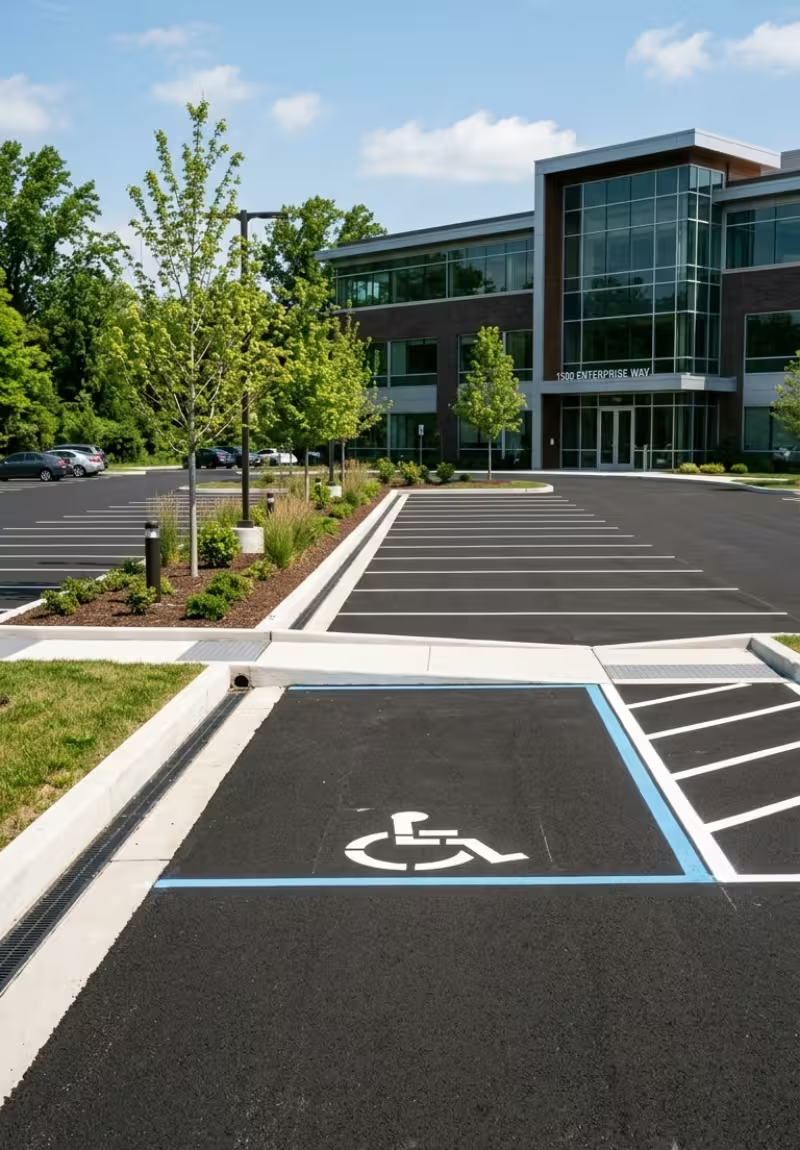
Yes, asphalt milling can be an environmentally friendly way to rehabilitate a worn road, driveway or parking lot—especially when the removed pavement is properly collected and reused as reclaimed asphalt pavement.
Milling removes a controlled depth of existing asphalt instead of excavating the entire pavement structure. The recovered material contains valuable aggregate and asphalt binder that may be processed for use in new asphalt mixtures or other approved construction applications.
This approach can:
- Keep reusable pavement material out of landfills
- Reduce demand for newly quarried aggregate
- Conserve asphalt binder
- Reduce unnecessary excavation
- Preserve a stable pavement base
- Maintain curb, drain and entrance elevations
- Prepare the surface for a properly bonded overlay
- Extend the useful life of existing infrastructure
However, milling is not automatically the most environmentally responsible choice for every project. Its overall impact depends on pavement condition, transportation distances, equipment efficiency, material handling, recycling options and the long-term performance of the completed surface.
American Paving & Concrete evaluates these factors before recommending milling, asphalt repair, resurfacing or complete replacement.
What Is Asphalt Milling?
Asphalt milling is the process of removing a selected depth of an existing asphalt surface with specialized equipment.
A milling machine uses a rotating drum fitted with cutting teeth to grind and remove deteriorated pavement. A conveyor transfers the loosened material into trucks so it can be transported for processing or approved reuse.
Depending on the project, milling may remove:
- A thin, worn surface layer
- One complete asphalt course
- Several inches of damaged pavement
- Uneven material near curbs and drains
- Failed pavement around transitions
- The full asphalt depth in selected areas
The process leaves a textured surface that can be inspected, repaired and prepared for a new asphalt layer.
The Federal Highway Administration identifies milling and full-depth pavement removal as common sources of reclaimed asphalt pavement, or RAP. Once properly crushed and screened, RAP contains graded aggregate coated with reusable asphalt cement. FHWA reclaimed-asphalt guidance
Why Asphalt Milling Can Be Environmentally Friendly
The main environmental advantage of milling is that existing pavement can become a construction resource rather than simply being treated as waste.
1. Asphalt millings can be recycled
Material removed during milling is known as reclaimed asphalt pavement.
After appropriate processing and quality control, RAP may be used in:
- New asphalt mixtures
- Recycled asphalt base
- Shoulder material
- Temporary access areas
- Other approved civil-engineering applications
The exact use depends on material quality, project specifications, contamination, particle size and local requirements.
Industry data for the 2024 construction season estimated that approximately 101.4 million tons of RAP were used in new asphalt mixtures. The same survey estimated that RAP replaced more than 96 million tons of virgin aggregate. NAPA–FHWA recycling survey
2. It conserves natural aggregate
Conventional asphalt production requires stone, sand and other aggregates. These resources must be extracted, processed and transported.
Using suitable RAP can partially replace virgin aggregate. This may reduce:
- Quarrying requirements
- Processing of new aggregate
- Transportation of virgin material
- Depletion of natural resources
- Waste created by pavement removal
The amount of new material saved depends on the mix design and the percentage of reclaimed material approved for the project.
3. It recovers asphalt binder
RAP contains both aggregate and aged asphalt binder.
When properly evaluated and incorporated into a suitable asphalt mix, part of this binder can contribute to the new material. This can reduce the amount of virgin binder required.
The 2024 recycling survey estimated that RAP use conserved approximately 5.1 million tons—or 27.9 million barrels—of virgin asphalt binder. NAPA recycling data
4. It can reduce landfill disposal
Removing pavement without recycling it creates a large quantity of heavy construction material.
Collecting and reusing suitable millings can:
- Divert material from disposal facilities
- Conserve landfill capacity
- Reduce disposal-related hauling
- Retain the value of existing aggregate and binder
This benefit depends on responsible handling. Milling material should be taken to an appropriate asphalt plant, processing facility or approved reuse location.
5. It may preserve the existing pavement structure
Not every deteriorated pavement requires complete excavation.
When the supporting base remains stable, milling can remove the damaged or oxidized surface while leaving functional underlying material in place. Preserving the base can reduce the quantity of material removed and replaced.
This is one reason a professional pavement assessment should distinguish between:
- Surface deterioration
- Asphalt-layer failure
- Localized base failure
- Widespread structural failure
- Drainage-related damage
A stable base may support milling and resurfacing. A failed base may require deeper excavation and reconstruction.
How Milling Supports Asphalt Resurfacing
Milling is frequently used before an asphalt overlay.
It can create space for new pavement while helping maintain appropriate elevations at:
- Curbs
- Catch basins
- Manholes
- Sidewalks
- Garage floors
- Building entrances
- Road connections
- Concrete aprons
- Loading areas
- Accessible routes
Installing an overlay without adjusting these elevations can create raised transitions, reduced curb exposure or drainage problems.
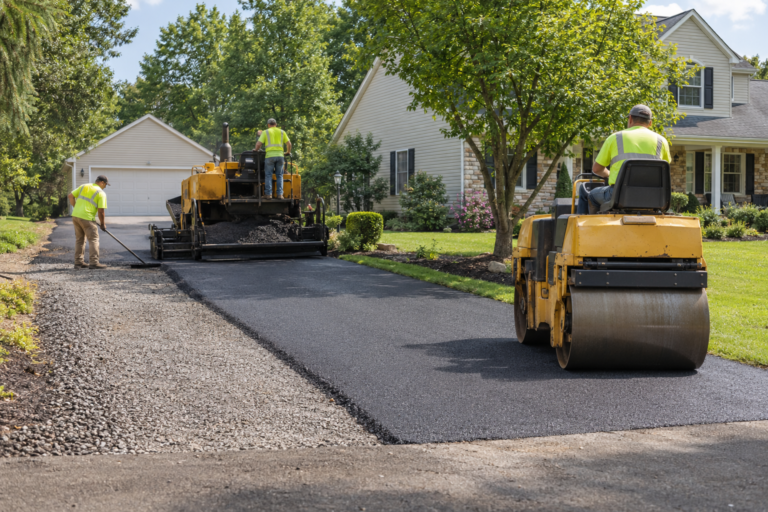
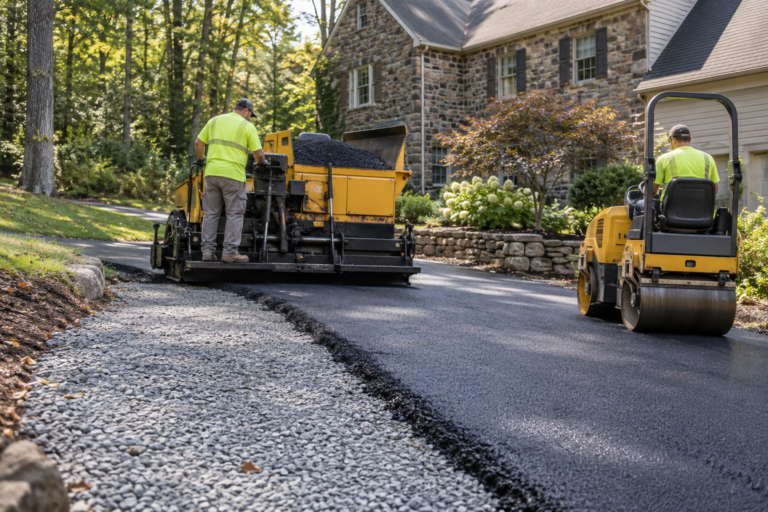
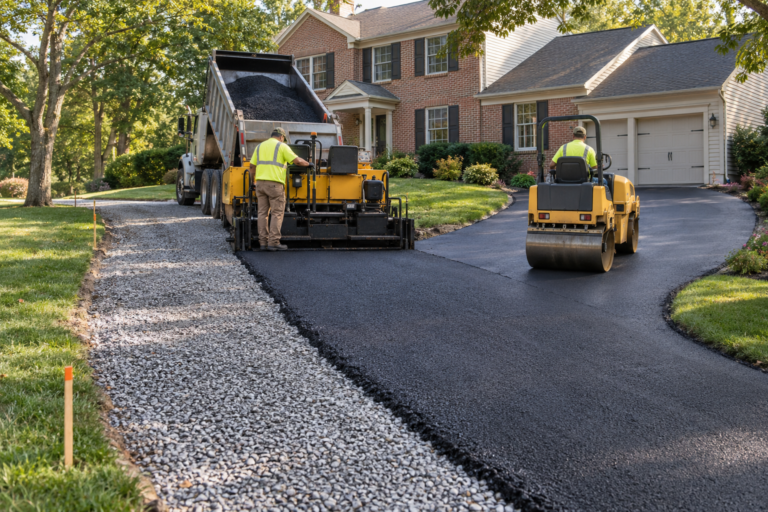
A properly planned milling-and-resurfacing project may involve:
- Inspecting the existing pavement
- Identifying failed base areas
- Establishing the milling depth
- Removing the specified asphalt layer
- Collecting the recovered material
- Cleaning the milled surface
- Completing localized repairs
- Applying a bonding or tack coat
- Installing the new asphalt layer
- Compacting and finishing the surface
Property owners can learn more about the preparation and placement process on our asphalt installation page.
Is Recycled Asphalt as Good as New Asphalt?
Reclaimed asphalt is not simply loose material added to a paving mixture without evaluation.
Professional asphalt producers assess factors such as:
- RAP source
- Aggregate gradation
- Existing binder content
- Binder condition
- Moisture
- Contamination
- Desired pavement performance
- Percentage of recycled material
- Virgin aggregate requirements
- New binder grade
- Production temperature
FHWA guidance reports that properly specified and produced recycled hot-mix asphalt can provide quality and structural performance comparable to conventional hot-mix asphalt. Performance still depends on correct mixture design, production, placement and compaction. FHWA recycled-asphalt user guideline
Recycled content alone does not guarantee a durable pavement. The full pavement system must suit the expected traffic, soil, drainage and climate.
Environmental Limitations of Asphalt Milling
A balanced environmental assessment should also consider the impacts created by the milling operation.
Fuel and equipment emissions
Milling machines, loaders, sweepers and trucks require energy. Their operation produces emissions.
The total impact can be affected by:
- Project size
- Equipment condition
- Milling depth
- Truck capacity
- Number of trips
- Traffic delays
- Distance to the asphalt plant
- Distance to the paving site
- Equipment idling
Recycling benefits may be reduced when recovered material must be transported an excessive distance.
Dust and loose material
Milling can produce dust and small particles. Contractors should use appropriate operational controls and thoroughly clean the surface before applying tack coat or new asphalt.
Loose debris should not be allowed to enter:
- Storm drains
- Waterways
- Adjacent properties
- Landscaped areas
- Public traffic lanes
Noise and temporary disruption
Milling machinery creates noise, vibration and traffic disruption. Commercial projects may require phasing and traffic control to protect workers, customers, tenants and pedestrians.
These are temporary project impacts, but they should be considered during scheduling.
Not every load is suitable for unrestricted reuse
Reclaimed material should be evaluated before reuse. Contamination, unsuitable composition or project specifications may limit where it can be used.
Responsible recycling involves controlled collection, storage, processing and placement—not simply spreading unprocessed millings wherever convenient.
Milling Versus Complete Asphalt Removal
Milling and full-depth removal serve different pavement conditions.
Milling may be appropriate when:
- Damage is concentrated near the surface
- The supporting base remains stable
- The pavement needs a new surface course
- Elevations must be preserved
- Rutting is limited to upper layers
- Existing asphalt is thick enough to mill
- Drainage can be maintained or improved
- Local failures can be repaired separately
Complete removal may be necessary when:
- The base has failed extensively
- Deep alligator cracking is widespread
- Severe settlement has occurred
- Large soft areas are present
- Drainage problems affect the pavement structure
- Asphalt thickness is inadequate
- Repeated repairs continue to fail
- Major grading corrections are required
Milling a failed surface without correcting the cause may produce only a short-term cosmetic improvement.
Our asphalt paving and repair evaluations consider both the visible surface and its supporting structure.
Milling Versus Asphalt Patching
Milling is not always necessary when deterioration is limited to isolated areas.
Professional asphalt repair may be more practical for:
- Individual potholes
- Small failed sections
- Localized depressions
- Broken pavement edges
- Damage around catch basins
- Limited utility cuts
These areas can be cut, excavated and reconstructed without milling the entire pavement.
When deterioration affects most of the surface but the base remains stable, broader milling and resurfacing may offer a more consistent solution.
Milling Versus Sealcoating
Milling and sealcoating should not be confused.
Sealcoating is a preventive surface treatment for structurally sound asphalt. It may help reduce exposure to sunlight, water, road salt, oil and oxidation.
Sealcoating cannot correct:
- Deep rutting
- Base failure
- Severe cracking
- Settlement
- Potholes
- Poor pavement elevations
- Major drainage problems
Milling removes physical pavement material. Sealcoating applies a protective coating over an eligible surface. The correct option depends on the type and depth of deterioration.
Environmental Benefits for Commercial Parking Lots
Asphalt milling is particularly useful for some commercial parking-lot rehabilitation projects.
A commercial site may contain:
- High-traffic drive aisles
- Loading zones
- Delivery routes
- Dumpster areas
- Catch basins
- Concrete aprons
- Accessible parking spaces
- Multiple entrances
- Tight pavement transitions
Selective milling allows the contractor to address varying conditions across the property. High-stress areas may require deeper repair, while stable sections may need only surface preparation and an overlay.
Commercial milling may also be phased to preserve access when site conditions allow. Visit our commercial paving and parking lot paving pages for related project information.
How Pennsylvania Weather Affects Milled Pavement
Pennsylvania pavement must withstand:
- Summer heat
- Heavy rainfall
- Freezing temperatures
- Snow and ice
- Freeze-thaw cycles
- Road salt
- Snowplow activity
Water entering cracks can weaken the aggregate base. When trapped moisture freezes and expands, pavement movement and cracking can worsen.
Milling can remove a damaged surface, but it does not automatically correct water beneath the pavement. Before resurfacing, the contractor should evaluate:
- Surface slope
- Catch-basin elevations
- Low areas
- Edge drainage
- Downspout discharge
- Subsurface instability
- Water movement from adjoining land
Correcting drainage and failed base material is essential to the long-term value—and environmental efficiency—of a rehabilitation project. A pavement that lasts longer avoids premature repeat work and additional resource use.
Can Asphalt Millings Be Used on a Driveway?
Asphalt millings are sometimes used as a surface or base material for private driveways and access lanes. However, they are not identical to professionally installed hot-mix asphalt.
Performance depends on:
- Material quality
- Particle size
- Binder remaining in the millings
- Base stability
- Grading
- Drainage
- Layer thickness
- Compaction
- Sun and temperature
- Vehicle weight
- Edge support
Loose or poorly compacted millings may shift, track or develop depressions. They should not be treated as a universal substitute for a properly designed paved driveway.
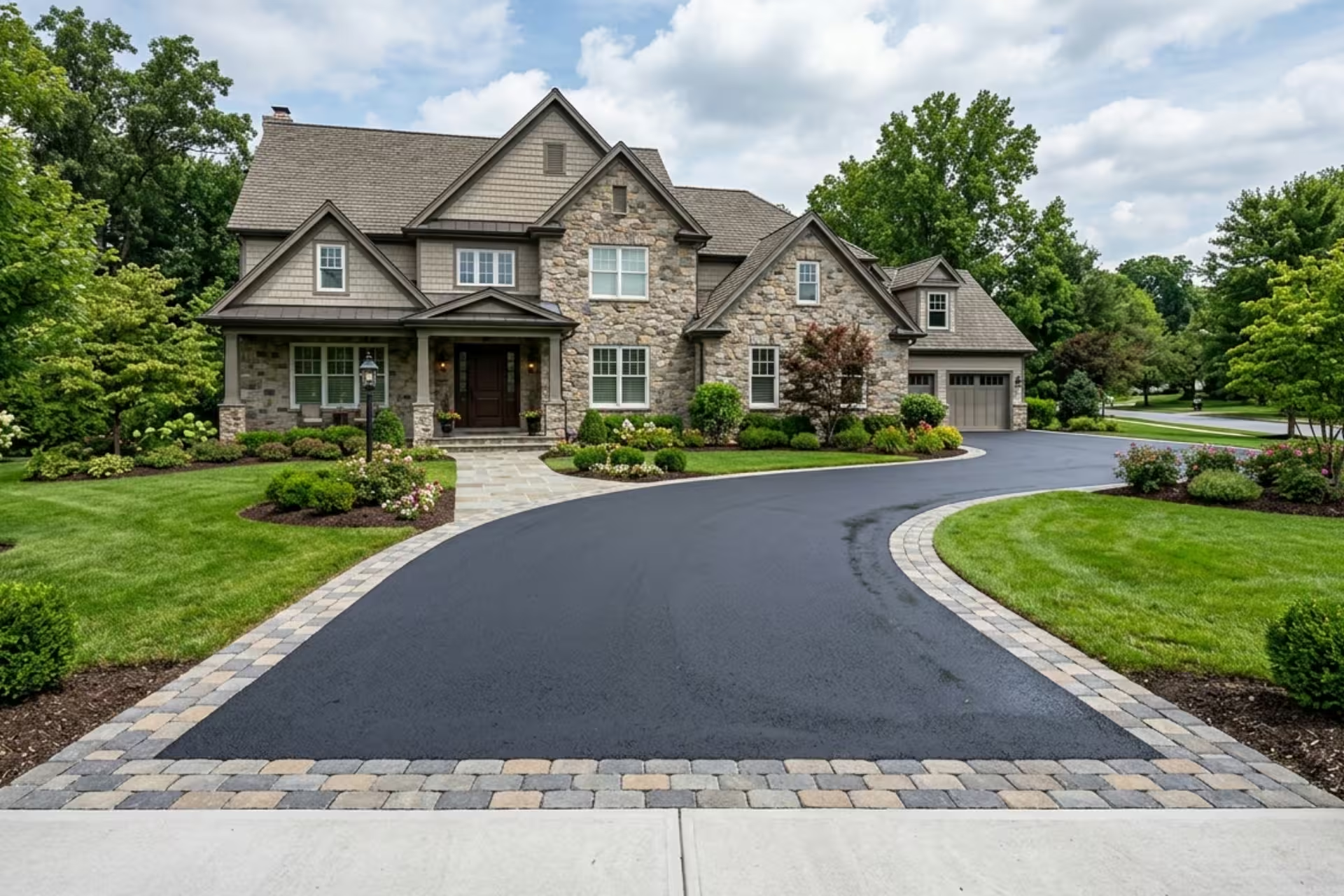
For a permanent residential surface, have the site evaluated through our driveway paving service.
How to Make a Milling Project More Sustainable
Property owners and project planners can improve the environmental performance of a milling project by asking:
- Where will the removed pavement be taken?
- Can the material be processed as RAP?
- Is the proposed milling depth necessary?
- Can the existing base remain in place?
- Are localized repairs needed before resurfacing?
- How far are the plant and disposal facilities?
- Can truck trips and equipment idling be minimized?
- Will drainage problems be corrected?
- Does the new pavement structure match expected traffic?
- How will the completed asphalt be maintained?
Environmental responsibility includes both material recycling and long-term pavement performance.
Is Asphalt Milling Right for Your Property?
Milling may be appropriate when your driveway, parking lot or access road has:
- Widespread surface wear
- Oxidized upper pavement
- Shallow rutting
- Uneven transitions
- Excess asphalt near curbs
- Poor elevations around drains
- A stable underlying base
- A need for resurfacing
A site inspection is necessary because surface appearance alone cannot confirm the condition of the pavement structure.
American Paving & Concrete provides residential and commercial pavement assessments throughout Bucks County, Montgomery County, Lehigh County and surrounding Pennsylvania communities.
Request an Asphalt Milling and Paving Estimate
American Paving & Concrete can inspect the existing pavement, assess the base and drainage, and determine whether milling, localized repair, resurfacing or complete replacement offers the most practical solution.
Call: (610) 477-3553
Email: info@americanpavingandconcrete.com
Address: 2114 Dublin Pike, Quakertown, PA 18951
Online: Request a free paving estimate