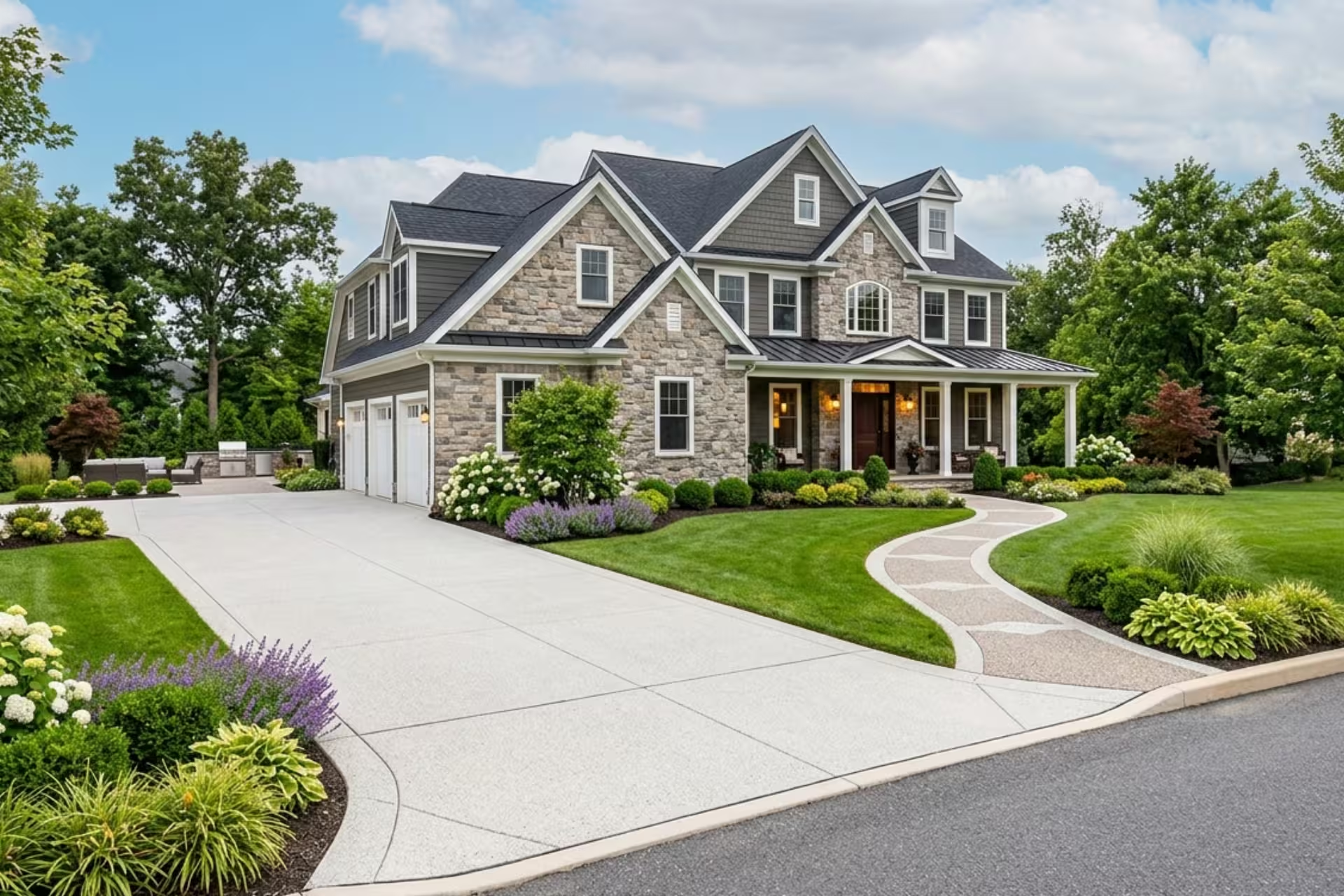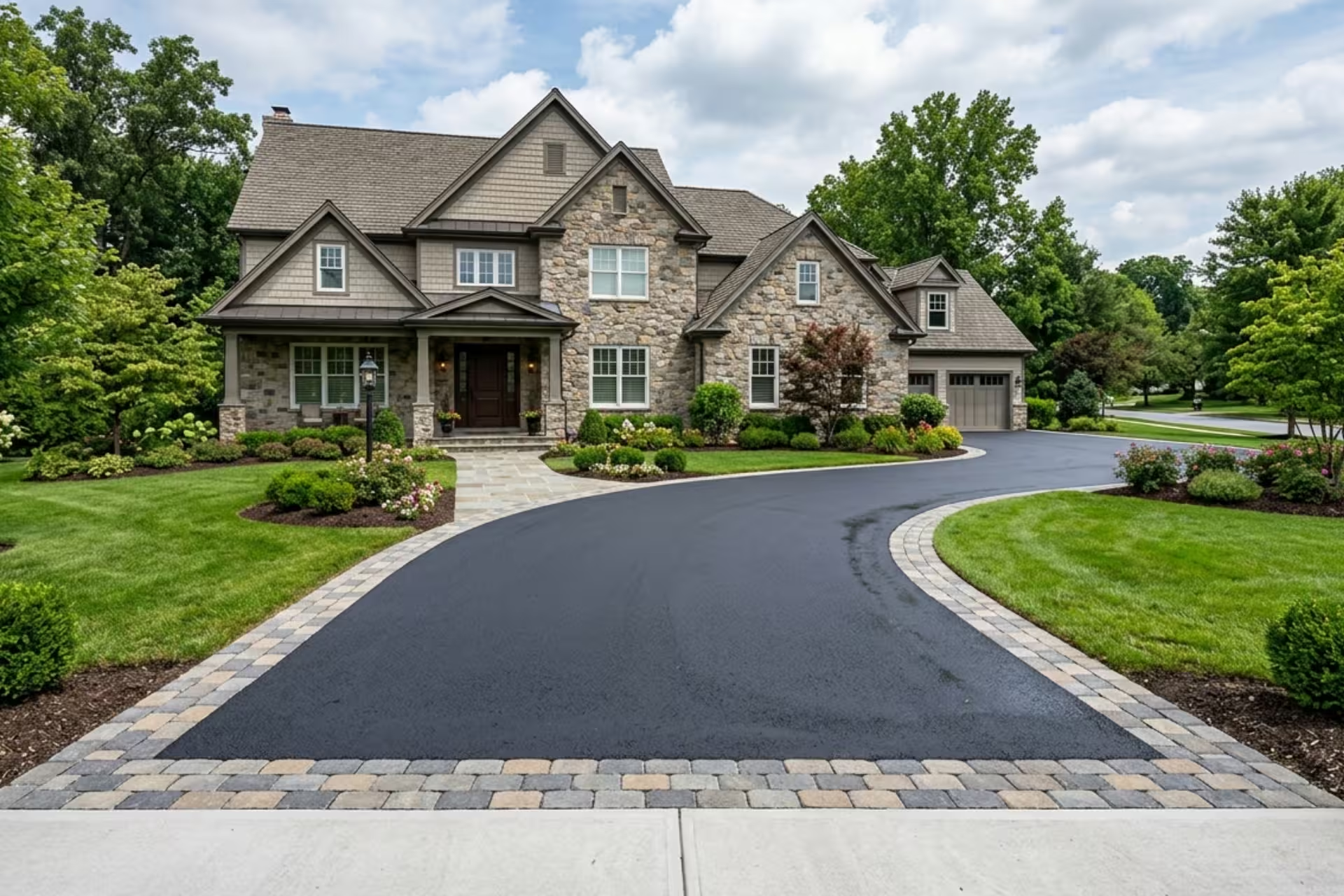
Asphalt driveways, commercial parking lots and shared paved areas in Lansdale face continual exposure to sunlight, rain, snow, road salt and changing seasonal temperatures. Repeated traffic, snowplow activity, automotive fluids and drainage problems can create additional wear.
Over time, asphalt may fade from black to gray as the pavement’s surface oxidizes. Fine cracks can develop, aggregates may become more visible and entrances or turning areas may wear faster than the surrounding pavement.
Sealcoating places a protective coating over eligible asphalt. When applied at the appropriate time and after thorough preparation, it may help reduce direct weather exposure, restore a darker appearance and support a long-term pavement-maintenance plan.
American Paving & Concrete provides professional sealcoating services for eligible driveways, parking lots and private paved areas in Lansdale and surrounding Montgomery County communities.
Residential and Commercial Sealcoating Services
Our Lansdale sealcoating services may include:
- Residential driveway sealcoating
- Shared-driveway sealcoating
- Commercial parking lot sealcoating
- Apartment and multifamily parking areas
- Retail and office properties
- Church and institutional parking
- Private access lanes
- Pavement-condition inspections
- Surface cleaning and preparation
- Vegetation removal
- Automotive-fluid stain preparation
- Eligible crack treatment
- Pothole-repair preparation
- Pavement-edge detailing
- Phased traffic planning
- Drying and reopening guidance
- Parking lot striping coordination
Every project should begin with an inspection. The recommendation must reflect the existing pavement’s condition rather than an automatic maintenance schedule.
How Sealcoating Helps Protect Asphalt
Asphalt contains binding materials that are gradually affected by sunlight and oxidation. As the surface ages, it may become lighter, drier and more brittle.
A properly timed sealcoating application may help:
- Reduce direct ultraviolet exposure
- Limit contact with rain and melting snow
- Slow surface oxidation
- Improve resistance to certain automotive fluids
- Restore a darker and more uniform appearance
- Improve contrast for parking-space markings
- Make routine cleaning easier
- Support preventive asphalt maintenance
Sealcoating protects the pavement surface. It does not add a structural asphalt layer or strengthen a failed supporting base.
When Is Asphalt Suitable for Sealcoating?
A driveway or parking lot may be suitable when:
- The aggregate base remains stable
- The pavement surface is generally firm
- Cracking is limited and treatable
- Potholes have been repaired
- Failed patches have been corrected
- Drainage is functioning properly
- Asphalt edges remain supported
- Loose aggregate is limited
- Existing coatings remain bonded
- Structural deterioration is not widespread
- The surface can be cleaned thoroughly
Surface fading alone does not determine suitability. An inspection should assess the complete pavement system.
What Sealcoating Cannot Repair
Sealcoating is a preventive surface treatment, not a structural repair.
It cannot properly correct:
- Potholes
- Alligator cracking
- Base failure
- Severe settlement
- Large depressions
- Standing-water problems
- Broken pavement edges
- Soft or unstable asphalt
- Deep structural cracks
- Failed utility cuts
- Widespread loose aggregate
- Extensive pavement movement
These conditions may require professional asphalt repair, resurfacing or complete replacement.
Coating severely damaged pavement may temporarily improve its color without correcting the cause of failure.
Residential Driveway Sealcoating in Lansdale
Residential driveways usually receive less traffic than commercial parking lots, but wear is often concentrated along the same wheel paths and parking positions.
Driveway deterioration may be affected by:
- Stationary tire turning
- Multiple household vehicles
- Delivery trucks
- Work vans
- Trailers
- Snowplow equipment
- Road salt
- Oil and automotive fluids
- Roof and downspout runoff
- Unsupported pavement edges
- Garage transitions
- Street connections
Before sealcoating, the driveway should be checked for cracks, settlement, potholes, drainage problems and broken edges.
When deterioration is extensive, professional driveway paving may be more appropriate than another surface coating.
Shared Driveways and Multifamily Parking Areas
Shared driveways and apartment parking facilities require advance coordination because several households may depend on the same pavement.
Project planning may include:
- Resident parking
- Visitor spaces
- Accessible parking
- Pedestrian routes
- Delivery access
- Waste collection
- Mail service
- Emergency routes
- Temporary parking locations
- Multiple entrances
- Advance resident notices
When the property layout permits, the pavement may be treated in sections. Each completed section must remain closed during application and curing.
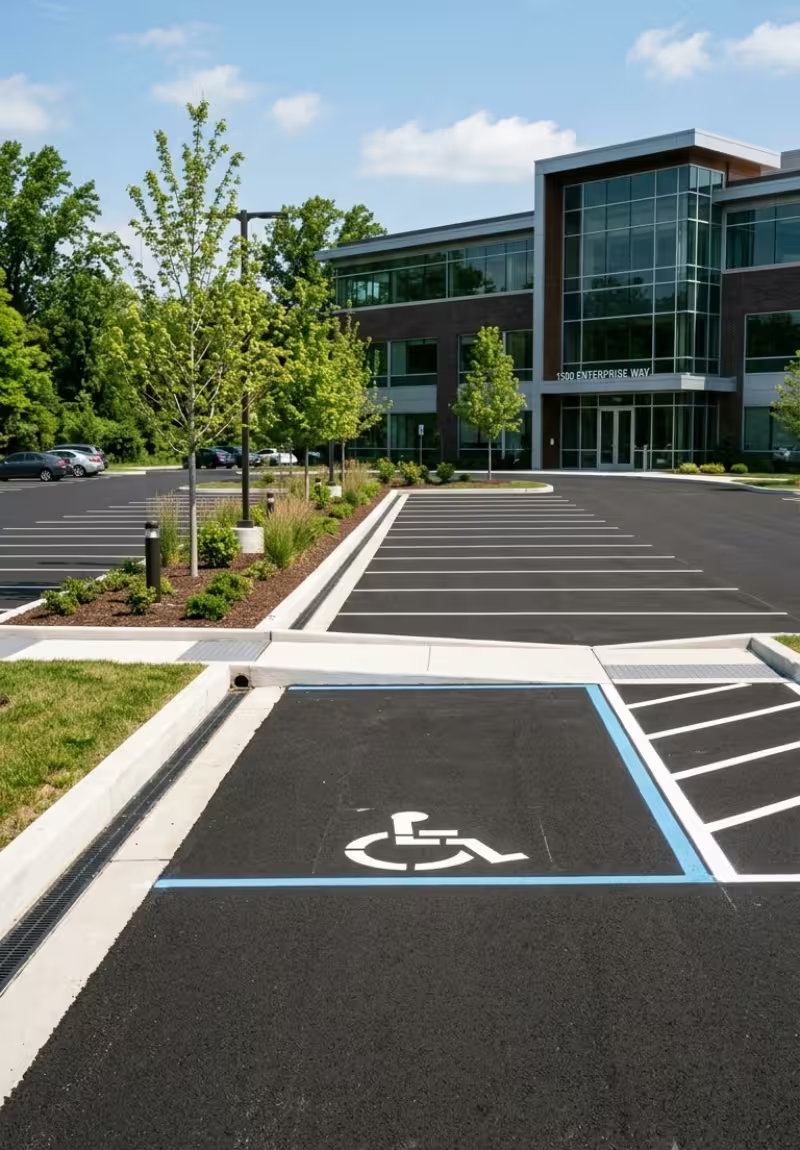
Commercial Parking Lot Sealcoating
Commercial parking lots experience repeated turning, braking and vehicle movement. Some sections may wear much faster than the rest of the property.
High-stress areas commonly include:
- Entrances and exits
- Main drive aisles
- Customer parking
- Employee parking
- Loading areas
- Delivery routes
- Dumpster locations
- Accessible parking spaces
- Sharp turning points
- Snowplow routes
- Oil-stained spaces
- Catch-basin areas
A commercial sealcoating plan should consider operating hours, tenant requirements, customer access, pedestrian routes, deliveries and the sequence for restoring pavement markings.
Property owners needing structural work can review the company’s commercial paving services.
Sealcoating for Compact Urban Properties
Some Lansdale properties have relatively compact paved areas, closely spaced buildings, narrow entrances or limited alternative parking.
These conditions can affect:
- Equipment access
- Material placement
- Temporary vehicle storage
- Pedestrian movement
- Work-zone boundaries
- Protection of neighboring properties
- Access to rear parking areas
- Waste-removal schedules
- Delivery routes
- Emergency access
The contractor should assess the entire property before determining whether a full closure or phased approach is appropriate.
Phased Sealcoating and Access Planning
Closing an entire commercial or multifamily lot may not always be practical. When the property layout allows it, work may be completed in separate phases.
A phased plan should account for:
- Alternative entrances and exits
- Temporary parking
- Customer and tenant access
- Pedestrian routes
- Delivery schedules
- Waste collection
- Emergency access
- Application boundaries
- Curing periods
- Restriping and reopening
Phasing may increase the total project duration because crews and equipment must move between separate work areas.
Crack Treatment Before Sealcoating
Crack filling and sealcoating perform different functions.
Crack treatment places suitable material into eligible pavement openings to help limit water infiltration. Sealcoating covers the broader asphalt surface.
Sealcoat alone cannot properly repair:
- Wide cracks
- Deep cracks
- Active cracks
- Settlement cracks
- Alligator cracking
- Open pavement joints
- Recurring cracks around utility cuts
Crack patterns should be inspected before coating. Extensive interconnected cracking may indicate instability within the supporting base.
Potholes and Failed Pavement
Potholes require appropriate repair before sealcoating.
A repair may involve:
- Removing failed asphalt
- Cleaning the affected area
- Inspecting the supporting base
- Removing unstable material
- Rebuilding aggregate where required
- Installing repair asphalt
- Compacting the patch
- Preparing the repaired surface
Applying sealer over a pothole does not replace missing asphalt or stabilize the material below it.
Drainage Structures and Low Areas
Developed residential and commercial properties may contain catch basins, utility structures, curbs, sidewalks and adjoining concrete.
An inspection should identify:
- Standing water
- Low pavement sections
- Blocked drainage paths
- Settlement near catch basins
- Cracks around utility covers
- Water flowing toward buildings
- Roof runoff crossing pavement
- Failed curb transitions
- Erosion along asphalt edges
- Deterioration around concrete aprons
Sealcoating cannot alter the pavement’s slope or correct a drainage failure. These issues should be addressed separately.
Preparing Asphalt for Sealcoating
Proper preparation supports adhesion and consistent coverage.
Preparation may include:
- Inspecting the entire paved area
- Identifying structural deterioration
- Removing dirt and loose debris
- Clearing grass and vegetation
- Cleaning automotive-fluid contamination
- Treating eligible cracks
- Repairing potholes
- Correcting failed patches
- Protecting concrete, masonry and curbs
- Detailing pavement edges
- Confirming suitable weather
- Establishing traffic control
Sealcoat should not be applied over wet pavement, loose material or untreated structural damage.
How Often Should Asphalt Be Sealcoated?
Many eligible asphalt surfaces are evaluated approximately every two to three years.
The correct schedule depends on:
- Pavement age
- Surface condition
- Previous coatings
- Traffic frequency
- Vehicle weight
- Sun exposure
- Drainage
- Snow-removal activity
- Road-salt exposure
- Automotive-fluid contamination
- Product specifications
A residential driveway may require a different schedule from a busy commercial parking lot.
Applying sealcoat every year is generally unnecessary for many normally performing surfaces. Excessive coating buildup may contribute to peeling, flaking, uneven texture or poor bonding.
When Can New Asphalt Be Sealcoated?
Fresh asphalt should not be sealcoated immediately. It needs time to cure and release oils.
New pavement is commonly evaluated after approximately six to twelve months, but the appropriate waiting period depends on:
- Asphalt mixture
- Installation date
- Installation season
- Weather exposure
- Direct sunlight
- Vehicle traffic
- Surface condition
- Sealer-manufacturer requirements
A contractor should inspect the pavement before scheduling its first coating. Customers planning new pavement can learn more about professional asphalt installation.
Suitable Sealcoating Weather
Sealcoating requires proper application and curing conditions.
General requirements include:
- Clean, dry asphalt
- Suitable air temperature
- Suitable pavement temperature
- No immediate rain
- Manageable humidity
- Adequate airflow
- Sufficient drying time
- Controlled pedestrian access
- Controlled vehicle traffic
Exact requirements depend on the selected product. Work should be postponed when weather could interfere with adhesion or curing.
How Long Must the Pavement Stay Closed?
The required closure period depends on:
- Product type
- Number of applications
- Coating thickness
- Temperature
- Humidity
- Sunlight and shade
- Airflow
- Pavement condition
- Vehicle weight
The surface may need to remain closed for approximately 24 to 48 hours, but the contractor’s project-specific instructions should be followed.
Commercial property owners should notify customers, tenants, employees and delivery providers before work begins.
Sealcoating and Parking Lot Striping
Existing pavement markings are generally covered when sealcoat is applied. They should be restored after the new coating has cured sufficiently.
Striping may include:
- Standard parking spaces
- Accessible parking spaces
- Access aisles
- Directional arrows
- Loading zones
- Crosswalks
- Fire-lane markings
- No-parking areas
- Numbered spaces
- Traffic-control markings
The project schedule should include both sealcoating and restriping before normal traffic returns.
What Affects Sealcoating Cost?
Sealcoating cost depends on pavement size, condition and project complexity.
Important factors include:
- Total square footage
- Pavement layout
- Surface-cleaning requirements
- Crack quantity and size
- Pothole and patch repairs
- Oil-stain preparation
- Existing coating condition
- Number of applications
- Curbs and detailed edges
- Access restrictions
- Traffic-control requirements
- Project phasing
- Parking lot striping
An on-site assessment provides a more reliable estimate than a generic square-foot price.
Long-Term Asphalt Maintenance
Sealcoating works best as one part of an organized pavement-maintenance program.
Long-term care may include:
- Routine pavement inspections
- Timely crack treatment
- Pothole repair
- Surface patching
- Drainage maintenance
- Edge support
- Oil-stain cleanup
- Periodic sealcoating
- Parking lot restriping
- Resurfacing planning
- Replacement planning
Maintenance should respond to the pavement’s actual condition, traffic and drainage demands.
Request a Sealcoating Estimate in Lansdale
American Paving & Concrete can inspect your driveway, parking lot or shared paved area and determine whether sealcoating is suitable. If repairs are needed first, the team can explain the available maintenance, resurfacing or paving options.
Call: (610) 477-3553
Email: info@americanpavingandconcrete.com
Address: 2114 Dublin Pike, Quakertown, PA 18951
Online: Request a free estimate