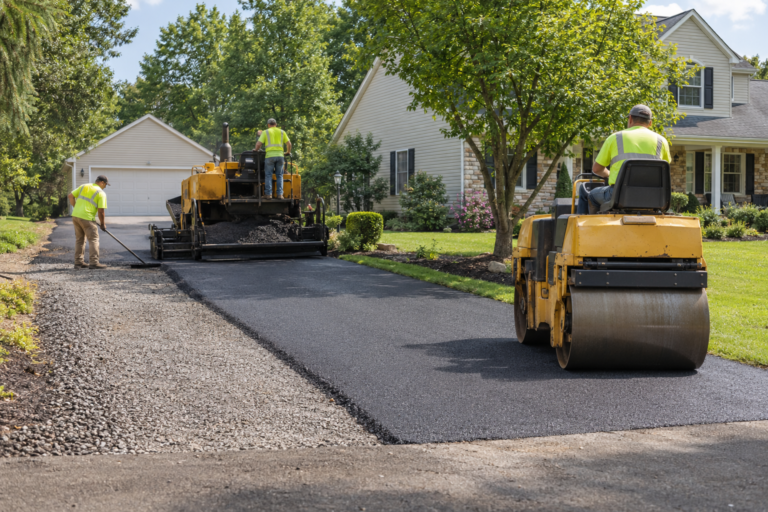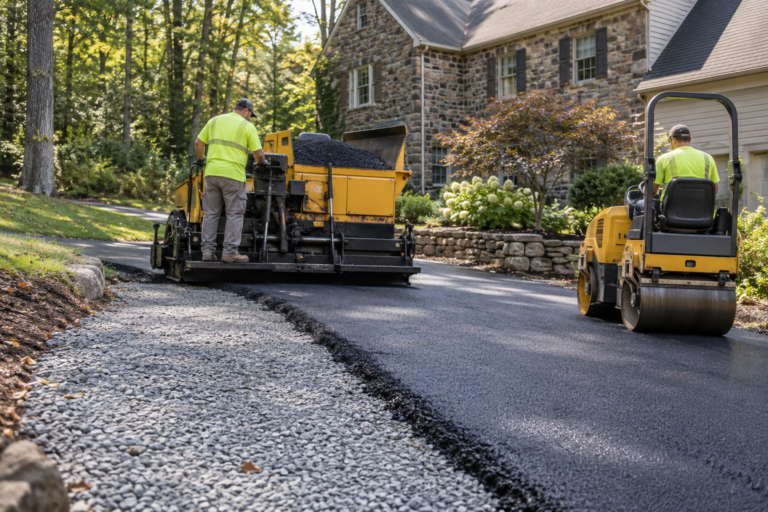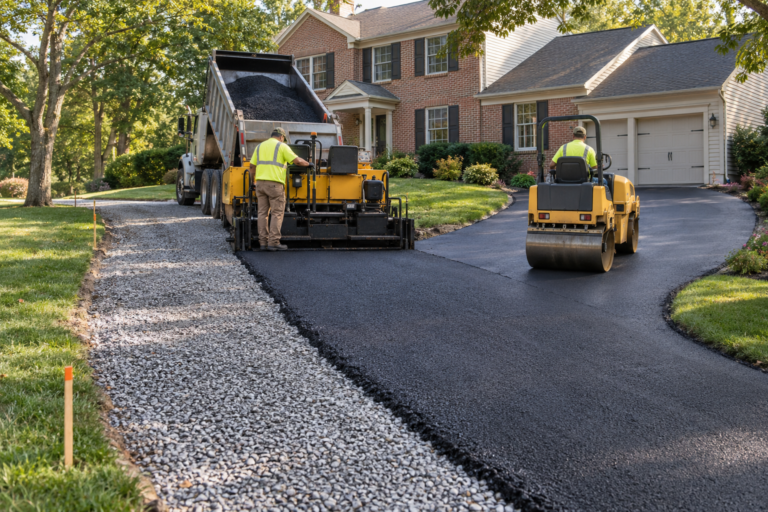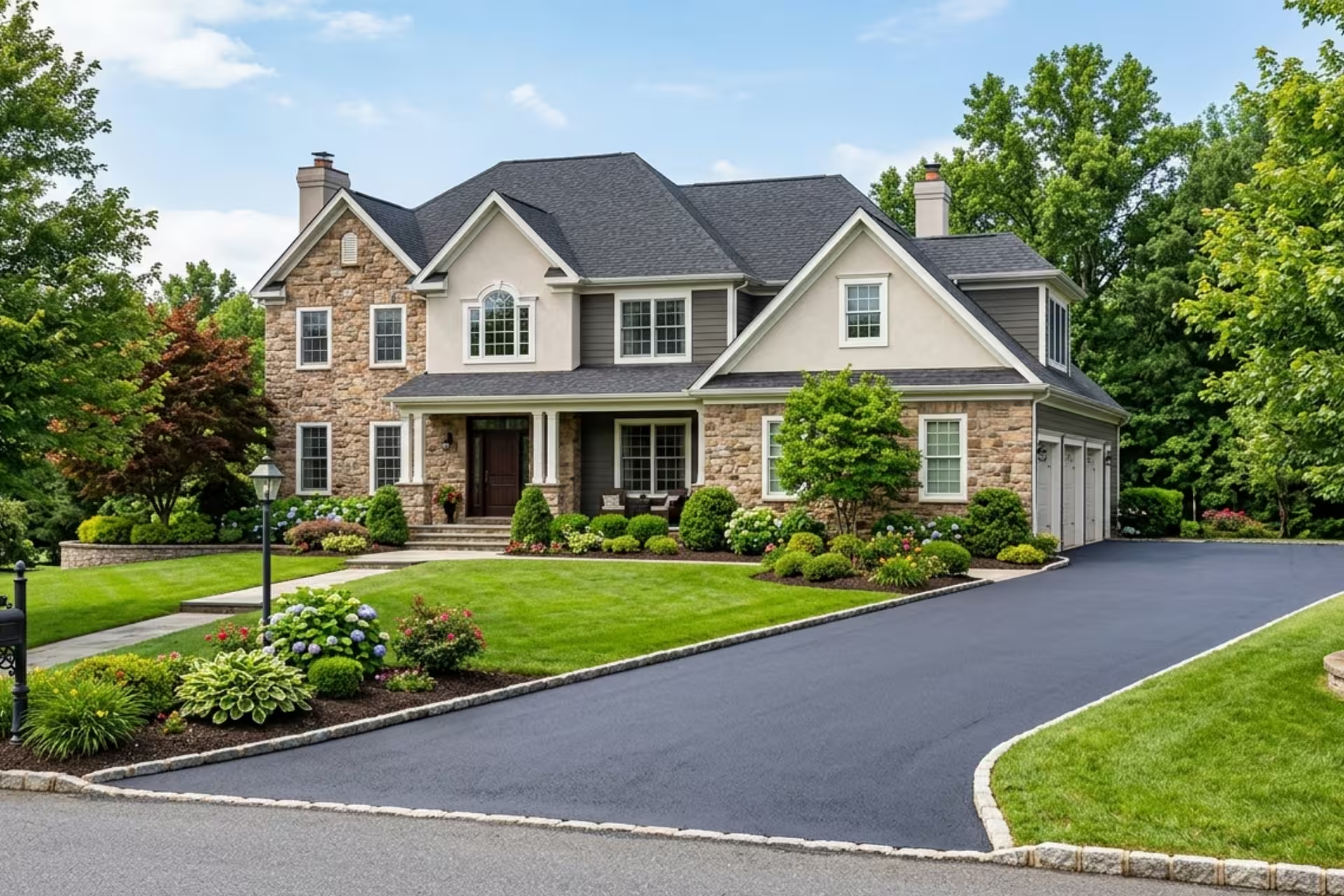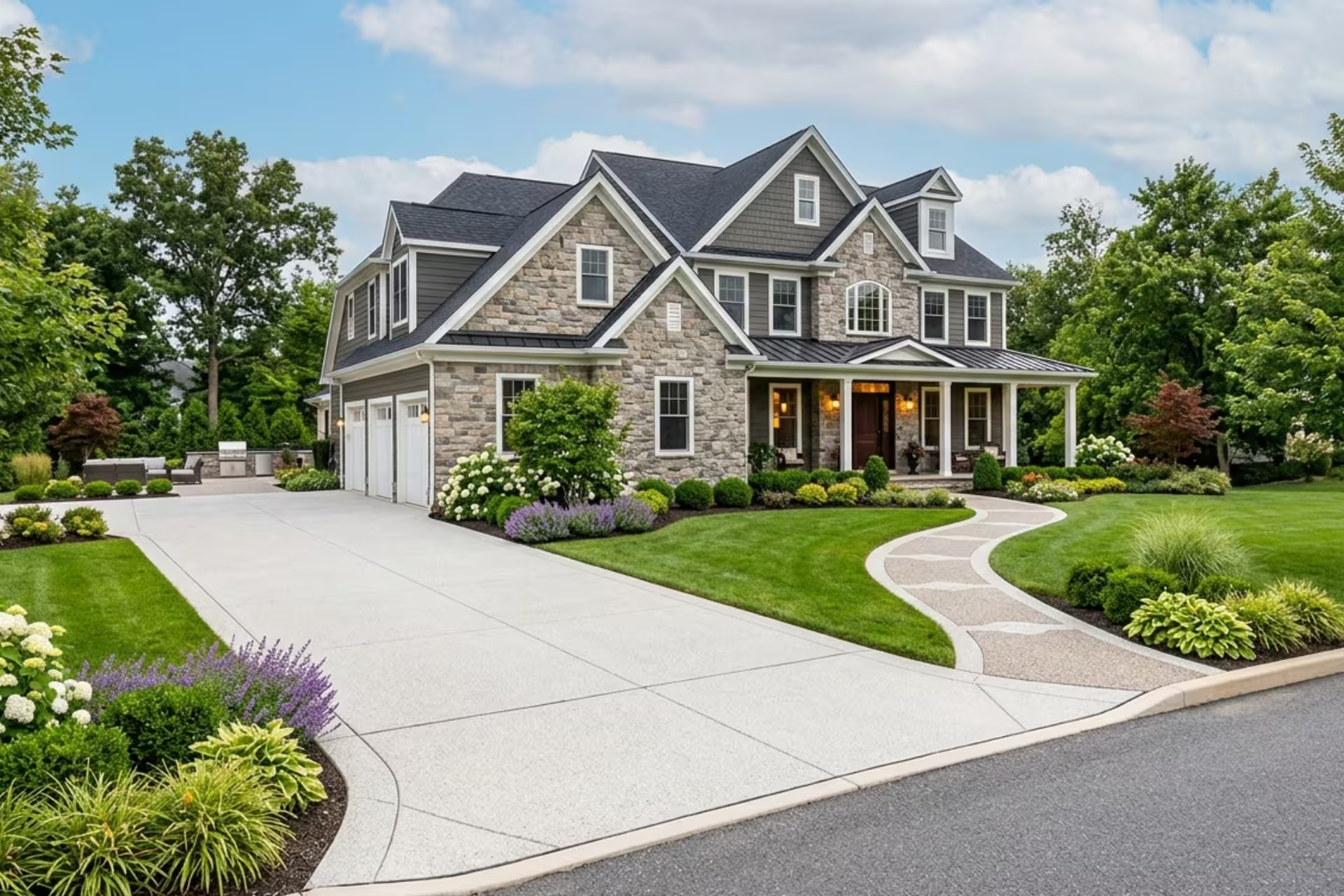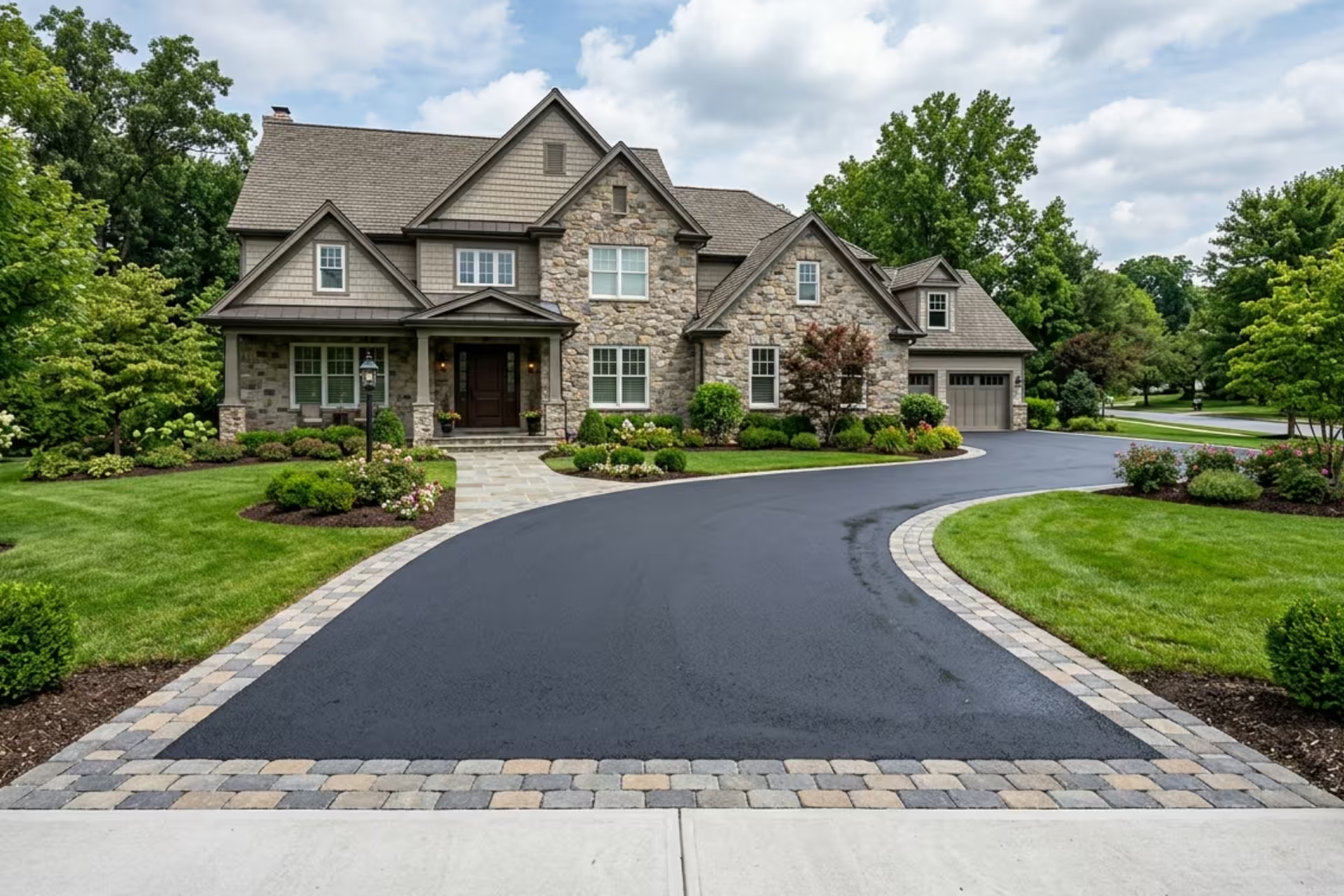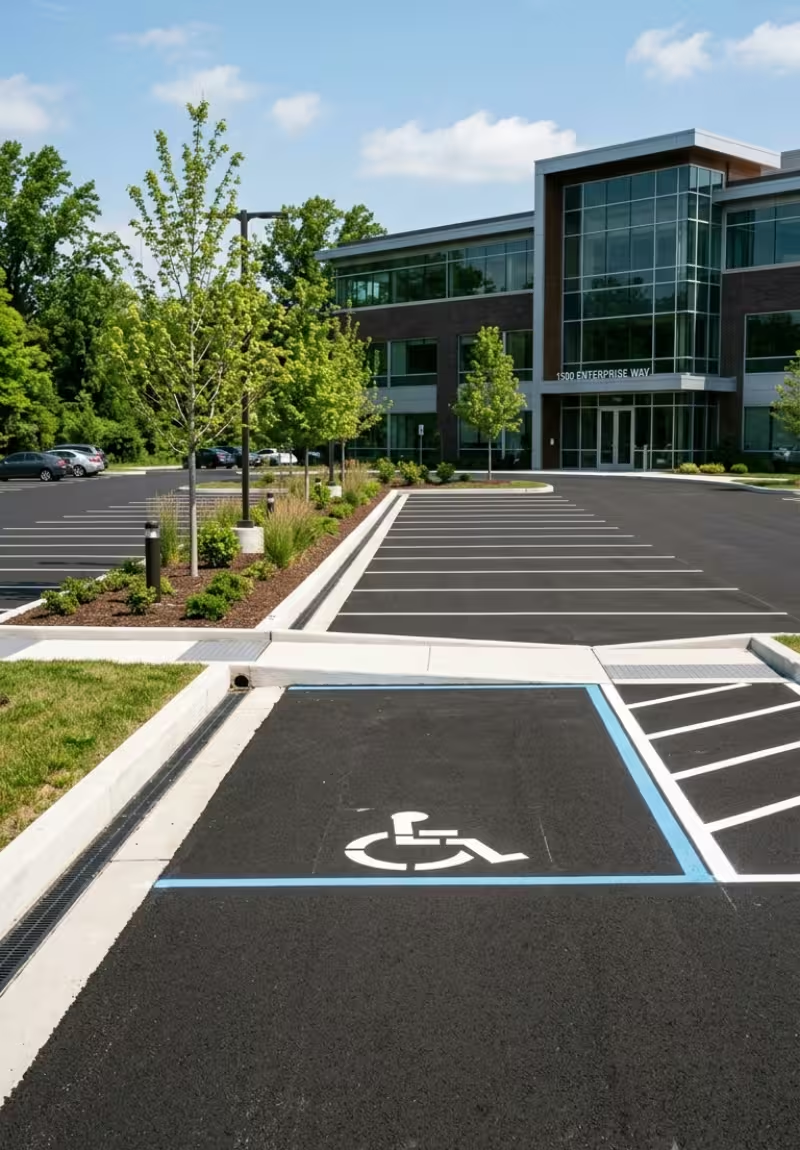
American Paving & Concrete provides professional sealcoating in Woxall, Pennsylvania, for residential driveways, long private lanes, commercial parking areas, churches, offices, and other paved properties.
Sealcoating can help protect structurally sound asphalt against sunlight, surface oxidation, moisture, road salt, and everyday traffic. It can also restore the darker, more uniform appearance of faded pavement.
Properties around Woxall and Upper Salford Township may have long driveways, sloped entrances, wooded surroundings, larger lots, and private access lanes. These conditions make proper surface preparation, drainage assessment, crack treatment, and application timing especially important.
Every project should begin with an inspection. Sealcoating is preventive asphalt maintenance, not a repair for failed pavement or an unstable supporting base.
Residential and Commercial Sealcoating in Woxall
We provide sealcoating solutions for eligible residential and commercial asphalt surfaces.
Residential sealcoating
Residential applications may include:
- Asphalt driveways
- Long rural driveways
- Private lanes
- Shared driveways
- Garage approaches
- Turnaround areas
- Additional parking spaces
- Residential access roads
A residential driveway should be evaluated for cracking, settlement, drainage, edge deterioration, and contamination before a coating is applied.
Commercial sealcoating
Commercial applications may include:
- Small business parking lots
- Church parking areas
- Office properties
- Community facilities
- Private parking areas
- Apartment properties
- Commercial entrances
- Drive aisles
- Service-business properties
Commercial projects may be divided into phases when property conditions allow, helping maintain access to part of the site while other sections are coated and allowed to cure.
What Does Sealcoating Do?
Sealcoating places a protective coating over eligible asphalt pavement.
A properly prepared application may help:
- Reduce direct sunlight exposure
- Slow visible surface oxidation
- Limit moisture exposure
- Protect against road salt
- Reduce the effect of minor fluid exposure
- Restore a darker pavement appearance
- Improve overall curb appeal
- Support a long-term maintenance plan
- Prepare parking areas for fresh line striping
Sealcoating cannot make severely damaged asphalt structurally sound. Its purpose is to protect pavement that remains stable enough to benefit from preventive treatment.
Why Asphalt Fades and Deteriorates
Fresh asphalt has a dark appearance, but its surface gradually changes as it is exposed to weather and traffic.
Common sources of deterioration include:
- Ultraviolet sunlight
- Rain and surface water
- Freeze-and-thaw cycles
- Snow and ice
- Road salt
- Vehicle traffic
- Snowplow activity
- Oil and gasoline
- Poor drainage
- Edge erosion
- Tree roots
- Heavy service vehicles
Oxidation can make asphalt appear gray, dry, or brittle. Open cracks may allow water to enter the pavement and affect the supporting aggregate.
Timely maintenance can help address eligible surface wear before it develops into more extensive damage.
Sealcoating for Long Driveways and Private Lanes
Long driveways are common around larger and more rural properties in Woxall. These surfaces require careful evaluation because wear may vary significantly from one section to another.
Potential problem areas include:
- Roadway entrances
- Steep or sloped sections
- Shaded areas
- Low spots
- Culvert crossings
- Narrow sections
- Turnaround areas
- Garage approaches
- Unsupported pavement edges
- Areas exposed to water runoff
A long driveway may be structurally sound in one area and damaged in another. Failed sections should be repaired before the general surface is sealcoated.
For pavement requiring more extensive work, review our complete driveway paving services.
Sealcoating Commercial Parking Areas
Parking lots experience different stresses from residential driveways.
Commercial wear can result from:
- Repeated vehicle traffic
- Turning and braking
- Delivery vehicles
- Waste-removal trucks
- Snowplows
- Fluid leaks
- Concentrated loads
- Poorly draining sections
- Busy entrances and exits
Before coating a parking area, the contractor should inspect parking spaces, drive aisles, entrances, drainage structures, loading areas, pavement markings, and damaged sections.
Existing markings are normally covered during sealcoating and may need to be reapplied after the surface has cured.
Property owners planning more extensive work can explore professional parking lot paving.
Signs Asphalt May Be Ready for Sealcoating
Possible signs that stable asphalt may benefit from sealcoating include:
- The pavement has changed from black to gray
- The surface appears dry or weathered
- Fine aggregate is becoming more visible
- The previous coating has worn away
- Minor cracks have been treated
- The pavement remains generally level
- The base appears stable
- The surface is not breaking apart
- Drainage remains functional
- Previous repairs have stabilized
These signs do not automatically confirm that coating is appropriate. An inspection is needed to identify damage that may require repair first.
When Sealcoating Is Not the Right Solution
Sealcoating should not be used to cover significant structural deterioration.
Repair, resurfacing, or replacement may be needed when pavement has:
- Potholes
- Alligator cracking
- Severe settlement
- Unstable or soft areas
- Broken edges
- Loose or crumbling asphalt
- Deep depressions
- Standing water
- Drainage failure
- Widespread cracking
- Repeatedly failing patches
- Supporting-base movement
Applying a dark coating may temporarily improve the appearance of failed asphalt, but it will not correct the source of the damage.
Damaged areas should be examined through a professional asphalt repair assessment.
Surface Preparation Before Sealcoating
Preparation influences how evenly the coating bonds and performs.
The process may include:
- Inspecting the complete pavement surface
- Identifying unstable or failed areas
- Removing dirt, leaves, and loose aggregate
- Cutting back grass and vegetation
- Cleaning contaminated sections
- Repairing potholes
- Filling eligible cracks
- Addressing broken pavement edges
- Protecting concrete and adjoining surfaces
- Confirming suitable weather
- Restricting vehicles and pedestrians
Sealcoating should not be installed over standing water, loose debris, untreated potholes, or active pavement failure.
Crack Filling and Sealcoating Are Different
Crack filling and sealcoating perform separate maintenance functions.
Crack treatment addresses eligible openings in the asphalt. Sealcoating covers the broader pavement surface and does not replace proper crack repair.
Cracks should be inspected before coating because they may indicate:
- Normal pavement movement
- Water infiltration
- Weak edge support
- Drainage problems
- Base settlement
- Root activity
- Structural failure
Large, interconnected, or rapidly widening cracks may require more extensive evaluation.
When Should New Asphalt Be Sealcoated?
New asphalt should not be sealed immediately after installation. It requires time to cure and release oils from the freshly installed pavement.
New asphalt is often evaluated after approximately six to twelve months, but the correct waiting period depends on:
- Asphalt mixture
- Installation season
- Weather exposure
- Surface condition
- Traffic
- Sunlight
- Pavement thickness
- Product requirements
The surface should be inspected rather than coated automatically according to a single calendar date.
How Often Should Asphalt Be Sealcoated?
Many eligible asphalt surfaces are evaluated for sealcoating approximately every two to three years.
The appropriate schedule depends on:
- Pavement age
- Traffic frequency
- Vehicle weight
- Sun exposure
- Drainage
- Previous coatings
- Snowplow use
- Road salt
- Surface condition
- Product performance
Annual application is generally unnecessary for normally performing asphalt. Applying new material too frequently can create excessive buildup, uneven texture, peeling, or poor bonding.
Suitable Weather for Sealcoating
Sealcoating needs appropriate weather during application and curing.
Suitable conditions generally require:
- A clean and dry surface
- Acceptable air temperature
- Acceptable pavement temperature
- No immediate rain
- Manageable humidity
- Adequate drying time
- Sufficient airflow
- Controlled vehicle and pedestrian access
The exact temperature and curing requirements depend on the product being installed.
Shaded driveways and wooded properties may dry more slowly than pavement receiving direct sunlight.
How Long Must the Pavement Remain Closed?
Many sealed surfaces require approximately 24 to 48 hours before normal vehicle use resumes. Actual curing time depends on:
- Product type
- Temperature
- Humidity
- Sunlight
- Shade
- Number of coats
- Pavement condition
- Vehicle weight
- Time of application
Always follow the contractor’s reopening instructions. Heavy vehicles may require additional consideration.
Commercial property owners should inform customers, tenants, employees, delivery providers, and waste-removal companies before the project begins.
Sealcoating and Woxall Weather
Asphalt in Montgomery County experiences summer heat, rain, freezing temperatures, snow, ice, and road salt.
Freeze-and-thaw cycles become particularly damaging when water enters untreated cracks. Repeated freezing can contribute to pavement movement and allow small defects to grow.
Sealcoating can help protect the exposed surface, but it works best with:
- Prompt crack treatment
- Functional drainage
- Pothole repair
- Stable pavement edges
- Periodic inspections
- Timely patching
- Responsible snow removal
It should be treated as one component of a complete maintenance plan.
What Affects Sealcoating Cost?
Sealcoating prices depend on the size and condition of the project rather than location alone.
Important factors include:
- Total square footage
- Driveway length
- Pavement condition
- Cleaning requirements
- Crack quantity
- Pothole repairs
- Failed pavement sections
- Oil-stain treatment
- Number of coats
- Property access
- Traffic control
- Project phasing
- Obstacles and detailed edges
- Line-striping requirements
An on-site assessment provides a more reliable estimate than a generic square-foot price.
Our Woxall Sealcoating Process
1. Pavement inspection
We assess the asphalt surface, cracking, drainage, repairs, edges, and access.
2. Project recommendation
We explain whether the pavement is suitable for sealcoating or needs repair, resurfacing, or replacement first.
3. Surface preparation
Dirt, vegetation, and loose material are removed. Eligible cracks and failed areas are addressed according to the agreed scope.
4. Sealcoat application
The selected coating is applied under suitable surface and weather conditions.
5. Curing and access control
The pavement remains closed while the coating dries and cures.
6. Final review
We review the treated area and provide applicable reopening and maintenance guidance.
Why Choose American Paving & Concrete?
American Paving & Concrete provides residential and commercial paving, repair, maintenance, and sealcoating services throughout Woxall, Upper Salford Township, and surrounding Montgomery County communities.
Property owners can expect:
- Residential and commercial capabilities
- Property-specific pavement evaluations
- Repair and maintenance options
- Attention to drainage and pavement condition
- Professional surface preparation
- Clear project recommendations
- Free estimates for qualifying projects
- Licensed and insured paving services
View our broader Woxall asphalt and concrete services when your project involves new installation, resurfacing, replacement, or concrete work.
Request a Sealcoating Estimate in Woxall, PA
If your driveway, private lane, or parking area looks faded or weathered, American Paving & Concrete can determine whether it is ready for sealcoating.
We will inspect the pavement and explain any cleaning, crack treatment, patching, or repair needed before application.
Call: (610) 203-4241
Email: info@americanpavingandconcrete.com
Address: 2114 Dublin Pike, Quakertown, PA 18951
Online: Request a free estimate
 Use loading="eager" and fetchpriority="high" only when this is the main above-the-fold image. Open Graph and social tags ImageObject schema Use this entity in the complete Tinicum schema graph: { "@type": "ImageObject", "@id": "https://americanpavingandconcrete.com/seal-coating-tinicum/#primaryimage", "url": "FEATURED-IMAGE-URL.webp", "contentUrl": "FEATURED-IMAGE-URL.webp", "width": 1536, "height": 1024, "caption": "Professional asphalt driveway sealcoating in Tinicum Township, Bucks County, Pennsylvania.", "representativeOfPage": true, "inLanguage": "en-US" } Convert the generated PNG to WebP before uploading and aim for approximately 150–250 KB while retaining good visual quality. Edit The feature image has been created with no writing, logos, signs, building names, address numbers, license plates, equipment labels, or watermarks. The multifamily parking-area setting makes it visually distinct from the other sealcoating location images. WordPress image SEO tags Recommended filename: multifamily-parking-lot-sealcoating-trooper-pa.webp Image title: Multifamily Parking Lot Sealcoating in Trooper PA Alt text: Contractor sealcoating a multifamily residential parking area in Trooper PA Caption: Professional asphalt sealcoating for a multifamily parking area in Trooper, Pennsylvania. Media description: A paving professional applying protective sealcoating to an asphalt parking and drive-aisle area at a multifamily residential property in Trooper, PA. HTML image tag Replace FEATURED-IMAGE-URL.webp with the uploaded WordPress Media Library URL.