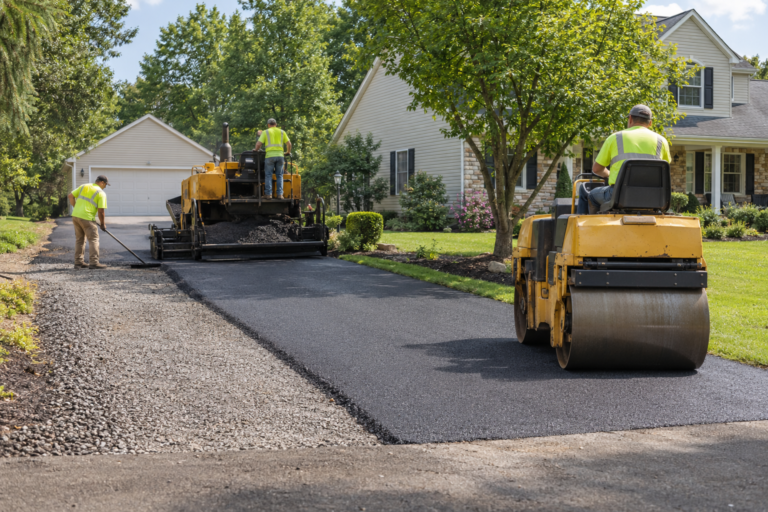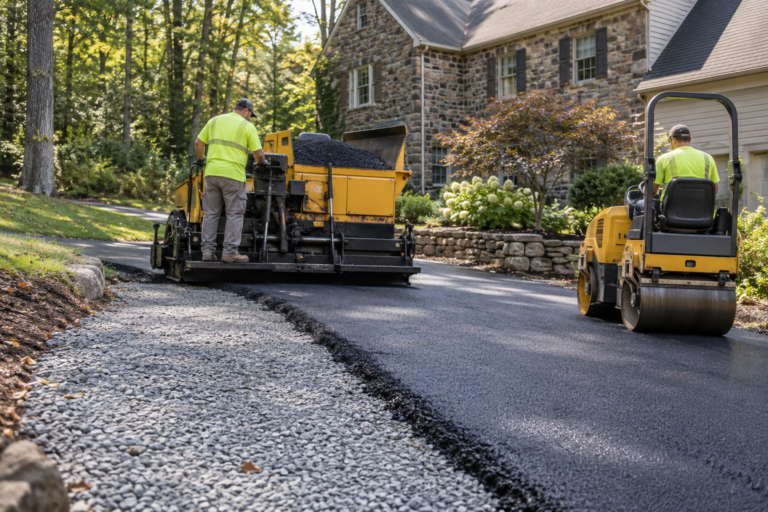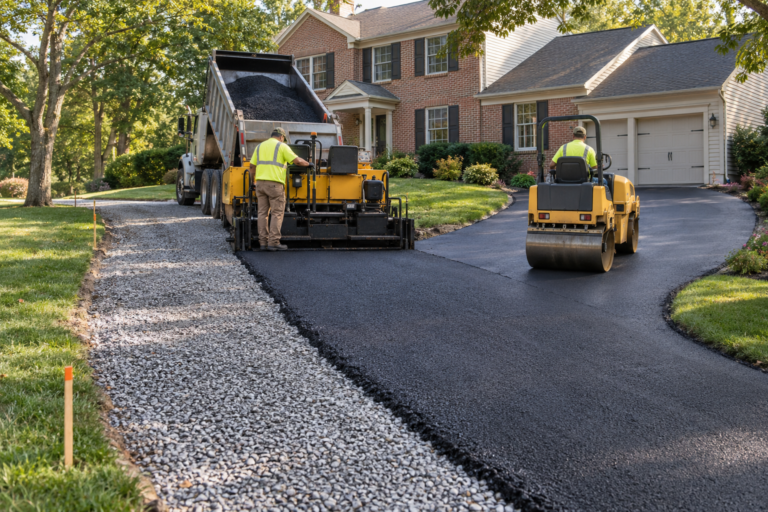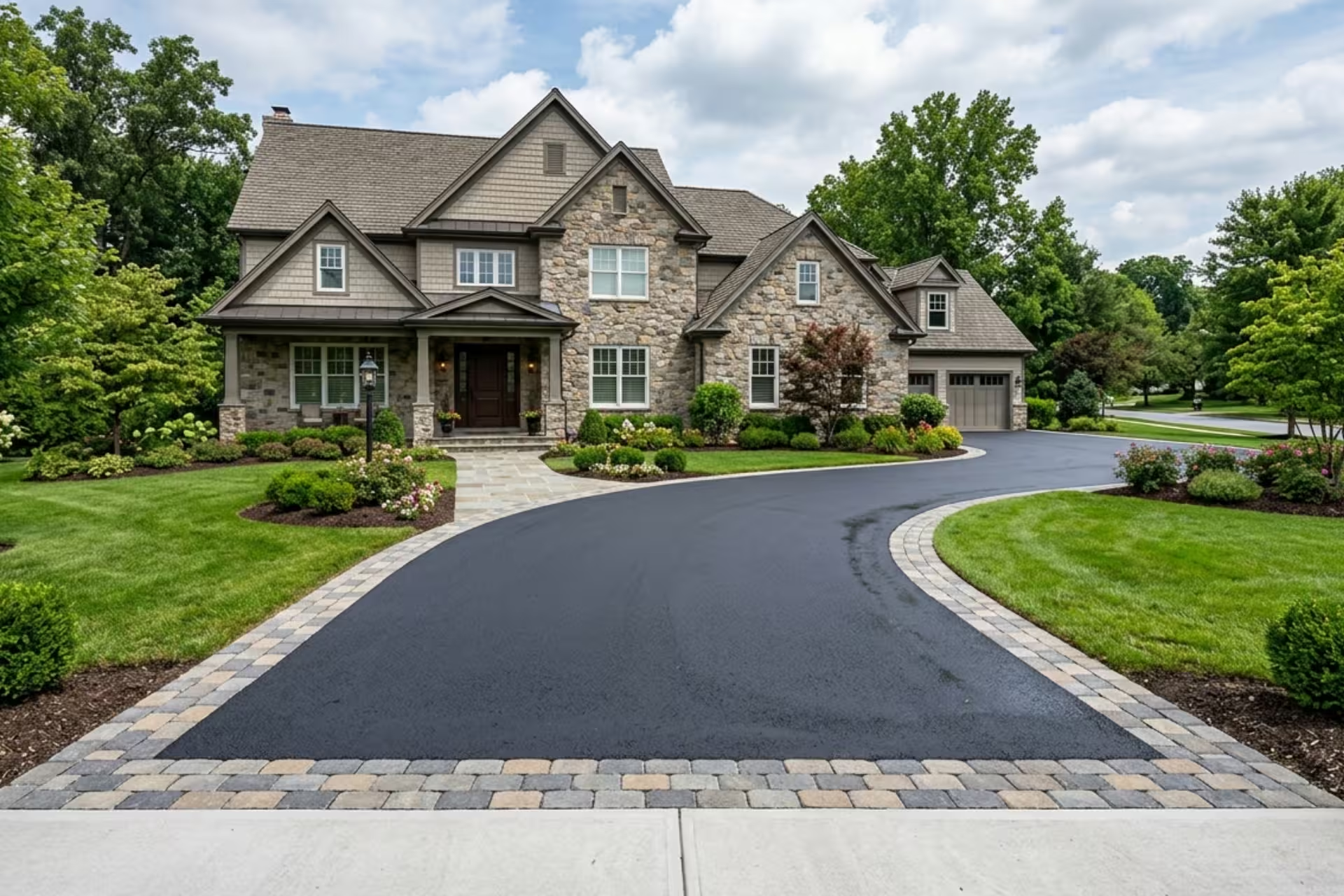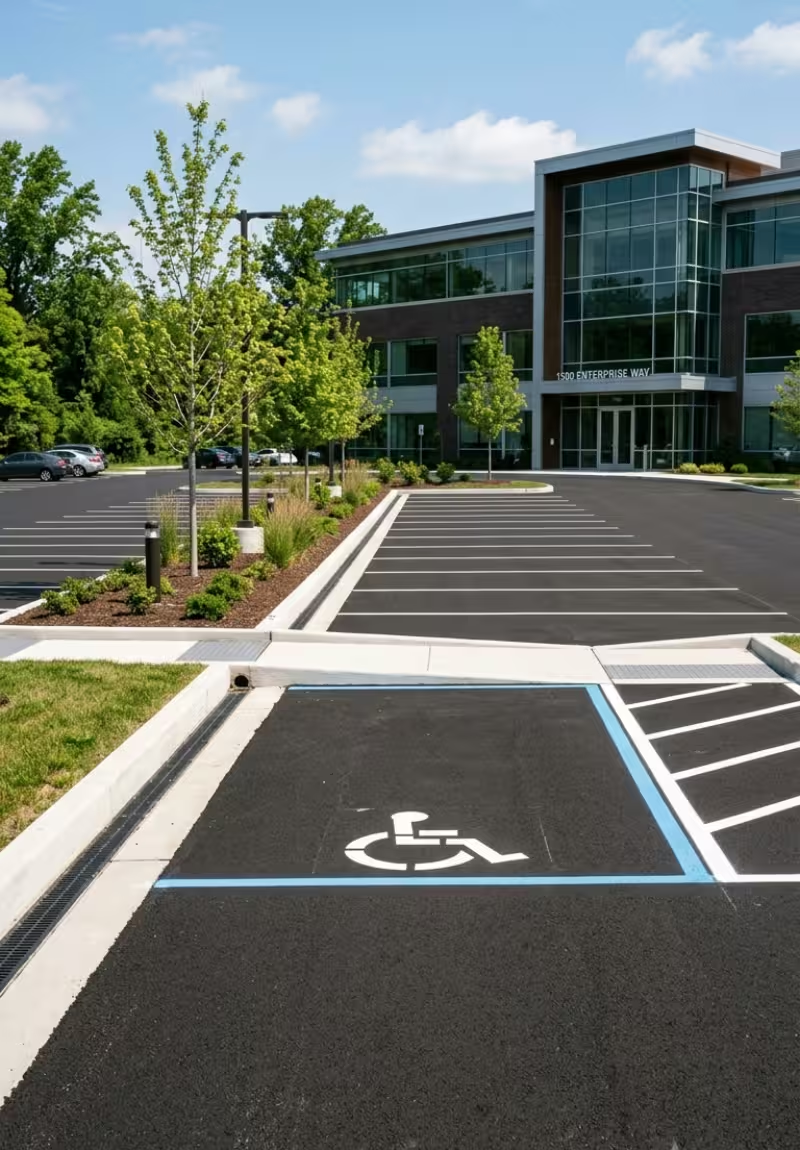
Asphalt paving is the process of preparing a stable foundation and installing a compacted mixture of aggregate and asphalt binder to create a smooth, durable surface.
Asphalt pavement is commonly used for:
- Residential driveways
- Commercial parking lots
- Private roads
- Access lanes
- Apartment parking areas
- Loading and delivery routes
- Driveway extensions
- Turnaround areas
- Roadway transitions
- Industrial pavement
The finished blacktop surface is only the visible part of the pavement system. Long-term performance also depends on the soil, aggregate base, grading, drainage, asphalt thickness, placement temperature, compaction, edges and expected traffic.
American Paving & Concrete provides professional asphalt paving for residential and commercial properties throughout Bucks, Montgomery and Lehigh counties.
What Is Asphalt Made From?
Asphalt pavement is made from two primary components:
Aggregate
Aggregate forms most of the mixture and may include:
- Crushed stone
- Gravel
- Sand
- Mineral filler
The aggregate provides structure, strength and surface texture.
Asphalt binder
Asphalt binder is a petroleum-based material that coats and binds the aggregate particles together. It helps create a flexible, cohesive pavement mixture.
The precise mixture depends on the pavement’s intended use, expected traffic, environmental conditions and project specifications.
A residential driveway may have different requirements from a parking lot used by delivery trucks or waste-removal vehicles.
Asphalt, Blacktop and Asphalt Concrete
The terms asphalt, blacktop and asphalt concrete are often used interchangeably in everyday conversation.
In paving, “asphalt concrete” generally describes the engineered mixture of aggregate and asphalt binder used to create pavement. “Blacktop” is a common informal name for an asphalt surface.
Property owners do not usually need to select a mixture without professional guidance. The contractor should recommend a suitable material and pavement design based on:
- Vehicle type
- Traffic frequency
- Required pavement thickness
- Supporting-base condition
- Drainage
- Climate
- Intended use
How Does the Asphalt Paving Process Work?
A professional asphalt project normally includes several connected stages.
1. Site inspection
The contractor evaluates:
- Existing surface condition
- Soil stability
- Drainage
- Property slope
- Access
- Pavement dimensions
- Vehicle use
- Utility structures
- Road and building transitions
The inspection helps determine whether the project requires new installation, repair, resurfacing or complete replacement.
2. Removal and excavation
Existing asphalt, concrete, vegetation or unsuitable soil may need to be removed.
Excavation creates space for the aggregate base and asphalt layers. The required depth depends on the property and pavement design.
Installing asphalt directly over unstable material can lead to settlement, cracking and potholes.
3. Subgrade preparation
The subgrade is the soil beneath the pavement system.
Soft, wet or unstable areas should be identified before the base is installed. Depending on site conditions, preparation may involve:
- Removing unsuitable soil
- Improving drainage
- Compacting the subgrade
- Installing stabilization material
- Adjusting the elevation
- Correcting weak areas
A properly prepared subgrade provides consistent support for the pavement above.
4. Aggregate-base installation
A compacted crushed-stone base is installed over the prepared subgrade.
The base helps:
- Support the asphalt
- Distribute vehicle loads
- Establish pavement elevation
- Promote stability
- Assist with drainage
- Reduce settlement
Aggregate should be placed at the appropriate depth and compacted thoroughly.
5. Grading and drainage
The pavement area is graded to direct water toward appropriate drainage locations.
Poor grading can cause:
- Standing water
- Ice formation
- Base erosion
- Settlement
- Potholes
- Garage water problems
- Damage around catch basins
- Eroded pavement edges
Drainage should be addressed before asphalt is installed, not treated as an afterthought.
6. Asphalt placement
Hot-mix asphalt is delivered and placed while it remains workable.
Depending on the project, asphalt may be installed with:
- A paving machine
- Specialized compact equipment
- Hand placement around detailed areas
The material must be distributed evenly and finished at the specified thickness.
7. Compaction
Rollers compact the asphalt while it remains within a workable temperature range.
Proper compaction helps:
- Reduce internal air voids
- Increase pavement density
- Improve surface smoothness
- Strengthen the finished layer
- Limit premature water infiltration
- Create consistent support
Insufficient compaction can contribute to early deterioration even when the surface initially looks acceptable.
8. Edge and transition finishing
The contractor finishes areas where asphalt meets:
- Public roads
- Garages
- Concrete aprons
- Sidewalks
- Drainage structures
- Existing pavement
- Unpaved shoulders
- Landscaped areas
Transitions should be practical for vehicles and should not obstruct water movement.
9. Cooling and reopening
New asphalt needs time to cool and set before regular traffic returns.
The waiting period depends on:
- Weather
- Pavement thickness
- Asphalt mixture
- Shade
- Vehicle weight
- Project type
- Contractor instructions
Heavy vehicles may need to remain off the pavement longer than passenger cars.
Why Is Base Preparation Important?
The supporting base is one of the most important parts of an asphalt pavement system.
An inadequate base may cause:
- Settlement
- Uneven pavement
- Depressions
- Alligator cracking
- Potholes
- Broken edges
- Failed patches
- Water collection
Adding a smooth asphalt layer does not correct unstable material underneath it.
Proper asphalt installation should account for soil, aggregate depth, moisture, compaction and drainage.
How Thick Should Asphalt Be?
There is no single asphalt thickness appropriate for every project.
The pavement design depends on:
- Passenger vehicles or heavy trucks
- Traffic volume
- Subgrade condition
- Aggregate-base depth
- Asphalt mixture
- Drainage
- Intended service
- Local project requirements
A lightly used residential driveway does not experience the same loads as a commercial delivery route.
The contractor should recommend the complete pavement structure rather than focusing only on the thickness of the visible asphalt.
Where Is Asphalt Paving Used?
Residential asphalt paving
Residential applications include:
- New driveways
- Driveway replacement
- Gravel-to-asphalt conversion
- Private lanes
- Shared driveways
- Additional parking
- Driveway extensions
- Garage approaches
- Turnaround areas
Professional residential asphalt paving should consider the property’s access, appearance, drainage and vehicle requirements.
Commercial asphalt paving
Commercial applications include:
- Retail parking lots
- Office properties
- Apartment communities
- Warehouses
- Industrial properties
- Churches
- Schools
- Medical facilities
- Restaurants
- Loading areas
- Private commercial roads
Commercial pavement may require a stronger structure because of heavy trucks, deliveries, snowplows and repeated turning movements.
Learn more about commercial paving.
New Asphalt Installation Versus Resurfacing
New construction and resurfacing are different paving methods.
New installation
New asphalt installation builds the pavement system from the ground up. It may involve excavation, subgrade preparation, aggregate placement, grading and asphalt installation.
Asphalt resurfacing
Resurfacing places a new asphalt layer over prepared existing pavement.
Resurfacing may be suitable when:
- The existing base remains stable
- The pavement is generally level
- Damage is primarily near the surface
- Potholes are limited and repairable
- Drainage remains functional
- Failed sections can be corrected first
Resurfacing is not appropriate for widespread base failure, severe settlement or major drainage problems.
Asphalt Repair Versus Replacement
Not every deteriorated asphalt surface needs complete replacement.
Repair may be suitable when:
- Damage is localized
- Potholes affect limited areas
- Cracking is manageable
- The surrounding pavement remains stable
- Settlement is minor
- Base damage is confined
Professional asphalt repair may include crack filling, surface patching, full-depth patching, edge repair and drainage-related corrections.
Replacement may be necessary when:
- Alligator cracking is widespread
- Potholes repeatedly return
- Large areas have settled
- The pavement is breaking apart
- The supporting base is unstable
- Drainage problems affect extensive areas
- Previous repairs repeatedly fail
An inspection should determine how deeply the deterioration extends.
Benefits of Asphalt Paving
Asphalt may offer several practical advantages:
- Smooth vehicle access
- Comparatively fast installation
- Earlier reopening than many concrete projects
- Suitability for long or large areas
- Practical localized repairs
- Future resurfacing potential
- A continuous blacktop appearance
- Reliable performance in cold climates
- Compatibility with preventive maintenance
- Recycling potential for reclaimed asphalt material
These benefits depend on appropriate design, materials and installation.
Limitations of Asphalt Paving
Asphalt is not maintenance-free.
Potential considerations include:
- Gradual surface fading
- Crack development
- Periodic repair needs
- Possible sealcoating
- Vulnerable unsupported edges
- Damage from leaking vehicle fluids
- Temporary softening during hot weather
- Impressions from heavy stationary loads
- Fewer decorative options than concrete
A balanced comparison should consider initial price, maintenance, appearance, drainage, traffic and long-term plans.
Asphalt Versus Concrete Paving
Neither material is automatically best for every property.
Asphalt may offer:
- Lower initial cost
- Faster installation
- A smooth blacktop finish
- Practical repairs
- Future resurfacing
- Efficient coverage of larger areas
Concrete may offer:
- A rigid surface
- A lighter color
- Decorative finishing options
- Defined control joints
- Suitability for concentrated loads
- Compatibility with walkways and aprons
Some properties use both. Asphalt may cover the main driveway or parking lot, while concrete is used for garage aprons, sidewalks, dumpster pads or loading areas.
Can Asphalt Be Installed Over Existing Pavement?
In some circumstances, new asphalt can be installed over existing asphalt or concrete. However, the existing surface must first be evaluated.
An overlay may not be appropriate when the pavement has:
- Severe settlement
- Widespread cracking
- Base failure
- Drainage problems
- Major elevation restrictions
- Unstable concrete slabs
- Failed utility cuts
- Extensive surface breakup
Covering unresolved defects can allow them to reflect through the new layer.
How Weather Affects Asphalt Paving
Weather affects the delivery, placement, compaction and cooling of asphalt.
Important conditions include:
- Air temperature
- Ground temperature
- Wind
- Rain
- Surface moisture
- Hauling distance
- Asphalt temperature
- Pavement thickness
Cold or wet conditions may reduce the time available for proper compaction. Asphalt should not be placed over frozen, saturated or unsuitable ground.
The contractor should determine whether conditions support an effective installation.
How Is Asphalt Maintained?
A pavement-maintenance plan may include:
- Routine inspections
- Surface cleaning
- Crack treatment
- Pothole repair
- Drainage checks
- Edge protection
- Oil-stain cleanup
- Sealcoating when appropriate
- Resurfacing planning
Sealcoating can help protect eligible asphalt from sunlight, oxidation, moisture and road salt. It does not repair structural damage.
Explore professional asphalt maintenance and sealcoating.
What Affects Asphalt Paving Cost?
Asphalt paving cost depends on:
- Total square footage
- Existing pavement removal
- Excavation
- Soil condition
- Aggregate-base requirements
- Asphalt thickness
- Drainage work
- Site access
- Traffic requirements
- Project phasing
- Utility structures
- Edges and transitions
- Material quantities
- Repair requirements
An on-site inspection provides a more accurate estimate than a generic square-foot price.
Choosing an Asphalt Paving Contractor
Before hiring a contractor, ask:
- Will the entire site be inspected?
- How will the base be prepared?
- How will drainage be handled?
- What pavement structure is recommended?
- Does the property need repair, resurfacing or replacement?
- How will edges and transitions be finished?
- What traffic restrictions will apply?
- What maintenance will be required?
- Is the contractor licensed and insured?
- Will the scope of work be provided clearly?
American Paving & Concrete operates under Pennsylvania contractor license PA154106.
Request an Asphalt Paving Estimate
American Paving & Concrete provides new asphalt installation, driveway paving, parking lot paving, repair, resurfacing and maintenance throughout Bucks, Montgomery and Lehigh counties.
We can inspect your property and recommend an appropriate pavement solution based on the site, drainage, traffic and existing conditions.
Call: (610) 477-3553
Email: info@americanpavingandconcrete.com
Address: 2114 Dublin Pike, Quakertown, PA 18951
Online: Request a free estimate