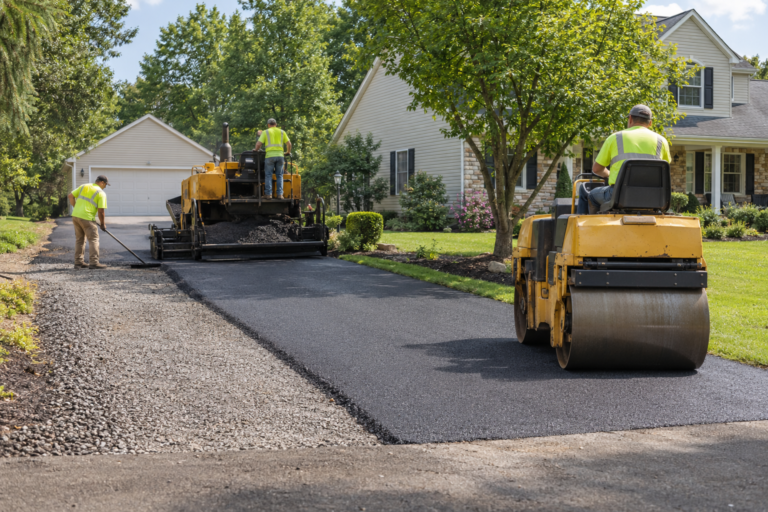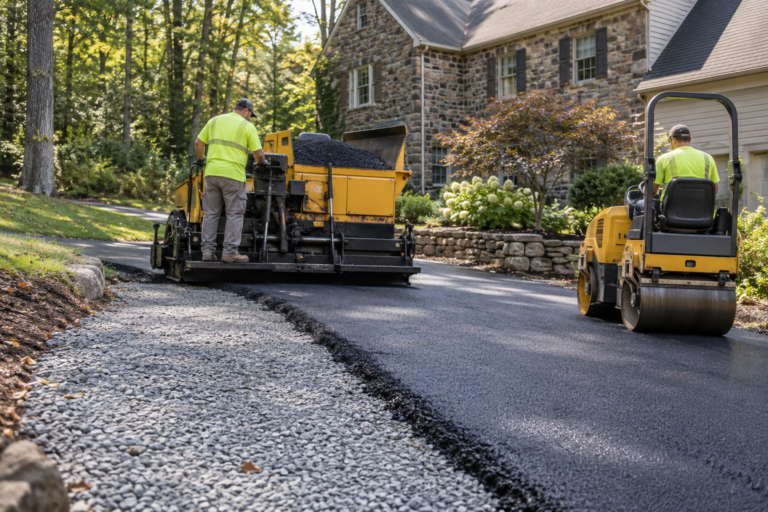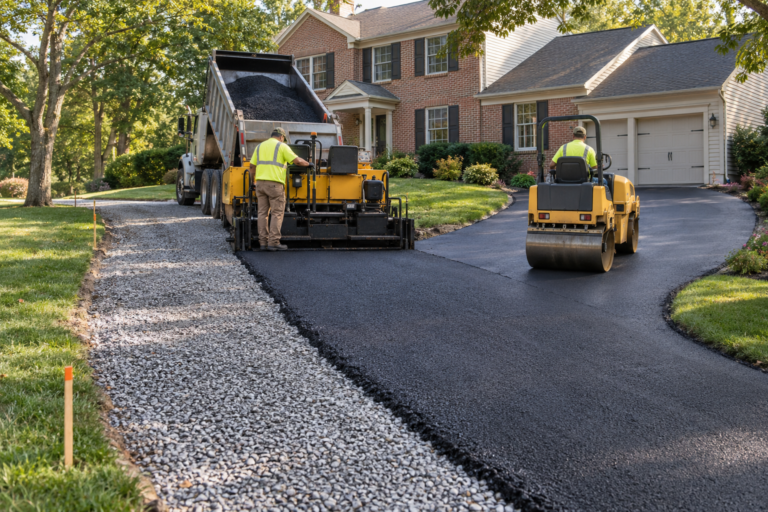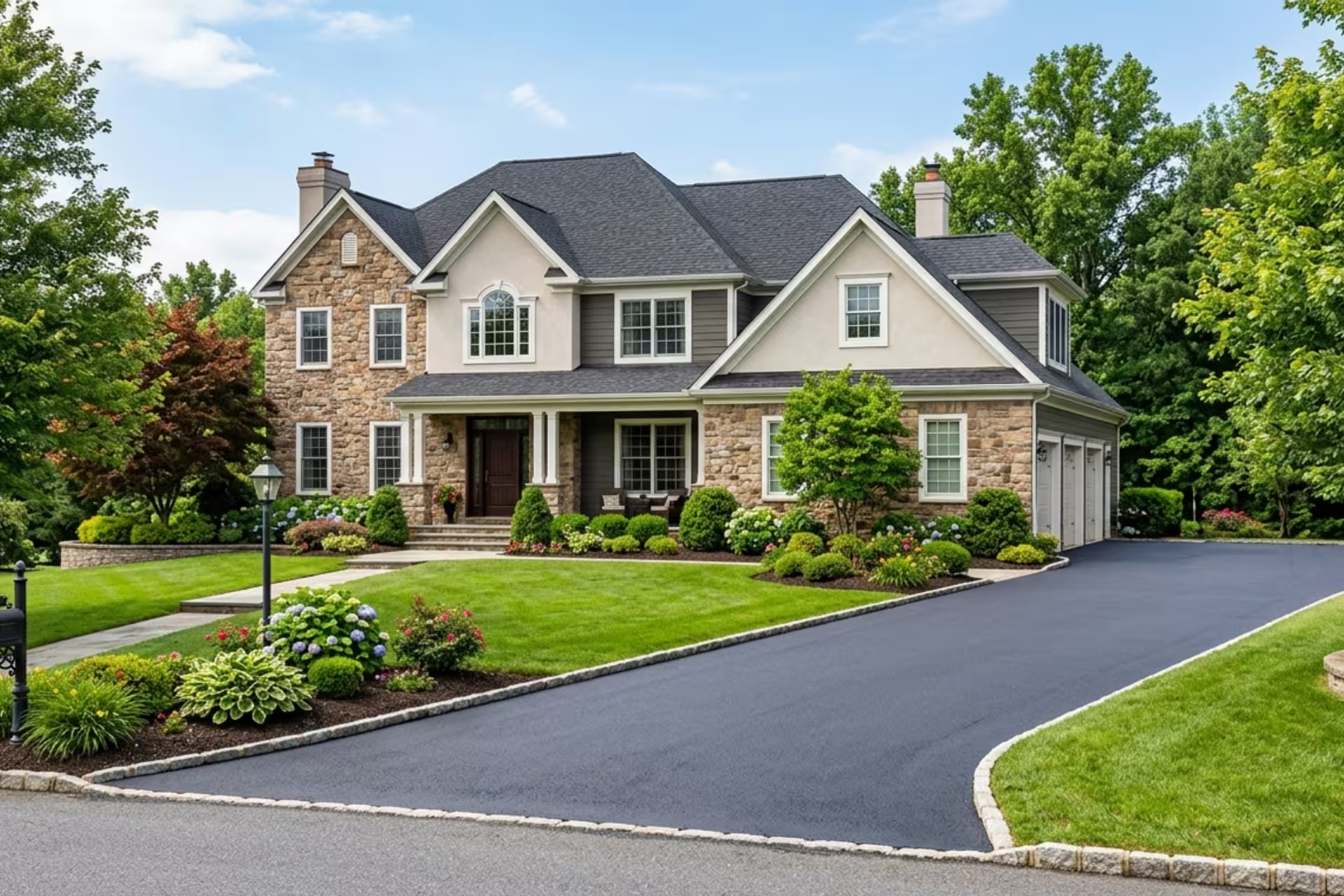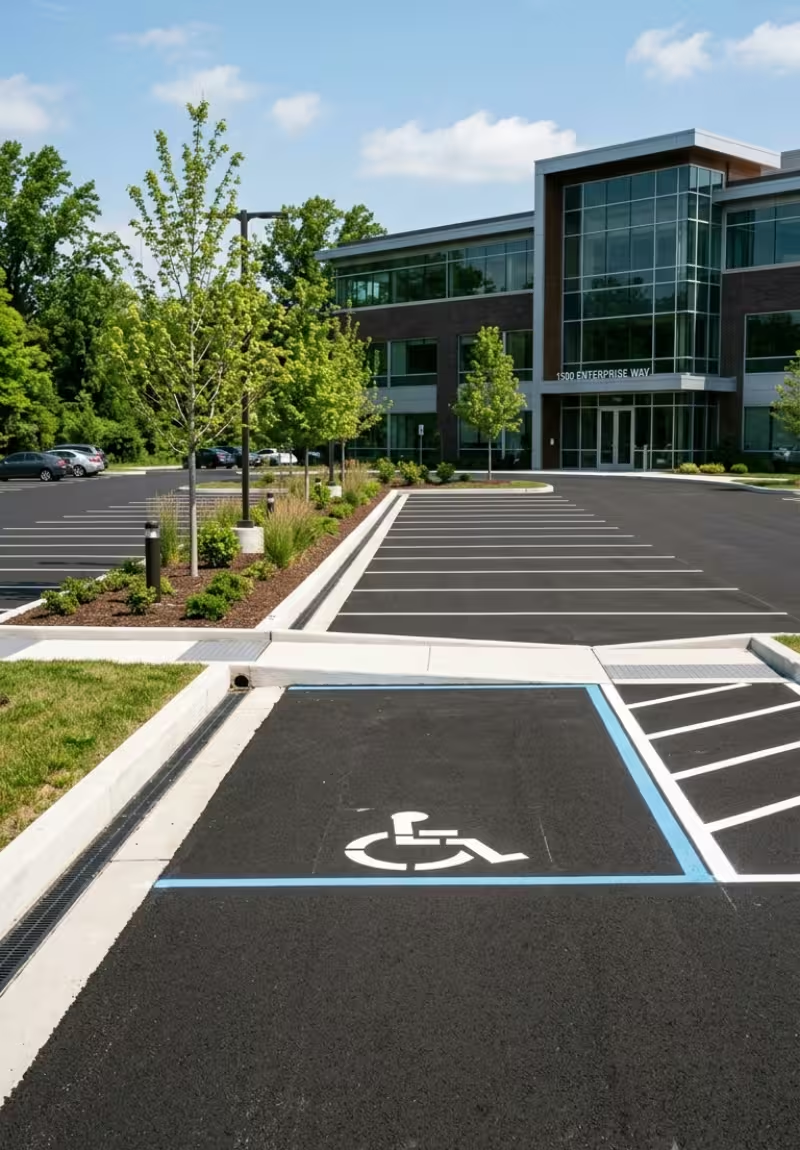
A properly installed asphalt surface can provide smooth vehicle access, improve a property’s appearance and withstand years of regular use. However, the performance of the finished pavement depends on much more than the visible asphalt layer.
Professional asphalt installation requires careful excavation, a stable aggregate base, effective drainage, appropriate asphalt thickness and thorough compaction. If any of these elements are overlooked, the new surface may develop settlement, cracks, potholes or drainage problems much sooner than expected.
American Paving & Concrete provides professional asphalt installation in Alburtis, Pennsylvania, for residential and commercial properties. Our team evaluates the property, prepares the supporting base and installs the pavement according to the surface’s intended use.
Whether you are replacing an old driveway, converting a gravel surface or planning a commercial parking area, the process begins with a detailed site assessment.
Professional Asphalt Paving in Alburtis, PA
Asphalt is a versatile paving material that can be used for numerous residential, commercial and light-industrial applications.
Our asphalt paving services in Alburtis may include:
- New asphalt driveway installation
- Existing driveway replacement
- Gravel-to-asphalt conversion
- Driveway extensions and widening
- Commercial parking lot installation
- Private lane and access-road paving
- Asphalt resurfacing
- Failed pavement replacement
- Garage and roadway transitions
- Asphalt repairs and patching
- Drainage and grading improvements
- Pavement preparation for sealcoating
Every property has different soil, access, drainage and traffic conditions. The pavement structure should therefore be designed around the actual site rather than using the same installation approach for every project.
Residential Asphalt Driveway Installation
A professionally paved driveway can provide a defined, low-maintenance surface for everyday vehicle access. It may also improve curb appeal and reduce the loose stone, dust, ruts and muddy areas commonly associated with an unstable gravel driveway.
Our driveway paving services can be used for:
- New home driveways
- Replacement asphalt driveways
- Gravel driveway conversions
- Shared residential lanes
- Driveway extensions
- Additional parking areas
- Garage approaches
- Roadway transitions
- Residential turnaround areas
Before installing a driveway, we evaluate its dimensions, slope, water flow, existing material and expected vehicle use. A driveway regularly used by work trucks, trailers or recreational vehicles may require different preparation from one used primarily by passenger vehicles.
Replacing an Existing Asphalt Driveway
An older driveway may require complete replacement when it has widespread structural deterioration, such as:
- Extensive alligator cracking
- Multiple recurring potholes
- Severe settlement
- Large soft or unstable areas
- Broken or crumbling pavement
- Poor drainage
- Significant base failure
- Repairs that repeatedly fail
Replacement allows the damaged pavement to be removed so the underlying base and drainage can be corrected before the new asphalt is placed.
If the deterioration is limited to a few isolated sections, targeted asphalt repair may be a more practical option.
Gravel-to-Asphalt Driveway Conversion
Converting a gravel driveway to asphalt involves more than installing pavement directly over the existing stone.
The gravel surface must first be evaluated for:
- Aggregate depth
- Material stability
- Soft spots
- Drainage
- Existing slope
- Compaction
- Edge support
- Garage and roadway elevations
If the existing gravel is loose, shallow or contaminated with soil, additional aggregate may be required. The surface must then be graded and compacted to create a stable foundation for the asphalt.
Installing asphalt over an unstable gravel base can result in depressions, cracking and premature pavement failure.
Commercial Asphalt Installation in Alburtis
Commercial paved surfaces frequently experience heavier and more repetitive traffic than residential driveways. Delivery trucks, service vehicles, waste-removal equipment and snowplows can place significant stress on the pavement.
Commercial asphalt installation may be suitable for:
- Retail properties
- Office buildings
- Apartment communities
- Warehouses
- Industrial facilities
- Churches
- Schools
- Medical offices
- Restaurants
- Commercial entrances
- Private parking facilities
- Loading and delivery areas
The pavement design should account for traffic frequency, vehicle weight, turning movements, drainage and access requirements.
For larger properties, work may be completed in planned phases when site conditions permit. This can help maintain access for customers, employees, tenants and delivery vehicles.
Property owners can learn more about our regional services through our Lehigh County paving contractor page.
The Asphalt Installation Process
A durable asphalt surface is created in several carefully coordinated stages.
1. Property and Pavement Assessment
The installation process begins with an inspection of the proposed paving area.
We evaluate:
- Existing pavement or gravel
- Soil and base stability
- Surface elevations
- Water-flow patterns
- Property access
- Pavement edges
- Road and garage transitions
- Expected vehicle traffic
- Nearby structures and landscaping
This assessment helps determine the excavation, base preparation, grading and pavement structure required for the project.
2. Removal and Excavation
Existing asphalt, unstable gravel, vegetation or unsuitable material may need to be removed.
The excavation depth depends on factors such as:
- Existing ground conditions
- Required aggregate-base depth
- Asphalt thickness
- Vehicle weight
- Drainage requirements
- Finished pavement elevation
Soft or unstable material should be addressed before the aggregate base is installed.
3. Aggregate-Base Installation
The aggregate base forms the structural foundation beneath the asphalt. It helps distribute vehicle loads and supports the finished pavement.
Base preparation may include:
- Installing crushed aggregate
- Spreading the material evenly
- Compacting it in controlled layers
- Correcting weak areas
- Establishing the required slope
- Supporting the pavement edges
- Preparing transitions and runoff paths
A weak or poorly compacted base can allow the pavement to move, settle and crack even when the asphalt surface initially appears smooth.
4. Grading and Drainage Preparation
Water should be directed away from the pavement, buildings and other vulnerable areas whenever the property layout permits.
Grading is used to establish the necessary slope and minimize low areas where water could collect.
Poor drainage can contribute to:
- Standing water
- Base erosion
- Settlement
- Cracking
- Potholes
- Ice formation
- Repeated pavement failure
Drainage should be considered before the asphalt is installed—not after damage has appeared.
5. Asphalt Placement
Hot-mix asphalt is placed over the prepared aggregate base. The required thickness and number of layers depend on the project’s intended use and site conditions.
Important considerations include:
- Residential or commercial use
- Vehicle weight
- Traffic frequency
- Soil stability
- Aggregate-base depth
- Drainage
- Pavement dimensions
- Turning and braking areas
There is no single asphalt thickness that is suitable for every driveway or parking lot.
6. Compaction and Finishing
The asphalt is compacted using professional paving equipment. Proper compaction creates a dense, even surface and helps reduce excessive air voids within the pavement.
Special attention is given to:
- Pavement edges
- Garage entrances
- Road connections
- Drainage areas
- Concrete transitions
- Utility structures
- Adjacent pavement
The finished surface is then reviewed before the project is completed.
Why Drainage Matters for Alburtis Asphalt Pavement
Pennsylvania pavement is exposed to rain, snow, ice, road salt and repeated freeze-thaw cycles. Water that enters pavement cracks or collects along unsupported edges can weaken the underlying base.
When trapped water freezes, it expands and can make existing cracks and weak areas worse. Continued traffic then breaks apart the unsupported surface, leading to potholes and settlement.
Drainage planning may involve:
- Establishing a consistent surface slope
- Correcting low spots
- Directing runoff away from buildings
- Improving drainage around pavement edges
- Adjusting driveway or parking-lot elevations
- Rebuilding damaged sections near drains
- Creating appropriate transitions between surfaces
Proper drainage cannot eliminate every weather-related issue, but it is an essential part of a long-lasting pavement structure.
Asphalt Repair, Resurfacing or Replacement?
Not every damaged asphalt surface needs to be completely replaced.
Asphalt Repair
Repair may be appropriate when the damage is localized, including:
- Individual potholes
- Isolated cracks
- Broken pavement edges
- Small depressions
- Limited failed sections
- Damage around drains or transitions
Professional asphalt repair services can address the affected area while preserving pavement that remains structurally stable.
Asphalt Resurfacing
Resurfacing involves installing a new asphalt layer over prepared existing pavement. It may be an option when:
- The supporting base remains stable
- Surface wear is widespread
- Cracking is moderate
- Potholes are limited
- The pavement remains reasonably level
- Drainage is still functioning
Damaged sections should be repaired before the overlay is installed.
Complete Replacement
Replacement may be necessary when:
- Structural deterioration is widespread
- The pavement has extensive alligator cracking
- Settlement is severe
- Potholes repeatedly return
- Large sections have become soft
- Drainage problems are extensive
- The supporting base has failed
An on-site inspection is the most reliable way to determine which option is appropriate.
Maintaining New Asphalt After Installation
New asphalt should be allowed to cool and set before vehicles are permitted onto it. The contractor’s project-specific instructions should always be followed.
Ongoing asphalt maintenance may include:
- Regular pavement inspections
- Timely crack filling
- Pothole repair
- Drainage checks
- Edge maintenance
- Surface patching
- Periodic sealcoating
- Future resurfacing planning
New asphalt should not be sealcoated immediately. The pavement needs adequate curing time before a protective coating is applied.
Once the surface has cured, professional sealcoating may help reduce direct exposure to moisture, sunlight, road salt, oil and oxidation. Sealcoating is a preventive treatment; it does not repair structural damage, potholes or base failure.
What Affects Asphalt Installation Cost?
The price of an asphalt installation project in Alburtis depends on the property and the work required to construct a stable pavement system.
Important cost factors include:
- Total square footage
- Existing pavement removal
- Excavation requirements
- Soil and base condition
- Aggregate-base depth
- Asphalt thickness
- Number of asphalt layers
- Drainage improvements
- Property access
- Pavement shape
- Edge and transition work
- Residential or commercial use
- Vehicle weight and traffic volume
Because these conditions vary considerably, a site inspection provides a more reliable estimate than a general price per square foot.
Why Choose American Paving & Concrete?
American Paving & Concrete provides residential and commercial asphalt paving solutions based on the condition and intended use of each property.
Our approach includes:
- Residential and commercial paving capabilities
- New asphalt installation and replacement
- Driveway and parking-lot paving
- Site-specific pavement recommendations
- Aggregate-base preparation
- Drainage and grading evaluation
- Professional paving equipment
- Repair and resurfacing options
- Clear project communication
- Free paving estimates
- Licensed Pennsylvania contractor services
We inspect the complete pavement structure—not only the visible surface—before recommending installation, repair, resurfacing or replacement.
Request an Asphalt Installation Estimate in Alburtis, PA
If you need a new driveway, gravel-to-asphalt conversion, commercial parking area or replacement pavement, contact American Paving & Concrete to schedule an inspection.
Our team can evaluate the property, explain the available options and provide a project estimate based on the required preparation and intended pavement use.
Call: (610) 477-3553
Email: info@americanpavingandconcrete.com
Address: 2114 Dublin Pike, Quakertown, PA 18951
Request an estimate: Contact American Paving & Concrete