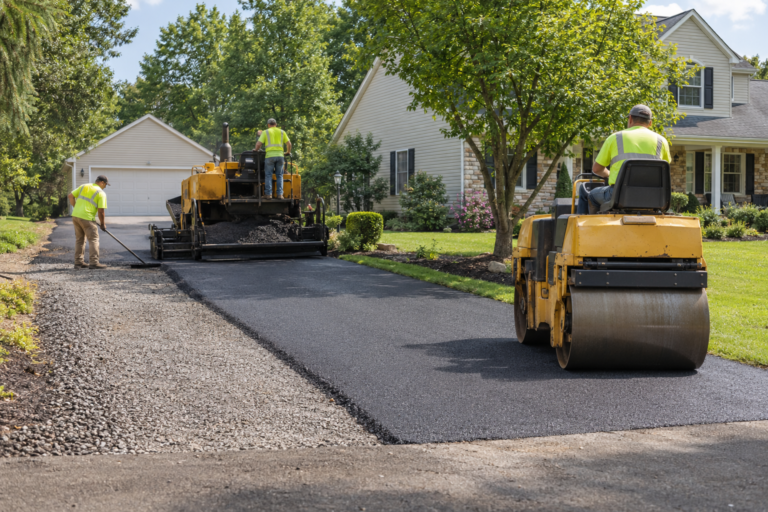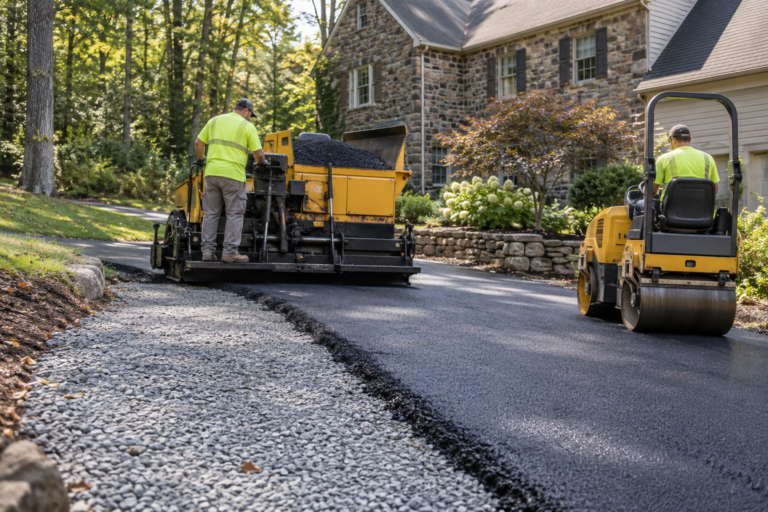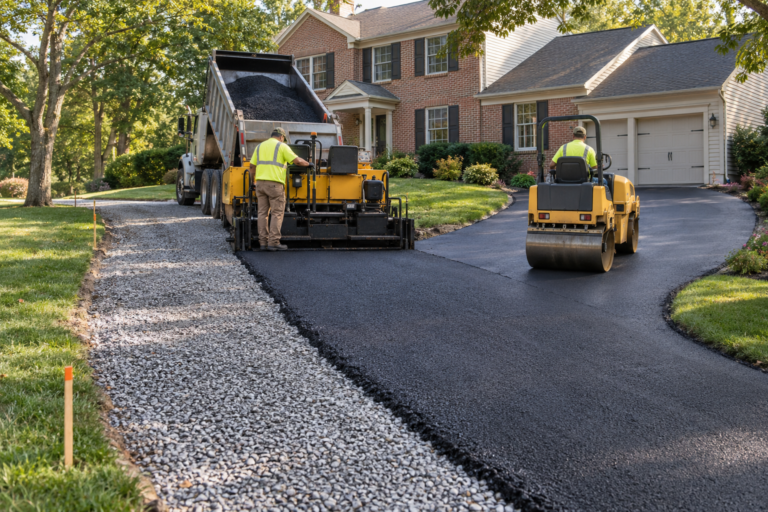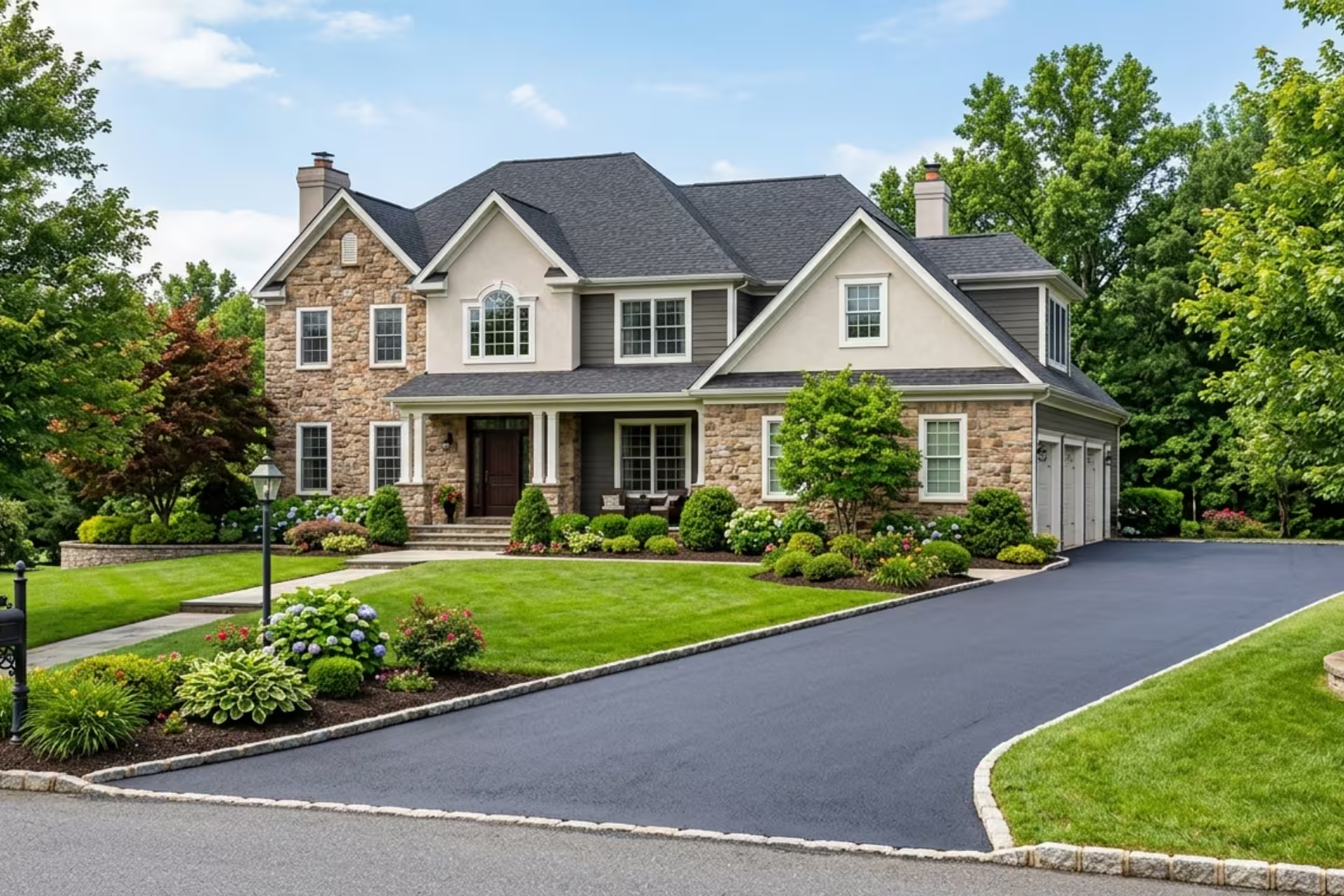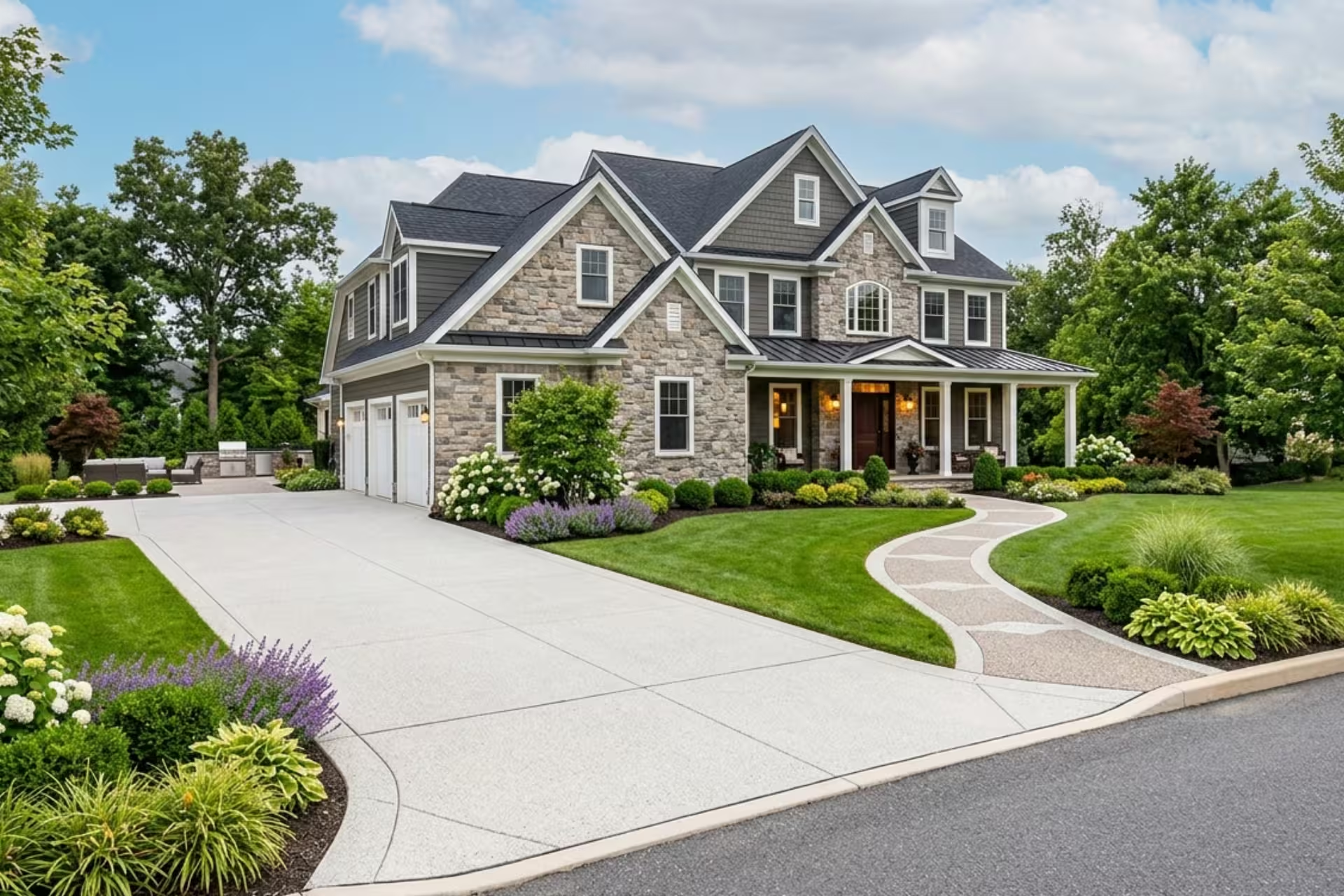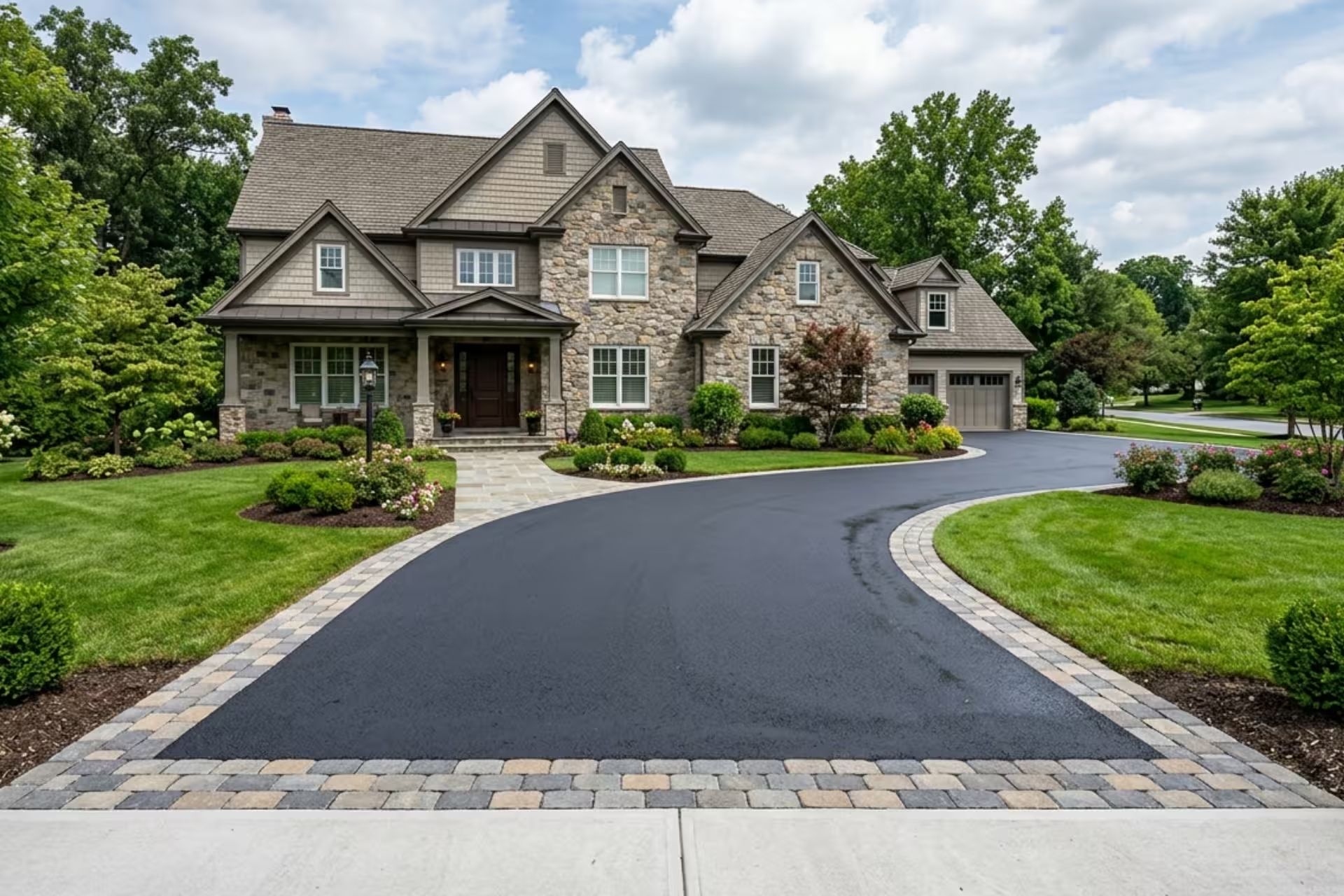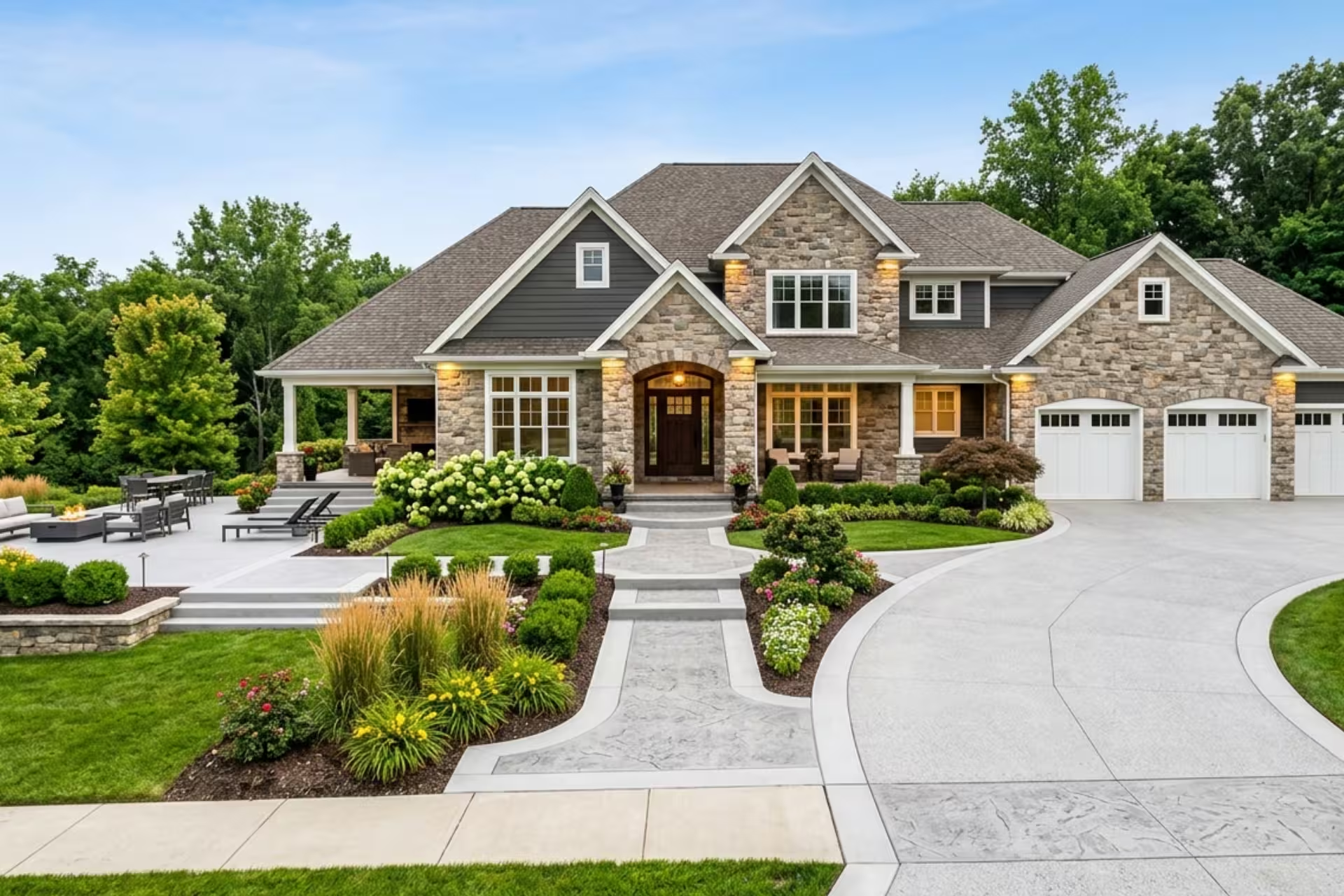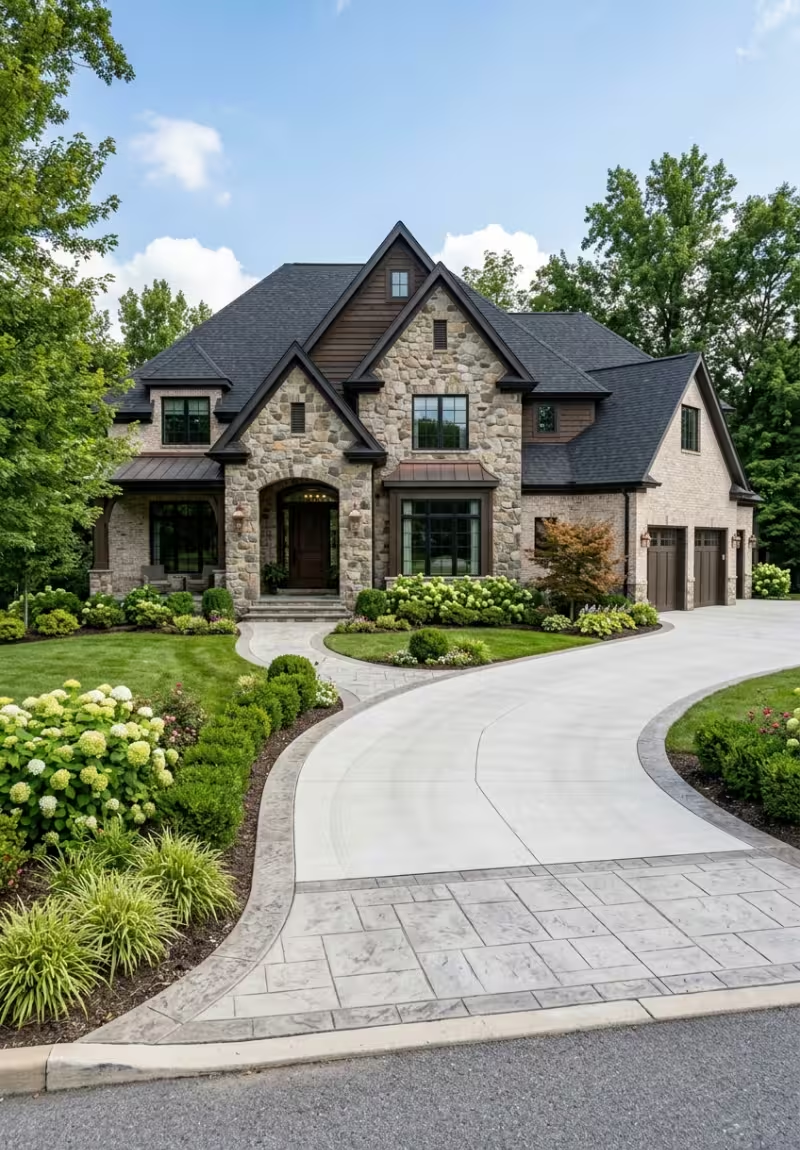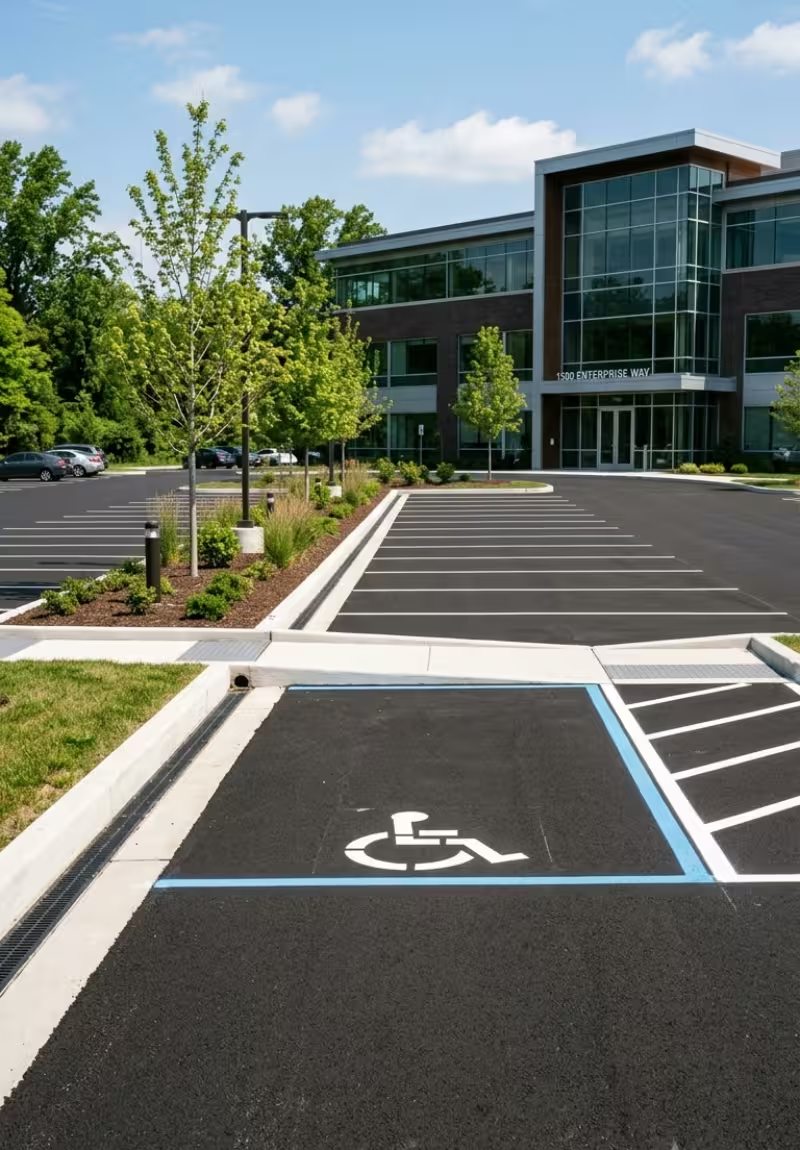
A reliable asphalt driveway or parking area begins beneath its finished surface. Soil stability, excavation, aggregate-base preparation, drainage, asphalt placement and compaction all influence how the pavement performs.
American Paving & Concrete provides professional asphalt installation in Catasauqua, Pennsylvania. We construct new driveways, replace structurally failed pavement, convert gravel surfaces and install residential and commercial parking areas.
Every project begins with an assessment of the property. We examine the existing surface, soil, base, slope, drainage, equipment access and expected vehicle use before recommending an installation method.
Learn more about our complete asphalt installation services or contact us to arrange an on-site estimate.
Complete Asphalt Installation Services
Our Catasauqua asphalt installation services may include:
- New asphalt driveway construction
- Complete driveway replacement
- Gravel-to-asphalt conversion
- Driveway extensions and widening
- Residential parking areas
- Commercial parking lots
- Private access lanes
- Existing pavement removal
- Excavation and grading
- Aggregate-base installation
- Drainage improvements
- Asphalt placement and compaction
- Pavement-edge finishing
- Road and garage transitions
The correct construction method depends on the property and the traffic the pavement must support.
New Asphalt Driveway Installation
New driveway construction requires more than placing asphalt over cleared ground.
The site should be evaluated for:
- Proposed driveway dimensions
- Soil stability
- Natural ground slope
- Garage elevation
- Road connection
- Surface-water movement
- Existing vegetation
- Utility locations
- Construction access
- Expected vehicle weight
- Permit requirements
Topsoil, organic material and unstable soil may need to be removed. The area is then graded and prepared for the aggregate base.
Homeowners can also review our complete driveway paving services for information about asphalt and concrete driveway options.
Gravel-to-Asphalt Conversion
An existing gravel driveway may provide part of the foundation for asphalt, but it must be inspected before paving.
Potential problems include:
- Inadequate stone depth
- Loose or contaminated gravel
- Vehicle ruts
- Soft underlying soil
- Poor edge support
- Low areas
- Standing water
- Vegetation growth
- Incorrect grading
The contractor must determine whether the existing aggregate can be reused or whether additional excavation and stone are needed.
A gravel conversion may involve:
- Removing vegetation and unstable material
- Evaluating the existing gravel
- Repairing soft sections
- Adding aggregate where required
- Establishing the correct grade
- Compacting the prepared base
- Installing the asphalt
- Compacting the finished pavement
- Finishing edges and transitions
Asphalt should not be placed over loose, wet or unstable material without correcting the underlying conditions.
Asphalt Driveway Replacement
Visible deterioration does not always require complete replacement. Localized cracks, potholes and failed sections may sometimes be repaired.
Replacement may be appropriate when the pavement has:
- Widespread interconnected cracking
- Repeated potholes
- Significant settlement
- Large depressions
- Extensive edge failure
- Unstable pavement
- Persistent drainage problems
- Numerous failed patches
- Base failure across multiple areas
- Severe surface breakup
During reconstruction, the damaged pavement is removed so the supporting material can be evaluated and corrected.
When failure is limited to individual sections, professional asphalt repair may be more appropriate.
Aggregate-Base Preparation
The aggregate base supports the asphalt and distributes vehicle loads over the underlying soil.
Poor base preparation can contribute to:
- Settlement
- Rutting
- Depressions
- Cracking
- Potholes
- Edge failure
- Uneven pavement
- Water-related deterioration
- Premature reconstruction
Base requirements depend on soil conditions, drainage and vehicle use. A thicker asphalt surface cannot reliably compensate for a weak foundation.
Grading and Drainage
Drainage should be planned before asphalt installation.
The evaluation may include:
- Driveway slope
- Garage and building elevations
- Roadside drainage
- Existing low areas
- Downspout discharge
- Adjacent landscaping
- Swales
- Catch basins
- Pavement edges
- Road and sidewalk connections
Water should be directed away from the pavement and nearby structures wherever the site permits.
Water entering the base can weaken supporting material. Pennsylvania freeze-thaw cycles may then contribute to movement, cracking and potholes.
Asphalt Installation Process
1. Site inspection
The contractor evaluates the surface, soil, drainage, traffic and equipment access.
2. Layout and planning
The pavement dimensions, elevations, transitions and drainage pattern are established.
3. Excavation or removal
Vegetation, unsuitable soil and failed pavement are removed as necessary.
4. Subgrade evaluation
The exposed soil is checked for wet, soft or unstable sections.
5. Aggregate-base construction
Aggregate is installed, graded and compacted to form a stable foundation.
6. Final grading
The base is shaped to establish the required elevations and water movement.
7. Asphalt placement
The asphalt mixture is installed while it remains within a suitable working-temperature range.
8. Compaction
Rolling equipment compacts the asphalt while it remains workable.
9. Edge and transition finishing
Connections to roads, garages, sidewalks and adjoining pavement are completed.
10. Final inspection
The surface, drainage, edges and transitions are reviewed before the project is closed.
Asphalt Thickness and Vehicle Use
There is no single pavement thickness that is correct for every project.
The pavement structure may be affected by:
- Passenger vehicles
- Work trucks
- Delivery vehicles
- Recreational vehicles
- Trailers
- Waste-removal trucks
- Commercial traffic
- Snow-removal equipment
- Soil stability
- Aggregate-base depth
A residential driveway may have different requirements from a commercial parking area exposed to frequent or heavy traffic.
The entire pavement structure should be designed for its intended use—not only the visible asphalt layer.
Why Asphalt Compaction Matters
Asphalt must be compacted before it cools beyond its workable range.
Proper compaction helps:
- Increase pavement density
- Reduce excessive air voids
- Improve surface stability
- Create smoother transitions
- Limit unnecessary water infiltration
- Support consistent performance
Weather, asphalt temperature, delivery time, pavement thickness and project size can affect the available compaction period.
Installation Versus Resurfacing
Complete installation and resurfacing address different pavement conditions.
Resurfacing adds asphalt over an existing surface. It may be appropriate when the supporting base remains stable and deterioration is primarily limited to the upper pavement.
Complete installation or reconstruction replaces the pavement structure and allows base, grading and drainage problems to be corrected.
Reconstruction may be necessary when there is:
- Widespread structural cracking
- Major settlement
- Base instability
- Repeated pothole formation
- Extensive pavement movement
- Serious drainage failure
Placing an overlay over unstable pavement may allow existing damage to reappear through the new surface.
Residential Asphalt Installation
Residential projects may include:
- New home driveways
- Replacement driveways
- Gravel conversions
- Driveway extensions
- Additional parking areas
- Private access lanes
- Road transitions
- Garage-apron connections
A driveway should provide practical access without directing unnecessary runoff toward the garage, foundation or adjoining property.
Commercial Asphalt Installation
Commercial projects may include:
- Parking lots
- Drive aisles
- Employee parking
- Customer entrances
- Apartment-community pavement
- Commercial access lanes
- Delivery routes
- Service areas
Commercial installation may require additional planning for traffic control, pedestrian access, deliveries and phased construction.
Visit our parking lot paving page for information about commercial installation and replacement.
Suitable Weather for Asphalt Installation
The contractor must consider:
- Air temperature
- Ground temperature
- Rain
- Surface moisture
- Wind
- Asphalt transportation time
- Project size
- Available compaction time
- Daylight
- Site access
Cold or wet conditions can reduce working time or interfere with placement and compaction.
When Can New Asphalt Be Used?
New asphalt must cool and become sufficiently stable before vehicles return.
The reopening period depends on:
- Weather
- Surface temperature
- Pavement design
- Vehicle weight
- Sunlight and shade
- Project conditions
Follow the contractor’s instructions rather than relying on one waiting period for every installation.
During the pavement’s early life, avoid stationary tire turning, unsupported edges, concentrated trailer jacks and heavy equipment parked in one position.
Maintaining New Asphalt
Preventive maintenance may include:
- Keeping the pavement clean
- Monitoring drainage
- Cleaning fuel and oil spills
- Protecting unsupported edges
- Repairing eligible cracks
- Monitoring heavy-load areas
- Addressing localized damage
- Sealcoating when appropriate
New asphalt should not be sealcoated immediately. It must be allowed to cure before a protective coating is considered.
Learn more about professional sealcoating and ongoing asphalt maintenance.
Asphalt Installation Cost Factors
The cost of asphalt installation in Catasauqua may depend on:
- Total pavement area
- Existing pavement removal
- Excavation depth
- Soil condition
- Aggregate-base requirements
- Asphalt thickness
- Drainage work
- Property slope
- Equipment access
- Pavement shape
- Edge construction
- Road and garage transitions
- Expected traffic
- Material transportation
An on-site inspection provides a more reliable estimate than a generic square-foot price because it accounts for construction beneath the finished asphalt.
Request an Asphalt Installation Estimate in Catasauqua
American Paving & Concrete provides asphalt installation for homeowners, businesses and property managers in Catasauqua and surrounding Lehigh County communities.
We can inspect your property and recommend an installation method based on its soil, drainage, traffic and intended use.
Call: (610) 477-3553
Email: info@americanpavingandconcrete.com
Business address: 2114 Dublin Pike, Quakertown, PA 18951
Online: Request a free estimate