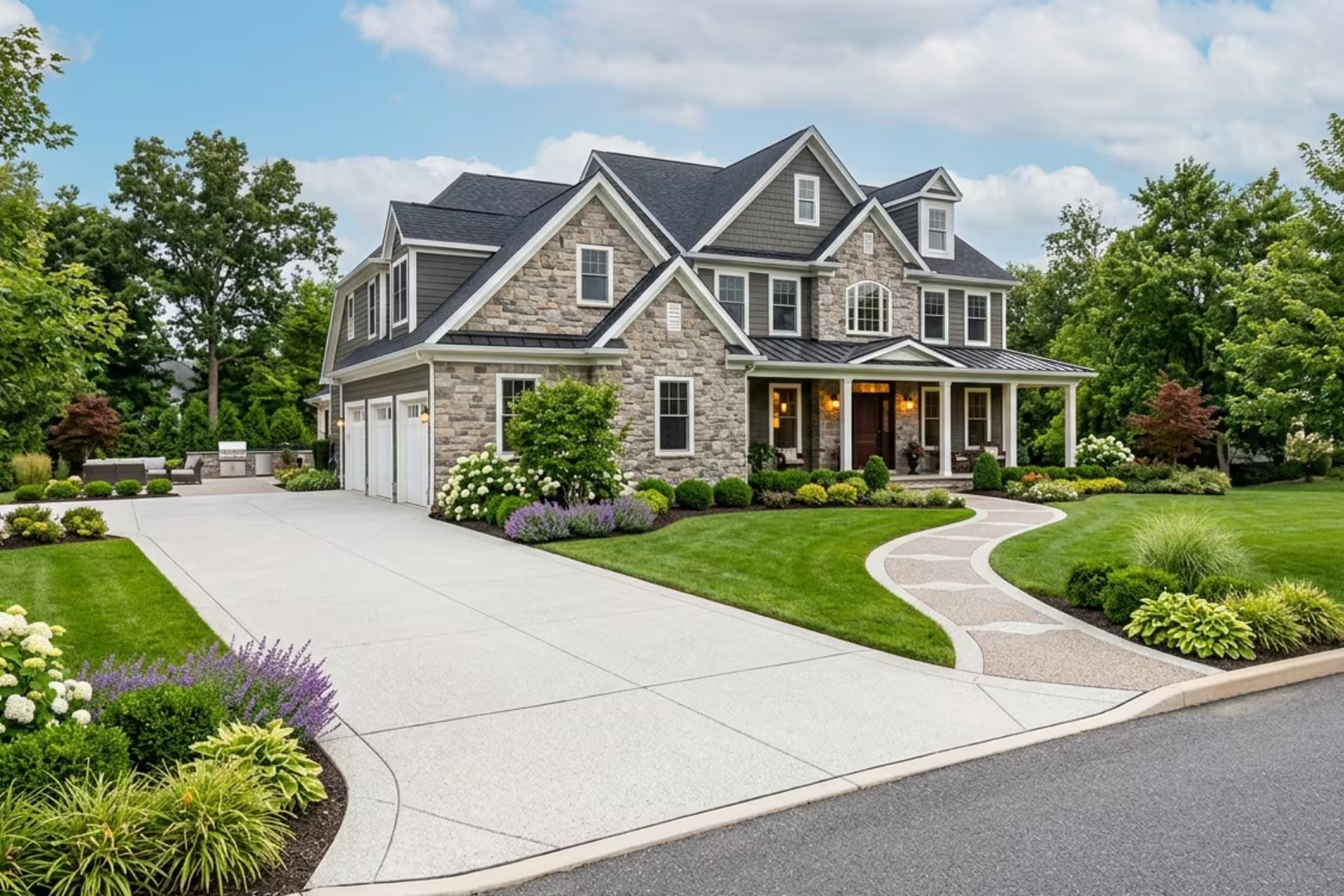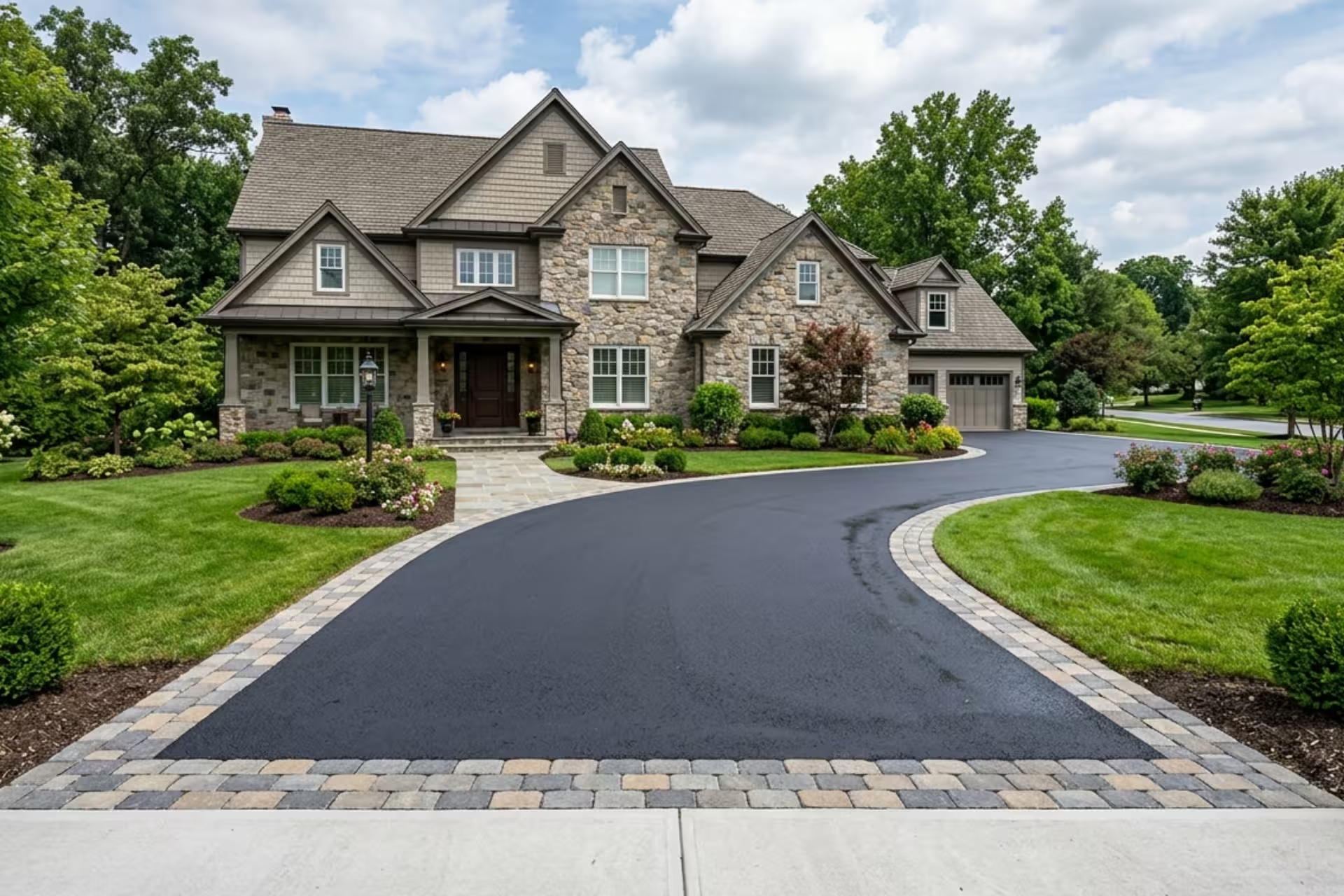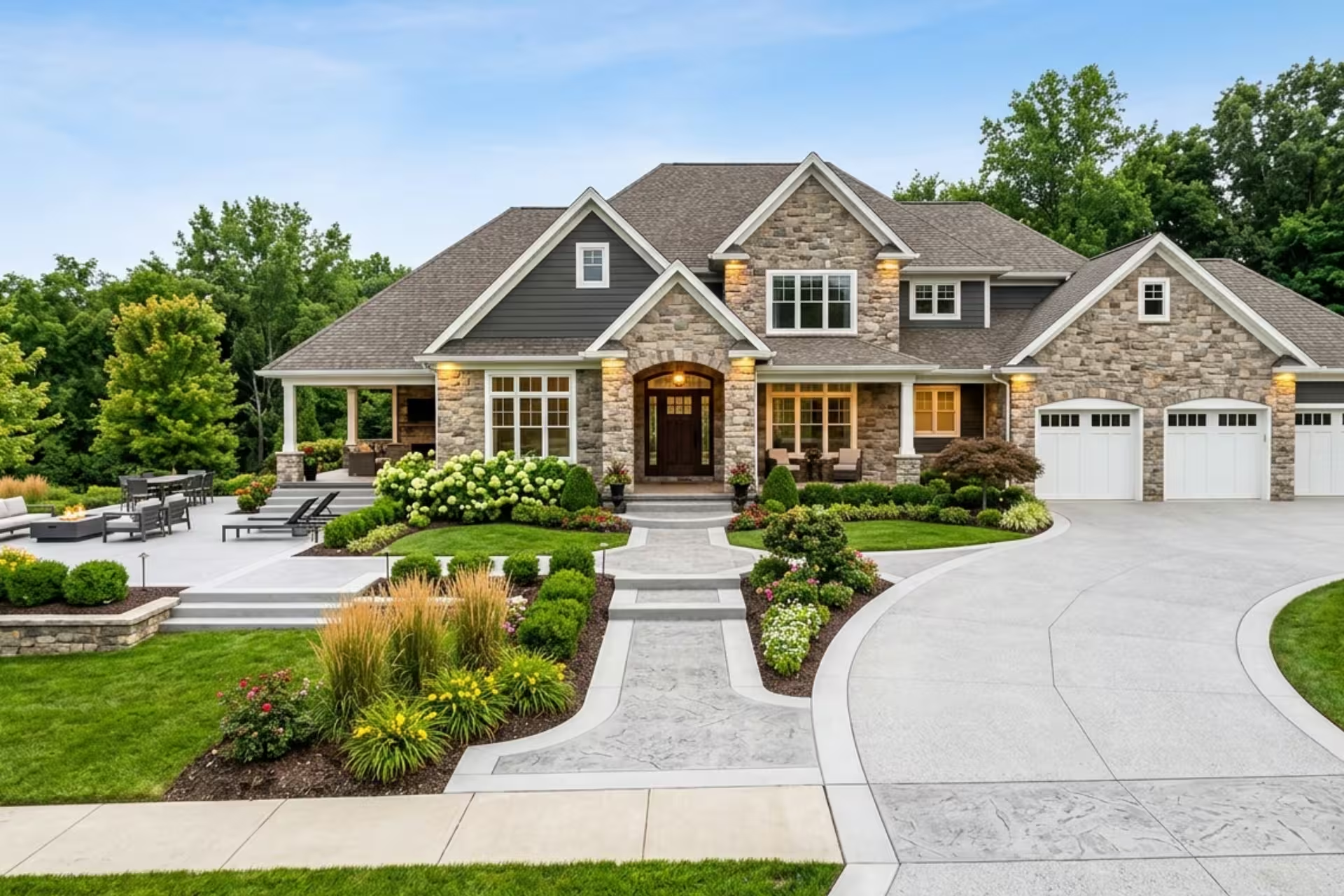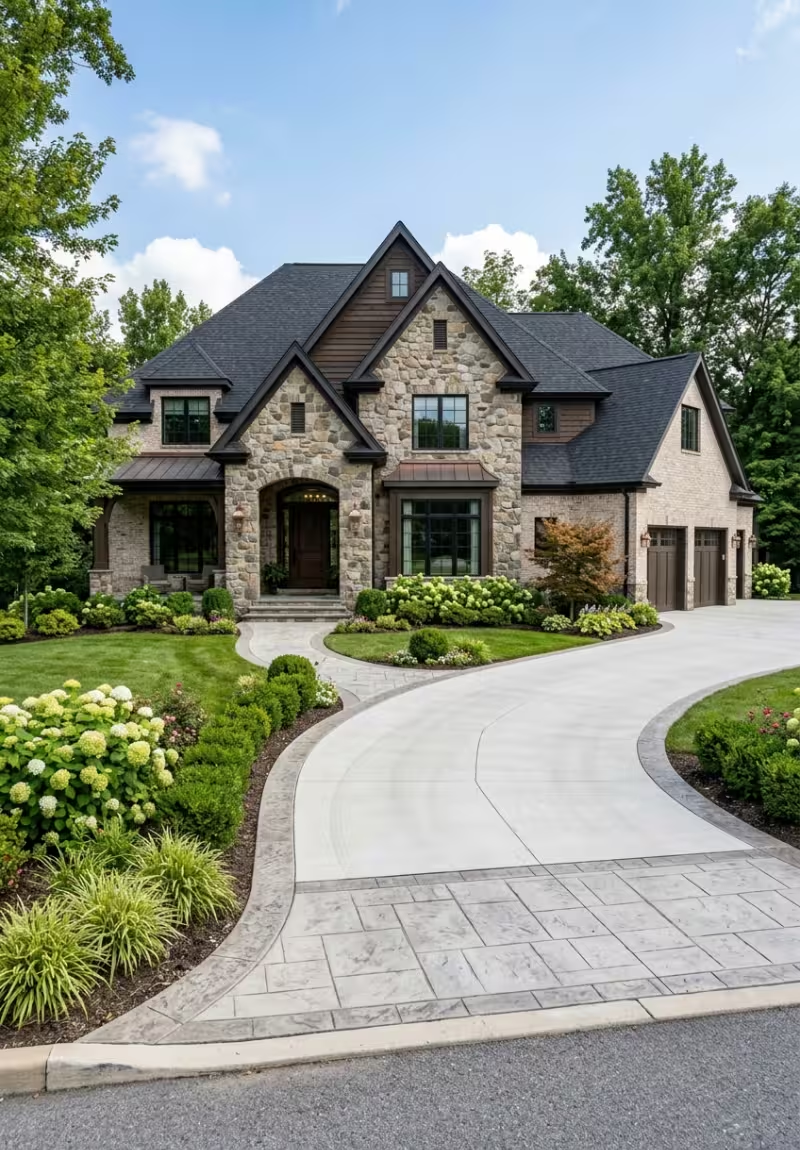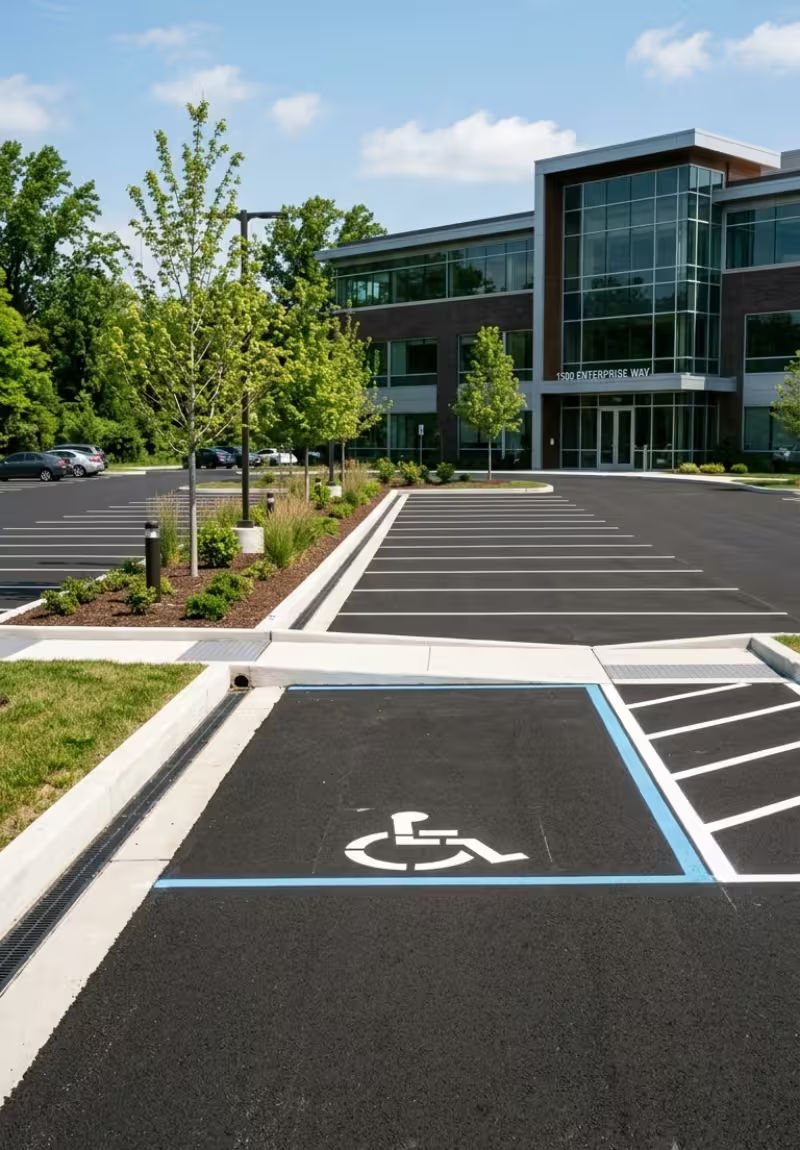
A professionally installed asphalt surface can improve access, parking, drainage and the appearance of a residential or commercial property. Its long-term performance, however, depends on much more than the asphalt visible at the surface.
Dependable pavement begins with a property inspection, suitable excavation, a stable aggregate base, effective grading and professional compaction.
American Paving & Concrete provides professional asphalt installation in Red Hill, Pennsylvania. We install residential driveways, commercial parking areas, private lanes, access routes and other asphalt surfaces.
Before recommending an installation method, we assess the existing surface, supporting base, drainage, property access and expected vehicle use. This helps ensure the pavement structure reflects the conditions and requirements of the site.
Asphalt Paving Services in Red Hill
Red Hill includes historic borough properties, detached homes, twin homes, newer residential developments, neighborhood businesses and commercial facilities. Properties can have different access, slope, drainage and pavement-strength requirements.
Our asphalt installation services may include:
- New asphalt driveway installation
- Gravel-to-asphalt conversion
- Asphalt driveway replacement
- Driveway widening
- Residential parking extensions
- Garage-approach paving
- Shared driveway installation
- Rear parking-area paving
- Private-lane paving
- Commercial parking-area installation
- Parking lot replacement
- Commercial entrances
- Drive-aisle construction
- Failed pavement reconstruction
- Asphalt resurfacing
- Aggregate-base preparation
- Grading and drainage improvements
- Asphalt placement and compaction
Every property has different construction requirements. The pavement should be designed around the site rather than one standard specification.
Residential Asphalt Driveway Installation
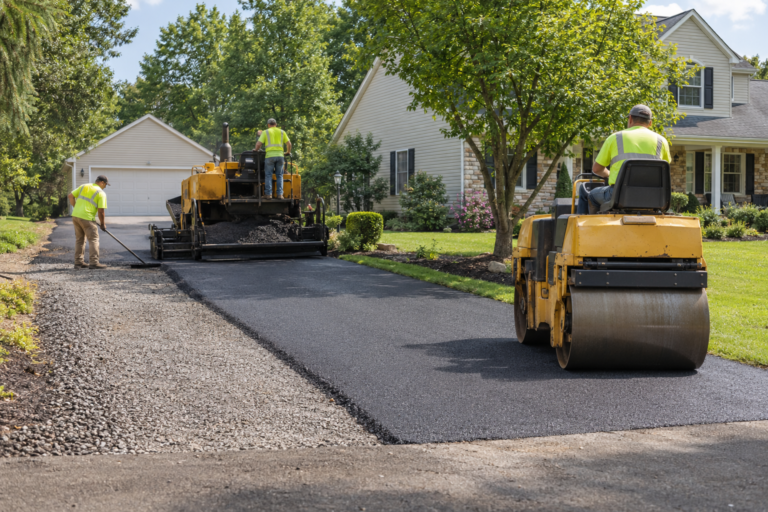
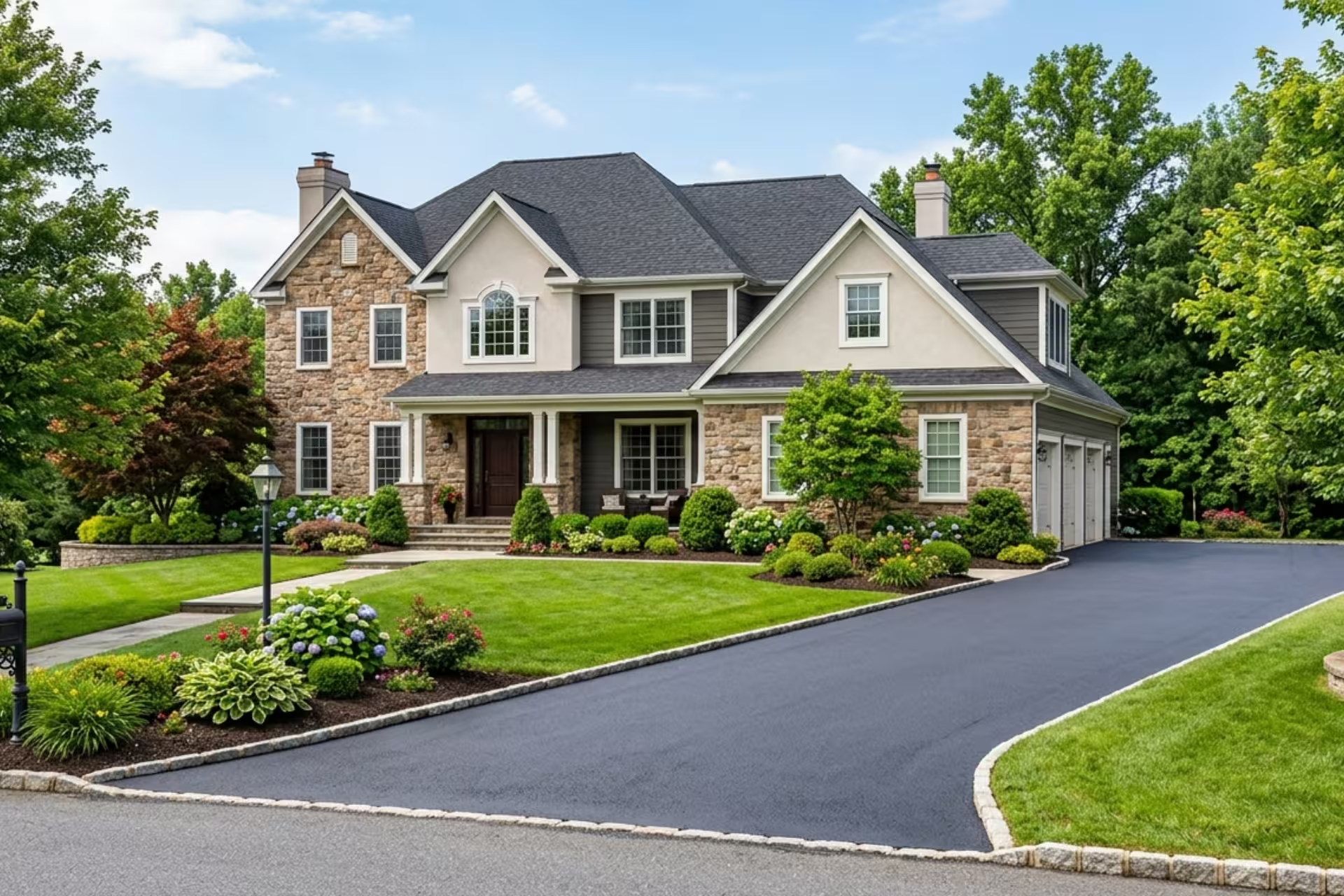
A professionally installed asphalt driveway creates a smooth and defined surface for daily vehicle access. It can also reduce the mud, loose stone, dust and rutting associated with an unstable gravel driveway.
Our driveway paving services may be appropriate for:
- Newly constructed homes
- Gravel driveways
- Dirt or stone access areas
- Severely deteriorated pavement
- Narrow residential driveways
- Driveway extensions
- Additional household parking
- Garage approaches
- Shared lanes
- Residential turnarounds
Before paving, we examine the driveway’s dimensions, slope, existing material, water movement, garage transition, road entrance and expected vehicle use.
A driveway primarily supporting passenger vehicles may require different preparation from one regularly used by work trucks, trailers or recreational vehicles.
Asphalt Installation for Older Borough Properties
Some Red Hill properties have older pavement, narrow access between buildings or driveways constructed in several stages over many years.
Existing surfaces may contain:
- Multiple asphalt layers
- Previous patches
- Shallow aggregate
- Mixed base materials
- Settled utility trenches
- Poorly supported edges
- Uneven garage transitions
- Drainage problems
- Contaminated aggregate
- Deteriorated joints
These conditions should be evaluated before new asphalt is installed.
Covering unstable pavement without addressing the underlying problem may allow settlement, cracks and depressions to return through the new surface.
Red Shale, Soil Conditions and Base Stability
Local soil and underlying material can vary significantly from one property to another. Red Hill’s name is associated with the reddish shale found in the area, but the actual soil, fill and aggregate beneath each driveway must be inspected individually.
The supporting material may need evaluation for:
- Bearing stability
- Moisture retention
- Loose or fractured material
- Organic soil
- Previous fill
- Soft areas
- Existing aggregate depth
- Drainage movement
- Compaction
- Seasonal changes
No assumption about base depth or construction should be made from the location alone. Site conditions determine what excavation and aggregate preparation are required.
Gravel-to-Asphalt Driveway Conversion
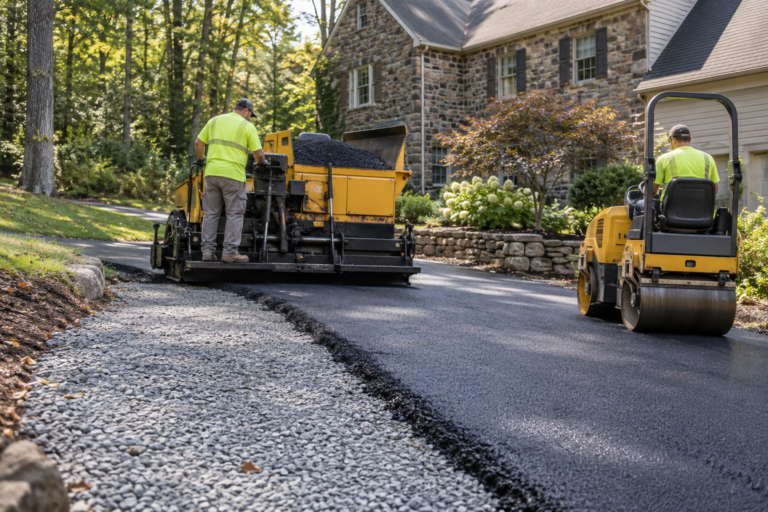
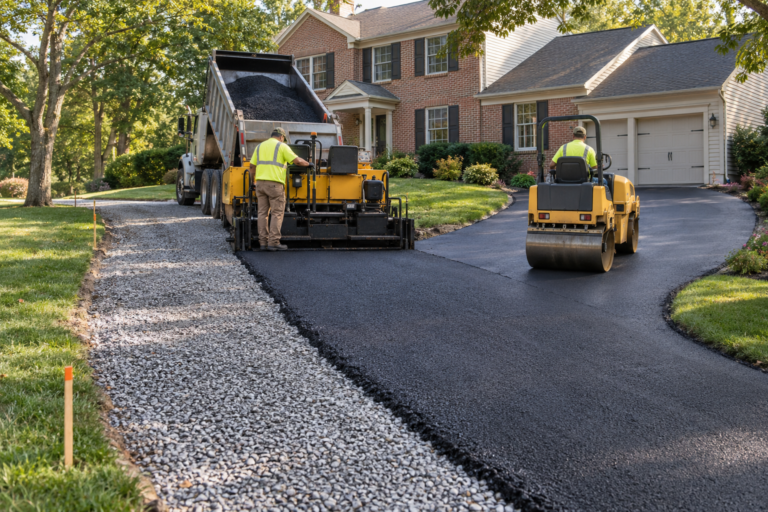
Converting gravel to asphalt can create a smoother, cleaner and easier-to-maintain driveway. Asphalt should not simply be placed over loose stone without assessing the supporting structure.
The gravel area should be inspected for:
- Aggregate depth
- Aggregate quality
- Base stability
- Soft sections
- Soil contamination
- Surface slope
- Drainage
- Compaction
- Edge support
- Road and garage transitions
If the gravel is shallow, unstable or contaminated, additional crushed aggregate or excavation may be required.
Installing asphalt over an inadequate base can contribute to settlement, depressions, cracking and premature pavement failure.
Asphalt Driveway Replacement
Not every damaged driveway needs complete replacement. Isolated potholes, cracks or small failed sections may sometimes be addressed through professional asphalt repair.
Complete replacement may be more appropriate when pavement has:
- Extensive alligator cracking
- Numerous recurring potholes
- Severe settlement
- Large soft areas
- Widespread surface breakup
- Major edge deterioration
- Multiple failed repairs
- Significant drainage problems
- An unstable supporting base
Replacement allows deteriorated pavement and unsuitable material to be removed. The base, grade and drainage can then be corrected before new asphalt is installed.
Driveway Widening and Additional Parking
Some Red Hill properties need more space for household vehicles, visitors, trailers or improved garage access.
A driveway extension may provide:
- Side-by-side parking
- Additional vehicle storage
- Better garage alignment
- Improved turning space
- A residential turnaround
- Access to a rear parking area
The new section requires suitable excavation, aggregate-base construction, grading and compaction. Asphalt should not be installed directly over topsoil, grass or uncompacted fill.
The joint between new and existing pavement should also be properly prepared to create a stable transition.
Sloped Driveways and Surface Water
Properties with sloped driveways require careful grading so runoff does not collect near garages, buildings, sidewalks or pavement edges.
Slope and drainage planning may consider:
- Direction of surface runoff
- Garage-floor elevation
- Road and curb connections
- Low areas
- Neighboring surfaces
- Downspout discharge
- Pavement-edge support
- Existing drains
- Water movement across the property
- Winter icing concerns
The objective is not necessarily to eliminate every natural slope. It is to create controlled water movement while preserving practical and safe vehicle access.
Commercial Asphalt Installation in Red Hill
Commercial pavement typically experiences more frequent and heavier traffic than a residential driveway. Customers, employees, tenants, delivery vehicles, maintenance trucks, waste-removal vehicles and snowplows all place stress on the surface.
American Paving & Concrete provides commercial paving services for properties such as:
- Neighborhood businesses
- Retail properties
- Offices
- Medical facilities
- Apartment communities
- Restaurants
- Churches
- Schools
- Warehouses
- Storage facilities
- Managed commercial properties
- Private parking facilities
Commercial pavement may include parking spaces, drive aisles, entrances, exits, loading areas and service lanes.
The construction plan should consider traffic frequency, vehicle weight, turning movements, drainage, pedestrian access and property operations.
Parking Area Installation and Replacement
A properly constructed parking area supports vehicle circulation, property access and effective drainage.
Professional parking lot paving may include:
- Existing pavement removal
- Site excavation
- Aggregate-base installation
- Base compaction
- Grading
- Drainage correction
- Asphalt placement
- Pavement compaction
- Entrance and exit paving
- Drive-aisle construction
- Loading-area installation
- Preparation for line striping
- Phased construction where practical
Commercial properties should be assessed for traffic patterns, base stability, drainage problems and access restrictions before work begins.
The Asphalt Installation Process
Professional asphalt installation involves several coordinated stages.
1. Property inspection
The proposed paving area is evaluated for:
- Existing pavement condition
- Gravel and base materials
- Soil stability
- Surface elevations
- Water-flow patterns
- Low areas
- Pavement dimensions
- Property access
- Expected traffic
- Vehicle weight
- Building transitions
- Road connections
- Pavement edges
This information helps determine the required excavation, aggregate base, grading and asphalt structure.
2. Excavation and removal
Existing asphalt, unstable gravel, vegetation, topsoil or unsuitable material may need to be removed.
Preparation may include:
- Removing deteriorated pavement
- Excavating unstable material
- Cutting out soft sections
- Removing contaminated aggregate
- Establishing the required construction depth
- Preparing the area for crushed stone
- Forming road and garage transitions
Installing asphalt over unstable material may allow movement in the base to transfer into the finished surface.
3. Aggregate-base construction
The aggregate base forms the structural foundation beneath the asphalt. It helps distribute vehicle loads and support the finished pavement.
Base construction may involve:
- Placing crushed aggregate
- Spreading material evenly
- Compacting it in layers
- Correcting weak areas
- Establishing the required grade
- Preparing drainage paths
- Supporting pavement edges
- Forming surface transitions
The appropriate aggregate depth depends on soil conditions, drainage, pavement use and expected traffic.
4. Grading and drainage
The prepared surface should be graded to move water away from buildings and vulnerable pavement areas whenever site conditions permit.
Poor drainage can contribute to:
- Standing water
- Aggregate-base erosion
- Pavement settlement
- Cracking
- Potholes
- Ice accumulation
- Edge deterioration
- Recurring repairs
Low areas and runoff problems should be addressed before paving. Correcting significant drainage issues later may require removing and reconstructing portions of the surface.
5. Hot-mix asphalt placement
Once the base is stable, graded and compacted, hot-mix asphalt can be installed.
Professional placement focuses on:
- Spreading asphalt evenly
- Maintaining the planned depth
- Preserving the required slope
- Limiting low spots
- Creating smooth transitions
- Forming defined edges
- Working in suitable weather
- Preparing the asphalt for compaction
The material must be placed and compacted while it remains within an appropriate working-temperature range.
6. Compaction and finishing
Compaction increases pavement density and helps create a stable, smooth surface.
Proper compaction helps:
- Reduce excessive air voids
- Improve load-bearing performance
- Create a smoother finish
- Limit water penetration
- Improve pavement stability
- Reduce premature deterioration
The road entrance, garage transition, joints and pavement edges are then finished and inspected.
Why Aggregate-Base Preparation Matters
New asphalt can only perform as well as the structure supporting it.
A weak or inadequately compacted base may allow pavement movement under traffic. This movement can eventually appear as:
- Cracks
- Depressions
- Uneven pavement
- Potholes
- Broken edges
- Failed transitions
- Recurring patched areas
Base preparation should reflect soil conditions, drainage and expected vehicle use.
Commercial traffic and heavier vehicles may require stronger construction than a residential driveway mainly supporting passenger cars.
Drainage and Pennsylvania Weather
Asphalt in Red Hill is exposed to rainfall, summer heat, freezing temperatures, snow, ice, salt and repeated freeze-thaw cycles.
Water can enter through cracks, damaged edges and poorly drained sections. If moisture reaches the aggregate base, the supporting material may lose stability. Freezing water can then expand and make pavement damage worse.
Drainage preparation may include:
- Establishing a consistent surface slope
- Correcting low areas
- Directing water away from buildings
- Improving runoff around parking areas
- Supporting pavement edges
- Forming suitable garage transitions
- Rebuilding areas near drains
- Reducing water collection at entrances
Proper preparation, grading and maintenance help asphalt manage changing seasonal conditions.
Repair, Resurfacing or Replacement?
The correct service depends on the pavement and supporting base.
Asphalt repair
Localized repair may be suitable for:
- Individual potholes
- Isolated cracks
- Small failed sections
- Limited edge deterioration
- Minor depressions
- Failed utility cuts
- Damage around drains
Repair can preserve surrounding pavement that remains structurally stable.
Asphalt resurfacing
Resurfacing installs a new asphalt layer over prepared existing pavement.
It may be suitable when:
- The supporting base remains stable
- The pavement is reasonably level
- Surface wear is widespread
- Cracking is moderate
- Potholes are limited
- Drainage remains functional
Failed areas should be repaired before the new layer is installed.
Complete installation or replacement
Full-depth construction may be necessary when:
- No paved surface currently exists
- Gravel or dirt requires conversion
- Asphalt is breaking apart across large areas
- Settlement is severe
- Potholes repeatedly return
- The supporting base has failed
- Extensive drainage correction is required
- The paved area needs expansion or redesign
A property inspection helps determine which option is appropriate.
What Affects Asphalt Installation Cost?
The cost of asphalt installation in Red Hill depends on the project size and construction required beneath the finished pavement.
Pricing factors may include:
- Total square footage
- Existing pavement removal
- Excavation depth
- Soil and shale conditions
- Aggregate-base requirements
- Asphalt thickness
- Number of asphalt layers
- Drainage improvements
- Property access
- Pavement shape
- Edge construction
- Garage and road transitions
- Residential or commercial use
- Expected vehicle weight
- Project phasing
An on-site assessment provides a more dependable estimate than a general square-foot price that does not account for site conditions.
Maintaining Newly Installed Asphalt
New asphalt needs time to cool and set before vehicles use it. Property owners should follow the contractor’s project-specific instructions.
Long-term asphalt maintenance may include:
- Routine pavement inspections
- Prompt crack filling
- Pothole repair
- Drainage checks
- Edge maintenance
- Cleaning vehicle-fluid spills
- Repairing failed areas
- Resurfacing planning
- Sealcoating at an appropriate time
New pavement should not be sealcoated immediately because the asphalt needs sufficient time to cure.
Once it is ready, professional sealcoating may help protect eligible asphalt from sunlight, moisture, oxidation, salt and vehicle fluids. Sealcoating does not correct structural failure, settlement or potholes.
Asphalt Paving Across Montgomery County
Red Hill is part of Montgomery County and the Upper Perkiomen area. The website’s Montgomery County paving contractor page provides additional regional service information.
The recommended internal-linking structure is:
Asphalt Installation → Montgomery County Paving → Red Hill Asphalt Installation
This connects the primary service, county-level coverage and local article.
Why Choose American Paving & Concrete?
American Paving & Concrete provides:
- Residential and commercial asphalt paving
- New driveway and parking-area installation
- Gravel-to-asphalt conversion
- Driveway widening and extensions
- Complete pavement replacement
- Repair and resurfacing options
- Aggregate-base preparation
- Grading and drainage evaluation
- Site-specific recommendations
- Professional paving equipment
- Clear project communication
- Free project estimates
We assess the visible pavement and supporting structure before recommending installation, repair, resurfacing or replacement.
Request an Asphalt Installation Estimate in Red Hill, PA
If you need a new driveway, private access lane, commercial parking area, gravel conversion or replacement pavement, contact American Paving & Concrete.
We can inspect the proposed paving area, explain the options and prepare an estimate based on the construction required.
Call: (610) 477-3553
Email: info@americanpavingandconcrete.com
Address: 2114 Dublin Pike, Quakertown, PA 18951
Online: Request a free paving estimate