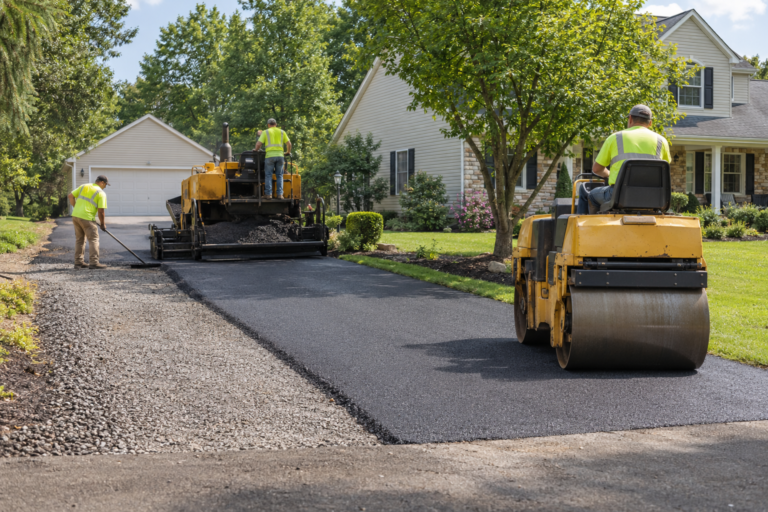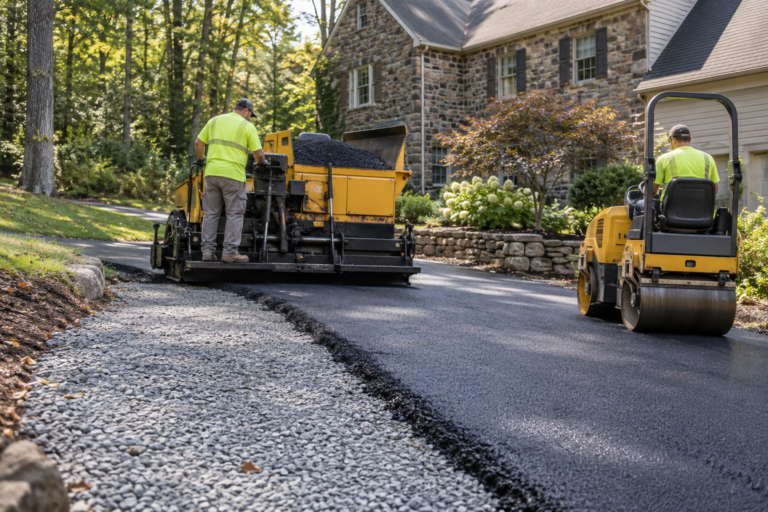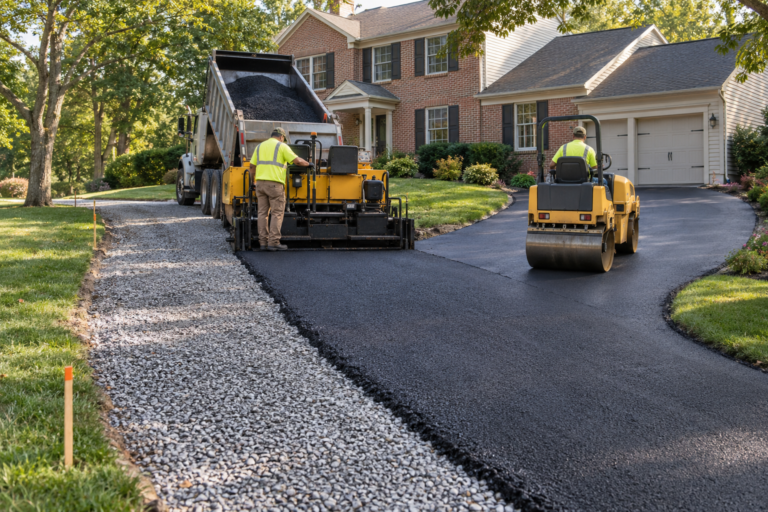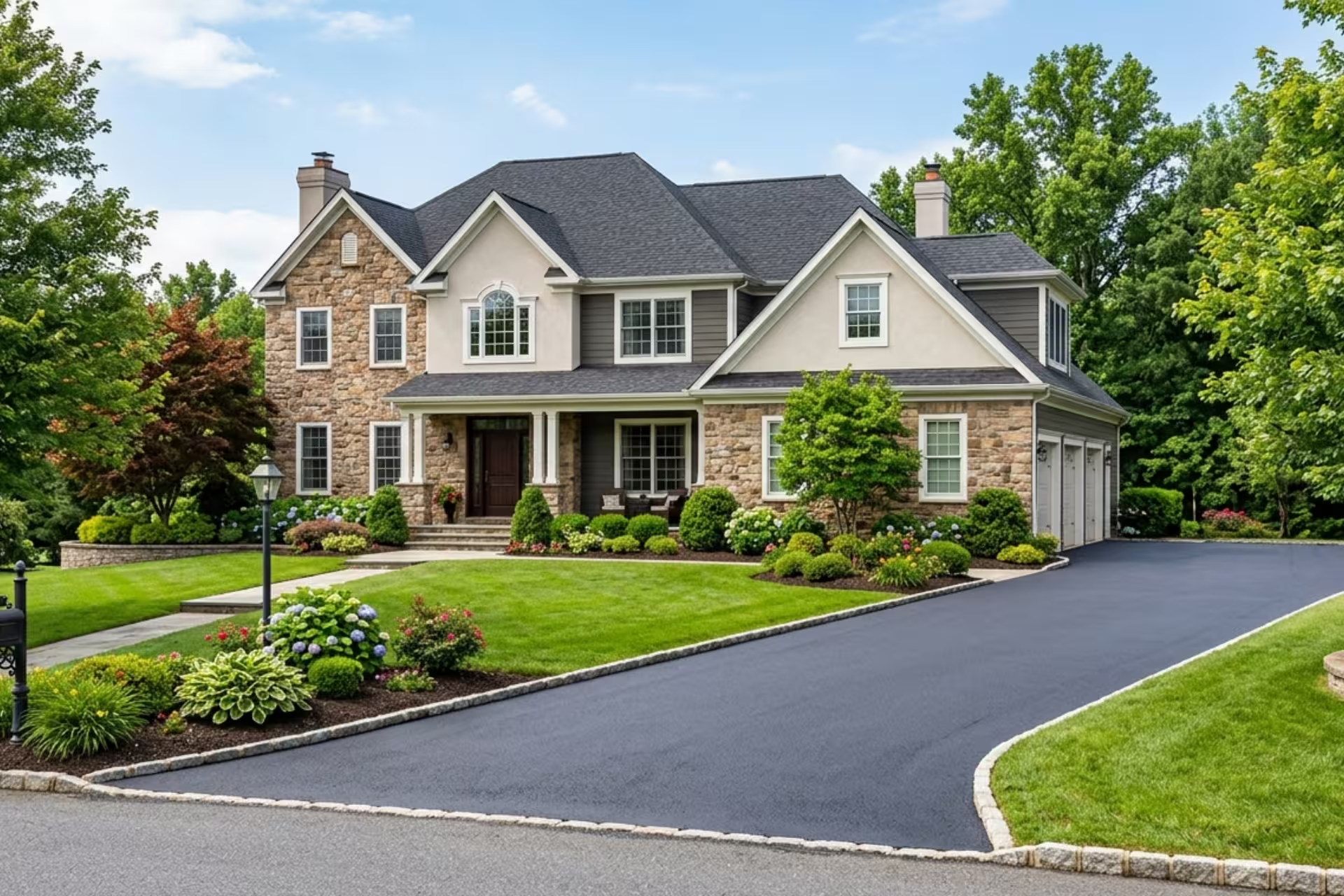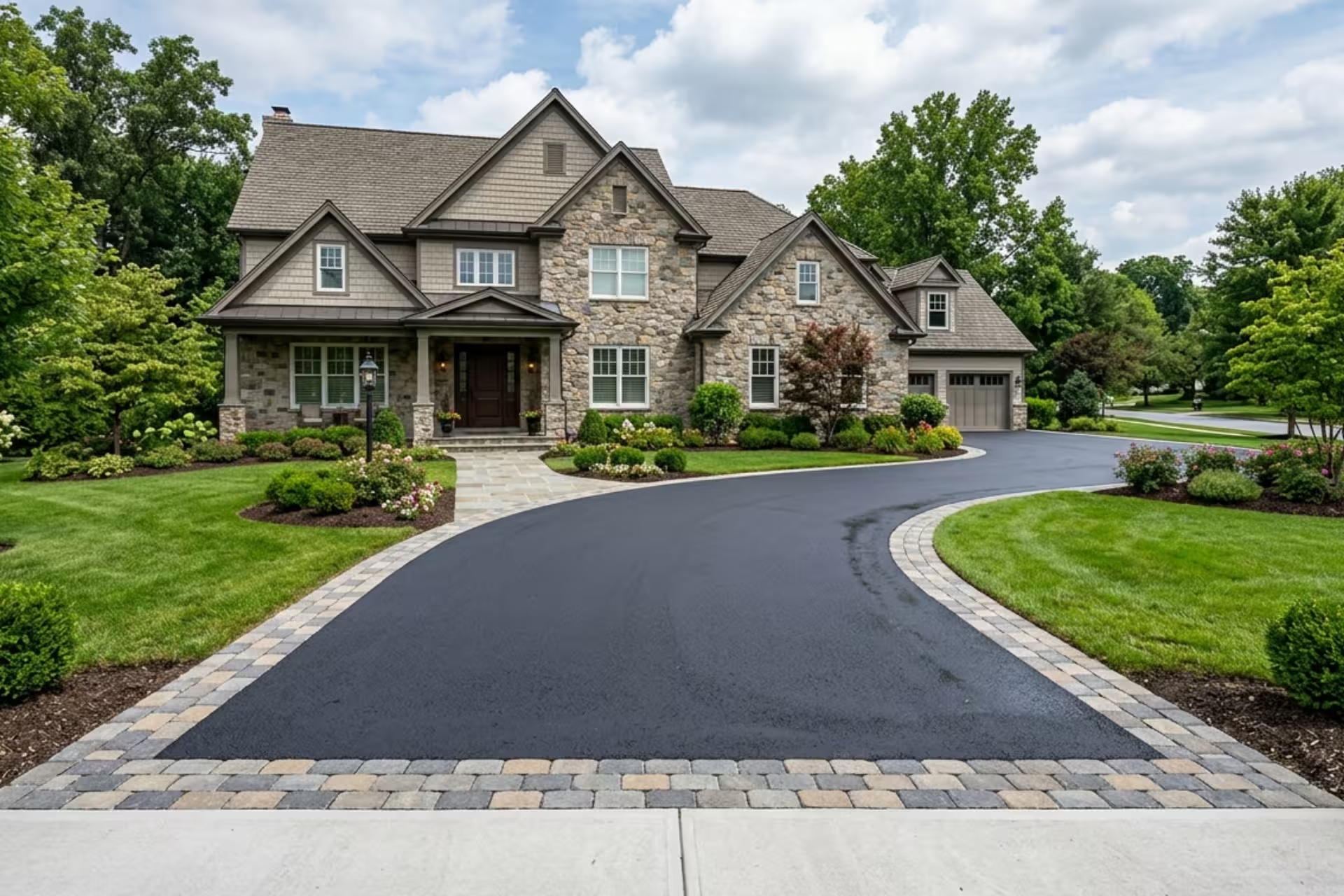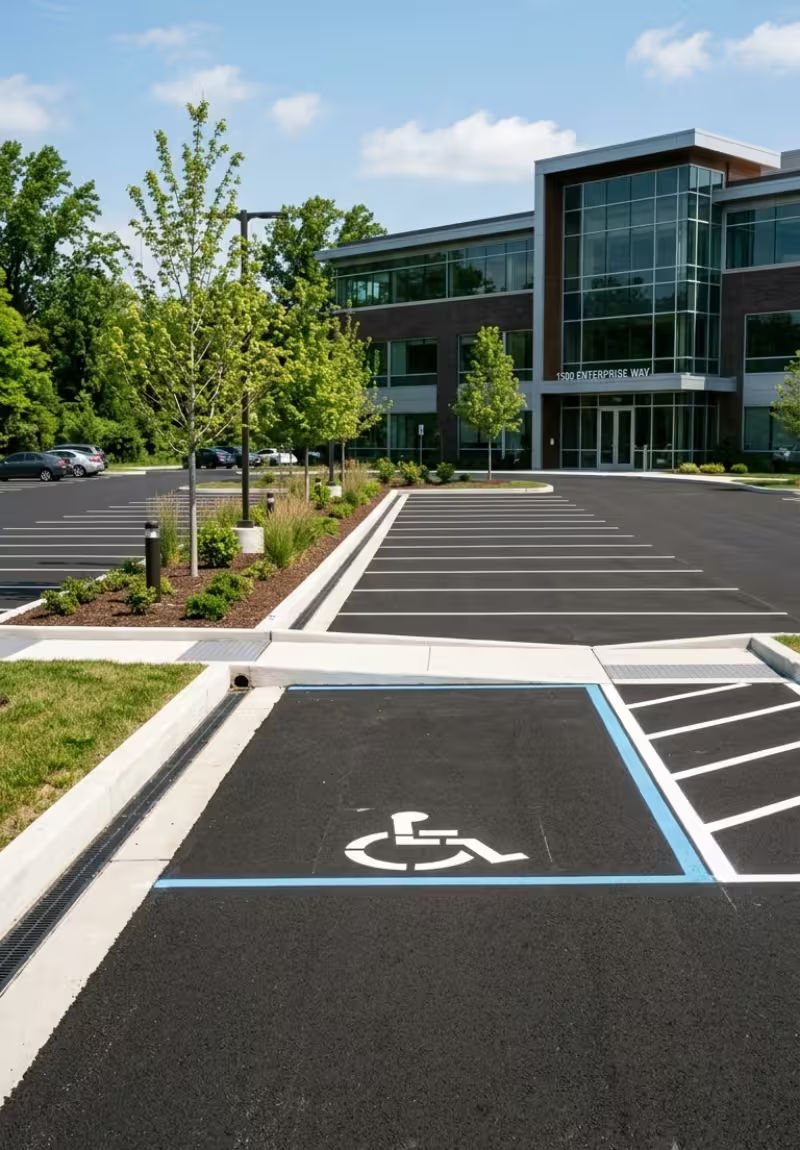
Asphalt pavement is exposed to vehicle traffic, sunlight, rainfall, freezing temperatures, snow, ice, road salt and seasonal temperature changes. Without timely maintenance, small cracks and surface defects can allow water to reach the supporting base and contribute to more extensive deterioration.
Professional maintenance helps property owners identify developing problems, complete appropriate repairs and plan future pavement work before the surface reaches widespread structural failure.
American Paving & Concrete provides professional asphalt maintenance in Allentown, Pennsylvania. We maintain residential driveways, commercial parking lots, apartment parking areas, private lanes, access routes and other asphalt surfaces.
Every pavement surface ages differently. Maintenance recommendations should reflect the asphalt’s condition, traffic, drainage, age, previous repairs and supporting base rather than applying the same treatment to every property.
Complete Asphalt Maintenance Services in Allentown
Allentown includes residential neighborhoods, apartment properties, offices, retail locations, warehouses, restaurants, medical facilities and other commercial sites. These properties can have significantly different pavement-maintenance requirements.
Our asphalt maintenance services may include:
- Pavement inspections
- Crack filling
- Pothole repair
- Surface patching
- Full-depth asphalt repair
- Edge maintenance
- Drainage checks
- Low-area correction
- Repair around drains
- Cleaning and surface preparation
- Sealcoating preparation
- Professional sealcoating
- Resurfacing evaluation
- Seasonal pavement maintenance
- Residential driveway maintenance
- Commercial parking lot maintenance
- Long-term pavement planning
Maintenance should be based on an inspection of the property and the actual condition of the asphalt.
Why Asphalt Maintenance Matters
Asphalt naturally changes as it ages. Sunlight and oxidation can make the surface dry and brittle, while traffic and seasonal weather place additional stress on the pavement.
Small defects can become larger when they are left untreated.
Maintenance may help:
- Reduce water penetration
- Slow crack expansion
- Address potholes before they widen
- Protect pavement edges
- Correct localized failures
- Preserve structurally stable asphalt
- Improve surface appearance
- Plan resurfacing before complete failure
- Reduce unexpected commercial repairs
- Extend the useful life of eligible pavement
Maintenance cannot make asphalt last indefinitely, but it can help property owners manage deterioration and identify when more extensive work is required.
Residential Driveway Maintenance
Residential driveways are exposed to daily vehicle use, sunlight, rain, snow, salt and freeze-thaw cycles.
Our driveway maintenance services may include:
- Visual pavement inspections
- Crack filling
- Pothole repair
- Surface patching
- Edge restoration
- Drainage evaluation
- Low-spot correction
- Garage-transition repair
- Road-entrance maintenance
- Sealcoating
- Resurfacing planning
Homeowners should inspect their driveways after winter, heavy rainfall and noticeable changes in the pavement.
Common warning signs include:
- New cracks
- Widening cracks
- Small potholes
- Loose aggregate
- Crumbling edges
- Standing water
- Sinking sections
- Failed patches
- Rough garage transitions
- A dry or faded surface
Early inspection may provide more maintenance and repair options than waiting until the driveway is extensively deteriorated.
Commercial Parking Lot Maintenance
Commercial pavement often receives heavier and more frequent traffic than a residential driveway.
Parking lots may support:
- Customer vehicles
- Employee vehicles
- Delivery trucks
- Service vehicles
- Waste-removal trucks
- Snowplows
- Emergency vehicles
- Commercial equipment
American Paving & Concrete provides commercial paving services and maintenance for retail properties, offices, apartment communities, restaurants, warehouses, schools, churches and managed facilities.
Commercial asphalt maintenance may include:
- Scheduled pavement inspections
- Crack-filling programs
- Pothole repair
- Full-depth patching
- Drainage maintenance
- Repair around catch basins
- Edge restoration
- Sealcoating
- Resurfacing planning
- Line-striping coordination
- Phased repair work
- Budget forecasting
A structured maintenance plan can help property managers identify high-priority failures and prepare for future pavement expenses.
Professional Asphalt Inspections
An inspection is the starting point for an effective maintenance plan.
A professional evaluation may identify:
- Surface cracks
- Alligator cracking
- Potholes
- Loose aggregate
- Faded asphalt
- Standing water
- Soft pavement
- Crumbling edges
- Failed patches
- Settlement
- Damage near drains
- Rough entrances
- Failed pavement joints
- Snowplow damage
The contractor should also consider the supporting base, surface slope, drainage and expected traffic.
Following inspection, the pavement may be recommended for:
- Routine monitoring
- Crack filling
- Localized repair
- Full-depth patching
- Sealcoating
- Resurfacing
- Complete replacement
The appropriate recommendation depends on whether the damage is limited to the surface or extends into the supporting pavement structure.
Crack Filling as Preventive Maintenance
Cracks create openings through which water can reach the pavement base. Moisture can weaken the supporting aggregate and make freeze-thaw damage worse.
Professional crack filling may help:
- Reduce water penetration
- Slow the expansion of suitable cracks
- Protect the supporting base
- Improve surface appearance
- Prepare eligible pavement for sealcoating
- Delay more extensive deterioration
Cracks should first be evaluated for size, pattern and cause.
Isolated linear cracks may be suitable for filling. Widespread alligator cracking can indicate structural movement or base failure and normally requires more than routine crack treatment.
Crack filling does not reconnect structurally failed pavement or correct settlement beneath the surface.
Pothole Repair
Potholes form when asphalt and supporting material become damaged and break away. Water, traffic, freeze-thaw cycles and base instability can all contribute to their development.
Professional asphalt repair may involve:
- Removing loose pavement
- Cutting back unstable edges
- Inspecting the supporting base
- Rebuilding weak material
- Installing new asphalt
- Compacting the repair
- Sealing or finishing patch edges
Potholes should be addressed before they widen, create vehicle hazards or allow additional water into surrounding pavement.
Repeated potholes in the same area may indicate that the underlying base or drainage problem has not been corrected.
Surface Patching and Full-Depth Repair
The appropriate patching method depends on how deeply the damage extends.
Surface patching
Surface patching may be suitable when deterioration is primarily limited to the upper asphalt layer.
It may be used for:
- Shallow surface failure
- Small broken areas
- Minor depressions
- Limited edge deterioration
- Localized pavement wear
Surface patching may not perform well when the material beneath the asphalt is unstable.
Full-depth patching
Full-depth repair addresses both visible asphalt damage and the weakened supporting material.
It may be appropriate for:
- Deep potholes
- Soft pavement
- Sinking sections
- Severe localized cracking
- Recurring patch failure
- Damage around drains
- Heavy-traffic failures
The failed section is removed, the base is rebuilt and new asphalt is installed and compacted.
Asphalt Edge Maintenance
Pavement edges are often more vulnerable because they have less surrounding support than the center of a driveway or parking lot.
Edge deterioration may result from:
- Vehicles driving off the pavement
- Weak shoulders
- Water erosion
- Heavy vehicle loads
- Vegetation growth
- Snowplow activity
- Inadequate base support
- Poor transitions
Edge maintenance may include:
- Removing loose asphalt
- Rebuilding failed sections
- Improving shoulder support
- Correcting drainage
- Controlling vegetation
- Repairing entrance transitions
- Keeping heavy vehicles away from unsupported edges
Broken edges should be repaired before deterioration spreads farther into the pavement.
Drainage Maintenance
Water is one of the most important factors affecting asphalt performance.
Drainage maintenance may include:
- Correcting localized low areas
- Clearing runoff paths
- Repairing pavement around drains
- Protecting pavement edges
- Directing water away from buildings
- Monitoring catch basins
- Reducing standing water
- Inspecting drainage after storms
Poor drainage can contribute to:
- Potholes
- Cracking
- Base erosion
- Settlement
- Ice formation
- Edge failure
- Repeated patch failures
Repairing visible asphalt damage without correcting the underlying drainage problem may allow the failure to return.
Maintenance Around Catch Basins and Drains
Commercial parking lots and larger residential properties may include catch basins, trench drains or other drainage structures.
Pavement near these structures can deteriorate because of:
- Settlement
- Water infiltration
- Heavy turning traffic
- Weak material around the structure
- Loose asphalt edges
- Height differences
- Repeated freeze-thaw movement
Maintenance may require removing failed asphalt, rebuilding supporting material and forming a stable transition around the drainage structure.
Simply adding asphalt around a settled drain may not correct the underlying problem.
Sealcoating as Part of Asphalt Maintenance
Professional sealcoating applies a protective coating over structurally stable asphalt.
Sealcoating may help reduce direct exposure to:
- Water
- Ultraviolet sunlight
- Road salt
- Oil
- Fuel residue
- Oxidation
- General weathering
It can also create a darker and more uniform surface appearance.
Before sealcoating, pavement should be:
- Inspected
- Cleaned
- Dry
- Free of loose material
- Repaired where necessary
- Structurally suitable for coating
Sealcoating does not repair potholes, deep cracks, settlement, alligator cracking or base failure. Necessary repairs should be completed first.
When Should Asphalt Be Sealcoated?
There is no universal sealcoating schedule suitable for every surface.
Timing depends on:
- Pavement age
- Asphalt condition
- Previous sealcoating
- Sun exposure
- Traffic
- Drainage
- Weather
- Surface porosity
- Completed repairs
- Manufacturer and contractor recommendations
New asphalt should not be sealcoated immediately. It needs sufficient time to cure before a coating is applied.
Overapplying sealcoat or coating unsuitable pavement can cause poor results. The surface should be professionally evaluated before treatment.
Asphalt Resurfacing Planning
Maintenance and localized repairs eventually become less practical as surface wear spreads.
Resurfacing involves installing a new asphalt layer over prepared existing pavement.
It may be suitable when:
- The supporting base remains stable
- The pavement is generally level
- Surface wear is widespread
- Cracking is moderate
- Potholes are limited and repairable
- Drainage remains functional
- Existing elevations can accept another layer
Failed sections should be repaired before resurfacing.
Planning resurfacing before widespread structural failure may preserve more options than waiting until complete reconstruction is necessary.
When Maintenance Is No Longer Enough
Routine maintenance cannot correct every pavement problem.
More extensive repair, resurfacing or replacement may be required when asphalt has:
- Widespread alligator cracking
- Severe settlement
- Large soft areas
- Multiple recurring potholes
- Major drainage problems
- Extensive base failure
- Asphalt breaking apart across large areas
- Repairs that repeatedly fail
- Major elevation problems
When the supporting structure has failed, repeated surface treatments may provide only temporary improvement.
If complete reconstruction is necessary, professional asphalt installation can address excavation, base construction, grading and new pavement placement.
Seasonal Asphalt Maintenance in Allentown
Allentown pavement experiences substantial seasonal changes.
Spring inspections
Spring inspections may identify damage caused by:
- Winter freezing
- Road salt
- Snowplows
- Ice
- Freeze-thaw cycles
- Snowmelt
- Blocked drainage
Spring maintenance may include crack filling, pothole repair, patching and drainage checks.
Summer maintenance
Warm and dry conditions may be appropriate for:
- Asphalt repairs
- Sealcoating
- Drainage correction
- Resurfacing
- Edge restoration
Weather conditions and product requirements should always be considered before work begins.
Fall preparation
Fall is an important time to inspect pavement before winter.
Preparation may include:
- Filling suitable cracks
- Repairing potholes
- Clearing drainage paths
- Supporting pavement edges
- Correcting standing-water areas
- Reviewing snow-removal routes
Winter monitoring
During winter, property owners should monitor:
- New potholes
- Ice formation
- Snowplow damage
- Edge deterioration
- Blocked drains
- Standing meltwater
- Deicing-material accumulation
Permanent asphalt repairs may require suitable temperatures and surface conditions.
Snowplow and Winter Damage
Snow-removal equipment can affect asphalt edges, raised patches, drains and uneven pavement transitions.
Before winter, commercial property managers should identify:
- Raised pavement
- Broken edges
- Drain locations
- Utility covers
- Speed-control features
- Weak patches
- Loading areas
- Snow-storage locations
A smoother, well-maintained surface may help reduce plow impacts, although winter operations will continue to place stress on pavement.
Residential Maintenance Planning
A residential driveway maintenance plan may include:
- Regular visual inspections
- Prompt crack filling
- Pothole repair
- Edge support
- Drainage checks
- Surface cleaning
- Sealcoating when appropriate
- Resurfacing evaluation
The appropriate schedule depends on pavement age, condition, traffic, drainage and exposure.
Commercial Maintenance Planning
A commercial pavement plan may include:
- Scheduled inspections
- Condition documentation
- Crack-filling programs
- Pothole repair
- Full-depth patching
- Drainage maintenance
- Sealcoating
- Resurfacing planning
- Line-striping coordination
- Phased repair work
- Long-term budget planning
High-traffic entrances, loading areas, turning lanes and waste-collection areas may require more frequent inspections.
What Affects Asphalt Maintenance Cost?
The cost of asphalt maintenance in Allentown depends on:
- Total pavement area
- Residential or commercial use
- Number and size of cracks
- Pothole damage
- Patch depth
- Base condition
- Drainage problems
- Edge deterioration
- Sealcoating requirements
- Surface preparation
- Property access
- Traffic-control needs
- Resurfacing requirements
- Project phasing
An on-site inspection provides a more accurate estimate than a general rate that does not account for pavement condition.
Asphalt Maintenance Across Lehigh County
Allentown is part of Lehigh County. The website’s Lehigh County paving contractor page provides additional information about regional residential and commercial paving services.
The recommended internal-linking structure is:
Asphalt Maintenance → Lehigh County Paving → Allentown Asphalt Maintenance
The Allentown maintenance article should also link contextually to the existing Allentown asphalt installation guide when discussing complete replacement.
Why Choose American Paving & Concrete?
American Paving & Concrete provides:
- Residential and commercial asphalt maintenance
- Pavement inspections
- Crack filling and pothole repair
- Surface and full-depth patching
- Drainage evaluation
- Edge restoration
- Sealcoating preparation
- Resurfacing recommendations
- Replacement and installation options
- Site-specific maintenance planning
- Clear project communication
- Free project estimates
We recommend maintenance according to pavement condition rather than applying unnecessary treatments.
Request an Asphalt Maintenance Estimate in Allentown, PA
If your driveway or parking lot has cracks, potholes, standing water, edge damage, settlement or general surface deterioration, contact American Paving & Concrete.
We can inspect the pavement, identify developing problems and recommend maintenance, repair, resurfacing or replacement based on its condition.
Call: (610) 477-3553
Email: info@americanpavingandconcrete.com
Address: 2114 Dublin Pike, Quakertown, PA 18951
Online: Request a free pavement estimate