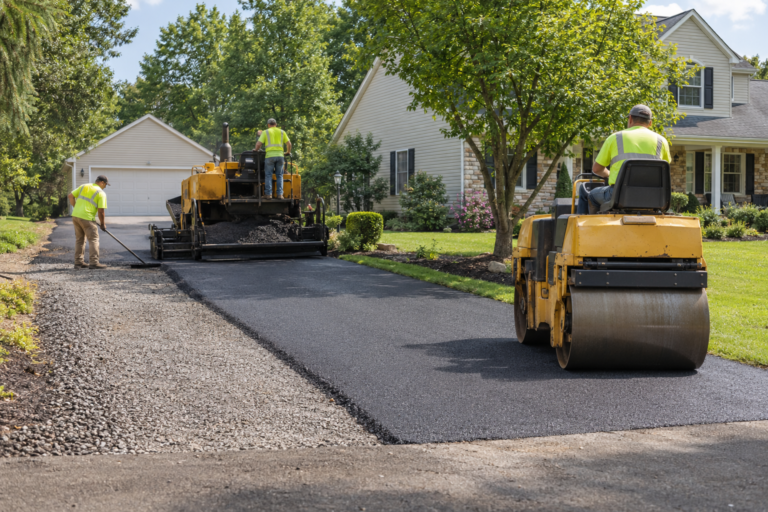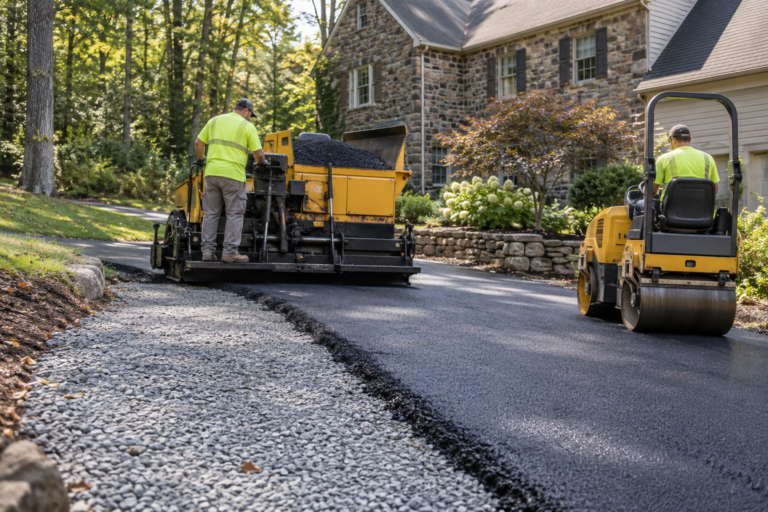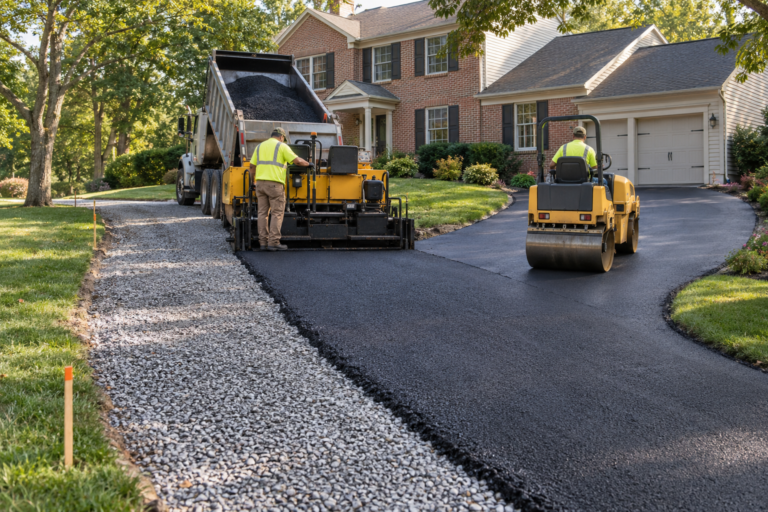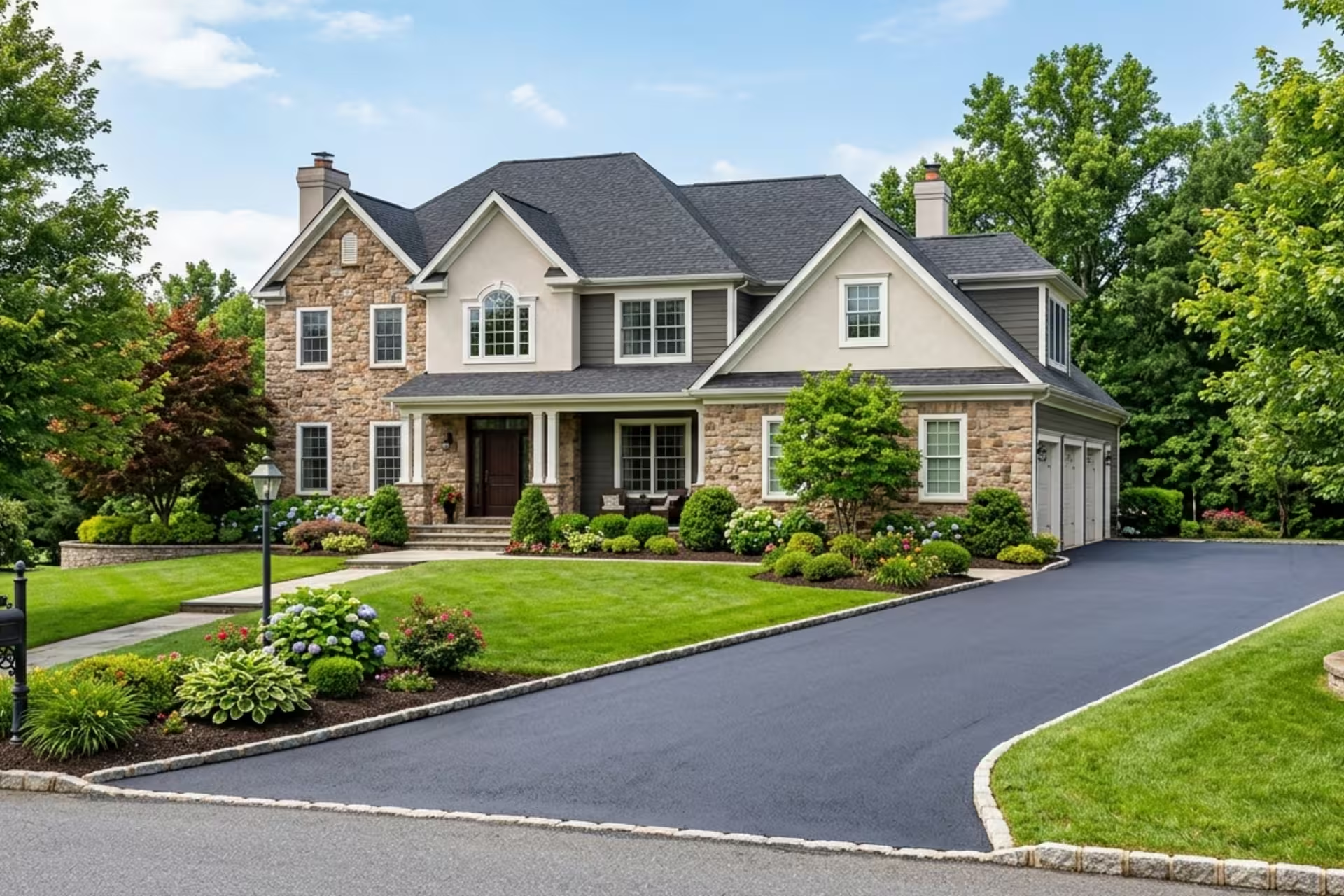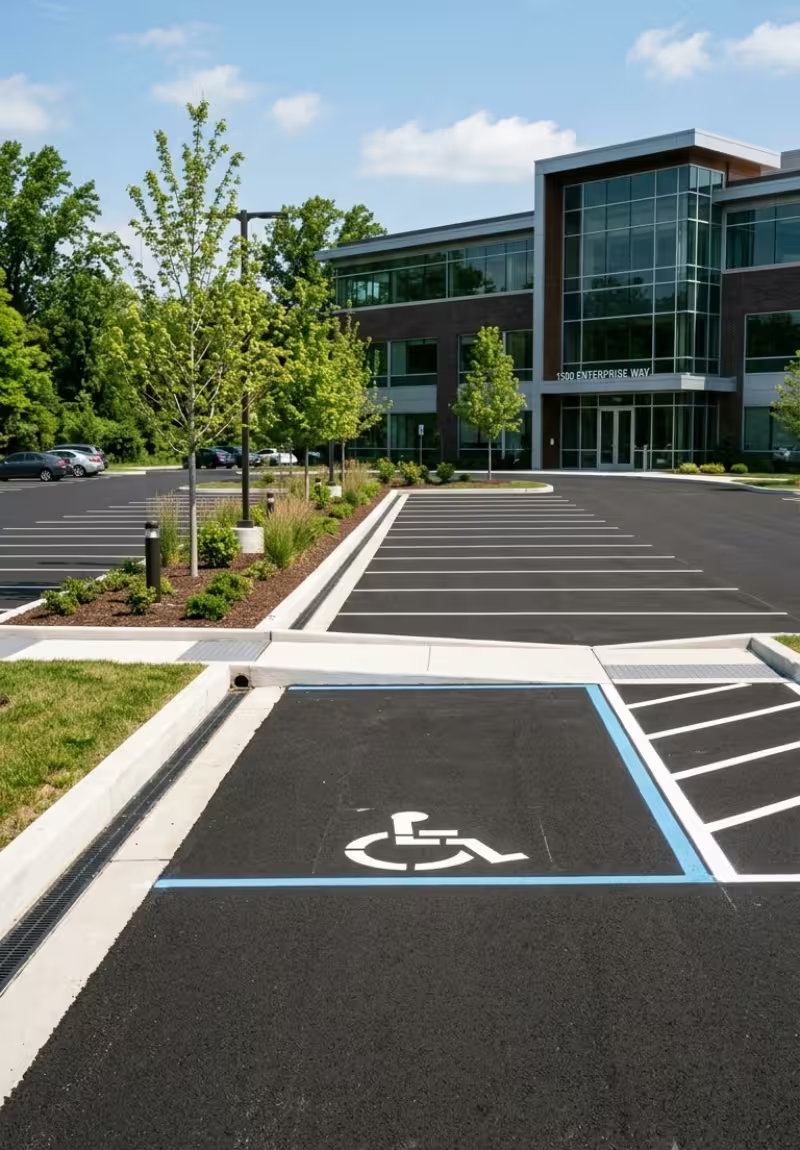
Commercial pavement must support everyday property operations while providing practical access for customers, employees, patients, tenants, deliveries, service vehicles and emergency traffic.
Potholes, settlement, cracking and standing water can affect a property’s appearance and make vehicle or pedestrian access more difficult. However, successful pavement work requires more than covering visible deterioration with another asphalt layer.
American Paving & Concrete provides professional commercial paving services in East Norriton, Pennsylvania. Our services include parking lot installation, pavement replacement, asphalt milling, resurfacing, pothole repair, drainage correction and maintenance.
Before recommending work, we evaluate the asphalt surface, aggregate base, traffic, drainage, entrances and expected vehicle loads.
Complete Commercial Paving Services in East Norriton
East Norriton contains retail properties, offices, medical facilities, apartment communities, institutions, service businesses and other managed commercial sites.
Our services may include:
- New parking lot installation
- Commercial parking lot replacement
- Asphalt milling
- Asphalt resurfacing
- Pothole repair
- Crack filling
- Surface patching
- Full-depth asphalt repair
- Failed-section reconstruction
- Commercial entrance paving
- Access-lane paving
- Drive-aisle paving
- Loading-area repair
- Catch-basin-area repair
- Drainage correction
- Asphalt-to-concrete transitions
- Concrete pads and aprons
- Sealcoating
- Pavement-maintenance planning
- Preparation for line striping
- Phased paving projects
The correct service depends on the pavement condition and the strength of its supporting structure.
Commercial Properties We Serve
American Paving & Concrete provides paving solutions for:
- Retail properties
- Shopping areas
- Office buildings
- Medical properties
- Apartment communities
- Condominium developments
- Restaurants
- Churches
- Schools
- Daycare facilities
- Warehouses
- Storage facilities
- Institutional properties
- Managed commercial properties
- Private commercial roads
- Loading and service areas
Every site has different traffic, drainage, access and pavement-strength requirements. These conditions should be assessed before construction begins.
New Commercial Parking Lot Installation
A new parking lot requires a properly constructed foundation beneath the asphalt.
Professional parking lot paving may include:
- Inspecting and measuring the site.
- Evaluating soil and drainage.
- Planning vehicle and pedestrian circulation.
- Removing unsuitable material.
- Excavating to the necessary depth.
- Installing crushed aggregate.
- Compacting the base in layers.
- Establishing drainage grades.
- Installing hot-mix asphalt.
- Compacting each pavement layer.
- Finishing edges and transitions.
- Preparing the surface for line striping.
The pavement structure should reflect expected use. A small office lot used by passenger vehicles may require different preparation from a medical entrance, loading area or service lane.
Commercial Pavement Design
There is no single pavement specification suitable for every commercial property.
Important considerations include:
- Passenger vehicles
- Delivery trucks
- Waste-removal vehicles
- Emergency vehicles
- Buses and vans
- Trailers
- Snowplows
- Maintenance equipment
- Traffic frequency
- Turning and braking
- Standing vehicle loads
- Soil stability
- Aggregate-base depth
- Asphalt thickness
- Surface drainage
- Property layout
Entrances, drive aisles, loading areas and dumpster approaches often experience greater stress than standard parking stalls.
These sections may require stronger base construction or a different pavement structure.
Aggregate-Base Preparation
The aggregate base supports the asphalt and distributes vehicle loads.
Preparation may include:
- Removing unstable soil
- Excavating soft areas
- Installing crushed aggregate
- Compacting material in layers
- Replacing contaminated base material
- Establishing drainage grades
- Supporting pavement edges
- Reinforcing commercial entrances
- Creating smooth transitions
A weak or inadequately compacted base can contribute to settlement, cracking, potholes and recurring repair failure.
Installing asphalt over unstable material may temporarily improve the appearance without resolving the underlying problem.
Commercial Parking Lot Replacement
Complete replacement may be suitable when pavement has extensive structural failure.
Warning signs can include:
- Widespread alligator cracking
- Numerous recurring potholes
- Severe settlement
- Large soft areas
- Extensive surface breakup
- Failed drainage
- Crumbling edges
- Multiple failed patches
- Unstable aggregate
- Asphalt breaking apart throughout the property
Replacement allows the damaged asphalt and unsuitable supporting material to be removed. The base, drainage and surface elevations can then be corrected before new pavement is installed.
Asphalt Milling in East Norriton
Asphalt milling removes a controlled depth of existing pavement before resurfacing.
Milling may be used to:
- Remove worn asphalt
- Maintain curb exposure
- Preserve doorway clearance
- Correct surface elevations
- Remove shallow rutting
- Prepare commercial entrances
- Improve transitions
- Prepare pavement around drains
- Create a suitable overlay profile
- Connect new pavement to adjoining surfaces
Milling depth depends on the condition of the existing asphalt and the planned overlay.
The milled surface should be cleaned before repairs and replacement asphalt are installed.
Commercial Asphalt Resurfacing
Resurfacing installs a new asphalt layer over prepared existing pavement.
It may be appropriate when:
- The aggregate base remains stable
- The pavement is reasonably level
- Surface wear is widespread
- Cracking is moderate
- Potholes are limited and repairable
- Major structural movement is absent
- Drainage remains functional
Failed sections should be repaired before resurfacing. Milling may be required near curbs, sidewalks, entrances and drainage structures.
Resurfacing should not be used to hide major settlement, extensive base failure or unresolved drainage problems.
Commercial Asphalt Repair
Localized deterioration does not always require complete parking lot replacement.
Professional asphalt repair may include:
- Pothole repair
- Crack filling
- Surface patching
- Full-depth patching
- Edge reconstruction
- Low-spot correction
- Utility-cut repair
- Entrance repair
- Loading-area repair
- Catch-basin-area repair
- Drainage-related repair
- Failed-patch replacement
The repair method depends on whether the damage remains near the asphalt surface or extends into the supporting aggregate.
Pothole and Full-Depth Repair
Potholes can develop when water enters damaged asphalt, weakens the base and allows traffic to break the pavement apart.
A properly prepared repair may involve:
- Removing loose material
- Cutting back to stable pavement
- Inspecting the aggregate base
- Removing unstable material
- Installing replacement aggregate
- Compacting the base
- Installing new asphalt
- Compacting the repair
- Finishing the patch perimeter
Full-depth repair may be necessary for deep potholes, alligator cracking, loading-area failure and deterioration around drainage structures.
Filling only the visible opening without correcting a weak base may allow the pothole to return.
Parking Lot Drainage
Water is a major contributor to commercial pavement deterioration.
Poor drainage can cause:
- Standing water
- Potholes
- Base erosion
- Settlement
- Ice formation
- Pavement-edge damage
- Catch-basin deterioration
- Recurring patch failure
- Water near entrances
Drainage correction may involve rebuilding low areas, improving the surface grade, repairing pavement around drains and restoring runoff paths.
Repairs may continue to fail if the underlying drainage problem remains unresolved.
Catch-Basin and Drainage-Area Repairs
Pavement near catch basins may settle or crack when aggregate erodes or separates from the drainage structure.
Repair may require:
- Removing damaged asphalt
- Inspecting the drain surroundings
- Rebuilding the aggregate base
- Correcting the adjoining grade
- Installing replacement asphalt
- Compacting around the structure
- Creating a smooth drainage transition
The finished surface should direct runoff toward the drain without creating another depression.
Medical and Healthcare Property Paving
Healthcare and medical properties can have specific access requirements. Parking and entrances may need to accommodate patients, staff, visitors, deliveries and emergency vehicles.
Planning may need to consider:
- Patient drop-off areas
- Emergency access
- Accessible parking routes
- Building entrances
- Pedestrian movement
- Delivery access
- Staff parking
- Temporary traffic control
- Phased construction
- Reopening schedules
Paving work should be coordinated carefully to reduce disruption and preserve essential access.
Retail and Office Parking Lots
Retail and office properties depend on practical customer and employee access.
Services may include:
- Parking lot resurfacing
- Entrance repair
- Pothole patching
- Drive-aisle reconstruction
- Drainage correction
- Sidewalk transitions
- Sealcoating
- Preparation for restriping
Project scheduling may need to account for business hours, deliveries, customer traffic and shared entrances.
Apartment and Multi-Unit Property Paving
Apartment and condominium pavement must support residents, visitors, deliveries, maintenance vehicles and waste collection.
Services may include:
- Parking lot resurfacing
- Pothole repair
- Drive-aisle paving
- Entrance reconstruction
- Walkway transitions
- Drainage correction
- Pavement maintenance
- Phased paving
- Preparation for restriping
Residents and tenants should receive advance notice regarding parking restrictions, construction phases and reopening times.
Commercial Entrances and Drive Aisles
Entrances and exits experience concentrated turning, braking and acceleration forces.
Common damage includes:
- Rutting
- Surface shoving
- Potholes
- Edge breakup
- Settlement
- Rough roadway transitions
- Drainage deterioration
- Failed utility cuts
A commercial entrance may require stronger preparation than standard parking stalls. Its grade should support practical access without trapping water near the roadway or property.
Loading and Waste-Collection Areas
Loading zones and dumpster approaches experience concentrated vehicle weight and frequent turning.
Potential damage includes:
- Depressions
- Wheel-path rutting
- Alligator cracking
- Broken edges
- Surface shoving
- Oil contamination
- Potholes
- Base failure
The pavement design should reflect vehicle weights and standing loads.
Some properties may benefit from professional concrete paving for pads, aprons or transitions exposed to concentrated loads.
Phased Commercial Paving
Commercial and institutional properties may need to remain partially open during construction.
A phased plan can help preserve:
- Customer access
- Patient access
- Employee parking
- Tenant parking
- Building entrances
- Delivery routes
- Emergency access
- Pedestrian routes
Phasing should account for equipment movement, construction joints, curing, traffic control and reopening times.
Although phasing may reduce operational disruption, it can require additional coordination and equipment mobilization.
Seasonal Conditions in East Norriton
Commercial pavement in East Norriton is exposed to summer heat, rainfall, freezing temperatures, snow, ice, road salt and snowplow activity.
Water entering cracks can weaken the aggregate base. Freeze-thaw cycles may then widen deterioration and contribute to potholes.
Asphalt installation and surface treatments should be scheduled according to suitable weather and material requirements.
Routine asphalt maintenance can help identify cracks, drainage problems and failed sections before they expand.
Sealcoating and Preventive Maintenance
Professional sealcoating may help protect eligible asphalt from sunlight, oxidation, moisture, road salt and vehicle-fluid exposure.
Sealcoating does not repair:
- Potholes
- Base failure
- Severe settlement
- Alligator cracking
- Drainage problems
- Structurally failed pavement
Repairs and crack treatment should be completed before an eligible surface is sealcoated.
A maintenance plan may include pavement inspections, crack filling, pothole repair, drainage checks and future resurfacing evaluation.
What Affects Commercial Paving Cost?
Commercial paving cost depends on:
- Total pavement area
- Existing asphalt removal
- Milling depth
- Excavation requirements
- Soil stability
- Aggregate-base depth
- Asphalt thickness
- Vehicle loads
- Drainage correction
- Catch-basin work
- Concrete work
- Property access
- Project phasing
- Disposal requirements
- Number of mobilizations
- Preparation for line striping
An on-site assessment provides a more accurate estimate than a general square-foot price that does not account for property conditions.
Repair, Resurface or Replace?
Repair may be appropriate when:
- Damage affects isolated areas
- Most pavement remains serviceable
- The surrounding asphalt is stable
- Settlement is limited
- Drainage remains functional
Resurfacing may be appropriate when:
- Surface wear is widespread
- The base remains stable
- Structural cracking is limited
- Failed sections can be repaired
- Major settlement is absent
- Drainage remains functional
Replacement may be appropriate when:
- Potholes repeatedly return
- Alligator cracking is widespread
- Large areas have settled
- The aggregate base is unstable
- Drainage failure is extensive
- Numerous repairs have failed
- Asphalt is breaking apart throughout the property
A professional property inspection helps determine the appropriate service.
Commercial Paving Throughout Montgomery County
East Norriton Township is in Montgomery County. Visit the Montgomery County paving contractor page for information about broader regional services.
Why Choose American Paving & Concrete?
American Paving & Concrete provides:
- Commercial asphalt and concrete services
- New parking lot installation
- Parking lot replacement
- Asphalt milling and resurfacing
- Pothole and full-depth repair
- Drainage evaluation
- Commercial entrance paving
- Medical property paving options
- Phased construction
- Pavement-maintenance planning
- Site-specific recommendations
- Licensed Pennsylvania contractor services
- Free project estimates
We evaluate the complete pavement structure before before recommending repair, resurfacing or replacement.
Request a Commercial Paving Estimate in East Norriton, PA
If your commercial property needs a new parking lot, replacement pavement, repairs, milling, resurfacing or maintenance, contact American Paving & Concrete.
We can inspect the property, discuss access requirements and prepare an estimate based on the necessary construction.
Call: (610) 477-3553
Email: info@americanpavingandconcrete.com
Address: 2114 Dublin Pike, Quakertown, PA 18951
Online: Request a commercial paving estimate