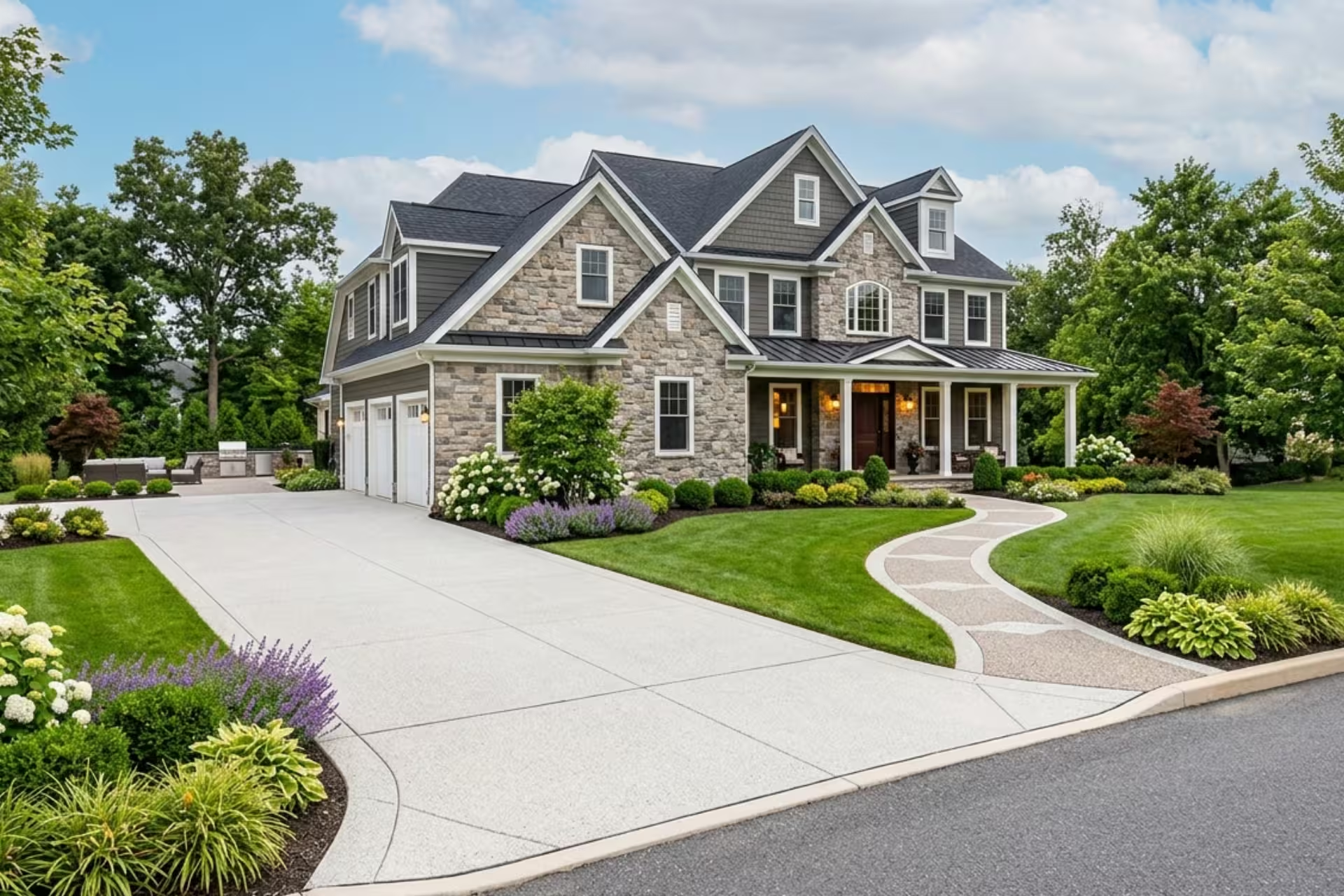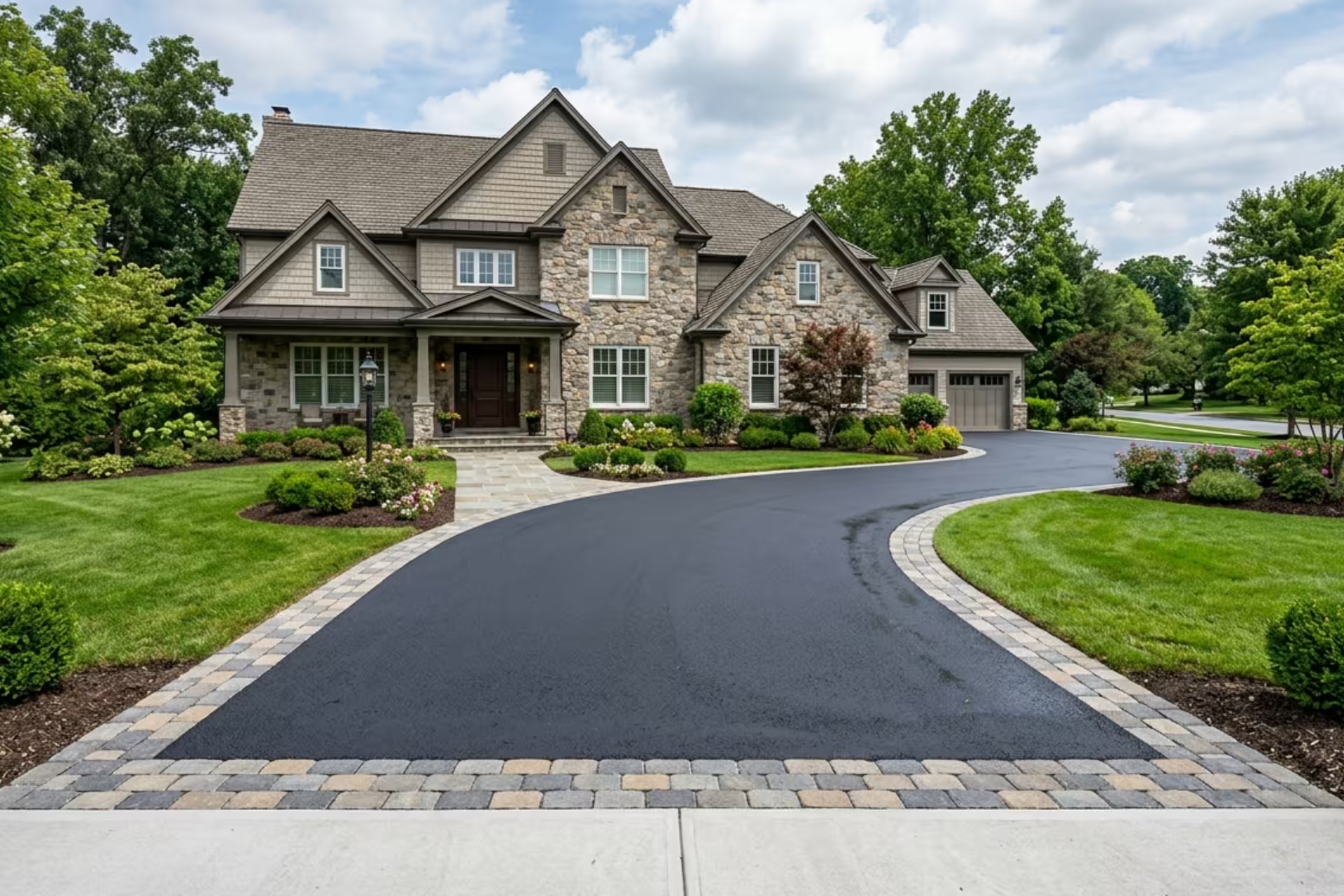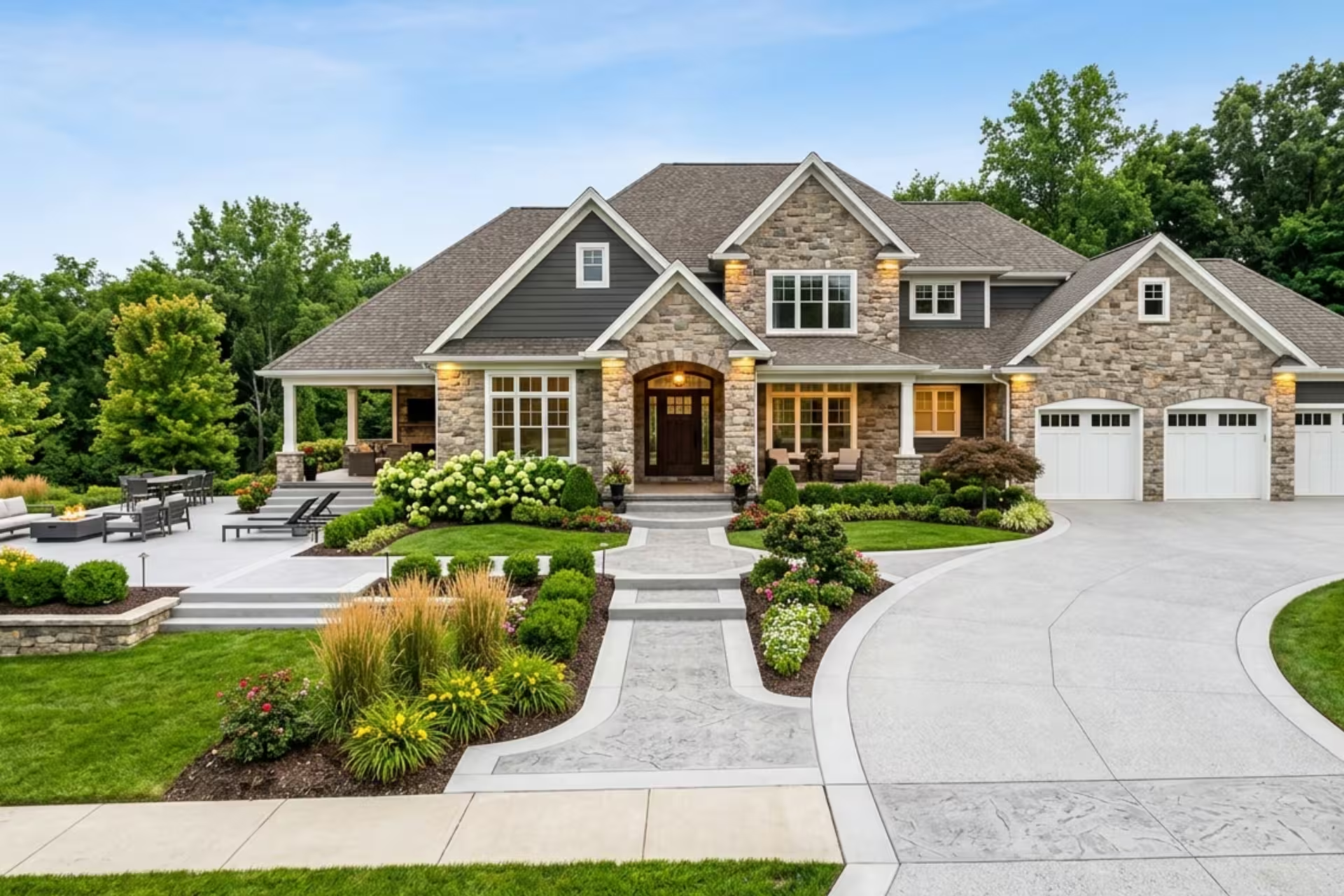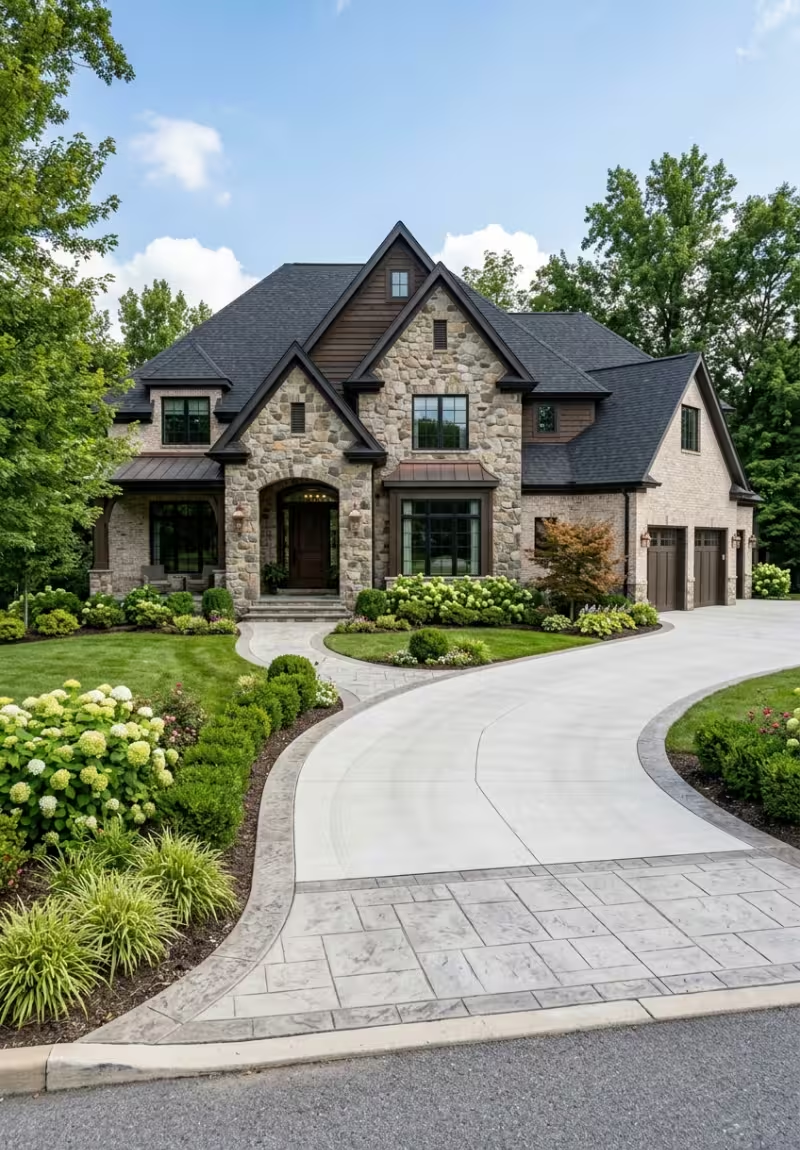
An asphalt driveway is constantly exposed to sunlight, rain, vehicle traffic, automotive fluids, snow, ice and Pennsylvania’s seasonal temperature changes. Over time, these conditions can dry and fade the pavement’s surface, making routine maintenance increasingly important.
Professional driveway sealcoating applies a protective coating over eligible asphalt. When the pavement is properly prepared and structurally suitable, sealcoating can limit direct exposure to weather and help maintain a consistent dark finish.
American Paving & Concrete provides professional sealcoating services in Perkasie, Pennsylvania, for residential driveways and qualifying commercial asphalt surfaces.
Before recommending treatment, we assess the pavement’s age, surface condition, cracking, drainage and previous coatings. Sealcoating is preventive maintenance—not a substitute for repairing structural pavement failure.
Professional Asphalt Sealcoating in Perkasie
Perkasie properties can have everything from compact residential driveways to longer private lanes and commercial parking areas. Each surface requires preparation based on its condition, use and surrounding environment.
Our sealcoating work may include:
- Residential driveway sealcoating
- Private-lane sealcoating
- Commercial pavement sealcoating
- Parking-area maintenance
- Pavement cleaning and preparation
- Oil-spot evaluation
- Vegetation removal along asphalt edges
- Crack inspection
- Minor asphalt repair recommendations
- Controlled sealer application
- Edge and transition detailing
- Drying and reopening instructions
A site inspection helps determine whether the asphalt is ready for sealcoating or needs professional asphalt repair first.
What Does Sealcoating Do?
Sealcoating creates a protective surface layer over properly cured asphalt. It is primarily intended to reduce direct exposure to environmental conditions that contribute to surface aging.
A suitable sealcoat may help:
- Slow surface oxidation
- Limit direct ultraviolet exposure
- Reduce superficial water penetration
- Protect against minor automotive-fluid exposure
- Restore a darker, more uniform appearance
- Make routine cleaning easier
- Reduce weathering of the asphalt surface
- Support a broader pavement-maintenance plan
Sealcoating does not add a new structural asphalt layer. It cannot rebuild a failed base, level severe depressions or permanently repair potholes and alligator cracking.
Signs Your Driveway May Be Ready for Sealcoating
A driveway may be a candidate for sealcoating when it remains structurally stable but shows normal surface aging.
Possible signs include:
- The asphalt has faded from black to gray
- Fine surface aggregate is becoming visible
- The pavement has minor nonstructural cracks
- Water no longer sheds as readily from the surface
- A previous coating has worn evenly
- The driveway has not been sealed for several years
- The surface is sound but appears dry or weathered
The pavement should still be inspected before treatment. Similar-looking symptoms can have different underlying causes.
Faded but stable asphalt may benefit from sealcoating. Asphalt with extensive movement or base failure generally needs repair or reconstruction.
When Sealcoating Is Not the Correct Solution
Sealcoating is not appropriate for every damaged driveway.
It will not correct:
- Potholes
- Severe depressions
- Extensive alligator cracking
- Base failure
- Large soft areas
- Significant settlement
- Drainage-related movement
- Broken pavement edges
- Loose or crumbling asphalt
- Widespread surface separation
Applying sealer over structural damage may temporarily darken the pavement without resolving the reason it is failing.
Isolated damage may be repairable. Widespread deterioration may require resurfacing or professional asphalt installation.
Sealcoating Versus Asphalt Repair
Sealcoating and asphalt repair serve different purposes.
Sealcoating
Sealcoating is preventive surface maintenance. It protects eligible asphalt from exposure and improves surface uniformity.
It is most suitable when:
- The pavement remains stable
- Cracking is minor
- There are no active potholes
- Drainage functions properly
- The asphalt is appropriately cured
- Previous coatings are compatible and intact
Asphalt repair
Repair addresses damaged sections of pavement.
It may include:
- Pothole repair
- Failed-area removal
- Edge reconstruction
- Crack treatment
- Drain-area repair
- Utility-cut repair
- Localized base correction
- Depressed-area reconstruction
Repairs should be completed and allowed to set appropriately before sealcoating.
The Driveway Sealcoating Process
Professional results depend on careful preparation, suitable pavement and appropriate weather.
1. Pavement inspection
The driveway is assessed for:
- Asphalt age
- Surface wear
- Existing coatings
- Cracks
- Potholes
- Settlement
- Drainage
- Oil or chemical contamination
- Edge condition
- Traffic requirements
This inspection determines whether sealcoating is suitable and identifies repairs that should be completed first.
2. Surface cleaning
Dirt and loose material can prevent proper sealer adhesion. The pavement must be thoroughly cleaned.
Preparation may include:
- Removing loose aggregate
- Sweeping dirt and debris
- Clearing grass from pavement edges
- Removing leaves and organic material
- Cleaning accumulated material from cracks
- Evaluating oil-stained areas
- Addressing surface contaminants
- Protecting nearby concrete and structures
Sealer should bond to prepared asphalt rather than a layer of dust or debris.
3. Crack and damage evaluation
Cracks are reviewed to determine whether they are suitable for treatment or indicate deeper pavement movement.
Crack treatment may help reduce water entry through eligible openings, but it does not restore structural strength to failed asphalt.
Potholes and unstable sections should be professionally repaired before coating.
4. Property protection
Before application, nearby surfaces and features should be protected as appropriate.
These may include:
- Concrete sidewalks
- Garage floors and aprons
- Pavers
- Curbs
- Walls
- Fences
- Landscaping
- Drainage structures
- Roadway transitions
Careful edge work helps create a cleaner finished appearance.
5. Sealer application
The coating is applied evenly across the prepared pavement using a method suitable for the project.
Application should focus on:
- Consistent coverage
- Defined pavement edges
- Avoiding excessive buildup
- Protecting adjoining surfaces
- Maintaining the manufacturer’s application requirements
- Accounting for pavement texture and porosity
- Observing suitable temperature and weather conditions
More material is not automatically better. Excessive or uneven application can delay drying and create an inconsistent finish.
6. Drying and reopening
The coated pavement must remain closed to vehicles until it has dried and cured sufficiently.
Reopening time depends on:
- Temperature
- Humidity
- Sunlight
- Shade
- Air movement
- Pavement condition
- Product requirements
- Number and thickness of coats
Property owners should follow the project-specific reopening instructions rather than relying on one universal timeframe.
Why Surface Preparation Matters
A sealcoat depends on its bond with the asphalt. Dirt, vegetation, moisture, oil and loose material can interfere with adhesion.
Poor preparation may contribute to:
- Peeling
- Flaking
- Uneven color
- Premature wear
- Bare areas
- Visible application marks
- Poor edge definition
- Reduced coating life
Preparation also provides an opportunity to identify damage that should not simply be covered.
A clean, dry and structurally suitable surface gives the coating a better foundation.
Crack Treatment Before Sealcoating
Cracks create pathways through which water can reach the pavement’s supporting material. Once moisture enters the base, traffic and freeze-thaw cycles can accelerate movement and deterioration.
Before sealcoating, cracks should be evaluated for:
- Width
- Depth
- Pattern
- Movement
- Edge deterioration
- Vegetation
- Water entry
- Nearby settlement
A few isolated cracks may be treatable. Dense interconnected cracking often indicates structural failure that sealcoating cannot correct.
Crack treatment may remain visible after the pavement is sealed. This is normal because the repair material and surrounding asphalt have different textures.
Pennsylvania Weather and Asphalt Driveways
Perkasie experiences hot summers, rainfall, freezing temperatures, snow, ice and repeated freeze-thaw cycles.
Sunlight contributes to oxidation at the pavement surface. Water can enter through open cracks and damaged edges. If trapped moisture freezes, expansion can worsen existing pavement movement.
Seasonal pavement protection involves more than applying sealer. A complete asphalt-maintenance plan may include:
- Routine inspections
- Crack treatment
- Pothole repair
- Drainage correction
- Edge maintenance
- Sealcoating when appropriate
- Cleaning spills
- Resurfacing planning
Sealcoating is one component of this broader maintenance cycle.
How Often Should a Driveway Be Sealcoated?
There is no reliable schedule that applies to every driveway.
The appropriate interval depends on:
- Pavement age
- Previous coating condition
- Sun exposure
- Tree cover
- Vehicle traffic
- Snowplow use
- Surface texture
- Drainage
- Weather exposure
- Product performance
- Oil or chemical contact
- Quality of the previous application
Sealcoating too frequently can create excessive buildup. The driveway should be evaluated according to its actual condition rather than automatically coated every year.
Can New Asphalt Be Sealcoated Immediately?
No. Newly installed asphalt needs time to cure before sealcoating.
Applying a coating too early can interfere with the pavement’s normal curing process. The suitable waiting period depends on the asphalt mixture, installation conditions, season and site exposure.
New-driveway owners should follow the paving contractor’s recommendation and have the pavement evaluated before scheduling its first sealcoat.
Residential Driveway Sealcoating
Residential driveway work requires attention to features such as:
- Garage entrances
- Concrete aprons
- Sidewalk crossings
- Decorative pavers
- Retaining walls
- Drainage swales
- Landscaping
- Roadway transitions
- Shared access
- Sloped pavement
- Vehicle parking needs
The project should be scheduled so vehicles can remain off the treated surface during drying.
American Paving & Concrete also provides driveway paving when an existing surface has deteriorated beyond what maintenance can reasonably preserve.
Commercial Sealcoating and Pavement Maintenance
Commercial asphalt is exposed to more frequent traffic, turning vehicles, delivery trucks, refuse vehicles and snow-removal equipment.
A commercial maintenance plan may include:
- Parking-lot inspection
- Failed-area repair
- Crack treatment
- Sealcoating
- Drainage maintenance
- Loading-area evaluation
- Traffic planning
- Phased application
- Reopening coordination
- Preparation for line striping
Businesses may benefit from planned phases that preserve access to part of the property when site conditions allow.
For larger properties, see our commercial paving services.
What Affects Sealcoating Cost in Perkasie?
The price depends on more than driveway square footage.
Cost factors can include:
- Total pavement area
- Driveway shape
- Surface porosity
- Existing coating condition
- Cleaning requirements
- Vegetation along edges
- Number and condition of cracks
- Oil stains
- Repair requirements
- Application method
- Property access
- Nearby surfaces requiring protection
- Number of coats
- Traffic-control requirements
An on-site inspection provides a more useful estimate than a general price that does not account for pavement condition.
How to Prepare for Your Sealcoating Appointment
Property owners may be asked to:
- Remove vehicles from the driveway
- Arrange alternate parking
- Move portable basketball hoops
- Remove planters and movable objects
- Turn off scheduled lawn irrigation
- Keep pets and children away from the work area
- Avoid washing the pavement immediately before service
- Trim vegetation that blocks pavement edges
- Keep vehicles off the coating until reopening is approved
Specific preparation instructions should be confirmed before work begins.
Sealcoating Services in Perkasie and Bucks County
Perkasie is in Bucks County, Pennsylvania. American Paving & Concrete provides residential and commercial pavement services throughout its established regional service area.
The recommended internal-linking structure is:
Sealcoating → Bucks County Paving Services → Perkasie Driveway Sealcoating
Link this article from the main sealcoating page and the relevant Bucks County service-area page after publication. This creates a clear relationship between the core service, county service area and local post.
Why Choose American Paving & Concrete?
American Paving & Concrete offers:
- Residential driveway sealcoating
- Commercial asphalt maintenance
- Pavement-condition evaluations
- Surface preparation
- Crack and repair recommendations
- Asphalt repair and installation
- Site-specific maintenance planning
- Clear project communication
- Professional paving equipment
- Pennsylvania contractor services
- Free project estimates
We evaluate the pavement before recommending sealcoating. If the surface needs repair, resurfacing or replacement instead, we can explain the available options.
Request a Sealcoating Estimate in Perkasie, PA
If your asphalt driveway or parking area is faded but remains structurally sound, contact American Paving & Concrete for an evaluation.
We can inspect the pavement, identify necessary preparation and determine whether sealcoating is appropriate.
Call: (610) 477-3553
Email: info@americanpavingandconcrete.com
Address: 2114 Dublin Pike, Quakertown, PA 18951
Online: Request a free estimate