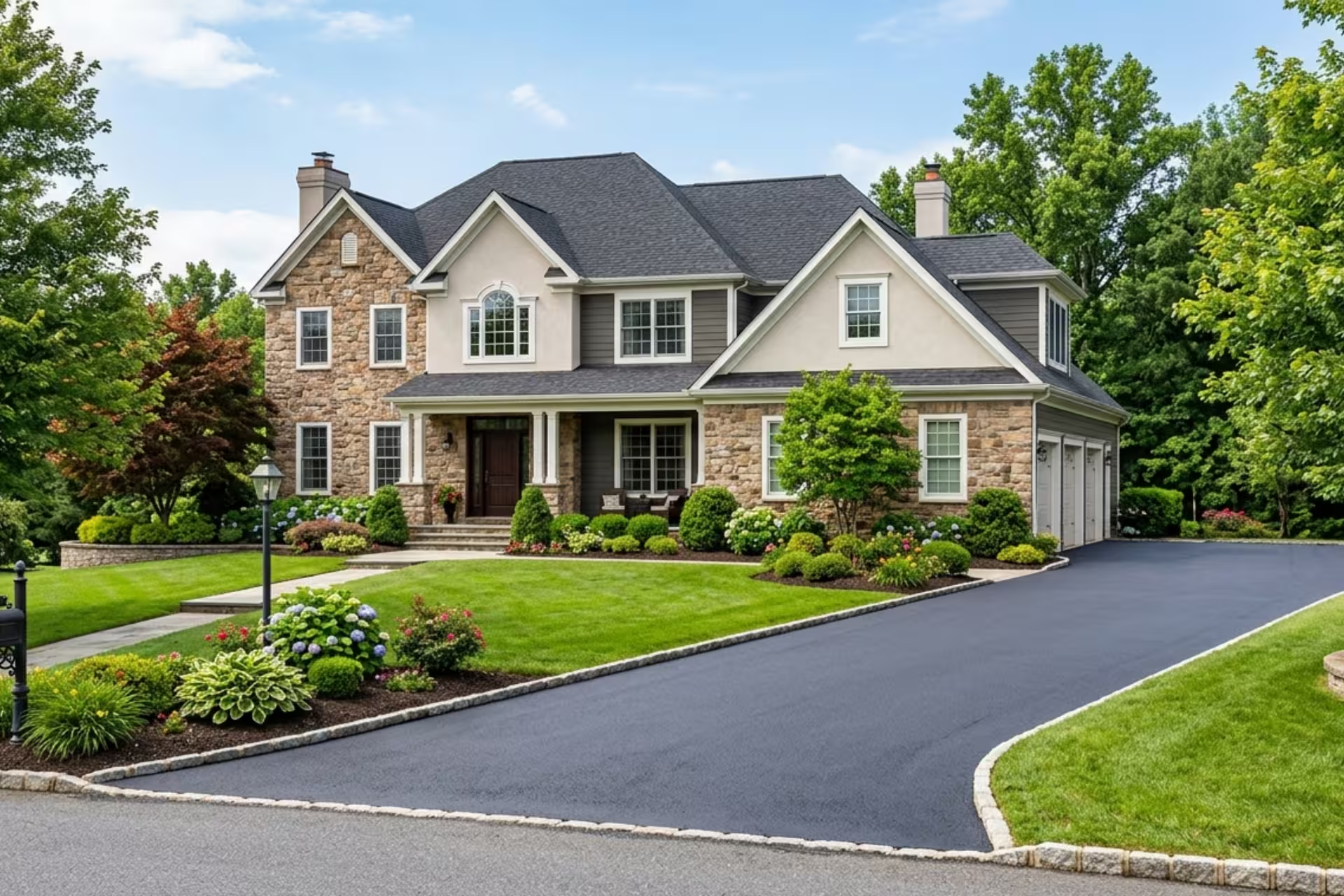
A properly installed tar-and-chip driveway commonly provides approximately 7–10 years of service, while favorable site conditions, careful construction and timely maintenance may allow it to remain functional longer.
Its exact lifespan depends on much more than the visible stone surface. The condition of the existing pavement or aggregate base, drainage, binder application, aggregate embedment, vehicle traffic and Pennsylvania’s freeze-thaw weather all affect long-term performance.
Tar-and-chip—also called chip seal or stone-and-oil surfacing—combines a liquid asphalt binder with a layer of selected aggregate. The stone is rolled into the binder, creating a textured driving surface with a more natural appearance than conventional blacktop.
American Paving & Concrete provides professional paving and pavement-maintenance services throughout Pennsylvania. Before recommending tar-and-chip, asphalt or another surface, we evaluate the site’s foundation, grade, drainage and expected traffic.
What Is a Tar-and-Chip Driveway?
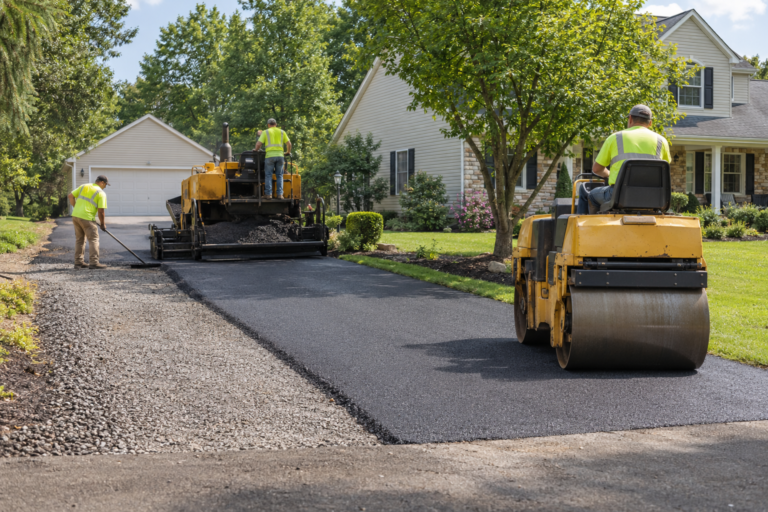
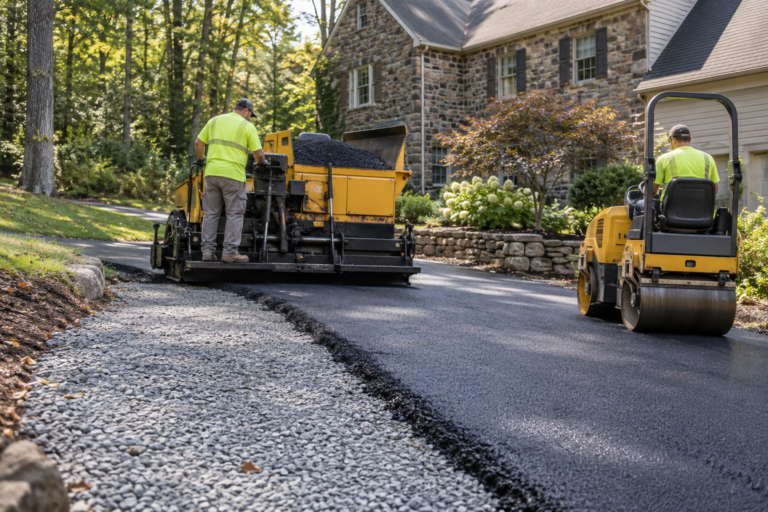
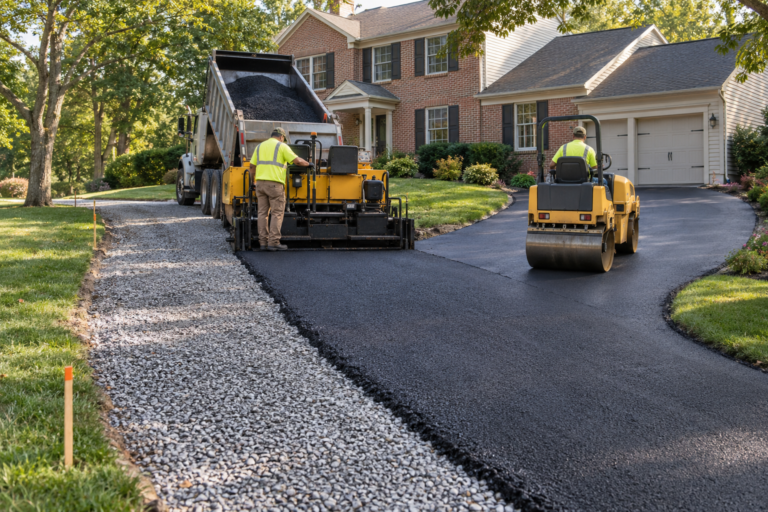
A tar-and-chip driveway is constructed by applying a heated asphalt-based binder to a prepared surface and covering it with clean aggregate. The stone is then rolled into the binder so it becomes embedded and forms the wearing surface.
The installation generally involves:
- Inspecting the existing pavement or aggregate base
- Correcting failed or unstable areas
- Cleaning and preparing the surface
- Establishing appropriate drainage and grade
- Applying the asphalt binder
- Spreading selected aggregate evenly
- Rolling the stone into the binder
- Removing excess loose aggregate when appropriate
Some projects use multiple applications of binder and stone, depending on the surface, desired finish and intended use.
Tar-and-chip should not be confused with loose gravel. Although stone is visible at the surface, the aggregate is embedded in an asphalt binder rather than simply spread over an unbound driveway.
Average Tar-and-Chip Driveway Lifespan
A typical tar-and-chip driveway may last approximately 7–10 years before it requires significant renewal. This is a general planning range rather than a guarantee.
Some surfaces require attention sooner because of:
- Weak underlying pavement
- Inadequate drainage
- Heavy or frequent vehicles
- Insufficient binder
- Poor aggregate embedment
- Snowplow damage
- Unstable edges
- Severe freeze-thaw movement
- Oil or chemical contamination
- Delayed maintenance
A well-built surface over a stable foundation may continue serving beyond the general range, particularly when damaged areas are addressed promptly.
The driveway’s useful life should be evaluated by condition rather than age alone. A ten-year-old surface with stable support and limited wear may remain serviceable, while a much newer surface can fail if its base or drainage was unsuitable.
What Determines How Long Tar-and-Chip Lasts?
Several connected factors determine the service life of a chip-seal driveway.
Existing surface condition
Tar-and-chip is often applied over:
- Existing asphalt
- Stable aggregate
- Previously chip-sealed pavement
- Prepared private roads
- Suitable parking or access areas
The underlying surface must be capable of supporting traffic. Chip seal is a surface treatment; it does not rebuild a structurally failed base.
If the existing pavement has extensive alligator cracking, severe settlement, potholes or unstable areas, those defects may eventually affect the new surface.
Base preparation
The driveway’s base distributes vehicle loads and supports the surface system.
A weak foundation may contribute to:
- Settlement
- Rutting
- Depressions
- Edge failure
- Potholes
- Surface movement
- Recurring cracks
- Loose aggregate
New construction or severely deteriorated driveways may require excavation and compacted aggregate before any finished surface is installed.
Our driveway paving services include site-specific preparation based on soil, drainage, access and expected traffic.
Drainage
Water is one of the most important factors affecting pavement life.
Poor drainage may cause:
- Water infiltration
- Base erosion
- Soft supporting material
- Freeze-thaw movement
- Low spots
- Edge deterioration
- Surface breakup
- Recurring potholes
The driveway should be graded to direct water away from buildings and vulnerable pavement sections whenever the site permits.
Tar-and-chip does not correct major drainage problems by itself. Grade and runoff concerns should be addressed during preparation.
Binder application
The asphalt binder holds the aggregate in position. Its application must be appropriate for the existing surface, aggregate and weather conditions.
Too little binder can leave stone insufficiently embedded. Excessive binder may rise through the aggregate or create unstable areas.
Even and controlled application helps produce consistent aggregate retention.
Aggregate selection
Aggregate affects appearance, texture and performance.
Important characteristics include:
- Stone size
- Shape
- Cleanliness
- Durability
- Compatibility with the binder
- Resistance to traffic wear
- Ability to embed properly
Dusty, dirty or unsuitable aggregate may not bond effectively. Clean stone with appropriate physical properties generally provides better results.
Property owners may also have aesthetic options. Our guide to customizing tar-and-chip driveway color and texture explains how aggregate selection influences the finished appearance.
Rolling and embedment
The aggregate must be rolled into the binder while the materials remain workable.
Proper rolling helps:
- Seat the stone
- Improve binder contact
- Create consistent embedment
- Reduce premature aggregate loss
- Establish a more uniform surface
- Prepare the driveway for controlled traffic use
A limited amount of loose stone can be normal after installation. Significant or continuing aggregate loss may indicate an installation or traffic issue.
Traffic and vehicle weight
A residential driveway used primarily by passenger vehicles experiences different stress from one regularly supporting:
- Delivery trucks
- Dump trucks
- Trailers
- Recreational vehicles
- Construction equipment
- Commercial vehicles
- Waste-removal trucks
- Snowplows
Heavy vehicles, sharp turning and repeated braking can disturb the surface, particularly when it is new or during very hot weather.
The pavement structure should be designed for the traffic it will actually receive.
How Pennsylvania Weather Affects Chip Seal
Pennsylvania pavement is exposed to summer heat, rain, snow, ice, salt and repeated freeze-thaw cycles.
During warm weather, asphalt binders can soften. Aggressive turning or braking may disturb stone, particularly on a newly installed surface.
During winter, water entering damaged areas can freeze and expand. Repeated freezing and thawing can worsen existing base movement, cracks and edge deterioration.
Weather-related performance depends on:
- Drainage
- Base stability
- Surface condition
- Aggregate embedment
- Pavement edges
- Snow-removal methods
- Timely repair
- Installation conditions
Seasonal inspection helps identify small defects before they develop into larger failures.
Signs a Tar-and-Chip Driveway Is Aging
Normal aging does not always mean the entire driveway needs replacement.
Watch for:
- Increasing loose stone
- Bare binder areas
- Worn traffic paths
- Faded or exposed underlying pavement
- Potholes
- Depressions
- Broken edges
- Surface cracks
- Drainage-related erosion
- Areas where stone no longer remains embedded
- Repeated damage in the same location
The pattern of deterioration matters.
Uniform surface wear may indicate that renewal is approaching. Isolated damage may be repairable. Widespread settlement or interconnected cracking may indicate a problem beneath the surface.
Can a Tar-and-Chip Driveway Be Repaired?
Yes, localized tar-and-chip damage may be repairable when the surrounding pavement and foundation remain stable.
Possible repairs include:
- Pothole patching
- Failed-area removal
- Localized base correction
- Edge rebuilding
- Drainage correction
- Binder and aggregate reapplication
- Treatment around utility cuts
- Repair of depressed areas
The repaired section may not match the surrounding stone perfectly. Aggregate color changes naturally, and older areas have already been exposed to traffic and weather.
Professional asphalt repair may be necessary when failure extends into the supporting pavement or base.
Can Tar-and-Chip Be Renewed?
A worn chip-seal surface may sometimes be renewed with another application of binder and aggregate.
Renewal may be considered when:
- The foundation remains stable
- Drainage functions properly
- Settlement is limited
- Failed sections can be repaired
- The surface is suitable for another application
- Elevation changes will not create transition problems
Before renewal, the contractor should evaluate cracks, potholes, loose material, edges and previous surface treatments.
Installing a new surface application over unstable pavement may temporarily improve appearance without resolving structural failure.
Tar-and-Chip Versus Asphalt Lifespan
Conventional hot-mix asphalt and tar-and-chip are different pavement systems.
Tar-and-chip
Tar-and-chip commonly offers:
- A textured, natural-looking finish
- Multiple aggregate color possibilities
- Good surface traction
- A lower-cost option in some applications
- Less visible minor surface variation
- Periodic renewal through additional chip-seal applications
Its commonly expected service interval is around 7–10 years, depending on conditions and maintenance.
Hot-mix asphalt
Professionally installed asphalt may provide a longer overall structural service life when built over a suitable aggregate base.
It commonly offers:
- A smoother surface
- Easier sweeping and snow removal
- Defined pavement edges
- Suitability for frequent traffic
- Repair and resurfacing options
- A more uniform blacktop appearance
Our asphalt paving services include new residential and commercial pavement construction.
The better option depends on the property, budget, appearance preference, traffic and long-term maintenance expectations.
Tar-and-Chip Versus Gravel
A gravel driveway consists of compacted aggregate without an asphalt binder at the surface. Tar-and-chip uses binder to retain much of the surface stone.
Compared with loose gravel, tar-and-chip may provide:
- Less stone migration
- Fewer ruts under suitable conditions
- A more defined surface
- Reduced dust
- Improved resistance to washout
- A more finished appearance
However, neither system performs well over a soft, unstable or poorly drained base.
Does Tar-and-Chip Need Sealcoating?
A tar-and-chip driveway generally should not receive conventional black driveway sealer in the same manner as a standard asphalt driveway unless a qualified contractor specifically determines that the treatment is compatible.
Applying an unsuitable coating may:
- Cover the decorative aggregate
- Change the intended texture
- Create an inconsistent appearance
- Reduce surface characteristics
- Interfere with future treatment
Tar-and-chip is more commonly maintained through repairs and compatible binder-and-aggregate renewal.
Conventional sealcoating is primarily intended for eligible asphalt pavement. The surface type should be correctly identified before any coating is applied.
Tar-and-Chip Driveway Maintenance
Routine maintenance can help preserve the surface and supporting structure.
Inspect the driveway
Check the pavement seasonally and after severe weather for:
- Potholes
- Loose stone
- Settlement
- Drainage problems
- Edge damage
- Erosion
- Worn traffic paths
- Vegetation growth
- Cracks
- Snowplow damage
Maintain drainage
Keep water moving away from the driveway by maintaining:
- Swales
- Ditches
- Culverts
- Drain inlets
- Pavement edges
- Road transitions
- Low areas
Drainage problems should be corrected promptly because continued water exposure can undermine the base.
Repair damage early
A small failed area is generally easier to address than widespread deterioration.
Prompt repair can help prevent:
- Pothole enlargement
- Water infiltration
- Edge breakup
- Aggregate loss
- Base contamination
- Damage spreading into surrounding pavement
Use careful snow-removal practices
Snowplow blades can catch raised stone or damage pavement edges.
Operators should:
- Use suitable blade settings
- Avoid scraping aggressively
- Identify pavement boundaries
- Exercise care at transitions
- Avoid pushing snow onto weak edges
- Reduce unnecessary spinning and sharp turning
Control vegetation
Grass and weeds can grow along unsupported edges or through damaged areas. Maintaining the driveway perimeter helps protect its width and makes deterioration easier to identify.
When Should Tar-and-Chip Be Replaced?
Complete reconstruction may be appropriate when the driveway has:
- Widespread base failure
- Severe rutting
- Extensive settlement
- Numerous recurring potholes
- Major drainage problems
- Large soft areas
- Extensive edge loss
- Multiple failed surface treatments
- Unsuitable elevations or transitions
- A need for significant redesign
Reconstruction allows unsuitable material to be removed and the grade, base and drainage to be rebuilt.
If the supporting structure remains sound, renewal or localized repair may be more practical than complete replacement.
What Does Tar-and-Chip Driveway Installation Cost?
Tar-and-chip pricing depends on the property and construction requirements.
Important factors include:
- Total square footage
- Existing surface
- Excavation requirements
- Base depth and condition
- Aggregate type
- Number of applications
- Binder quantity
- Driveway shape
- Property access
- Drainage improvements
- Edge preparation
- Traffic requirements
- Road and garage transitions
- Repair work
- Material availability
Tar-and-chip may cost less than a completely reconstructed asphalt driveway in some circumstances, particularly when installed over a suitable existing surface. It should not be selected solely by comparing surface prices while ignoring necessary base work.
An on-site assessment provides a more reliable estimate.
Is Tar-and-Chip Right for Your Driveway?
Tar-and-chip may suit property owners who want:
- A textured driving surface
- A natural stone appearance
- Aggregate color choices
- Good traction
- An alternative to conventional blacktop
- A practical surface for a long private lane
- Periodic surface-renewal options
It may be less suitable when the owner wants:
- A completely smooth surface
- Easy sweeping
- Minimal loose aggregate
- Frequent sharp vehicle movements
- A uniform blacktop appearance
- Conventional asphalt sealcoating
- The easiest surface for intensive snow removal
The decision should consider the entire pavement system, not appearance alone.
Request a Driveway Paving Assessment
If you are considering tar-and-chip, asphalt paving or another driveway surface, American Paving & Concrete can evaluate the site and explain the available options.
A property inspection can help determine:
- Whether the existing base is stable
- What preparation is needed
- How drainage should be handled
- Which surface suits the traffic
- Whether repair, renewal or replacement is appropriate
Call: (610) 477-3553
Email: info@americanpavingandconcrete.com
Address: 2114 Dublin Pike, Quakertown, PA 18951
Online: Request a free estimate