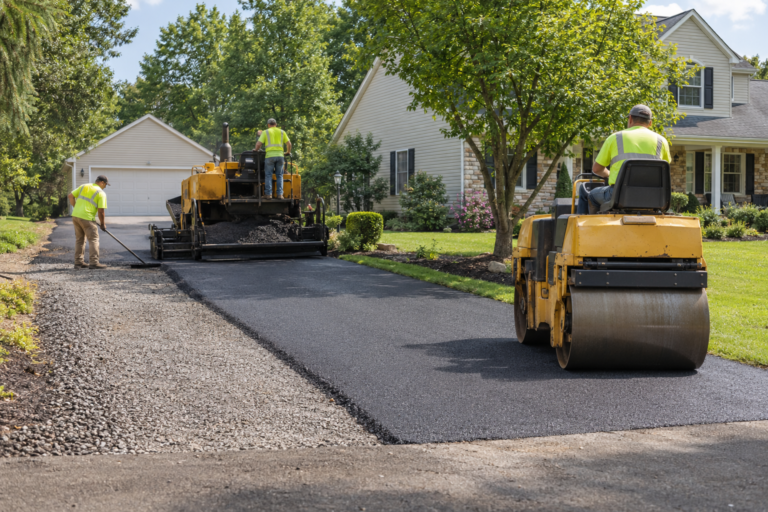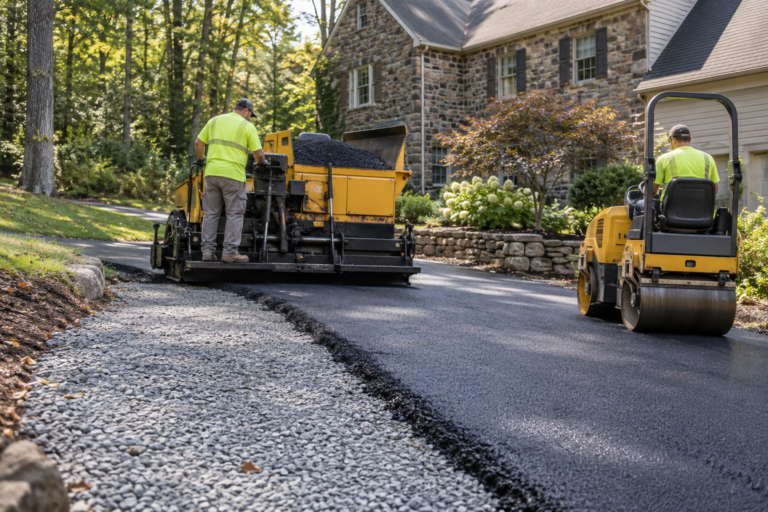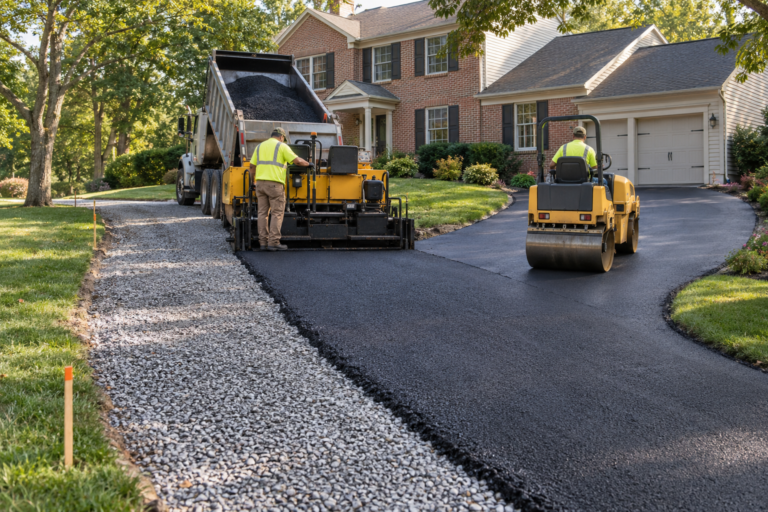
Newly paved asphalt can often support normal passenger vehicles after approximately 24–48 hours, provided it has cooled sufficiently and the paving contractor confirms that it is ready.
Hot weather, thick pavement, shade, heavy vehicles and certain project conditions may require a longer waiting period. Commercial trucks, trailers, waste-removal vehicles and other heavy loads should generally remain off the pavement longer than passenger cars.
However, being ready for traffic is not the same as being completely cured. Asphalt can continue hardening through oxidation for approximately 6–12 months after installation.
During this extended curing period, the pavement remains more vulnerable to sharp turning, concentrated loads, vehicle fluids and surface indentation—especially during hot weather.
American Paving & Concrete provides professional asphalt installation for residential driveways, commercial parking lots, access lanes and other paved surfaces.
Cooling, Setting and Curing Are Different
The terms “drying” and “curing” are often used interchangeably, but asphalt pavement does not dry like ordinary paint.
Three related stages occur after installation.
Initial cooling
Hot-mix asphalt is delivered and installed at an elevated temperature. It must remain hot enough during placement and rolling to achieve proper compaction.
After paving, the material begins cooling. It becomes increasingly firm as its temperature falls.
Traffic should remain off the surface during this initial cooling period.
Setting or hardening
Once the asphalt has cooled sufficiently, it can begin supporting controlled traffic. This does not mean that it has reached its final hardness.
Vehicle use should begin only when the contractor determines that the pavement is ready.
Long-term curing
Asphalt continues to harden through oxidation after it has reopened to traffic. This gradual process may continue for several months.
Extra care during the early curing period can help prevent:
- Tire scuffing
- Surface impressions
- Depressions
- Kickstand marks
- Sharp-turn damage
- Fluid stains
- Edge deterioration
Typical New-Asphalt Waiting Times
The following are general planning ranges. Always follow the instructions provided for the specific project.
Walking on new asphalt
Light foot traffic may sometimes be permitted after the surface has cooled and become firm. The contractor should confirm when it is safe.
Avoid:
- High heels
- Sharp furniture legs
- Bicycle kickstands
- Motorcycle stands
- Heavy equipment
- Dragging objects
- Concentrated point loads
Even small objects can create impressions in warm, newly installed asphalt.
Driving passenger vehicles
Passenger cars may often use the pavement after approximately 24–48 hours.
More time may be required when:
- The weather is very hot
- The surface remains soft
- The driveway receives prolonged sunlight
- The pavement is thick
- The area is shaded and cooling slowly
- The vehicle is unusually heavy
- The asphalt mixture or project conditions require it
Drive slowly and avoid turning the steering wheel while the vehicle is stationary.
Parking passenger vehicles
Parking creates a sustained load in one location. Although driving may be permitted, the contractor may recommend delaying prolonged parking or changing the vehicle’s parking position during the early curing period.
Avoid leaving vehicles in exactly the same location for extended periods when the surface remains vulnerable.
Heavy trucks and commercial vehicles
Heavy vehicles place greater stress on new asphalt.
These may include:
- Delivery trucks
- Dump trucks
- Moving trucks
- Waste-removal vehicles
- Trailers
- Recreational vehicles
- Commercial vans
- Construction equipment
- Oil-delivery trucks
The waiting period should be determined according to vehicle weight, pavement design, temperature and project requirements.
A residential driveway designed primarily for passenger vehicles should not automatically be assumed to support heavy commercial traffic.
What Affects Asphalt Cooling Time?
Air temperature
Cooler air generally helps pavement lose heat faster. Hot summer conditions slow cooling and can keep new asphalt more vulnerable to surface movement.
Pavement temperature
Dark asphalt absorbs solar heat. Even after the initial waiting period, its surface can soften during very hot, sunny weather.
Asphalt thickness
A thicker asphalt layer retains heat longer than a thinner layer. The pavement structure and number of lifts influence cooling time.
Sun and shade
Direct sunlight can keep asphalt hot, while shade can sometimes slow the release of stored heat after installation. Site conditions affect different parts of a driveway or parking lot unevenly.
Wind and air movement
Air movement can help remove heat from the pavement surface.
Asphalt mixture
Different asphalt mixtures and aggregate structures can cool and perform differently. The mix should be selected for the project’s intended use.
Existing surface and base
The temperature and composition of the supporting pavement or aggregate can influence how the new layer loses heat.
Why New Asphalt Is Vulnerable to Tire Marks
Fresh asphalt is more flexible than fully cured pavement.
Tire scuffing is most likely when a vehicle:
- Turns sharply
- Uses power steering while stationary
- Brakes suddenly
- Accelerates aggressively
- Repeatedly follows the same path
- Operates on very warm pavement
Minor tire marks may become less noticeable with time and continued surface aging. Deep displacement or repeated damage should be evaluated.
To reduce scuffing:
- Keep the vehicle moving while steering
- Use wider turns
- Avoid sudden acceleration
- Avoid hard braking
- Change parking positions
- Limit unnecessary traffic during hot conditions
How Long Does Asphalt Take to Cure Completely?
Asphalt may continue curing for approximately 6–12 months. The precise period depends on the asphalt mixture, climate, pavement thickness, traffic and site exposure.
Long-term curing does not mean the pavement must remain unused for months. It means that the surface continues to harden after controlled traffic has begun.
During this period, property owners should treat the pavement carefully and monitor it for damage.
New Asphalt Care During the First Week
The first week is particularly important.
Follow reopening instructions
Use the contractor’s project-specific waiting period rather than assuming every driveway or parking lot can reopen at the same time.
Avoid sharp vehicle movements
Do not turn the steering wheel while the vehicle is stationary. Avoid aggressive acceleration, sudden braking and tight turns.
Keep heavy vehicles away
Do not allow delivery, moving, construction or waste-removal trucks onto the pavement unless the contractor has approved the load.
Avoid concentrated loads
Small contact points can create impressions.
Be careful with:
- Trailer jacks
- Motorcycle kickstands
- Bicycle stands
- Portable basketball hoops
- Metal furniture legs
- Dumpsters
- Storage containers
- Vehicle ramps
Use appropriately designed load-distribution pads only when recommended.
Keep the surface clean
Remove spilled materials according to professional guidance. Do not use harsh chemicals that could damage the asphalt.
Protecting New Asphalt During Hot Weather
Asphalt can soften when pavement temperatures rise.
During very hot weather:
- Avoid parking heavy vehicles for long periods
- Change regular parking locations
- Avoid tight turning
- Keep motorcycle stands off the pavement
- Do not place narrow furniture legs directly on the surface
- Avoid dragging equipment
- Monitor heavily loaded areas
- Limit unnecessary commercial traffic
Hot-weather softness during the curing period does not automatically mean the pavement was installed incorrectly. Asphalt is a flexible pavement material whose stiffness changes with temperature.
Can Rain Damage Newly Paved Asphalt?
Light rain after the asphalt has been properly installed and compacted does not necessarily damage it. However, paving should not normally proceed over a saturated or unsuitable surface.
Water-related performance depends on:
- Base condition
- Compaction
- Drainage
- Pavement temperature
- Rain intensity
- Installation stage
- Surface elevations
Standing water should not be considered normal simply because the pavement is new. Persistent ponding may indicate a grading, drainage or settlement issue that should be evaluated.
Why Asphalt Compaction Matters
Compaction increases pavement density and helps create a stable surface.
Professional compaction helps:
- Reduce excessive air voids
- Improve load distribution
- Limit water infiltration
- Create smoother pavement
- Support long-term durability
- Reduce premature deterioration
The asphalt must be compacted while it remains within a suitable temperature range. Once it cools too far, achieving the required density becomes more difficult.
Proper installation is therefore more important than simply waiting longer before driving on the pavement.
Edge Protection for New Asphalt
Unsupported pavement edges are vulnerable because they do not have adjacent material resisting sideways movement.
Protect new asphalt edges by:
- Avoiding driving directly along them
- Preventing heavy vehicles from crossing them
- Keeping water from eroding supporting material
- Maintaining adjacent soil or aggregate
- Avoiding sharp turns near the perimeter
- Repairing edge damage promptly
Appropriate edge support depends on the driveway design, grade and adjoining landscape.
When Can New Asphalt Be Sealcoated?
Newly installed asphalt should not be sealcoated immediately.
The pavement needs sufficient time to cure before a protective coating is considered. Applying sealer too early may interfere with the normal curing process.
The correct waiting period depends on:
- Asphalt condition
- Installation season
- Climate
- Surface appearance
- Mixture
- Traffic
- Contractor and product requirements
Have the pavement evaluated before scheduling its first sealcoating service.
Sealcoating is preventive maintenance. It does not repair base failure, potholes or structural cracking.
When Should Cracks Be Repaired?
Not every visible line in new pavement is a structural crack. Surface texture, joints and transitions can create lines that require professional evaluation.
Contact the contractor when you observe:
- A widening crack
- Pavement separation
- Settlement
- An expanding depression
- Loose asphalt
- Water entering an opening
- Broken edges
- Repeated movement
- A pothole
- Damage around a drain or utility cover
Timely asphalt repair can help prevent isolated problems from spreading.
When Can Snowplows Use New Asphalt?
Snow-removal equipment can scrape or catch pavement surfaces and edges.
Before plowing new asphalt:
- Confirm that the pavement is ready
- Mark pavement boundaries
- Adjust blade height appropriately
- Avoid aggressive scraping
- Use care near transitions
- Prevent blades from catching edges
- Avoid sharp equipment turns
- Identify drains and utility covers
Snowplow operators should know that the surface is new.
New Residential Driveway Care
A newly installed driveway should be treated according to its designed use.
Our driveway paving services consider:
- Passenger vehicles
- Work trucks
- Trailers
- Recreational vehicles
- Garage transitions
- Road entrances
- Drainage
- Driveway slope
- Turnaround areas
- Pavement edges
Tell the contractor about heavy vehicles that regularly use the property. Vehicle requirements can influence base construction and pavement design.
New Commercial Parking Lot Care
Commercial pavement may need to support:
- Customer vehicles
- Employee parking
- Delivery trucks
- Waste-removal vehicles
- Emergency access
- Loading operations
- Snow-removal equipment
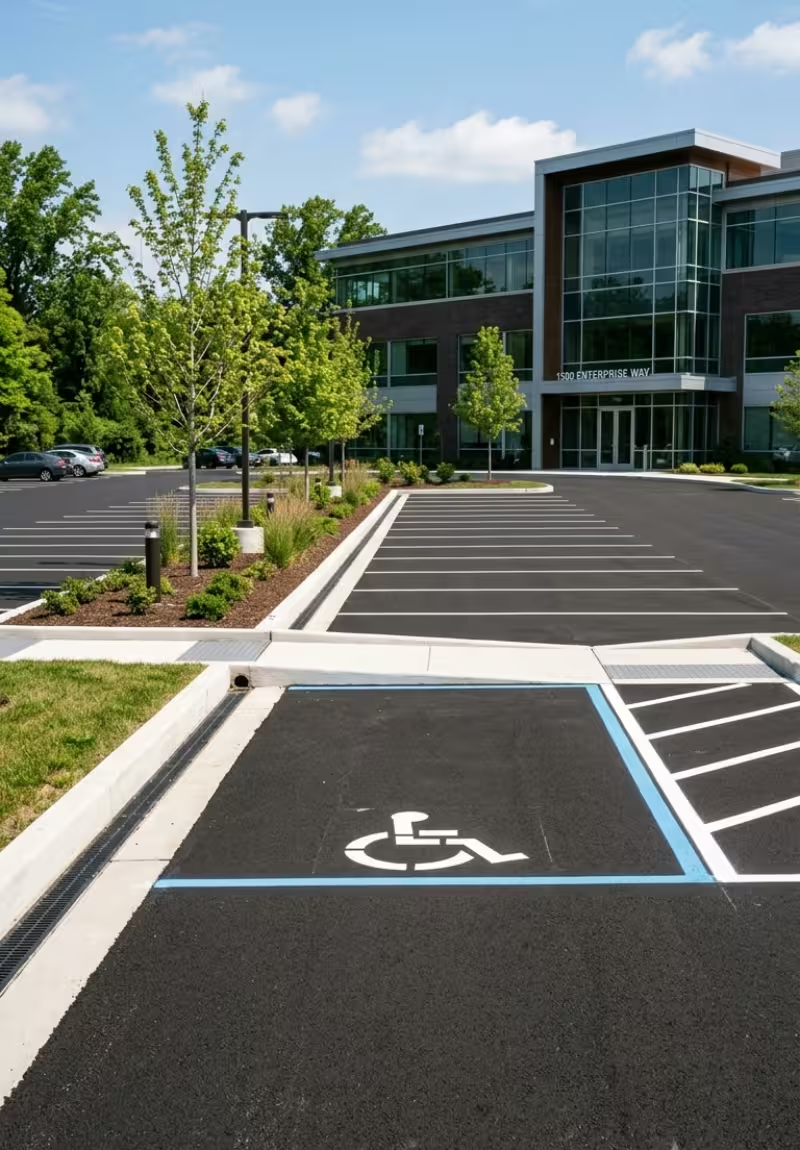
Professional parking lot paving should include an appropriate reopening and traffic-control plan.
Where possible, commercial paving may be completed in phases to help preserve access while protecting newly installed sections.
Parking lot striping should be applied only when the asphalt is suitable for the selected marking material.
Signs New Asphalt May Be Ready for Use
The contractor—not appearance alone—should determine when the pavement can reopen.
Relevant considerations include:
- The surface has cooled sufficiently
- The asphalt has become firm
- Rolling and finishing are complete
- Edges and transitions are stable
- Weather conditions are suitable
- The expected vehicle load is acceptable
- Traffic will not disrupt unfinished work
- Project-specific waiting requirements have been met
Do not test the pavement by driving on it early.
Common Mistakes After Asphalt Installation
Avoid these common problems:
- Driving onto the pavement before approval
- Parking a heavy vehicle in one place
- Turning tires while stationary
- Allowing delivery trucks onto a residential driveway
- Placing trailer jacks directly on asphalt
- Spilling gasoline, oil or solvents
- Sealcoating too soon
- Ignoring drainage problems
- Driving repeatedly along unsupported edges
- Dragging sharp or heavy objects
- Assuming full curing occurs within one or two days
A short initial closure can help protect a substantial paving investment.
Long-Term Asphalt Maintenance
Once the pavement has cured sufficiently, routine asphalt maintenance may include:
- Regular inspections
- Drainage checks
- Crack treatment
- Pothole repair
- Edge maintenance
- Cleaning vehicle-fluid spills
- Repairing localized failures
- Sealcoating when appropriate
- Resurfacing planning
- Monitoring heavy-traffic areas
Maintenance should be based on pavement condition rather than a rigid schedule.
Request an Asphalt Paving Estimate
American Paving & Concrete installs residential driveways, commercial parking lots, private access lanes and other asphalt surfaces.
We can evaluate the property, explain the preparation requirements and provide project-specific instructions for reopening and early pavement care.
Call: (610) 477-3553
Email: info@americanpavingandconcrete.com
Address: 2114 Dublin Pike, Quakertown, PA 18951
Online: Request a free paving estimate