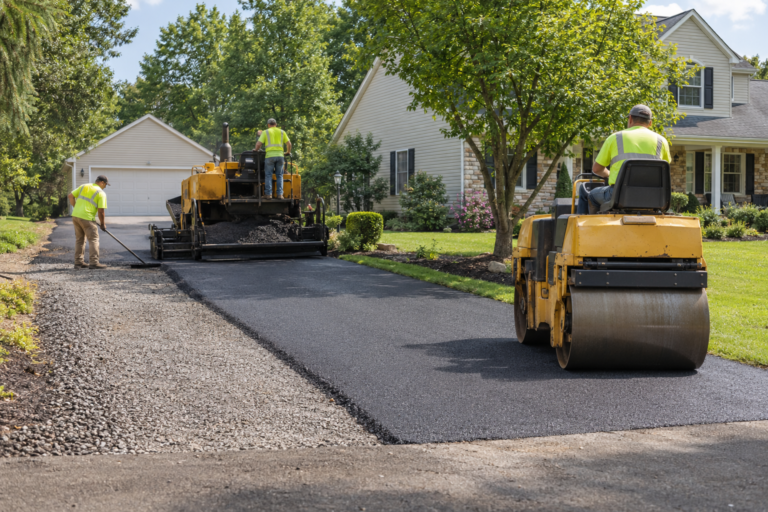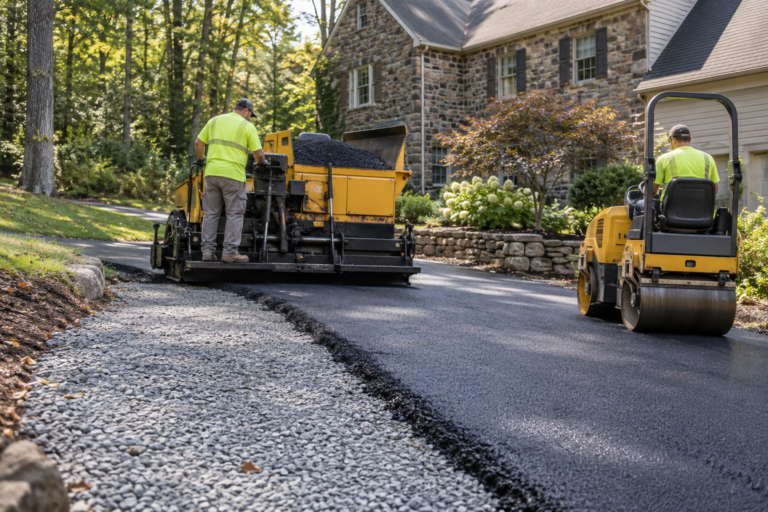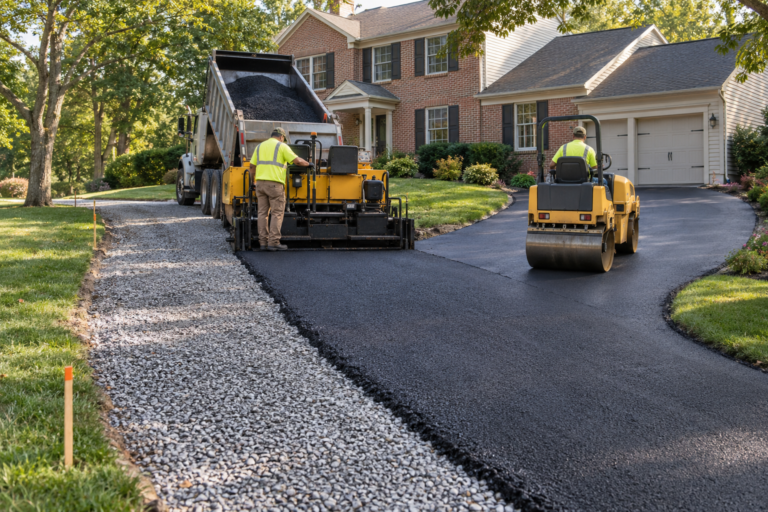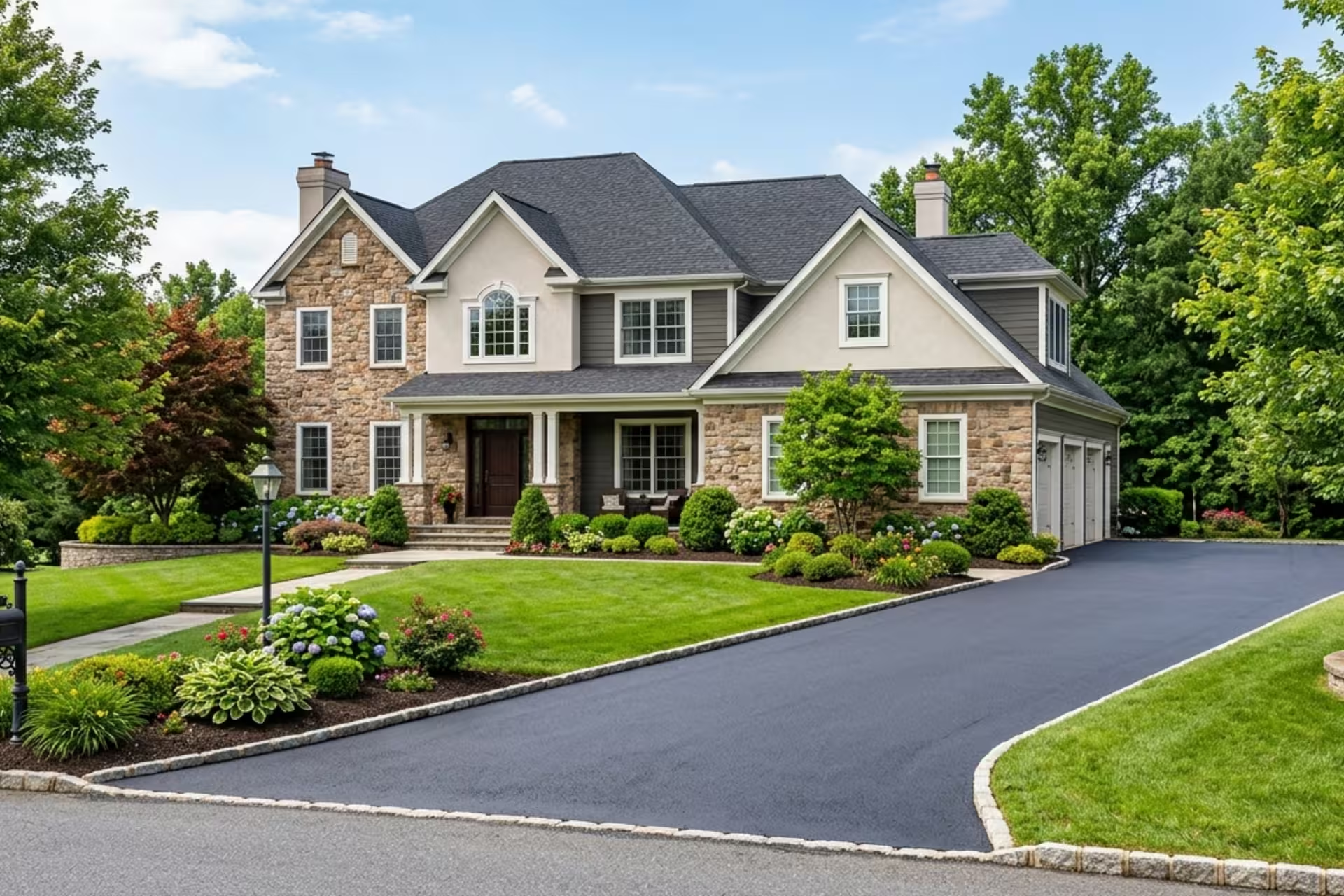
A durable residential driveway begins with more than the visible asphalt surface. Its long-term performance depends on stable soil, a properly constructed aggregate base, effective drainage, suitable asphalt thickness and thorough compaction.
American Paving & Concrete provides professional residential asphalt services for homeowners in Bally, Pennsylvania, and nearby Berks County communities. We assess the complete driveway before recommending installation, repair, resurfacing or replacement.
Our residential services may include:
- New asphalt driveway installation
- Driveway replacement
- Asphalt resurfacing
- Gravel-to-asphalt conversion
- Driveway extensions
- Pothole repair
- Asphalt patching
- Crack filling
- Edge restoration
- Low-spot correction
- Drainage improvements
- Garage and road transitions
- Asphalt maintenance
- Sealcoating preparation
Every property has different soil, slope, access and vehicle requirements. Our recommendations are based on the actual condition and intended use of your driveway.
To discuss your project, call American Paving & Concrete at (610) 477-3553 or request a free estimate online.
Residential Asphalt Paving in Bally
Asphalt is a practical residential paving material for driveways, private lanes, parking areas and property entrances.
A professionally designed asphalt driveway can provide:
- A smooth driving and parking surface
- Defined vehicle access
- Improved curb appeal
- Easier snow removal
- Reduced dust compared with loose gravel
- Better control of surface runoff
- A repairable and maintainable surface
- Reliable performance under normal residential traffic
The pavement structure should match how the property will be used. A driveway serving passenger vehicles may require a different design from one regularly used by work trucks, trailers, recreational vehicles or other heavy loads.
Our residential asphalt paving services consider traffic, soil, base construction, drainage and property layout before installation begins.
New Asphalt Driveway Installation
A new driveway requires careful planning from the ground up.
The installation process may include:
- Inspecting and measuring the property
- Marking the proposed driveway layout
- Removing vegetation and unsuitable material
- Excavating to the required depth
- Correcting soft or unstable soil
- Installing a graded aggregate base
- Compacting the base in controlled layers
- Establishing slope and drainage
- Preparing edges and transitions
- Placing the asphalt mixture
- Compacting and finishing the pavement
- Reviewing the completed driveway
The exact process depends on the existing property and project design.
Our asphalt installation page explains why excavation, base preparation and compaction are essential to the finished surface.
Asphalt Driveway Replacement
Complete driveway replacement may be appropriate when the existing pavement has widespread structural deterioration.
Possible signs include:
- Extensive alligator cracking
- Multiple recurring potholes
- Severe settlement
- Large soft areas
- Asphalt breaking apart
- Failed patches throughout the driveway
- Inadequate pavement thickness
- Major drainage problems
- Widespread base failure
- Significant elevation problems
Replacement allows the old pavement and unstable supporting material to be removed. The contractor can then rebuild the base, correct drainage and establish suitable grades before installing new asphalt.
A worn appearance alone does not necessarily mean complete replacement is required. An inspection should determine how deeply the damage extends.
Asphalt Driveway Resurfacing
Resurfacing, also called an asphalt overlay, installs a new asphalt layer over a prepared existing driveway.
It may be suitable when:
- The aggregate base remains stable
- Settlement is limited
- Drainage functions properly
- Surface deterioration is widespread
- Cracking is moderate
- Potholes are limited
- Existing elevations can accommodate an overlay
- Failed sections can be repaired first
Preparation may involve repairing cracks, patching failed areas, cleaning the pavement, adjusting transitions and applying a bonding coat.
Resurfacing should not be used to conceal severe structural problems. Cracks and movement caused by an unstable base may eventually reflect through the new layer.
Asphalt Driveway Repair in Bally
Localized damage does not always require resurfacing or replacement.
Professional asphalt repair may be appropriate for:
- Individual potholes
- Isolated cracks
- Small failed sections
- Broken edges
- Garage transitions
- Roadway entrances
- Depressions
- Utility cuts
- Damage around drains
- Localized surface breakup
The repair method depends on the depth and cause of the damage.
Surface patching
Surface patching may address shallow deterioration limited to the upper asphalt layer.
Full-depth patching
Full-depth repair removes failed pavement and unstable base material. New aggregate and asphalt are installed and compacted within the repaired section.
Edge repair
Crumbling or unsupported edges may require rebuilding and improved shoulder support.
Repairing only the visible surface may not provide a lasting solution when water, soil movement or base failure caused the damage.
Pothole Repair
Potholes often develop after water enters cracks and weakens the pavement structure.
Traffic and freeze-thaw cycles can then loosen and remove asphalt, causing the opening to expand.
A professional repair may include:
- Removing loose pavement
- Cutting back to stable asphalt
- Inspecting the base
- Removing weakened aggregate
- Installing new base material
- Compacting the base
- Placing new asphalt
- Compacting the repair
- Finishing and sealing its edges
Placing material into an unprepared hole may produce only a temporary repair if the underlying cause remains.
Asphalt Crack Repair
Cracks can allow water to reach the aggregate base.
Common crack types include:
Longitudinal cracks
These travel in the same direction as the driveway and may develop near joints or areas of pavement movement.
Transverse cracks
These run across the driveway and may result from temperature changes and shrinkage.
Edge cracks
These appear near unsupported pavement edges and may be associated with erosion, poor shoulder support or vehicles leaving the driveway.
Alligator cracking
This interconnected pattern often indicates deeper structural or base failure. Filling the surface cracks alone is generally insufficient.
Eligible isolated cracks should be addressed before they widen or contribute to base deterioration.
Driveway Drainage and Grading
Water management is one of the most important parts of residential paving.
Poor drainage may produce:
- Standing water
- Base erosion
- Settlement
- Cracking
- Potholes
- Ice formation
- Washed-out shoulders
- Repeated repair failure
- Water moving toward buildings
Driveway drainage planning may involve:
- Establishing suitable cross-slope
- Directing runoff away from the home
- Correcting low areas
- Improving edge drainage
- Managing downspout discharge
- Repairing areas around drains
- Preparing stable shoulders
- Adjusting road and garage transitions
Bally and the surrounding region experience rain, snow and freezing temperatures. Water that enters pavement cracks can freeze, expand and contribute to further damage.
Installing new asphalt without correcting a known drainage problem may allow deterioration to return.
Gravel-to-Asphalt Driveway Conversion
Converting a gravel driveway to asphalt can create a smoother and more defined surface.
The existing gravel should first be evaluated for:
- Material depth
- Aggregate quality
- Compaction
- Soft spots
- Drainage
- Slope
- Organic contamination
- Edge support
- Road transitions
- Garage elevations
Some gravel driveways already contain part of the base needed for paving. Others require additional stone, excavation, grading or compaction.
New asphalt should not simply be placed over loose or unstable gravel.
Learn more about planning a new residential surface through our driveway paving service.
Asphalt Driveway Extensions
Homeowners may need additional paved space for:
- Another vehicle
- Improved garage access
- A parking pad
- A wider entrance
- Easier vehicle turning
- Trailer access
- Connecting existing paved areas
A driveway extension should be constructed with a suitable base and properly connected to the existing pavement.
The contractor should consider:
- Local requirements
- Property boundaries
- Drainage
- Existing asphalt condition
- New edge support
- Vehicle weight
- Finished elevations
- Utility locations
Simply paving over lawn or topsoil can lead to settlement and cracking.
Garage and Road Transitions
The points where a driveway meets a garage, sidewalk, concrete apron or public road require careful preparation.
Poor transitions can create:
- Raised edges
- Vehicle scraping
- Trip hazards
- Water collection
- Weak pavement joints
- Crumbling asphalt
- Uncomfortable vehicle movement
Transition work should account for the thickness of the asphalt, base elevations, drainage direction and adjoining materials.
Residential Driveway Sealcoating
Sealcoating is a preventive treatment for eligible, structurally sound asphalt.
It may help reduce direct exposure to:
- Sunlight
- Oxidation
- Water
- Road salt
- Oil
- Gasoline
- Seasonal weather
Before coating, the driveway should be inspected and properly prepared. Suitable cracks should be treated, potholes repaired and failed sections patched.
Sealcoating cannot fix:
- Base failure
- Potholes
- Severe settlement
- Alligator cracking
- Drainage problems
- Unstable pavement
Visit our sealcoating page for more information about preventive surface protection.
Asphalt Maintenance for Bally Homes
Preventive maintenance can help identify smaller problems before they become more extensive.
A residential asphalt maintenance plan may include:
- Seasonal inspections
- Crack treatment
- Pothole repair
- Drainage checks
- Edge maintenance
- Surface cleaning
- Oil-stain monitoring
- Sealcoating when appropriate
- Resurfacing planning
Inspect the driveway after winter, heavy rainfall or noticeable pavement movement.
Early warning signs may include:
- New cracks
- Widening openings
- Loose aggregate
- Faded or brittle asphalt
- Water pooling
- Sinking areas
- Broken edges
- Failed patches
- Vegetation growing through cracks
How Pennsylvania Weather Affects Residential Asphalt
Residential asphalt in Bally must manage changing seasonal conditions, including:
- Summer heat
- Heavy rain
- Snow and ice
- Freezing temperatures
- Freeze-thaw cycles
- Road salt
- Snowplow activity
Heat and ultraviolet exposure contribute to surface oxidation. Rain can enter untreated cracks. When trapped water freezes, expansion may increase pavement movement and deterioration.
Proper installation helps asphalt manage these conditions, but maintenance remains important throughout the driveway’s service life.
Choosing the Correct Asphalt Thickness
One standard thickness is not appropriate for every residential property.
The pavement design should consider:
- Passenger vehicles
- Work trucks
- Delivery vehicles
- Trailers
- Recreational vehicles
- Traffic frequency
- Soil stability
- Aggregate-base depth
- Drainage
- Driveway slope
Asphalt thickness cannot compensate for an unstable or poorly compacted base. Both parts of the pavement structure must work together.
How Much Does Residential Asphalt Paving Cost in Bally?
Residential paving prices depend on the property and work required.
Cost factors may include:
- Total square footage
- Existing pavement removal
- Excavation
- Soil condition
- Base depth
- Aggregate requirements
- Asphalt thickness
- Number of asphalt layers
- Drainage corrections
- Driveway shape
- Site access
- Edges and transitions
- Repair requirements
- Material transportation
- Intended vehicle use
A site inspection provides a more reliable estimate than a generic online square-foot price.
Two similarly sized driveways may have different costs when one needs minimal preparation and the other requires excavation, drainage correction and base reconstruction.
Repair, Resurface or Replace?
The right solution depends on the depth and extent of the deterioration.
Repair may be suitable when:
- Damage is localized
- Potholes are limited
- Cracks are isolated
- The base remains stable
- Only small sections have failed
Resurfacing may be suitable when:
- Surface wear is widespread
- The base remains stable
- Settlement is limited
- Drainage works correctly
- Necessary repairs can be completed first
Replacement may be necessary when:
- Structural damage is widespread
- Alligator cracking covers large areas
- Potholes repeatedly return
- Settlement is severe
- The base has failed
- Drainage requires major correction
American Paving & Concrete evaluates these conditions before recommending a project scope.
Residential Asphalt Services Near Bally, Pennsylvania
Bally is a borough in Berks County with the 19503 ZIP code. Its residential properties include compact neighborhood lots as well as access to larger and more rural properties in surrounding communities. Bally Borough
Driveway recommendations must be based on the individual property rather than a generalized location assumption.
We assess:
- Existing pavement
- Soil and aggregate base
- Property access
- Surface elevations
- Drainage
- Road connections
- Garage approaches
- Expected traffic
- Maintenance requirements
Why Choose American Paving & Concrete?
Property owners choose American Paving & Concrete for residential paving because we provide:
- Property-specific assessments
- New driveway installation
- Repair, resurfacing and replacement options
- Aggregate-base preparation
- Drainage evaluation
- Asphalt and concrete capabilities
- Professional paving equipment
- Clear project recommendations
- Residential and commercial experience
- Free project estimates
- Licensed Pennsylvania contractor services
Our goal is to recommend work suited to the actual condition and intended use of your property.
Request a Residential Asphalt Estimate in Bally
Whether your Bally property requires a new asphalt driveway, replacement, resurfacing, pothole repair, crack treatment, drainage correction or preventive maintenance, American Paving & Concrete is ready to assess the project.
Call: (610) 477-3553
Email: info@americanpavingandconcrete.com
Address: 2114 Dublin Pike, Quakertown, PA 18951
Online: Request a free paving estimate