Asphalt pavement changes as it ages. Direct sunlight, oxygen, rainfall, snow, road salt, vehicle traffic and Pennsylvania’s freeze-thaw cycles can gradually fade and wear the surface.
Sealcoating applies a protective coating over asphalt that remains structurally serviceable. When the treatment is properly timed and the pavement is carefully prepared, it may help limit direct environmental exposure, restore a darker appearance and support long-term maintenance.
American Paving & Concrete provides professional asphalt sealcoating for eligible residential driveways, small commercial parking areas, private lanes and managed properties in East Greenville and surrounding Montgomery County communities.
Sealcoating is preventive maintenance. It does not rebuild damaged pavement or correct an unstable base.
Sealcoating for East Greenville Properties
Our sealcoating services may include:
- Residential driveway sealcoating
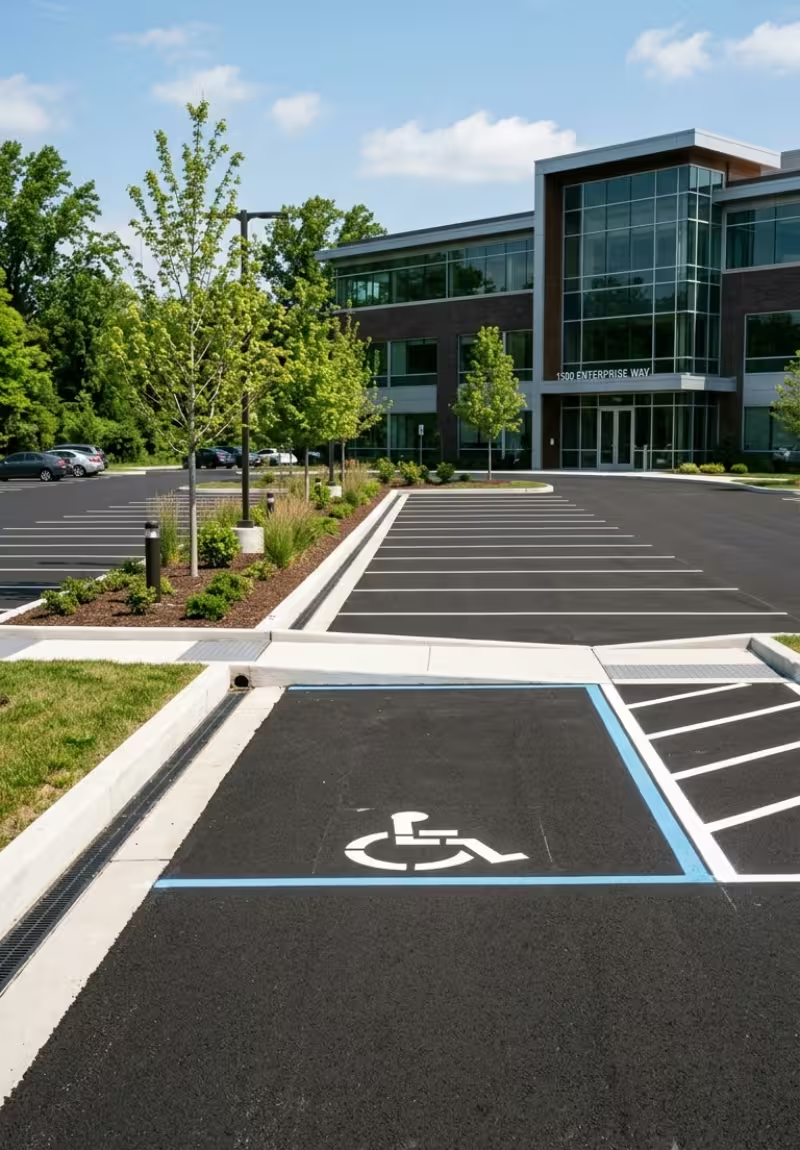
- Commercial parking lot sealcoating
- Private access-lane sealcoating
- Apartment parking-area maintenance
- Retail and office pavement
- Church and institutional parking areas
- Surface-condition inspections
- Pavement cleaning
- Vegetation removal
- Oil-stain preparation
- Eligible crack treatment
- Pothole-repair preparation
- Edge detailing
- Sealcoat application
- Access and closure planning
- Curing guidance
The appropriate service depends on surface condition, pavement age, drainage, traffic and previous treatments.
Why Asphalt Turns Gray
Fresh asphalt normally has a dark appearance because of the binder surrounding its stone aggregate. Sunlight and oxygen gradually affect this material.
As the pavement weathers, it may:
- Change from black to gray
- Develop a dry appearance
- Reveal more aggregate
- Become rougher
- Lose its uniform color
- Develop fine surface cracks
- Become more vulnerable to moisture
- Show wear in high-traffic areas
Sealcoating may help slow surface exposure, but fading alone does not prove that the pavement is ready for treatment.
Benefits of Properly Timed Sealcoating
A suitable sealcoating application may help:
- Reduce direct ultraviolet exposure
- Limit contact with rain and melting snow
- Slow surface oxidation
- Improve resistance to certain automotive fluids
- Restore a darker, more uniform appearance
- Improve the contrast of parking lot markings
- Make routine cleaning easier
- Support preventive asphalt maintenance
These benefits apply to pavement that remains stable enough to receive the coating.
What Sealcoating Cannot Repair
Sealcoating cannot properly correct:
- Potholes
- Alligator cracking
- Structural cracks
- Base failure
- Severe settlement
- Large depressions
- Standing-water problems
- Broken pavement edges
- Loose or crumbling asphalt
- Failed patches
- Frost-related movement
- Unstable utility-cut areas
These conditions may require professional asphalt repair, resurfacing or replacement.
A coating may temporarily darken failed pavement, but it will not resolve the underlying cause.
Inspecting Older Asphalt
Established driveways and parking areas may contain several generations of patches, coatings and repairs.
An inspection should review:
- Overall pavement age
- Previous sealcoat layers
- Surface oxidation
- Crack patterns
- Patch condition
- Potholes
- Drainage
- Settlement
- Edge support
- Loose aggregate
- Oil contamination
- Garage and roadway transitions
Repeatedly coating older asphalt without checking its structure may conceal warning signs while deterioration continues underneath.
Residential Driveway Sealcoating
A residential driveway commonly experiences repeated traffic along the same wheel paths.
Wear may be increased by:
- Vehicles parked in fixed locations
- Stationary tire turning
- Heavy work trucks
- Trailers
- Snowplow activity
- Road salt
- Oil and fluid leaks
- Roof runoff
- Unsupported edges
- Tree-root movement
- Poor garage transitions
Before sealcoating begins, the driveway should be inspected from its road connection to the garage or parking area.
If deterioration extends into the base, residential asphalt paving or replacement may be more appropriate.
Small Commercial Parking Areas
Small commercial properties still require organized planning, even when the paved area is not large.
A sealcoating plan may need to address:
- Customer parking
- Employee vehicles
- Delivery access
- Main entrances
- Accessible spaces
- Waste-removal routes
- Walkway crossings
- Oil-stained areas
- Pavement markings
- Business operating hours
Work may sometimes be divided into sections to help preserve access, but every treated section must remain closed throughout application and curing.
Pavement Edges Require Attention
Driveway and parking-lot edges can deteriorate faster when they lack adequate support.
Edge problems may include:
- Crumbling asphalt
- Loose aggregate
- Vegetation growth
- Soil erosion
- Vehicle tires leaving the pavement
- Snowplow damage
- Water flowing alongside the surface
- Gravel shoulder movement
Sealcoating does not rebuild a broken edge. Failed areas should be repaired and supported before the surface is treated.
Cracks Should Be Evaluated First
Crack treatment and sealcoating are different services.
Crack filling places suitable material into eligible openings to help reduce water penetration. Sealcoating covers the general pavement surface.
A coating alone will not properly repair:
- Wide cracks
- Deep cracks
- Active cracks
- Settlement cracks
- Alligator-cracked areas
- Open pavement joints
Cracks that repeatedly return may indicate movement in the supporting structure.
Pothole and Patch Repairs
Potholes should be repaired before sealcoating.
A suitable repair may involve:
- Removing failed pavement
- Cleaning the affected area
- Evaluating the base
- Rebuilding unstable material
- Installing repair asphalt
- Compacting the patch
- Allowing appropriate preparation before coating
Existing patches should also be checked for settlement, separation or movement.
Drainage and Standing Water
Sealcoating does not change the pavement’s slope or correct drainage failure.
Water problems may be caused by:
- Low pavement areas
- Settlement
- Poor surface slope
- Blocked drainage routes
- Eroded shoulders
- Roof runoff
- Failed catch-basin areas
- Adjoining surfaces directing water onto the asphalt
Water can enter open cracks and reach the supporting aggregate. When trapped moisture freezes, it can expand and contribute to further pavement movement.
Drainage problems should be addressed before sealcoating whenever possible.
Professional Sealcoating Preparation
The preparation process may include:
- Inspecting the entire paved surface
- Identifying structural problems
- Removing dirt and debris
- Clearing vegetation
- Cleaning oil-contaminated areas
- Treating eligible cracks
- Repairing potholes
- Correcting failed patches
- Protecting adjoining concrete
- Detailing pavement edges
- Confirming suitable weather
- Establishing traffic-control areas
Applying sealer over moisture, dirt, loose aggregate or unstable pavement can reduce adhesion and performance.
How Often Should Asphalt Be Sealcoated?
Many eligible surfaces are evaluated approximately every two to three years. The correct schedule depends on:
- Pavement age
- Previous coatings
- Traffic volume
- Vehicle weight
- Sunlight exposure
- Drainage
- Surface condition
- Snow-removal activity
- Road-salt exposure
- Automotive-fluid spills
- Product specifications
A lightly used driveway may require a different schedule from a commercial parking area.
Annual sealcoating is generally unnecessary for many properly performing surfaces. Excessive applications may cause buildup, peeling or flaking.
When Should New Asphalt Be Sealcoated?
New asphalt should not be coated immediately. It needs time to cure and release oils.
Fresh pavement is commonly evaluated after approximately six to twelve months, but the correct waiting period depends on:
- Asphalt mixture
- Installation date
- Seasonal conditions
- Sunlight exposure
- Traffic
- Surface appearance
- Product requirements
A professional inspection should determine when the pavement is ready.
Sealcoating Weather Requirements
Sealcoating requires suitable application and curing conditions.
General requirements include:
- Clean, dry asphalt
- Appropriate air temperature
- Appropriate pavement temperature
- No immediate rain
- Manageable humidity
- Adequate airflow
- Sufficient curing time
- Controlled vehicle and pedestrian traffic
The exact requirements depend on the selected product. Application should be postponed when weather could interfere with bonding or curing.
How Long Should Asphalt Remain Closed?
The closure period depends on:
- Sealer type
- Number of applications
- Temperature
- Humidity
- Sunlight and shade
- Airflow
- Pavement condition
- Vehicle weight
The pavement may need to remain closed for approximately 24 to 48 hours, but the contractor’s instructions should determine reopening.
Commercial properties should notify customers, employees, tenants and delivery providers before the project starts.
What Affects Sealcoating Cost?
Sealcoating cost depends on pavement size, condition and preparation.
Factors may include:
- Total square footage
- Surface layout
- Cleaning requirements
- Crack quantity
- Pothole repairs
- Failed patches
- Oil-stain preparation
- Previous coating condition
- Number of applications
- Detailed edging
- Property access
- Traffic control
- Project phasing
- Line-striping requirements
An on-site inspection provides a more reliable estimate than a general price per square foot.
Maintaining the Surface After Sealcoating
After the pavement reopens:
- Avoid sharp stationary tire turns
- Clean vehicle-fluid spills
- Keep drainage paths open
- Watch for new cracks
- Protect unsupported edges
- Avoid concentrated loads
- Inspect the surface after winter
- Repair potholes promptly
- Schedule future maintenance based on condition
Sealcoating should be combined with professional asphalt maintenance rather than treated as a complete pavement solution.
Sealcoating Services in Montgomery County
American Paving & Concrete provides residential and commercial paving services in East Greenville and surrounding communities.
Our broader Montgomery County paving services include driveway paving, parking lot paving, repairs, resurfacing, sealcoating and pavement maintenance.
Service availability should be confirmed using the project address.
Request a Sealcoating Estimate in East Greenville
We can inspect your driveway or parking area, determine whether it is suitable for sealcoating and explain any repairs or preparation required beforehand.
Call: (610) 477-3553
Email: info@americanpavingandconcrete.com
Address: 2114 Dublin Pike, Quakertown, PA 18951
Online: Request a free estimate