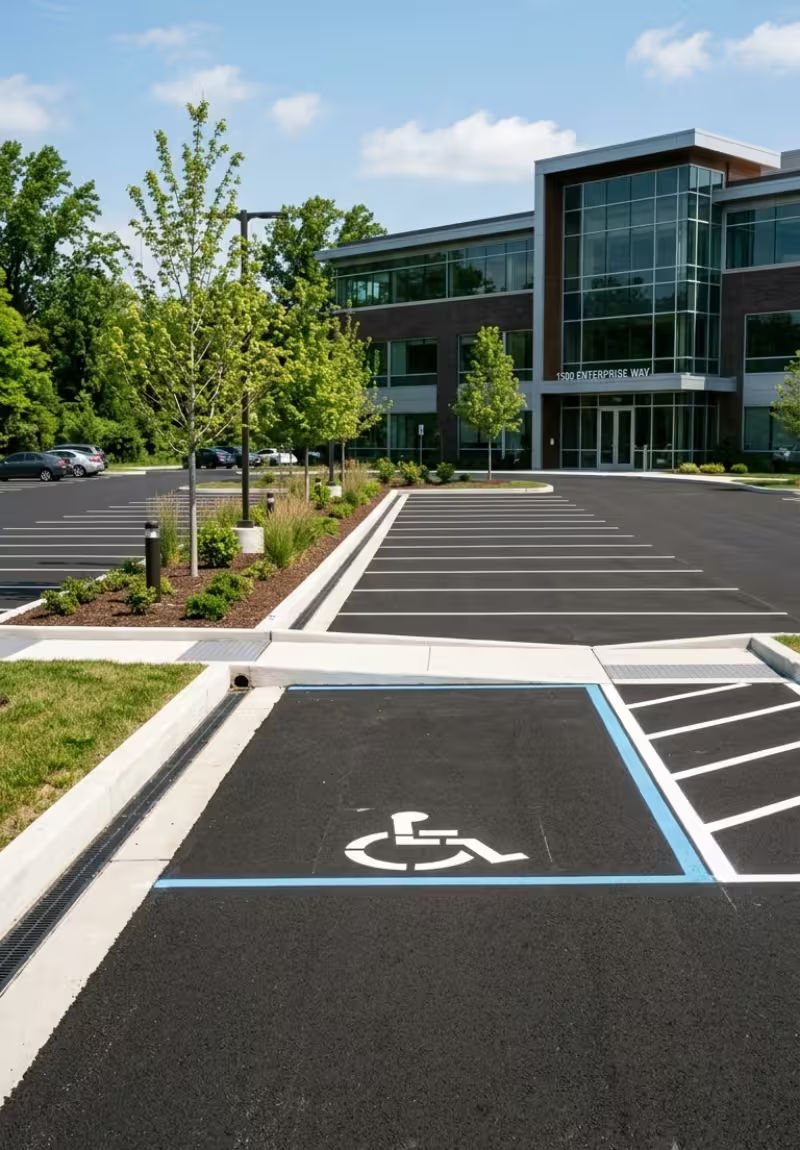
Commercial asphalt must safely and reliably support customers, employees, tenants, delivery vehicles, service trucks, and snow-removal equipment. Small defects can quickly become disruptive when traffic and water repeatedly affect weakened pavement.
American Paving & Concrete provides commercial asphalt maintenance and repair in Quakertown, Pennsylvania, for parking lots, access lanes, loading areas, apartment properties, offices, retail facilities, warehouses, churches, schools, and other commercial sites.
Our team evaluates the pavement surface, supporting base, drainage, traffic requirements, and property access before recommending repairs. The appropriate solution may involve crack treatment, pothole repair, surface patching, full-depth repair, drainage correction, sealcoating, resurfacing, or replacement.
Professional asphalt maintenance should respond to the pavement’s actual condition rather than follow an inflexible schedule.
Commercial Pavement Maintenance in Quakertown
A commercial maintenance plan should address immediate defects while also preparing for future work.
Our services may include:
- Pavement inspections
- Crack filling
- Pothole repair
- Surface patching
- Full-depth asphalt repair
- Failed-section replacement
- Broken-edge repair
- Repairs around catch basins
- Low-spot correction
- Drainage-related repair
- Sealcoating
- Resurfacing preparation
- Replacement planning
Minor surface wear may require preventive treatment, while unstable or repeatedly failing areas may need deeper reconstruction.
Commercial Properties We Serve
American Paving & Concrete provides asphalt maintenance for:
- Retail properties
- Shopping areas
- Office buildings
- Medical facilities
- Restaurants
- Apartment communities
- Condominium properties
- Warehouses
- Industrial facilities
- Churches
- Schools
- Daycare properties
- Storage facilities
- Service businesses
- Private commercial roads
- Loading and delivery areas
Each property has different operating requirements. An apartment community may need access maintained for residents, while a retail property must account for customer traffic and deliveries.
Our broader commercial paving services include installation, resurfacing, milling, repair, and replacement.
Why Commercial Asphalt Deteriorates
Commercial pavement may deteriorate because of:
- Repeated vehicle traffic
- Heavy delivery trucks
- Waste-removal vehicles
- Snowplows
- Stationary turning
- Braking and acceleration
- Water infiltration
- Freeze-and-thaw cycles
- Road salt
- Fuel and oil
- Weak supporting material
- Poor drainage
- Unsupported edges
- Utility cuts
- Previous temporary repairs
Visible deterioration may originate at the surface or develop underneath the asphalt. Inspecting the surrounding pavement helps determine the depth and likely cause of failure.
Signs Commercial Asphalt Needs Attention
Arrange an inspection when a parking lot or access area develops:
- New or widening cracks
- Potholes
- Alligator cracking
- Sunken pavement
- Standing water
- Broken edges
- Loose aggregate
- Failed patches
- Uneven transitions
- Damage around drains
- Faded or brittle asphalt
- Surface breakup
- Repeated problems in the same location
Addressing localized deterioration early may help reduce the area affected. Delaying repairs can allow water and traffic to enlarge the failure.
Commercial Pothole Repair
Potholes can affect vehicle access, pedestrian movement, drainage, and a property’s overall appearance.
A pothole repair may require:
- Identifying the affected area
- Removing broken or unstable asphalt
- Evaluating the material below
- Replacing unsuitable base material
- Installing repair asphalt
- Compacting the patch
- Sealing or finishing the edges
- Reviewing surrounding drainage
Placing loose material into a hole may offer only temporary improvement if the underlying cause remains unresolved.
Professional asphalt repair should address both the visible damage and the supporting pavement structure when necessary.
Surface Patching and Full-Depth Repair
Surface patching and full-depth repair are not interchangeable.
Surface patching
Surface patching may be appropriate when deterioration is limited primarily to the upper asphalt layer and the supporting material remains stable.
Full-depth asphalt repair
Full-depth repair may be necessary when damage extends through the pavement or affects the underlying base.
Possible signs of deeper failure include:
- Alligator cracking
- Recurring potholes
- Significant settlement
- Soft pavement
- Depressions
- Pumping water
- Loose underlying material
- Repeatedly failing patches
A complete inspection helps establish the appropriate repair depth.
Asphalt Crack Treatment
Cracks allow water to enter the pavement and reach the supporting aggregate. Once water penetrates the surface, traffic and seasonal temperature changes may increase deterioration.
Cracks vary in type and severity:
- Longitudinal cracks
- Transverse cracks
- Edge cracks
- Block cracking
- Joint separation
- Reflective cracks
- Alligator cracking
Eligible cracks may be cleaned and treated as part of preventive maintenance. Widespread interconnected cracking often indicates structural deterioration that crack filling alone cannot correct.
Parking Lot Drainage Repairs
Water is a major contributor to asphalt deterioration. Commercial pavement should direct runoff toward appropriate drainage areas without creating deep standing water.
Drainage problems may result from:
- Incorrect surface slope
- Settlement
- Blocked drains
- Damaged catch basins
- Failed utility cuts
- Depressions
- Raised transitions
- Eroded pavement edges
- Poorly directed roof runoff
Standing water can enter cracks, weaken supporting material, and contribute to potholes and settlement.
Drainage should be evaluated before repeated surface repairs are installed in the same location.
Repairs Around Catch Basins
Pavement around catch basins may deteriorate because of settlement, water infiltration, traffic, or movement between materials.
Warning signs include:
- Cracking around the basin
- Depressed asphalt
- Loose pavement
- Standing water
- Broken edges
- Separation around the frame
- Repeated patch failure
The damaged area may need to be removed and reconstructed rather than covered with another thin patch.
Parking Lot Edge Repair
Unsupported edges can break under vehicle loads or erode as water moves beside the pavement.
Commercial edge damage may occur near:
- Landscaped islands
- Unpaved shoulders
- Dumpster areas
- Loading zones
- Parking boundaries
- Driveway entrances
- Drainage swales
- Snow-storage areas
Repairing the asphalt without correcting erosion or inadequate support can allow the problem to return.
Loading Areas and Heavy-Vehicle Routes
Delivery routes, dumpster locations, and loading areas may deteriorate faster than ordinary parking spaces.
These areas are exposed to:
- Heavy axle loads
- Slow turning
- Repeated braking
- Stationary loads
- Trailer movements
- Waste-removal vehicles
- Fuel and hydraulic fluids
A repair plan should account for the actual vehicles using the property. High-stress areas may require deeper repairs or a pavement structure designed for heavier loads.
Repair, Resurfacing, or Replacement?
The correct recommendation depends on the depth and extent of deterioration.
Repair may be appropriate when:
- Damage is localized
- The surrounding pavement remains stable
- Potholes are limited
- Base failure is confined to small areas
- Drainage can be corrected locally
Resurfacing may be appropriate when:
- Surface wear is widespread
- The supporting base remains stable
- Settlement is limited
- Major structural movement is absent
- Failed areas can be repaired first
- Drainage remains functional
Replacement may be necessary when:
- Alligator cracking is widespread
- Potholes repeatedly return
- Large areas have settled
- Asphalt is breaking apart
- The supporting base has failed
- Previous repairs continually fail
- Drainage problems affect extensive sections
Resurfacing or sealcoating should not be used to conceal widespread structural failure.
Commercial Asphalt Sealcoating
Sealcoating may help protect structurally sound asphalt from direct exposure to sunlight, moisture, road salt, oil, and oxidation.
It can also:
- Restore a darker surface appearance
- Improve curb appeal
- Support a maintenance program
- Prepare the surface for refreshed markings
- Make general cleaning easier
Sealcoating is not a repair for potholes, deep cracks, settlement, or base failure. Required repairs should be completed first.
Learn more about professional sealcoating.
Phased Commercial Asphalt Repairs
Closing an entire commercial parking lot may not be practical. When site conditions allow, repairs can be divided into separate work zones.
Phasing may help maintain access for:
- Customers
- Employees
- Tenants
- Residents
- Delivery vehicles
- Emergency services
- Waste-removal providers
A phased plan should identify:
- Work areas
- Temporary traffic routes
- Pedestrian access
- Delivery schedules
- Accessible parking
- Cure times
- Reopening procedures
- Future phases
Phasing can extend the total project schedule because equipment and crews must move between separate work zones, but it may reduce disruption to normal operations.
Preparing a Commercial Property for Repairs
Preparation may involve:
- Confirming the repair boundaries
- Notifying tenants and employees
- Scheduling deliveries
- Relocating vehicles
- Restricting work areas
- Establishing temporary routes
- Protecting pedestrians
- Coordinating waste removal
- Marking underground utilities
- Monitoring weather
- Planning pavement-marking restoration
Property managers should communicate closure and reopening requirements before work begins.
How Weather Affects Asphalt Maintenance
Quakertown pavement experiences heat, rain, freezing temperatures, snow, ice, and road salt.
Weather can affect:
- Repair-material placement
- Compaction
- Crack treatment
- Sealcoat curing
- Surface dryness
- Project timing
- Traffic reopening
Some urgent repairs may require temporary stabilization until conditions permit a longer-lasting repair.
Building a Preventive Maintenance Plan
A commercial maintenance plan may include:
- Routine pavement inspections
- Seasonal damage reviews
- Prompt crack treatment
- Pothole repair
- Drainage maintenance
- Catch-basin inspection
- Edge repair
- Sealcoating
- Pavement-marking renewal
- Resurfacing planning
- Long-term replacement budgeting
Keeping written records of repairs can help identify recurring problems and plan future capital expenses.
What Affects Commercial Repair Cost?
Commercial asphalt repair cost depends on:
- Total repair area
- Type of damage
- Repair depth
- Base reconstruction
- Asphalt thickness
- Drainage work
- Site access
- Traffic control
- Project phasing
- Material quantity
- Equipment requirements
- Catch-basin work
- Utility coordination
- Pavement-marking restoration
A site inspection is necessary to distinguish a surface defect from deeper structural failure.
Why Choose American Paving & Concrete?
American Paving & Concrete is based in Quakertown and provides residential and commercial paving services throughout Bucks County, Montgomery County, and surrounding Pennsylvania communities.
Our commercial asphalt capabilities include:
- Pavement inspections
- Maintenance planning
- Pothole repair
- Surface and full-depth patching
- Drainage-related repair
- Asphalt resurfacing
- Parking lot paving
- Sealcoating
- Concrete pads and aprons
- Replacement planning
Recommendations are based on the property’s pavement condition, traffic, drainage, access, and intended use.
Request a Commercial Asphalt Inspection
American Paving & Concrete can inspect your commercial pavement and explain whether it needs maintenance, localized repair, resurfacing, or replacement.
Call: (610) 477-3553
Email: info@americanpavingandconcrete.com
Address: 2114 Dublin Pike, Quakertown, PA 18951
Online: Request a free estimate