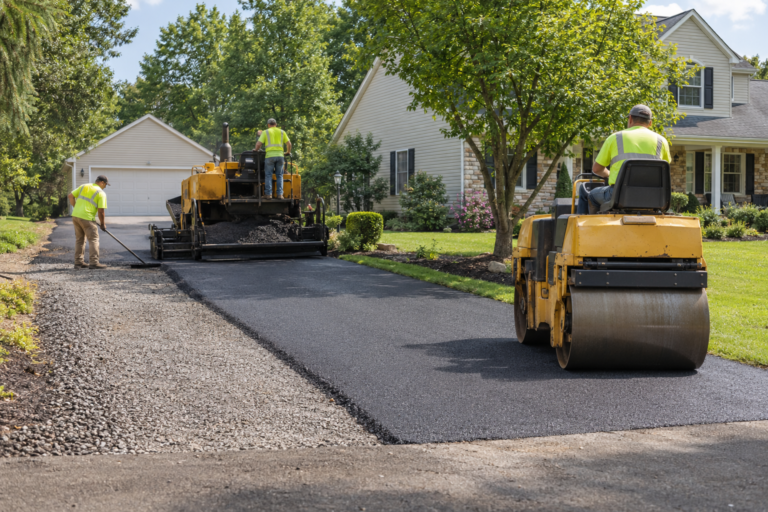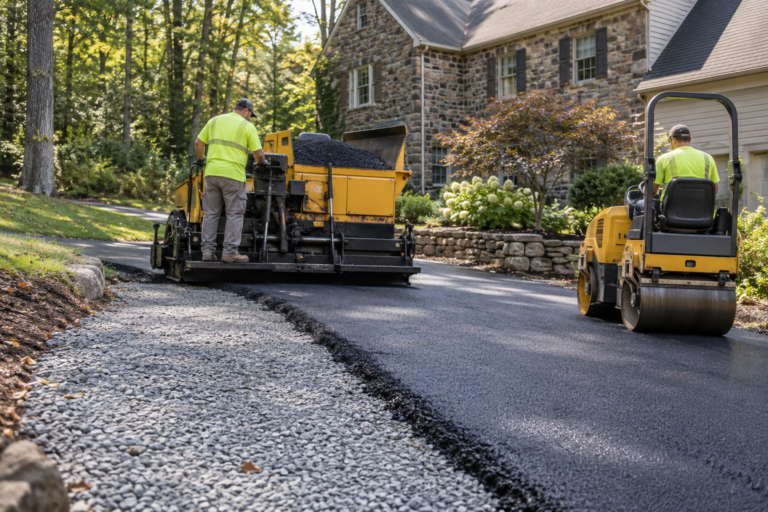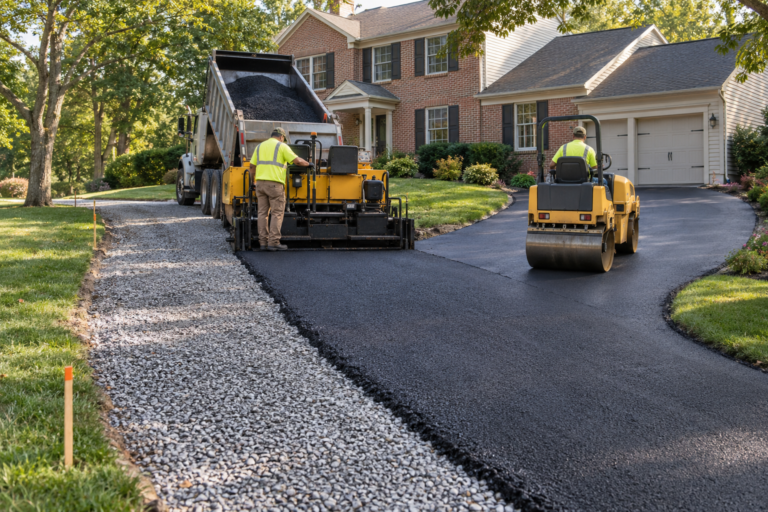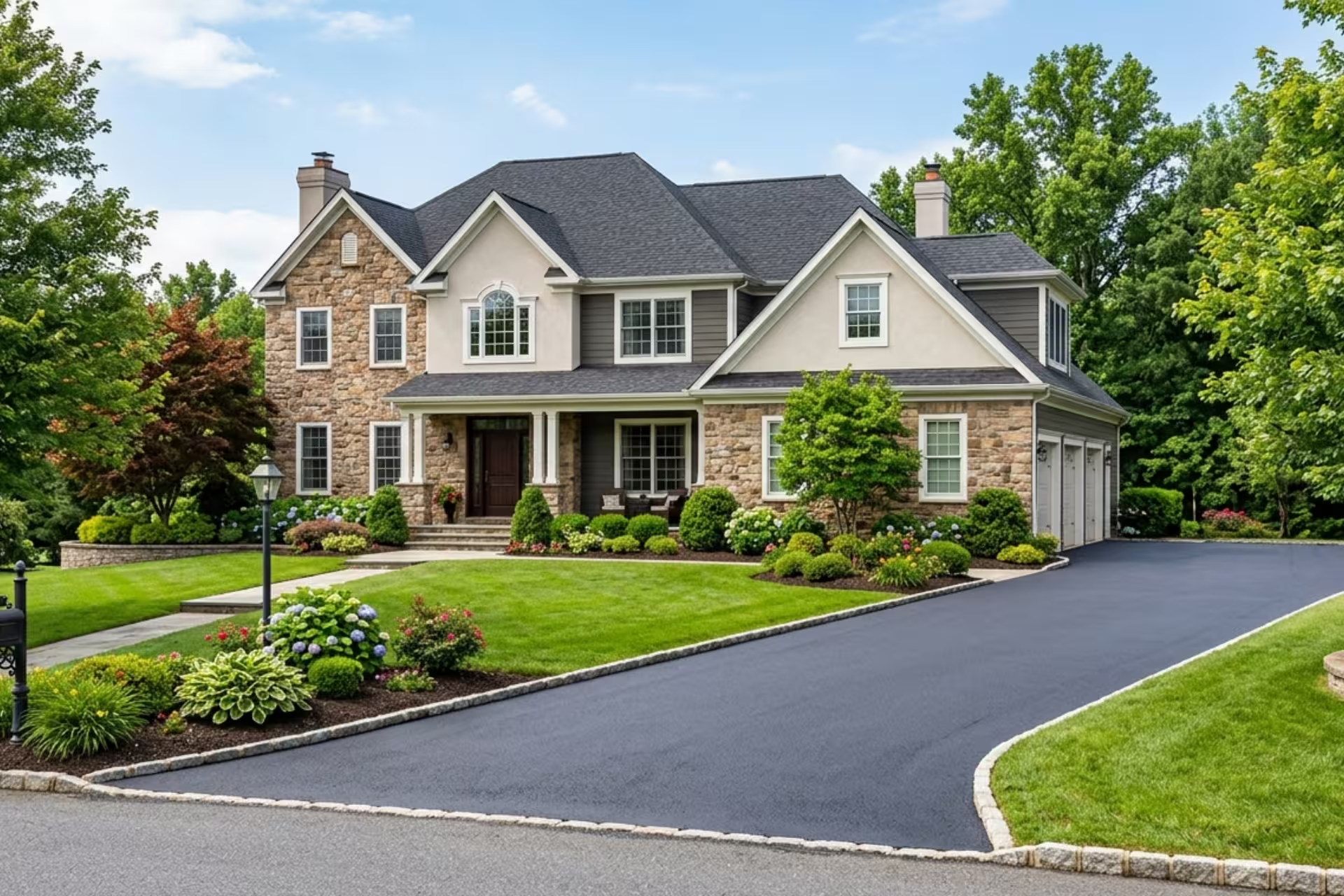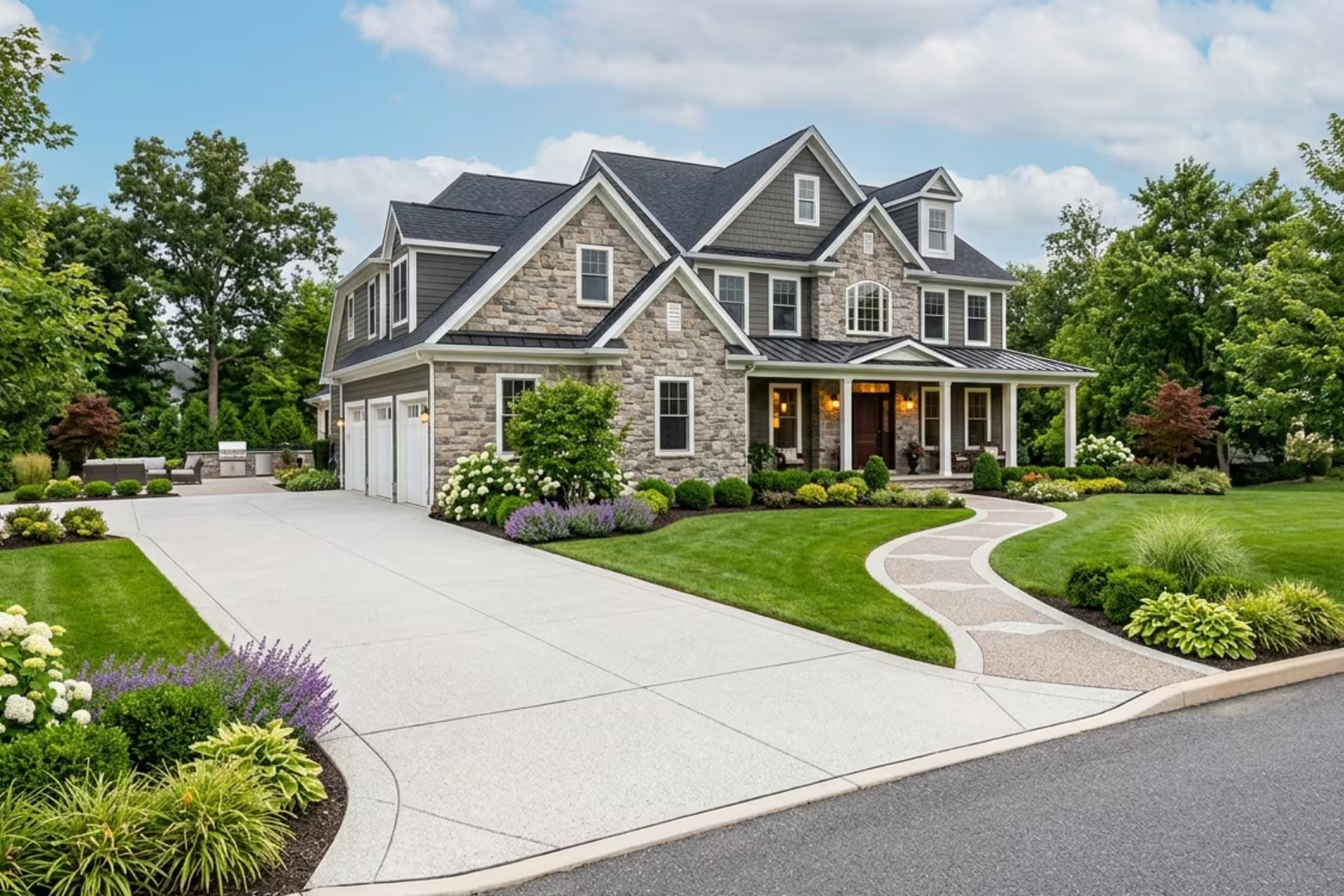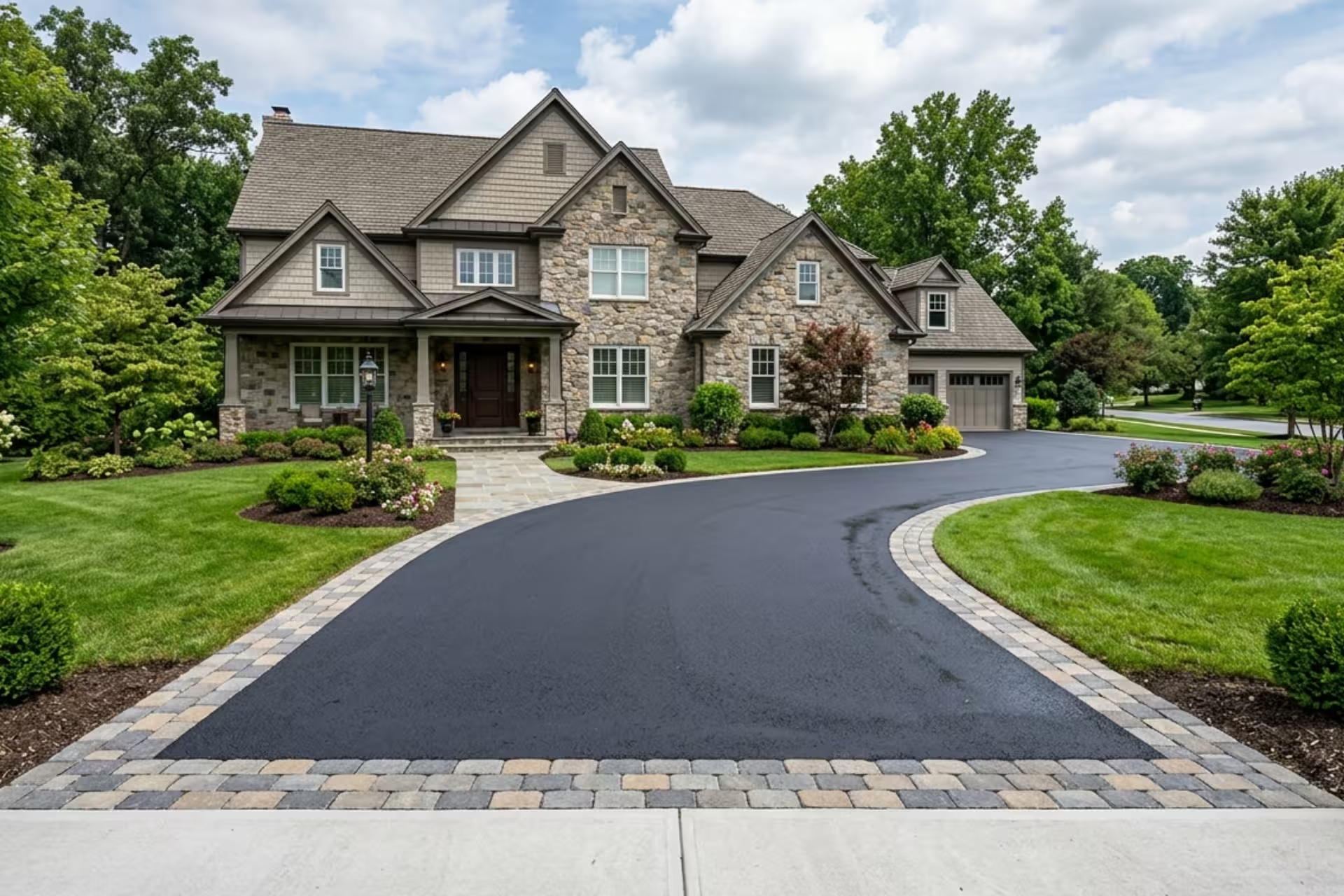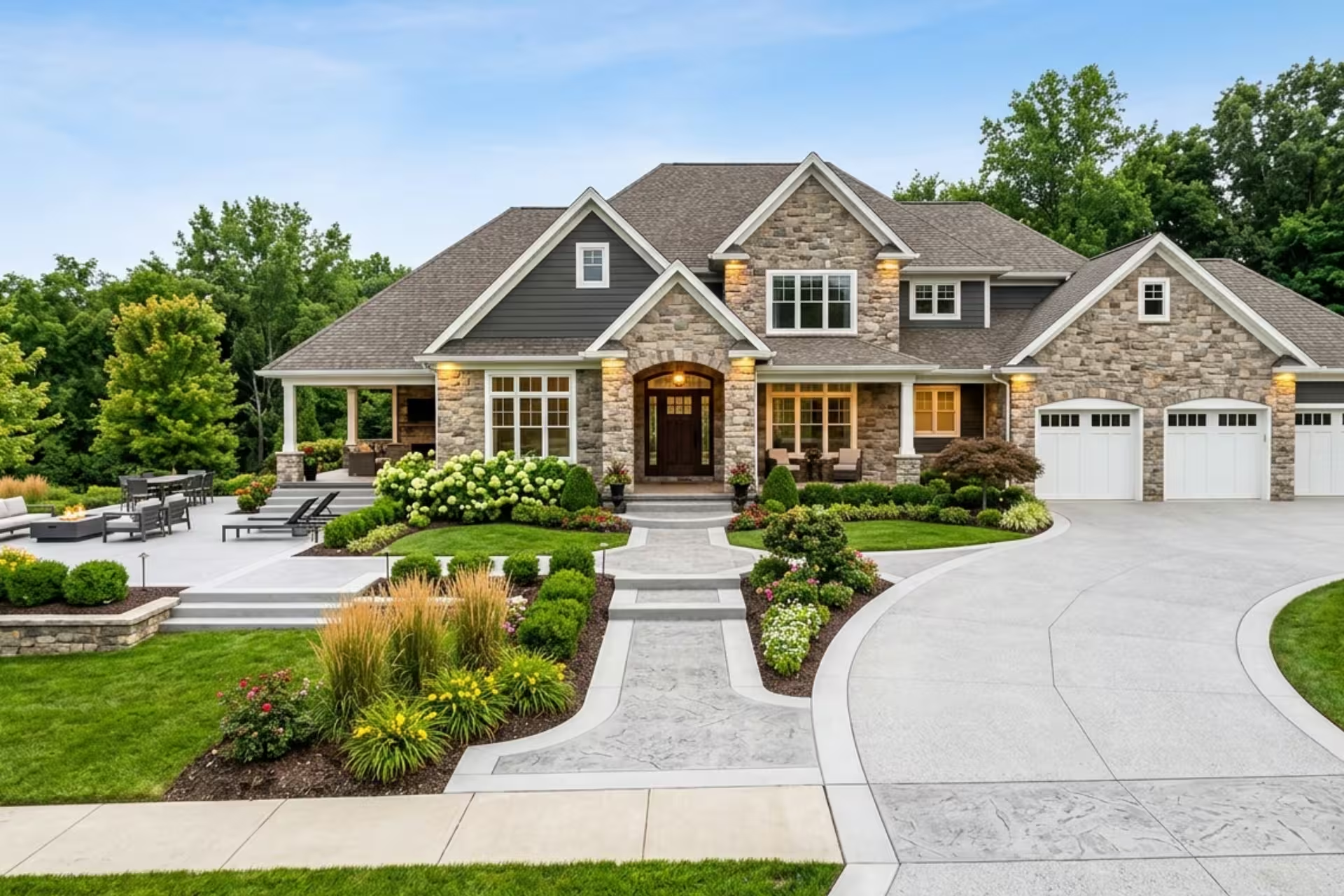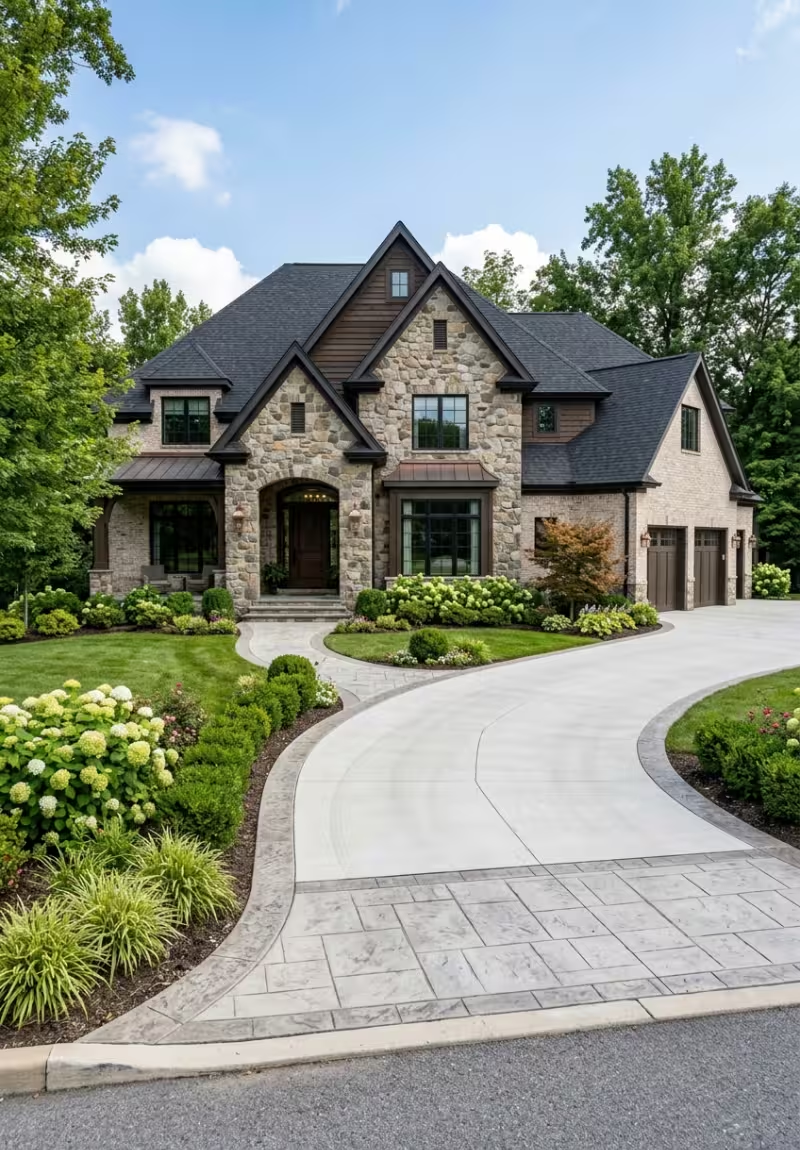
Asphalt and blacktop are often discussed as though they are two completely different paving materials. In everyday conversation, however, blacktop is usually an informal name for asphalt pavement, especially the smooth, dark surface installed on residential driveways, private lanes and smaller parking areas.
Both surfaces are generally made by combining mineral aggregate—such as crushed stone, sand or gravel—with asphalt binder. The mixture is produced, placed while workable and compacted to form a durable pavement surface.
The meaningful differences between paving projects usually involve:
- Aggregate size and gradation
- Asphalt-binder grade and quantity
- Mixture design
- Pavement thickness
- Supporting-base construction
- Compaction
- Drainage
- Expected traffic
- Climate and seasonal conditions
- Intended application
Therefore, choosing between “asphalt” and “blacktop” is less important than selecting the correct pavement design and ensuring that it is installed properly.
American Paving & Concrete provides professional asphalt paving for residential and commercial properties throughout Bucks, Montgomery and Lehigh counties.
Are Asphalt and Blacktop the Same Material?
In most residential and commercial conversations, the terms are used interchangeably.
A homeowner may request a blacktop driveway, while a paving contractor describes the same project as an asphalt driveway installation. Similarly, a property manager may refer to a blacktop parking lot even though the project specifications identify it as asphalt pavement.
There is no universal rule establishing that every surface called blacktop must contain one exact mixture or be produced at one specific temperature.
The final pavement should instead be evaluated according to:
- The approved asphalt mixture
- Aggregate properties
- Binder grade
- Lift thickness
- Base stability
- Compaction
- Surface drainage
- Expected vehicle loads
- Installation conditions
The name alone does not determine pavement quality.
What Is Asphalt Pavement Made From?
Asphalt pavement is primarily composed of mineral aggregate and asphalt binder.
Aggregate
Aggregate forms most of the mixture and may include:
- Crushed stone
- Gravel
- Sand
- Mineral filler
- Reclaimed asphalt material when permitted
The aggregate creates the pavement’s structural framework and contributes to strength, stability, surface texture and skid resistance.
Asphalt binder
Asphalt binder is the dark, adhesive material that coats and holds the aggregate particles together. Its properties affect pavement flexibility, durability and response to temperature changes.
The correct binder grade can depend on climate, traffic and project specifications.
Reclaimed asphalt pavement
Some asphalt mixtures may incorporate processed reclaimed asphalt pavement, commonly called RAP. Reclaimed material contains both aggregate and aged asphalt binder and may be incorporated into new mixtures under controlled specifications.
The exact mixture used should match the requirements of the project.
Why Is Asphalt Called Blacktop?
The term “blacktop” developed as a practical description of the pavement’s dark finished appearance.
Freshly installed asphalt generally has a deep black or charcoal color because the aggregate is coated with asphalt binder. As the pavement ages and oxidizes, its appearance may gradually fade toward gray.
“Blacktop” remains common in conversations about:
- Residential driveways
- Private roads
- Small parking areas
- Recreational surfaces
- Walkways
- Older asphalt surfaces
Paving professionals are more likely to use terms such as asphalt pavement, hot-mix asphalt, surface course, base course or asphalt overlay when discussing technical project requirements.
Asphalt Versus Blacktop: Practical Comparison
| Consideration | Asphalt | Blacktop |
|---|---|---|
| Meaning | Technical and general term for asphalt paving mixtures and pavement | Informal term commonly used for an asphalt surface |
| Basic materials | Aggregate combined with asphalt binder | Usually the same general materials |
| Common applications | Roads, driveways, parking lots and commercial pavement | Commonly associated with driveways and smaller paved areas |
| Appearance | Dark when new and gradually fades with age | Usually describes the same dark paved appearance |
| Installation | Placed and compacted according to project specifications | Normally installed using the same general paving process |
| Durability | Depends on design, base, drainage, traffic and maintenance | Depends on the same construction and maintenance factors |
| Maintenance | May require crack treatment, repair and sealcoating | Generally requires the same maintenance |
| Technical specification | Defined by the selected mixture and pavement design | The word alone does not define a technical mixture |
The specific design and quality of installation matter more than which term is used.
Is One Stronger Than the Other?
A surface is not automatically stronger because it is called asphalt rather than blacktop.
Pavement strength and performance depend on the complete structure, including:
- Soil stability
- Excavation depth
- Aggregate-base thickness
- Base compaction
- Asphalt mixture
- Asphalt thickness
- Number of lifts
- Final compaction
- Edge support
- Drainage
- Vehicle weight
- Traffic frequency
A properly designed residential driveway and a commercial parking lot may both use asphalt, but their construction requirements can be very different.
Commercial areas that support delivery trucks, waste-removal vehicles or frequent turning movements may require a stronger base and pavement design than a driveway used by passenger vehicles.
Residential Blacktop Driveways
A “blacktop driveway” normally means a residential asphalt driveway.
Asphalt can be suitable for residential properties because it offers:
- A smooth, continuous surface
- Efficient installation
- A clean, dark appearance
- Accommodation of long or curved layouts
- Repair and resurfacing options
- Compatibility with routine pavement maintenance
- Relatively quick return to use when conditions permit
Professional driveway paving begins with an evaluation of the soil, slope, drainage, access and anticipated vehicle use.
Installing asphalt over an unstable or poorly drained foundation can lead to premature cracking, sinking and potholes.
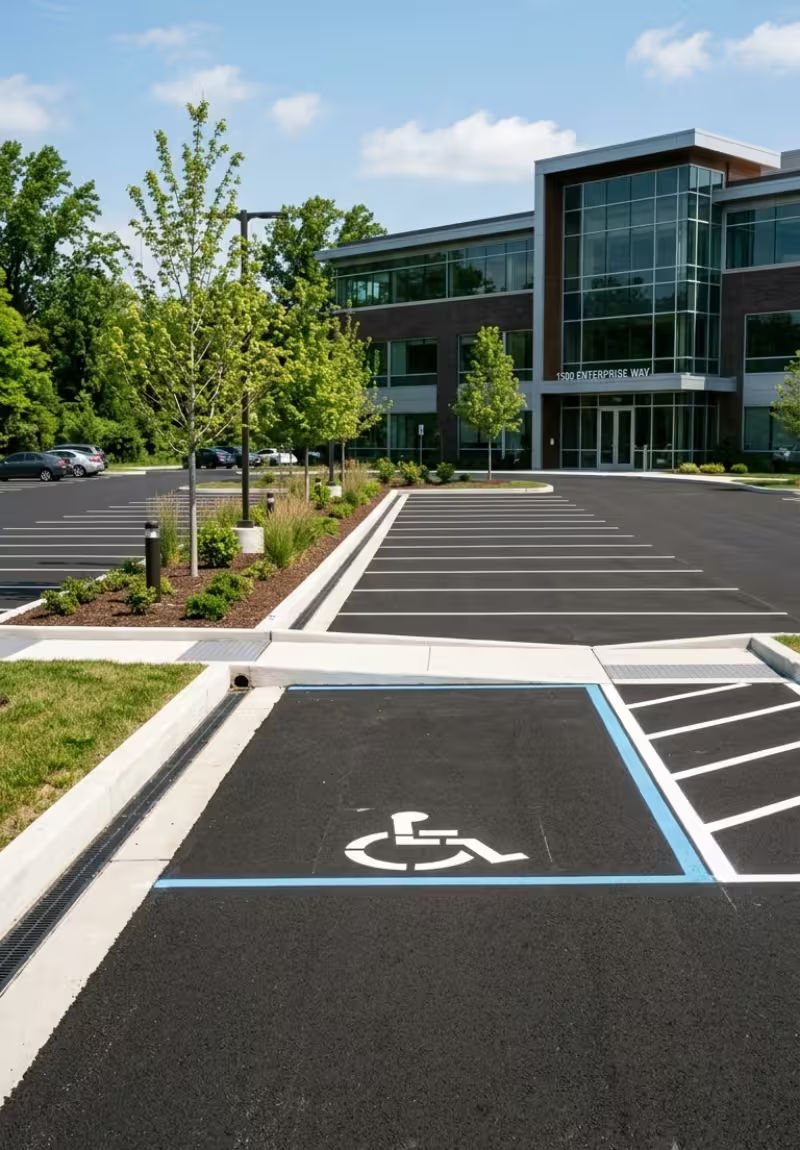
Asphalt for Commercial Parking Lots
Commercial asphalt pavement must be designed around property operations.
A parking-lot evaluation may consider:
- Daily traffic volume
- Passenger vehicles
- Delivery trucks
- Loading areas
- Dumpster locations
- Entrances and exits
- Turning and braking areas
- Accessible parking requirements
- Catch basins and drainage
- Snow-removal equipment
- Pavement markings
- Planned construction phases
Professional parking lot paving may involve different pavement thicknesses or construction details in high-stress areas.
The term blacktop does not communicate these requirements. A site-specific pavement plan does.
How Asphalt and Blacktop Are Installed
Although every property is different, installation may include the following stages.
1. Property inspection
The contractor evaluates dimensions, access, traffic, existing pavement, drainage and surrounding structures.
2. Excavation or surface removal
Vegetation, unsuitable soil or failed pavement may need to be removed. Existing asphalt may sometimes be milled or demolished depending on its condition.
3. Base preparation
A suitable aggregate base is installed, graded and compacted. The base helps distribute vehicle loads and support the asphalt surface.
4. Drainage grading
The pavement is shaped to direct water toward suitable drainage points rather than buildings, pavement edges or low areas.
5. Asphalt placement
The selected asphalt mixture is delivered and placed at the specified thickness.
6. Compaction
Rollers compact the pavement while the mixture remains workable. Proper compaction reduces excessive air voids and supports pavement performance.
7. Edge and transition work
Edges, garage entrances, road connections, sidewalks, drainage structures and adjoining pavement are finished appropriately.
Professional asphalt installation should address the entire pavement structure rather than only the visible surface.
Does Blacktop Cost Less Than Asphalt?
A contractor does not normally price a project solely according to whether the customer calls the surface asphalt or blacktop.
Project cost is affected by:
- Total square footage
- Existing surface condition
- Demolition or milling
- Excavation
- Aggregate-base requirements
- Asphalt thickness
- Number of pavement lifts
- Drainage work
- Site access
- Equipment requirements
- Disposal
- Traffic control
- Regional material costs
- Residential or commercial use
A small driveway with a stable base may cost less than a large parking lot requiring excavation, drainage correction and heavy-duty pavement construction.
An on-site assessment provides a more reliable estimate than comparing the words asphalt and blacktop.
Which Surface Lasts Longer?
Neither name guarantees a particular service life.
Asphalt pavement longevity depends on:
- Proper pavement design
- Quality materials
- Stable subgrade
- Compacted aggregate base
- Correct asphalt placement
- Adequate compaction
- Effective drainage
- Traffic type
- Weather exposure
- Timely maintenance
Water entering cracks can weaken supporting material. Repeated freezing and thawing may contribute to pavement movement and additional deterioration.
Addressing drainage and damage early can help reduce more extensive failure.
Can Existing Blacktop Be Repaired?
Yes. Because blacktop generally refers to asphalt pavement, it can normally be evaluated for standard asphalt repair methods.
Depending on the damage, repairs may include:
- Crack treatment
- Pothole patching
- Surface patching
- Full-depth patching
- Edge repair
- Low-area correction
- Drainage improvements
- Failed-section replacement
The correct repair depends on whether the deterioration is limited to the surface or extends into the aggregate base or subgrade.
Simply covering unstable pavement may not provide a lasting result.
Repair, Resurfacing or Replacement?
A pavement inspection should determine the extent and cause of deterioration.
Repair may be appropriate when:
- Damage is localized
- Potholes are limited
- Cracking is isolated
- Most of the pavement remains stable
- Drainage problems can be corrected locally
Resurfacing may be appropriate when:
- The supporting base remains stable
- Surface deterioration is widespread
- Major settlement is absent
- Failed areas can be repaired first
- Drainage remains functional
Replacement may be appropriate when:
- Alligator cracking is widespread
- Multiple repairs continue to fail
- The pavement has extensive settlement
- Large areas are soft or unstable
- Drainage failure affects the structure
- The supporting base requires reconstruction
An inspection prevents a cosmetic treatment from being recommended for structural failure.
Does Asphalt Need Sealcoating?
Sealcoating is a preventive surface treatment for eligible asphalt pavement. It may help reduce direct exposure to sunlight, oxidation, water, road salt and vehicle fluids.
However, sealcoating does not repair:
- Potholes
- Structural cracks
- Failed base material
- Severe settlement
- Drainage problems
- Widespread pavement breakup
Repairs should be completed before an eligible surface is sealcoated.
Learn more about professional sealcoating and the role it may play in an asphalt-maintenance plan.
How Pennsylvania Weather Affects Asphalt
Pennsylvania pavement is exposed to:
- Summer heat
- Strong sunlight
- Heavy rain
- Snow and ice
- Road salt
- Freeze-thaw cycles
- Snowplow activity
Temperature changes can cause pavement expansion and contraction. Open cracks allow water to enter the pavement structure, while freezing moisture can contribute to movement and base deterioration.
A suitable pavement design, effective drainage and timely asphalt maintenance are important for both residential and commercial surfaces.
Asphalt, Blacktop and Concrete Are Not the Same
Although asphalt and blacktop generally describe the same type of pavement, concrete is a different material.
Asphalt uses bituminous asphalt binder to hold aggregate together. Concrete uses cement, aggregate and water and cures into a rigid slab.
Asphalt may offer:
- Lower initial installation cost in many applications
- Faster installation
- A smooth black surface
- Repair and resurfacing options
- Greater flexibility
Concrete may offer:
- A rigid surface
- A lighter finished appearance
- Decorative finishing options
- Different maintenance requirements
- Compatibility with concrete aprons, sidewalks and patios
Neither option is universally best. Property use, budget, drainage, design and maintenance expectations should guide the decision.
How to Choose the Right Pavement
Do not make the decision based on terminology alone.
Ask the contractor to explain:
- The condition of the existing surface
- Whether excavation is necessary
- Proposed base preparation
- Drainage requirements
- Asphalt mixture
- Finished pavement thickness
- Compaction process
- Edge treatment
- Expected traffic
- Maintenance requirements
- Repair or resurfacing alternatives
A detailed site evaluation provides more useful information than asking whether asphalt or blacktop is better.
Request an Asphalt Paving Estimate
American Paving & Concrete provides residential and commercial asphalt paving, blacktop driveway installation, parking-lot paving, asphalt repair, resurfacing, sealcoating and pavement maintenance throughout Bucks, Montgomery and Lehigh counties.
We can inspect your property and recommend a pavement solution based on site conditions, drainage, traffic and the condition of the supporting base.
Call: (610) 477-3553
Email: info@americanpavingandconcrete.com
Address: 2114 Dublin Pike, Quakertown, PA 18951
Online: Request a free estimate