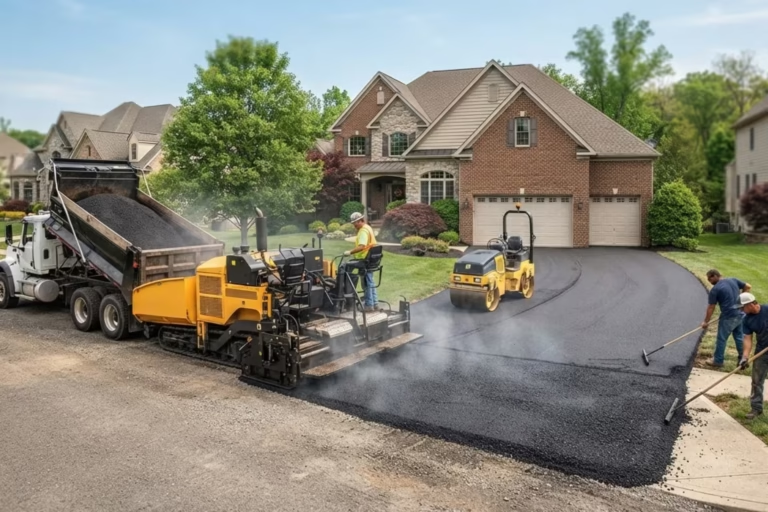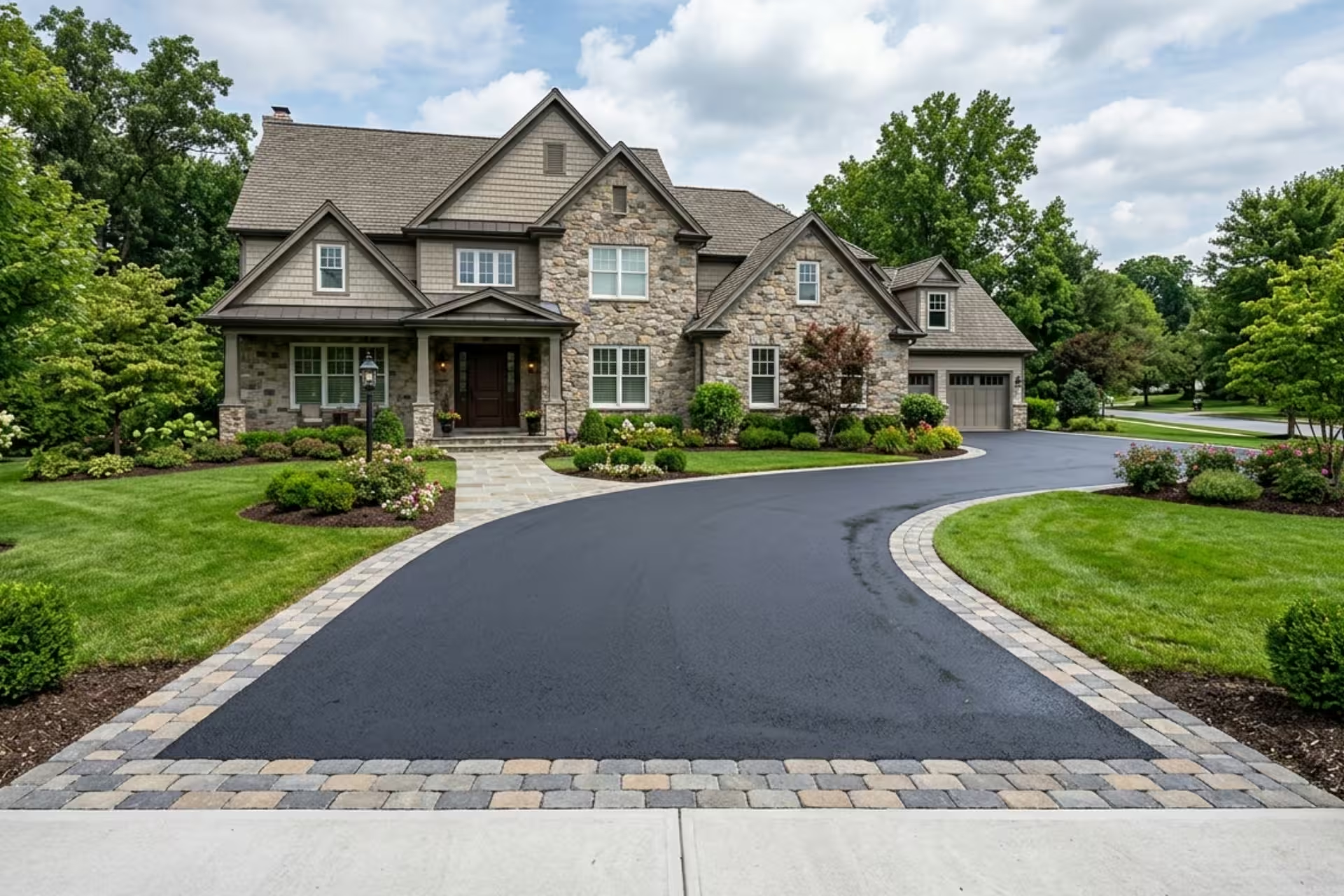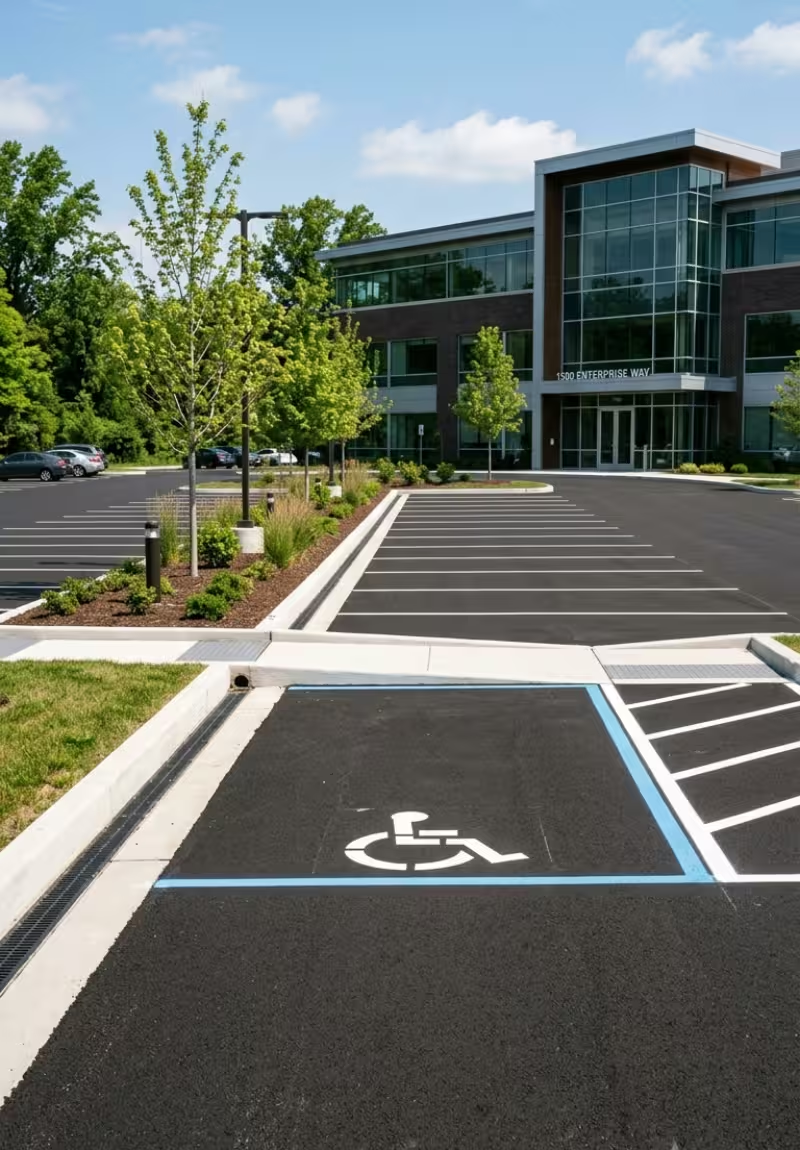
Choosing an experienced concrete paving company in Pennsylvania is important when planning a driveway, walkway, garage apron, commercial entrance, loading area or concrete pad. Concrete is a strong and versatile paving material, but its performance depends on proper excavation, base preparation, reinforcement, joint placement, finishing and curing.
A concrete surface may look simple once completed, but a successful installation requires careful planning below and above the finished slab. If the base is unstable, drainage is poor or the concrete is not installed correctly, the surface may crack, settle, hold water or become uneven.
American Paving & Concrete provides residential and commercial concrete paving services throughout Pennsylvania. Our services also include asphalt paving, driveway installation, commercial parking lot paving, asphalt repair, resurfacing, sealcoating and pavement maintenance.
This guide explains what a concrete paving company does, the types of projects concrete can be used for and how to choose the right contractor for your property.
What Does a Concrete Paving Company Do?
A concrete paving company installs, replaces and repairs concrete surfaces used by homeowners, businesses, property managers, apartment communities, churches, schools and industrial properties.
Concrete paving services may include:
- Concrete driveway installation
- Driveway replacement
- Garage aprons
- Walkways
- Sidewalks
- Entrance areas
- Concrete pads
- Dumpster pads
- Loading areas
- Commercial pavement sections
- Concrete transitions
- Damaged slab replacement
- Drainage correction
A professional company should inspect the property before recommending the correct concrete thickness, reinforcement, base and finishing method.
Residential Concrete Paving Services
Concrete can be used in several areas around a home. It provides a clean, structured appearance and creates a rigid surface for vehicles and pedestrians.
Residential concrete paving may include:
- New concrete driveways
- Driveway extensions
- Garage aprons
- Front walkways
- Side paths
- Entrance areas
- Concrete parking pads
- Patio connections
- Utility pads
- Replacement of damaged sections
The contractor should evaluate the property’s slope, soil condition, water flow and expected use before installation.
Concrete Driveway Installation
Concrete driveways are popular because they provide a solid, defined surface and can complement many styles of homes.
A concrete driveway installation may involve:
- Inspecting the site
- Removing existing pavement
- Excavating to the required depth
- Preparing a compacted aggregate base
- Setting forms
- Installing reinforcement if required
- Pouring concrete
- Leveling and finishing the surface
- Installing control joints
- Allowing the driveway to cure
- Removing forms and cleaning the site
The driveway must be designed to support expected vehicle loads. A driveway used by passenger cars may have different requirements than one used by work trucks, trailers or recreational vehicles.
Concrete Garage Aprons
A garage apron is the section between a driveway and a garage floor. It helps create a smoother transition and can protect the edge of the garage slab.
Concrete garage aprons may help:
- Improve the driveway-to-garage transition
- Reduce edge damage
- Direct water away from the garage
- Create a clean entrance
- Support frequent vehicle movement
- Connect an asphalt driveway to a concrete garage floor
Proper elevation is important. The apron should not direct water toward the garage door or building foundation.
Concrete Walkways and Sidewalks
Concrete is commonly used for walkways because it provides a stable pedestrian surface.
Concrete walkway services may include:
- Front entrance paths
- Side-yard walkways
- Commercial sidewalks
- Connections between parking lots and buildings
- Walkways around apartment complexes
- Church and school access paths
- Replacement of uneven sections
Walkways should be graded to move water away from buildings and reduce low spots.
Joint placement is also important because it helps control where shrinkage cracks occur.
Concrete Pads
Concrete pads provide a stable foundation for equipment, storage areas and other property features.
Common uses include:
- Air-conditioning equipment
- Generators
- Storage sheds
- Outdoor equipment
- Waste containers
- Commercial machinery
- Utility areas
- Small structures
The required slab thickness and reinforcement depend on the weight and use of the equipment.
Commercial Concrete Paving
Commercial properties often need concrete in areas that experience concentrated loads, repeated traffic or close contact with buildings.
Commercial concrete services may include:
- Loading zones
- Dumpster pads
- Delivery areas
- Warehouse entrances
- Concrete parking sections
- Commercial sidewalks
- Building entrances
- Equipment pads
- Pavement transitions
- High-use traffic areas
Concrete may be installed on its own or alongside asphalt. For example, a commercial parking lot may be paved with asphalt while loading zones and dumpster areas are built with concrete.
Why Concrete Is Used for Heavy-Use Areas
Concrete is a rigid material, making it suitable for certain areas exposed to concentrated weight or repeated use.
It may be selected for:
- Loading zones
- Dumpster areas
- Bus stops
- Commercial entrances
- Warehouse access points
- Equipment pads
- Areas with frequent turning traffic
The pavement design must still account for the base, thickness, reinforcement and drainage. Concrete alone cannot compensate for poor preparation.
Concrete and Asphalt on the Same Property
Many properties benefit from a combination of asphalt and concrete.
A residential project may include:
- An asphalt driveway
- A concrete garage apron
- A concrete front walkway
- A concrete parking pad
A commercial project may include:
- An asphalt parking lot
- Concrete sidewalks
- Concrete loading areas
- Concrete dumpster pads
- Concrete building entrances
Using both materials allows the contractor to match each surface to its use.
The connection points must be carefully planned so the elevations, drainage and transitions work together.
Concrete Base Preparation
The surface underneath the concrete is one of the most important parts of the project.
Base preparation may include:
- Removing old pavement
- Excavating unstable material
- Installing crushed stone
- Compacting the aggregate
- Correcting soft ground
- Establishing the correct elevation
- Preparing the slab edges
- Improving drainage
If the base settles, the concrete above it may crack or become uneven. Proper preparation helps distribute loads and support the slab.
Concrete Reinforcement
Reinforcement may be used to help control movement and improve the slab’s performance.
Depending on the project, reinforcement may include:
- Steel reinforcing bars
- Welded wire reinforcement
- Fiber reinforcement
- Thickened slab sections
- Reinforced edges
Reinforcement does not guarantee that concrete will never crack. Concrete naturally expands, contracts and shrinks. The goal is to help control movement and keep the slab working as intended.
Concrete Control Joints
Control joints are placed in concrete to create planned locations for shrinkage cracking.
Without properly spaced joints, cracks may form randomly across the slab.
Joint design depends on:
- Slab thickness
- Slab dimensions
- Layout
- Concrete mixture
- Expected use
- Surrounding structures
A professional concrete paving company should plan joint placement before pouring the slab.
Concrete Finishing
Finishing affects both the appearance and usability of the concrete.
Common finishing options may include:
- Broom finish
- Smooth finish
- Troweled finish
- Textured surface
- Defined borders
- Decorative finishes
Exterior concrete often uses a broom finish because it provides texture and may improve traction.
The chosen finish should suit the location, weather exposure and intended use.
Concrete Curing
Curing allows concrete to develop strength after it is poured. The surface may look hard quickly, but it continues gaining strength over time.
During curing, the contractor may recommend:
- Keeping vehicles off the surface
- Limiting foot traffic
- Avoiding heavy equipment
- Protecting the slab from extreme weather
- Following specific watering or curing instructions
- Avoiding deicing chemicals during the early period
Using the concrete too soon can damage the surface or reduce long-term performance.
Concrete Drainage Planning
Concrete is rigid and does not absorb significant amounts of water. The surface must therefore be sloped so runoff moves in the correct direction.
Drainage planning should protect:
- Garages
- Foundations
- Building entrances
- Walkways
- Parking areas
- Neighboring properties
- Low areas
- Pavement transitions
Standing water can lead to ice, staining, surface wear and settlement around slab edges.
Signs Concrete Needs Repair or Replacement
Concrete may need attention if you notice:
- Widespread cracking
- Sunken sections
- Raised slab edges
- Broken corners
- Surface scaling
- Standing water
- Exposed reinforcement
- Severe staining
- Loose or crumbling concrete
- Uneven transitions
- Repeated patch failure
Some damage can be repaired, while more serious structural problems may require slab removal and replacement.
Concrete Repair vs Replacement
The right solution depends on the type and extent of the damage.
Concrete Repair
Repair may be appropriate for:
- Small cracks
- Minor surface damage
- Isolated edge damage
- Small broken sections
- Limited joint repairs
Repairs may improve function, but the repaired area may not perfectly match the original concrete color or texture.
Concrete Replacement
Replacement may be better when:
- The slab has settled
- Cracks are widespread
- The base has failed
- Large sections are broken
- Water collects across the surface
- Reinforcement is exposed
- Previous repairs keep failing
Replacement allows the contractor to correct the base and drainage before installing new concrete.
Concrete Paving Cost Factors
The cost of concrete paving in Pennsylvania depends on the size and complexity of the project.
Pricing factors may include:
- Total square footage
- Existing pavement removal
- Excavation depth
- Base preparation
- Concrete thickness
- Reinforcement
- Formwork
- Joint installation
- Surface finish
- Drainage correction
- Site access
- Residential or commercial use
- Concrete delivery requirements
A large driveway, small walkway and commercial loading area will each require different designs and pricing.
An on-site estimate is the best way to determine the actual project cost.
How to Choose a Concrete Paving Company in Pennsylvania
When comparing concrete paving companies, consider more than the final price.
Ask each contractor:
- Do you handle residential and commercial concrete work?
- Will you inspect the site before estimating?
- How will the base be prepared?
- What concrete thickness do you recommend?
- Will reinforcement be used?
- How will control joints be placed?
- Which finish is suitable for the project?
- How will drainage be managed?
- How long must the concrete cure?
- Will I receive a written scope of work?
The contractor should clearly explain the installation process and why each step is necessary.
Warning Signs When Hiring a Concrete Contractor
Be cautious if a contractor:
- Does not inspect the property
- Avoids discussing base preparation
- Does not mention control joints
- Cannot explain concrete thickness
- Ignores drainage
- Provides only a vague estimate
- Recommends immediate vehicle use
- Does not discuss curing
- Pressures you to approve the project quickly
Poor preparation can lead to costly problems even when the concrete initially looks good.
Residential and Commercial Service Areas
American Paving & Concrete provides concrete paving services throughout Pennsylvania, including Bucks County and Montgomery County.
Service areas include:
- Quakertown
- Doylestown
- Bensalem
- North Wales
- Lansdale
- Norristown
- Blue Bell
- Abington
- Jenkintown
- Horsham
- King of Prussia
- Surrounding Pennsylvania communities
Project availability may depend on the property location, size and type of concrete work required.
Choose American Paving & Concrete
American Paving & Concrete provides concrete paving for homeowners, business owners and property managers throughout Pennsylvania.
Our concrete services include:
- Concrete driveways
- Garage aprons
- Walkways
- Commercial sidewalks
- Concrete pads
- Loading areas
- Dumpster pads
- Entrance areas
- Damaged slab replacement
- Concrete and asphalt transitions
We also provide asphalt paving, driveway installation, parking lot paving, asphalt repair, resurfacing, sealcoating and pavement maintenance.
Schedule Concrete Paving Services in Pennsylvania
Whether you need a new concrete driveway, walkway, garage apron, commercial entrance or equipment pad, American Paving & Concrete can inspect your property and recommend the right paving solution.
Call: (610) 203-4241
Email: info@americanpavingandconcrete.com
Website: goldenrod-bat-405442.hostingersite.com/