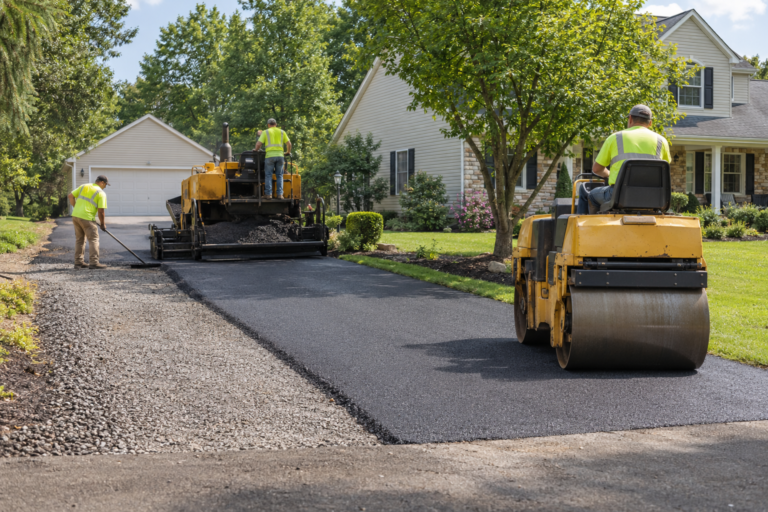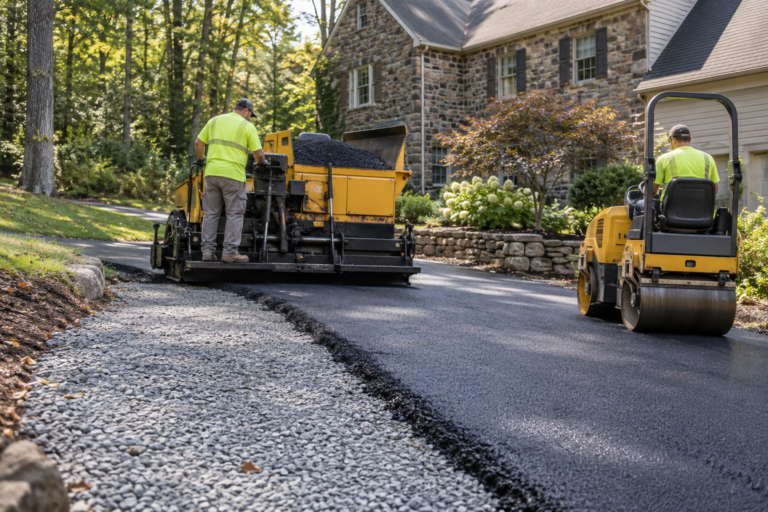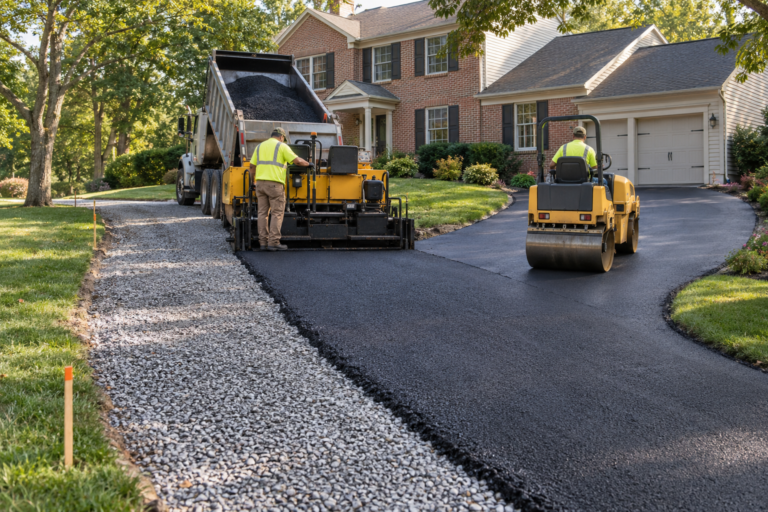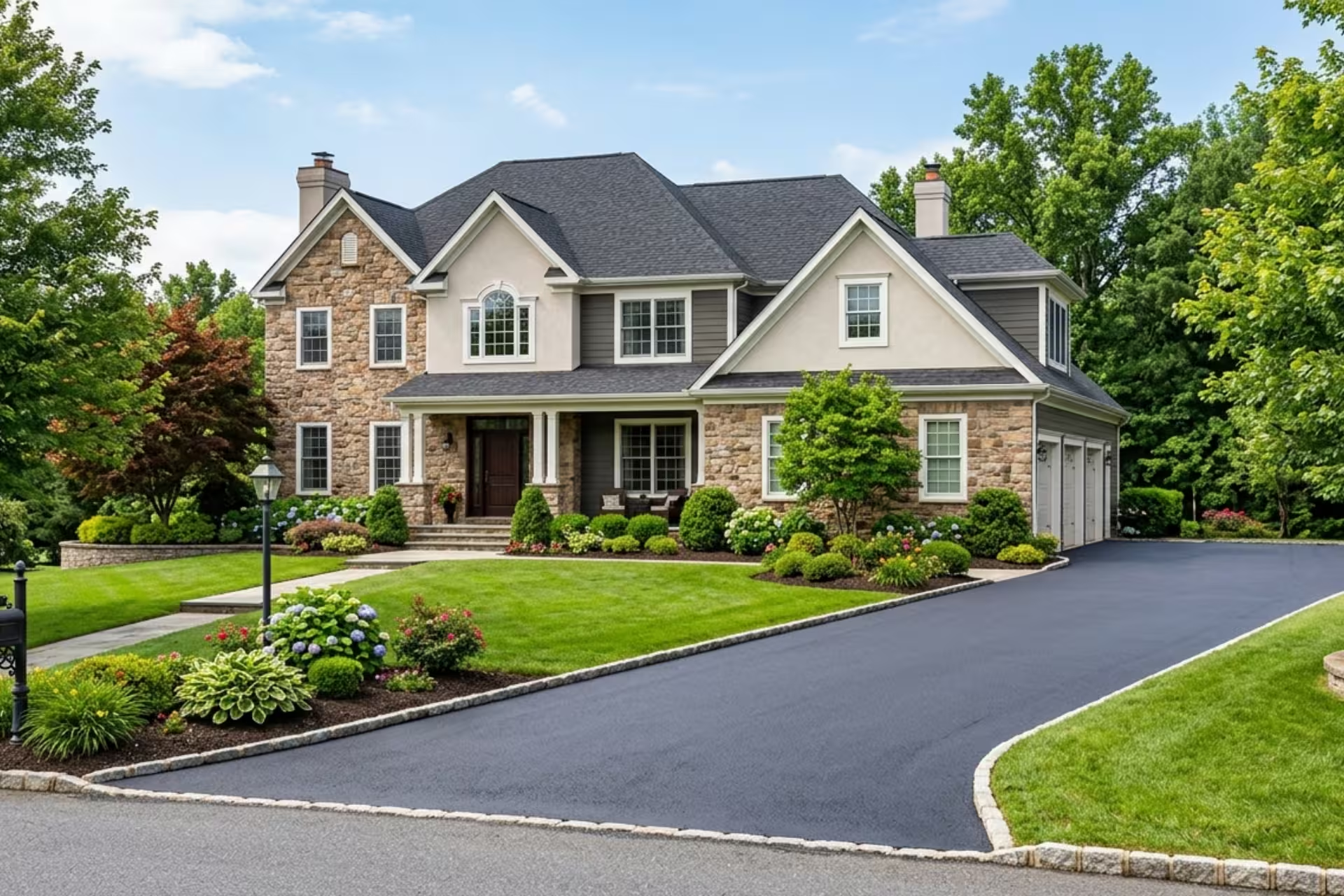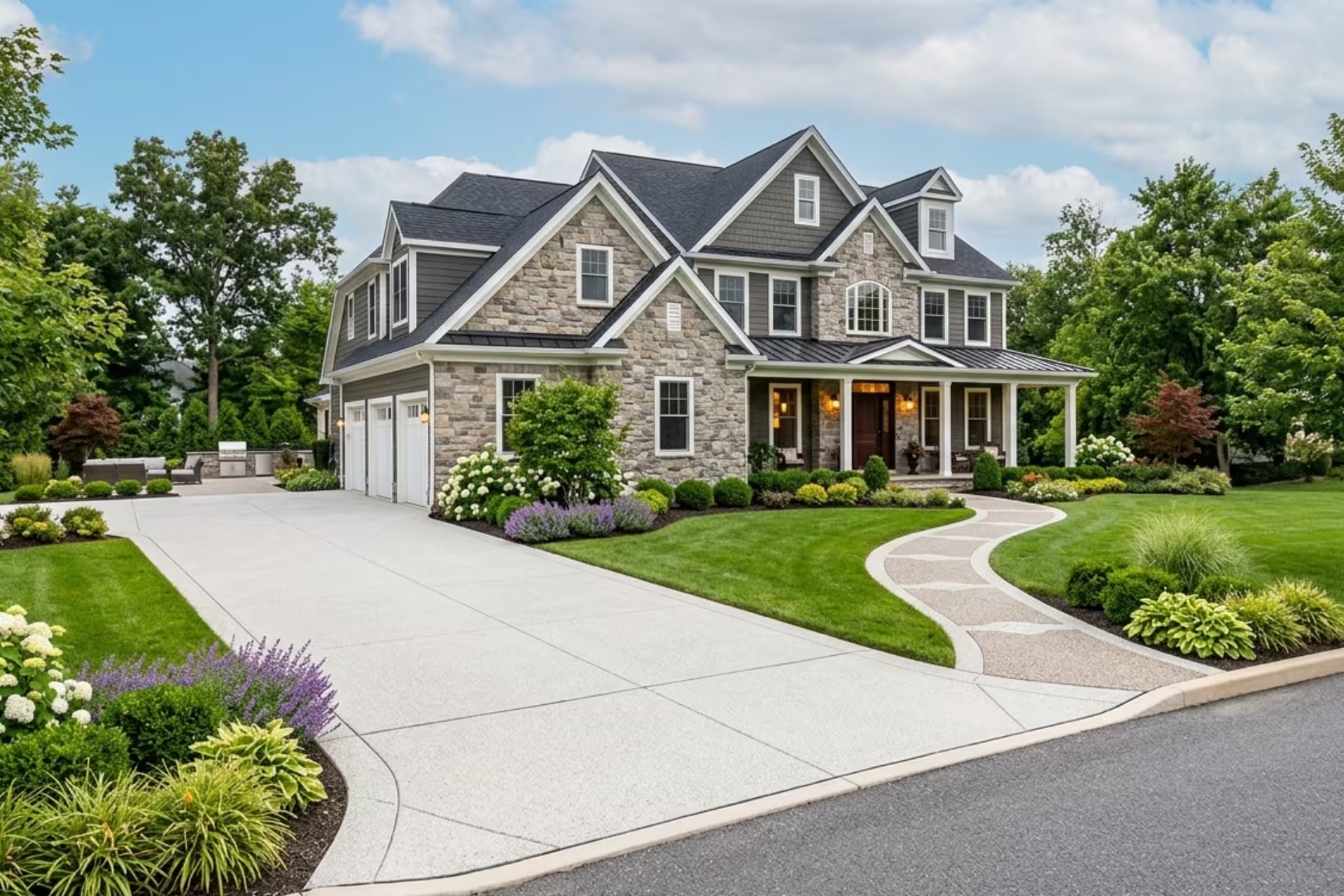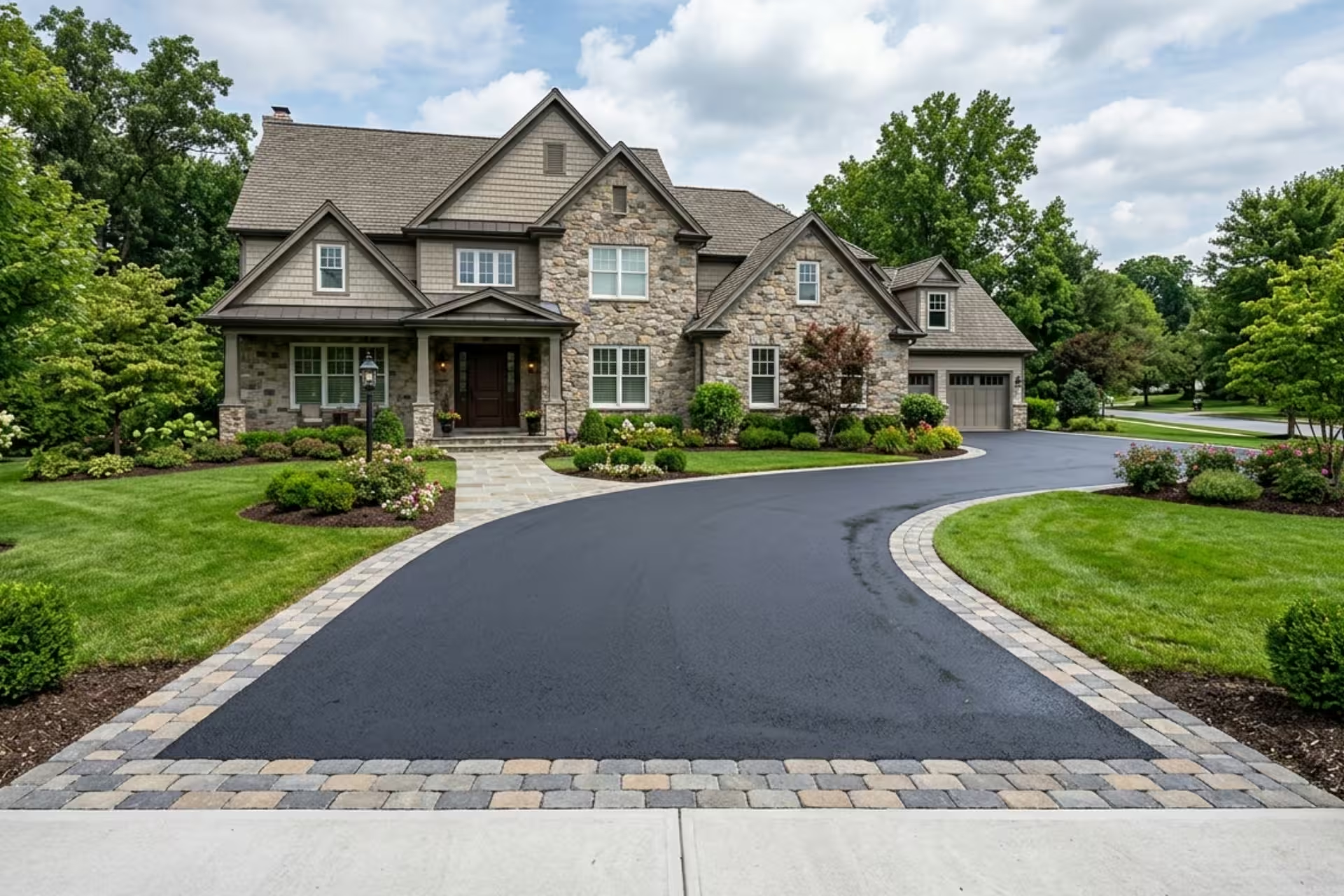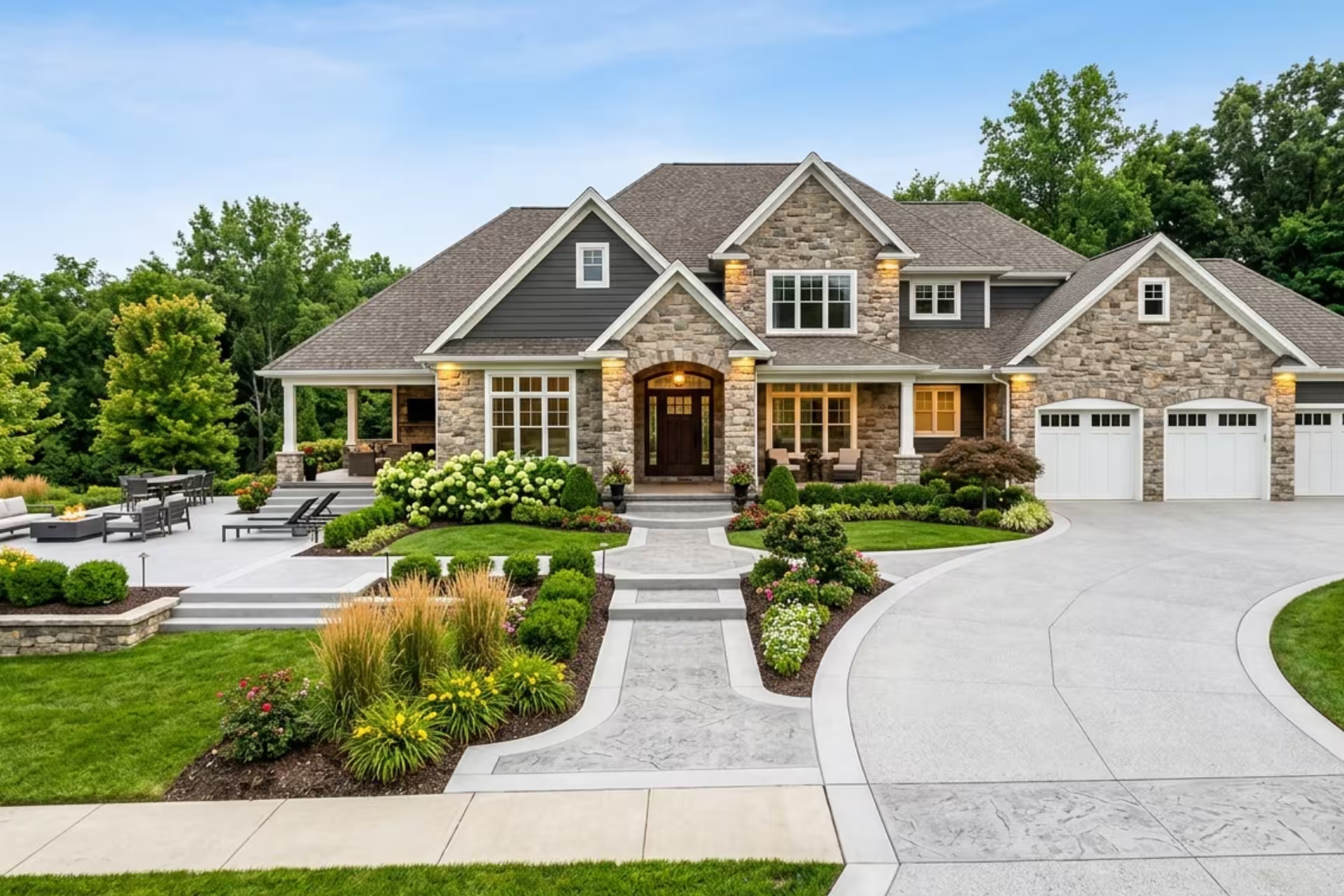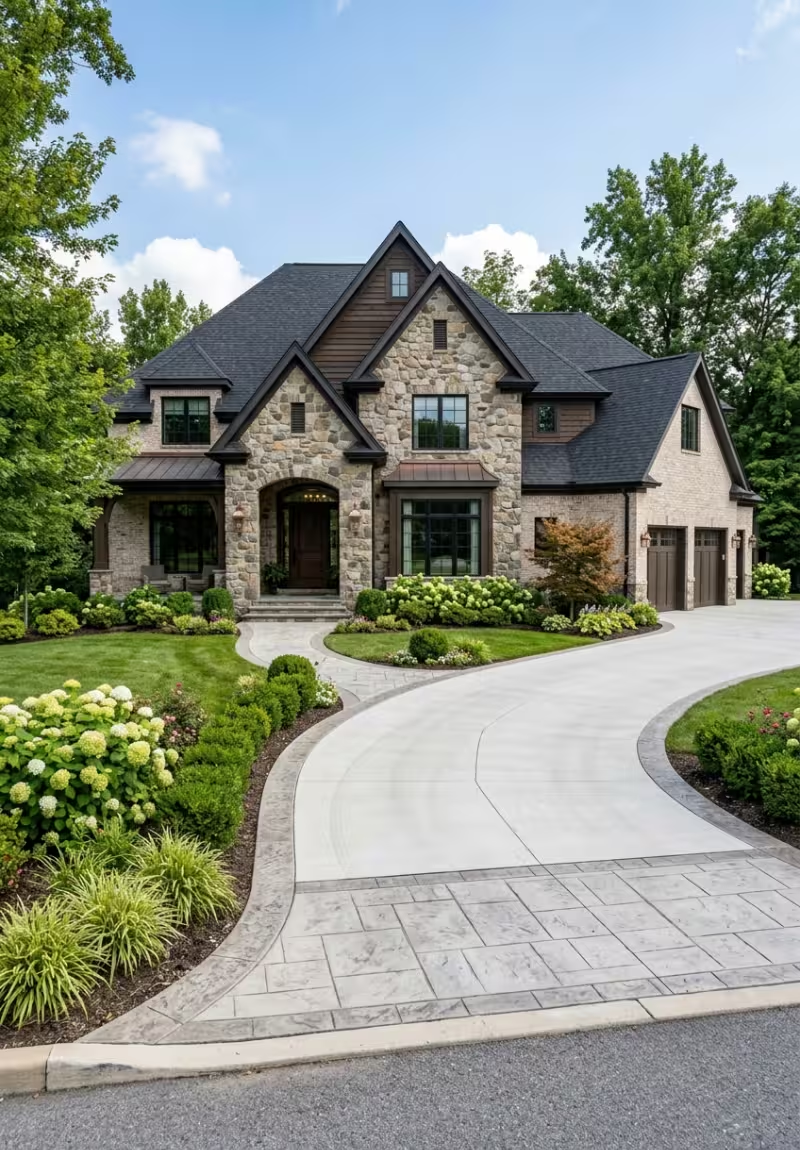
Tar-and-chip driveway installation is generally considered a cost-conscious paving option, particularly for long driveways, rural properties, private lanes and homeowners who prefer a natural stone appearance.
It frequently costs less than installing comparable areas with conventional hot-mix asphalt or concrete. However, it normally costs more upfront than leaving a driveway as loose gravel.
There is no reliable universal price per square foot for every tar-and-chip project. The actual cost depends on:
- Driveway length and width
- Existing surface condition
- Base preparation
- Excavation requirements
- Grading and drainage
- Number of surface applications
- Aggregate type and availability
- Equipment access
- Material transportation
- Edges and transitions
- Local site conditions
- Required repairs
A driveway that already has a stable, properly graded aggregate base may cost considerably less than a property requiring excavation, drainage correction and complete base construction.
American Paving & Concrete evaluates the entire site before recommending tar-and-chip, driveway paving, asphalt installation or another suitable surface.
What Is a Tar-and-Chip Driveway?
Tar-and-chip paving is a textured pavement treatment created by applying a bituminous asphalt binder and covering it with selected stone aggregate. The stone is rolled into the binder to form a bonded driving surface.
It is also commonly called:
- Chip seal
- Oil and stone
- Stone and oil
- Bituminous surface treatment
- Tar and stone
Although “tar and chip” is the familiar name, modern installations generally use an asphalt-based binder rather than traditional coal tar.
The finished driveway has a more natural and textured appearance than smooth black asphalt. Its appearance depends substantially on the size, shape and color of the selected aggregate.
Is Tar and Chip Cheaper Than Asphalt?
Tar-and-chip installation can cost less than a completely new hot-mix asphalt driveway, but the comparison must use equivalent project conditions.
For example, both estimates should account for:
- Excavation
- Aggregate-base installation
- Grading
- Compaction
- Drainage
- Existing-pavement removal
- Equipment access
- Driveway size
- Edges and transitions
A low tar-and-chip estimate that excludes essential base preparation should not be compared directly with an asphalt estimate that includes complete excavation and base construction.
Tar-and-chip may offer greater initial savings when:
- The driveway is long
- The existing aggregate base is stable
- Minimal excavation is required
- Drainage already functions properly
- Standard locally available stone is selected
- The property has good equipment access
- The driveway carries residential traffic
- A textured finish is acceptable
Asphalt may provide better value when:
- A smooth surface is essential
- The driveway receives frequent heavy traffic
- Snow-removal requirements favor a smoother finish
- Line markings or detailed pavement features are needed
- Easier localized repairs are important
- The intended use requires a conventional paved surface
For information about conventional asphalt construction, visit our asphalt paving service page.
Tar-and-Chip Versus Gravel Driveway Cost
Loose gravel commonly has a lower initial installation cost than tar and chip.
However, a gravel driveway may require ongoing attention for:
- Stone displacement
- Rutting
- Washouts
- Dust
- Weed growth
- Low areas
- Edge migration
- Regrading
- Replenishing lost aggregate
Tar and chip uses binder to hold much of the surface aggregate in position. This can create a more defined, stable driving surface than loose gravel.
A gravel driveway with a strong, properly compacted base may also provide a suitable starting point for tar-and-chip installation. However, loose stone alone is not proof that the underlying structure is ready.
The contractor must inspect:
- Aggregate depth
- Soft areas
- Drainage
- Slope
- Compaction
- Organic material
- Edge support
- Road and garage transitions
Additional preparation may still be required.
Tar-and-Chip Versus Concrete Driveway Cost
Concrete usually requires a higher initial investment than tar and chip.
The price of concrete may reflect:
- Subgrade preparation
- Aggregate base
- Formwork
- Reinforcement
- Concrete thickness
- Finishing
- Control joints
- Curing
- Detailed edges
- Drainage features
Concrete can offer a rigid, smooth and long-lasting surface, but it produces a very different appearance from tar and chip.
Tar and chip may suit homeowners who want:
- A lower initial paving cost
- A natural stone finish
- A textured driving surface
- An appearance suitable for rural properties
- A practical surface for a long driveway
Concrete may be more suitable for areas requiring a firm, uniform pedestrian surface or concentrated load support. Learn more about these applications through our concrete paving services.
Major Factors Affecting Tar-and-Chip Driveway Cost
Understanding the individual cost factors makes it easier to compare estimates fairly.
1. Driveway size
The total surface area is one of the largest pricing factors.
Contractors calculate area using driveway length and width, but may also account for:
- Parking areas
- Turnarounds
- Curved sections
- Entrance aprons
- Pull-off areas
- Garage approaches
- Irregular shapes
- Widened sections
Large driveways require more binder, aggregate, labor and equipment time. Nevertheless, the unit cost may sometimes become more efficient on larger accessible projects because mobilization costs are distributed across more square footage.
2. Existing base condition
The visible surface is only one part of the driveway.
A durable installation requires a stable supporting base. If the existing base is thin, wet, loose or contaminated, it may require correction before tar and chip is applied.
Preparation could include:
- Removing organic material
- Excavating soft soil
- Installing geotextile where appropriate
- Adding graded aggregate
- Compacting the base in layers
- Correcting low areas
- Establishing suitable slope
- Supporting pavement edges
Skipping required base preparation may reduce the initial estimate but increase the risk of settlement, rutting and premature failure.
3. Drainage and grading
Water must move away from the driveway and adjoining structures.
Drainage work may add to the project cost when the site has:
- Standing water
- Poor cross-slope
- Eroded shoulders
- Downspouts discharging onto the driveway
- Low areas
- Failed culverts
- Water flowing from neighboring land
- Improper garage or road transitions
The contractor may need to reshape the surface, add aggregate, rebuild low sections or adjust runoff paths.
Proper drainage supports longer service life and may reduce future repair expenses.
4. Aggregate selection
The selected stone affects both appearance and cost.
Pricing may vary according to:
- Stone type
- Color
- Size
- Shape
- Source
- Availability
- Transportation distance
- Required quantity
- Special-order status
Locally available aggregate is often more economical than decorative material transported from a distant quarry.
Homeowners interested in appearance options can review our related guide: Can I Customize the Color and Texture of My Tar-and-Chip Driveway?
5. Number of applications
A project may involve a single surface application or additional layers depending on the existing condition and intended use.
More material and installation passes will increase the initial price. The appropriate specification should be based on:
- Existing surface
- Base condition
- Vehicle use
- Driveway slope
- Desired finish
- Project design
More applications should not be added merely to make the estimate appear more substantial. Each layer should serve a defined purpose.
6. Site access
Paving equipment and delivery trucks require sufficient access.
Costs may increase when a property has:
- Narrow entrances
- Restricted turning space
- Low branches
- Overhead wires
- Steep approaches
- Soft shoulders
- Limited staging space
- Gates or pillars
- Difficult material-delivery routes
Good access can improve productivity and reduce material-handling time.
7. Existing driveway removal
Tar and chip may sometimes be installed over a suitable existing base or pavement. Other sites require removal of unstable material.
Removal adds expenses for:
- Labor
- Equipment
- Loading
- Transportation
- Processing or disposal
- Replacement aggregate
- Compaction
A site inspection is necessary before determining whether the existing driveway can remain.
8. Edges and transitions
Detailed areas require additional attention.
These may include transitions to:
- Public roads
- Garages
- Concrete aprons
- Walkways
- Gates
- Parking pads
- Drainage channels
- Other paved surfaces
Poorly constructed transitions can create bumps, loose edges, drainage problems or premature wear.
Why Online Tar-and-Chip Prices Can Be Misleading
Generic price ranges cannot account for the condition of an individual Pennsylvania property.
Two driveways with identical dimensions may have very different project costs if:
- One has a stable base and the other has soft soil
- One drains correctly and the other holds water
- One uses standard stone and the other uses decorative aggregate
- One has open access and the other has a narrow entrance
- One requires no excavation and the other needs complete reconstruction
Material, fuel, trucking and aggregate availability can also change over time.
An on-site assessment is more dependable than calculating a total from a generic national square-foot range.
Is the Cheapest Estimate the Best Value?
The lowest estimate does not necessarily represent the lowest long-term cost.
A complete proposal should explain:
- Area included
- Surface preparation
- Base repairs
- Grading
- Drainage work
- Binder application
- Aggregate type
- Number of applications
- Compaction
- Edges and transitions
- Cleanup
- Access limitations
- Maintenance expectations
An unusually low price may exclude work necessary for reliable performance.
Ask every contractor to quote the same scope. This makes comparisons more meaningful and reduces the risk of unexpected additional charges.
Tar-and-Chip Driveway Installation Process
A professional installation may include the following stages.
1. Site inspection
The contractor examines the existing driveway, supporting base, drainage, slope, access and transitions.
2. Project measurements
The complete area is measured, including parking spaces, curves, entrances and turnarounds.
3. Base preparation
Soft areas are corrected and suitable aggregate is graded and compacted as required.
4. Binder application
The asphalt-based binder is distributed evenly across the prepared surface.
5. Aggregate placement
The selected stone is spread while the binder is ready to receive it.
6. Rolling and compaction
A roller embeds the aggregate into the binder and produces a more uniform surface.
7. Finishing and cleanup
Edges and transitions are reviewed, and excess loose stone is managed according to the project requirements.
Does Tar and Chip Require Maintenance?
Tar-and-chip surfaces are often described as relatively low maintenance, but no driveway is completely maintenance-free.
Property owners should:
- Inspect the surface regularly
- Keep drainage routes clear
- Address erosion
- Avoid stationary tire turning
- Remove snow carefully
- Monitor loose stone
- Repair localized damage promptly
- Protect unsupported edges
- Follow the contractor’s aftercare instructions
The surface may eventually need another treatment as the binder ages and aggregate wears.
Maintenance needs depend on traffic, installation quality, weather exposure and drainage.
How Long Does Tar and Chip Last?
Service life cannot be guaranteed from the surface material alone.
It depends on:
- Base stability
- Drainage
- Installation quality
- Traffic frequency
- Vehicle weight
- Weather
- Aggregate quality
- Surface maintenance
- Snow-removal practices
A correctly constructed driveway with a stable base will generally perform better than a surface installed over weak or poorly drained material.
For a detailed explanation, read How Long Does a Tar-and-Chip Driveway Last?
Pennsylvania Weather and Tar-and-Chip Driveways
Pennsylvania driveways experience:
- Heavy rain
- Summer heat
- Snow
- Ice
- Freezing temperatures
- Freeze-thaw cycles
- Road salt
- Snowplow activity
Water entering weak areas can affect the base. Freezing moisture may contribute to movement and surface deterioration.
The driveway should be graded so water does not collect or flow beneath the surface. Snowplow blades should also be operated carefully to avoid dislodging embedded stone.
Climate alone does not determine performance. Base preparation, drainage and maintenance remain equally important.
When Tar and Chip May Offer Good Value
Tar and chip may be a practical investment when:
- The driveway is long
- The property has a rural or natural setting
- A textured stone appearance is preferred
- The existing base is stable
- Residential traffic is expected
- The owner wants an alternative to loose gravel
- Conventional asphalt or concrete exceeds the project budget
- Locally available aggregate meets the desired appearance
It can provide a useful balance between affordability, traction and visual character.
When Another Surface May Be Better
Tar and chip is not ideal for every property.
Another surface may be preferable when:
- A very smooth finish is required
- The driveway receives heavy commercial traffic
- Frequent tight turning is expected
- Wheelchairs, small casters or similar mobility needs require a uniform surface
- Aggressive snowplowing is unavoidable
- A formal concrete appearance is preferred
- Detailed painted markings are needed
- The base requires extensive reconstruction
American Paving & Concrete can compare tar and chip with residential asphalt paving based on the property’s intended use.
How to Get an Accurate Tar-and-Chip Estimate
Before requesting estimates, identify:
- Approximate driveway dimensions
- Existing surface material
- Known drainage problems
- Soft or sinking areas
- Vehicle types
- Desired aggregate appearance
- Garage and road transitions
- Access restrictions
- Preferred project timing
The contractor should then inspect the property and develop a scope based on actual conditions.
A professional estimate should address both installation cost and the work required to support long-term performance.
Request a Tar-and-Chip Driveway Estimate
American Paving & Concrete provides driveway paving and property-specific surface recommendations throughout Bucks County, Montgomery County, Lehigh County and surrounding Pennsylvania communities.
We can inspect the existing driveway, evaluate its base and drainage, discuss aggregate options, and prepare a project estimate based on the property’s actual requirements.
Call: (610) 477-3553
Email: info@americanpavingandconcrete.com
Address: 2114 Dublin Pike, Quakertown, PA 18951
Online: Request a free estimate