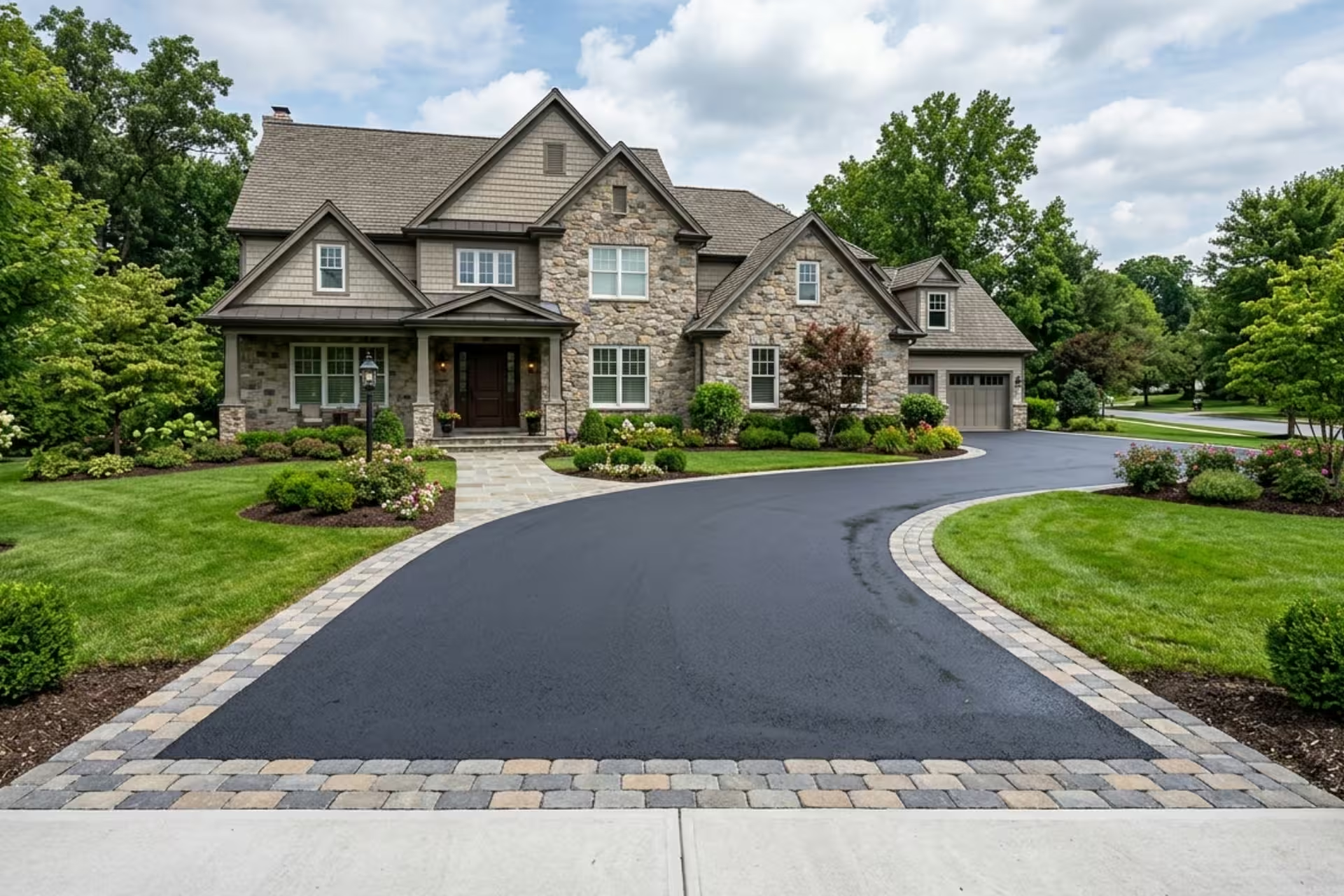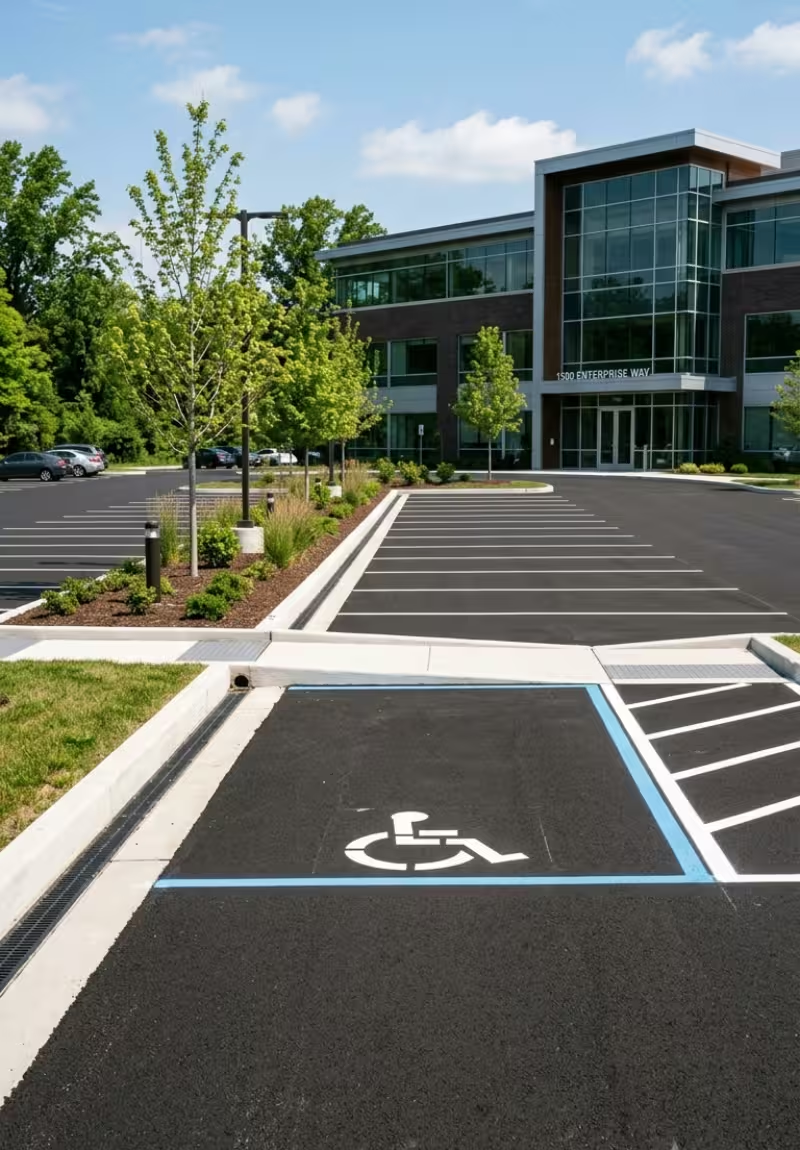
A reliable asphalt driveway begins below the finished blacktop surface. Soil conditions, excavation, aggregate-base depth, compaction, drainage, asphalt thickness and edge support all influence how the pavement performs.
American Paving & Concrete provides professional asphalt installation in Bally, Pennsylvania, for:
- New residential driveways
- Gravel-to-asphalt conversions
- Complete driveway replacement
- Driveway extensions
- Private access lanes
- Residential parking areas
- Asphalt resurfacing where appropriate
- Transitions to roads and garages
Bally is a borough in Berks County, Pennsylvania. American Paving & Concrete serves the community from its Quakertown business location; this page does not represent a separate office in Bally. Bally Borough
Every property is evaluated before installation. The correct pavement design depends on the site, expected vehicle use and condition of the supporting ground.
New Asphalt Driveway Installation
New driveway construction may be required for:
- Newly constructed homes
- Properties without a finished driveway
- Gravel or stone driveways
- Residential parking expansions
- Private access lanes
- Existing driveways beyond repair
- Redesigned entrances
- Additional vehicle parking
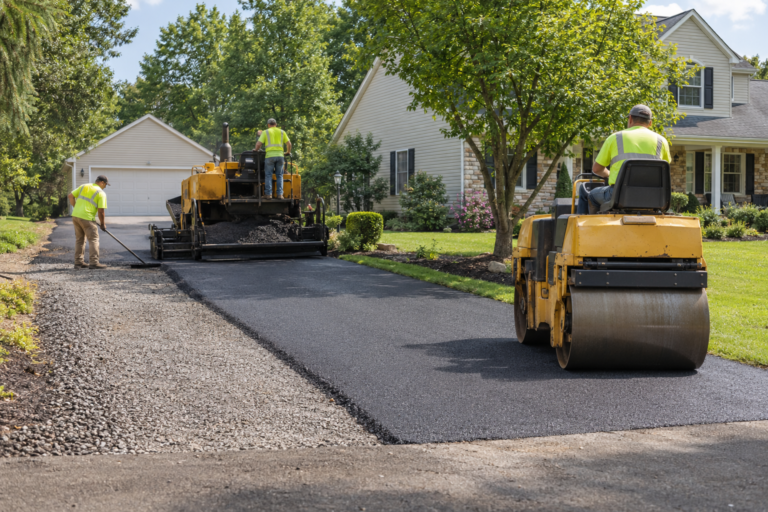
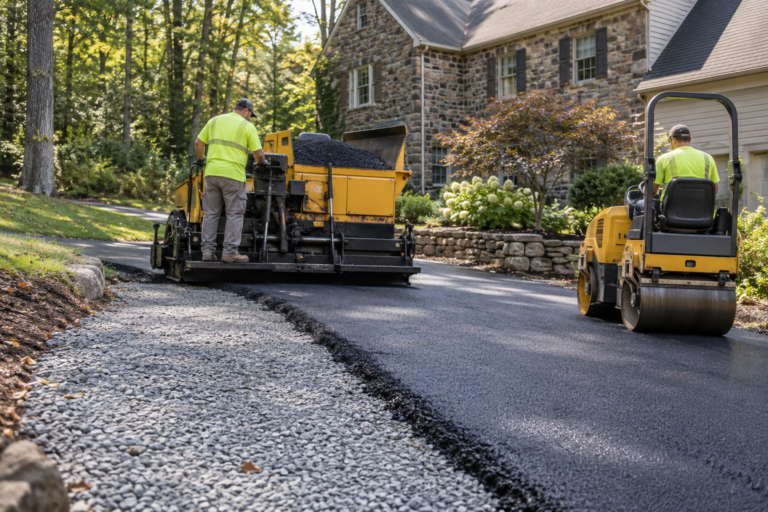
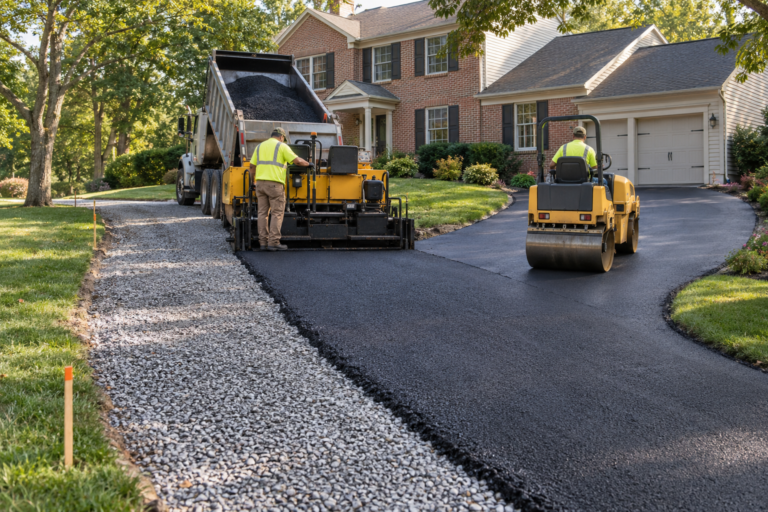
A new driveway installation may involve:
- Inspecting and measuring the site
- Evaluating soil and drainage
- Planning the driveway dimensions
- Removing vegetation or unsuitable material
- Excavating to the required depth
- Installing aggregate base
- Grading and compacting the base
- Establishing surface drainage
- Placing asphalt
- Compacting the pavement
- Finishing edges and transitions
- Providing initial-use instructions
Skipping important preparation may reduce pavement performance even when the newly installed surface looks smooth.
Gravel-to-Asphalt Driveway Conversion
Converting a gravel driveway to asphalt can create a smoother, more defined and easier-to-use residential surface.
The existing gravel should not automatically be treated as a finished paving base. Before installing asphalt, the contractor should evaluate:
- Existing aggregate type
- Aggregate depth
- Base contamination
- Soft or unstable areas
- Drainage
- Surface grade
- Driveway width
- Edge support
- Vehicle loads
- Settlement
- Access for paving equipment
Additional excavation or crushed aggregate may be necessary when the existing material is insufficient, poorly graded or mixed with soil.
A successful gravel conversion requires a stable base capable of supporting the new pavement.
Complete Asphalt Driveway Replacement
Replacement may be appropriate when an existing driveway has widespread structural failure.
Warning signs include:
- Extensive alligator cracking
- Multiple recurring potholes
- Severe settlement
- Large soft areas
- Drainage failure
- Asphalt breaking apart
- Failed repairs throughout the surface
- Major edge deterioration
- An unstable supporting base
- Significant pavement movement
Replacement allows the failed asphalt to be removed so the contractor can evaluate and correct the supporting structure.
The process may include:
- Removing old pavement
- Excavating failed material
- Rebuilding the aggregate base
- Correcting grade and drainage
- Compacting the foundation
- Installing new asphalt
- Finishing transitions and edges
Localized damage does not always require complete replacement. An inspection should determine whether professional asphalt repair or resurfacing remains practical.
Asphalt Resurfacing Versus New Installation
Resurfacing installs a new asphalt layer over prepared existing pavement. It is different from complete removal and reconstruction.
Resurfacing may be suitable when:
- The supporting base remains stable
- Major settlement is absent
- Surface wear is widespread
- Cracking is moderate
- Potholes are limited and repairable
- Drainage is functioning properly
- The existing pavement can support an overlay
Complete installation or replacement may be better when:
- Base failure is widespread
- The driveway has severe sinking
- Multiple repairs continue to fail
- Drainage requires reconstruction
- Asphalt is extensively broken
- The pavement elevation must change
- The existing surface cannot support an overlay
Covering an unstable driveway with new asphalt can allow cracks and settlement to appear through the overlay.
Site Inspection and Planning
Before installation, the contractor should examine the complete property rather than only the visible paving area.
The assessment may include:
- Soil condition
- Existing pavement
- Driveway dimensions
- Property access
- Garage elevation
- Road connection
- Walkways
- Utilities
- Trees and roots
- Drainage
- Slopes
- Retaining structures
- Expected vehicles
- Snow-removal requirements
The site inspection helps establish a realistic project scope and identify conditions that could affect installation.
Excavation and Soil Preparation
Asphalt should not be installed directly over organic material, unstable soil or poorly prepared ground.
Excavation requirements depend on:
- Existing surface material
- Soil stability
- Base depth
- Drainage
- Frost conditions
- Vehicle weight
- Proposed asphalt thickness
- Final pavement elevation
Soft or unsuitable material may need to be removed and replaced. The excavation must also leave sufficient space for the aggregate base and asphalt layers.
Aggregate-Base Installation
The aggregate base supports the asphalt and distributes vehicle loads.
A properly prepared base should:
- Use suitable crushed material
- Be installed at the required depth
- Be graded evenly
- Be compacted thoroughly
- Provide stable edge support
- Promote effective drainage
- Match the intended vehicle use
The base for a passenger-vehicle driveway may differ from a driveway regularly used by work trucks, trailers or heavy equipment.
Weak base preparation can contribute to:
- Cracking
- Potholes
- Rutting
- Settlement
- Edge failure
- Uneven transitions
- Standing water
The surface pavement cannot compensate for an unstable foundation.
Driveway Grading and Drainage
Drainage should be planned before asphalt is installed.
A driveway should direct water toward suitable runoff or drainage areas without sending it:
- Toward the home
- Into a garage
- Across a walkway
- Onto neighboring property
- Into unsupported pavement edges
- Into low sections
- Against retaining structures
Potential drainage work may include:
- Adjusting the driveway slope
- Correcting low areas
- Establishing a consistent grade
- Integrating existing drains
- Improving shoulder drainage
- Creating suitable transitions
- Managing runoff at the road
Poor drainage can allow water to enter the pavement base and contribute to premature damage.
Asphalt Thickness and Pavement Design
There is no single asphalt thickness appropriate for every project.
Design factors include:
- Passenger vehicles
- Work trucks
- Recreational vehicles
- Trailers
- Delivery vehicles
- Traffic frequency
- Soil stability
- Base strength
- Driveway slope
- Turning movements
- Climate
- Edge conditions
Asphalt may be installed in one or more lifts depending on the project design.
The proposal should explain the planned pavement structure rather than rely only on a general statement that asphalt will be installed.
Asphalt Placement and Compaction
Asphalt must remain workable during placement and compaction.
The process may involve:
- Delivering the selected asphalt mixture
- Distributing material evenly
- Establishing the required thickness
- Shaping the pavement
- Compacting the surface
- Finishing edges
- Matching adjoining elevations
- Creating smooth transitions
Proper compaction helps reduce excessive air voids and improves pavement stability.
Weather, transport distance, surface temperature and equipment access can affect how quickly the mixture must be placed and compacted.
Asphalt Driveway Edges
New asphalt edges require appropriate support.
Unsupported edges may break when vehicles drive beyond the paved surface or when water erodes the adjoining material.
Edge planning may include:
- Compacted shoulders
- Suitable adjoining soil
- Defined landscape borders
- Proper drainage
- Adequate pavement width
- Avoiding sharp drop-offs
- Protecting new edges from traffic
Drivers should avoid repeatedly placing tires on unsupported pavement edges.
Garage and Road Transitions
Transitions should provide practical vehicle access without creating abrupt bumps or low areas.
Important transition locations include:
- Garage floors
- Public roads
- Private roads
- Sidewalks
- Concrete aprons
- Existing pavement
- Drainage channels
- Walkways
The contractor should consider both finished elevation and water movement.
A transition that is too high may create an uncomfortable entrance. A transition that is too low may collect water.
Residential Asphalt Installation
Residential driveways should be designed around how the property is used.
The assessment may consider:
- Number of vehicles
- Vehicle size
- Parking locations
- Turning space
- Garage access
- Deliveries
- Trailers
- Snowplows
- Trash-collection access
- Outdoor equipment
Visit the Bally residential asphalt services page for broader information about driveway repair, resurfacing and maintenance in the community.
This installation page specifically addresses new construction, gravel conversion and complete replacement.
Driveway Extensions and Parking Areas
A driveway extension may provide additional room for:
- Household vehicles
- Guest parking
- Work vehicles
- Trailers
- Recreational vehicles
- Easier turning
- Improved garage access
The new section should be integrated with the existing pavement.
Installation may require:
- Excavation
- Base preparation
- Drainage adjustments
- Edge support
- Matching pavement elevation
- Transition work
- Asphalt placement and compaction
Simply placing asphalt beside an existing driveway without a stable base can lead to edge separation and settlement.
Pennsylvania Weather and Asphalt Installation
Bally-area pavement experiences:
- Summer heat
- Heavy rain
- Winter freezing
- Snow and ice
- Freeze-thaw cycles
- Road salt
- Snowplow activity
Water entering the pavement structure may weaken the base. When trapped moisture freezes, it can contribute to movement and cracking.
Professional installation should account for local seasonal conditions through:
- Stable base preparation
- Suitable drainage
- Proper compaction
- Appropriate asphalt mixture
- Supported edges
- Timely maintenance
Weather conditions during installation also affect material handling and compaction.
When Can a New Driveway Be Used?
New asphalt needs time to cool and set before vehicles use it.
The waiting period depends on:
- Weather
- Pavement temperature
- Asphalt mixture
- Pavement thickness
- Vehicle weight
- Shade
- Installation conditions
- Contractor instructions
Pedestrians may be able to use the driveway before vehicles, but the installer’s directions should be followed.
For the initial period:
- Avoid heavy vehicles
- Avoid sharp stationary turns
- Do not park concentrated loads on unsupported edges
- Keep construction equipment off the surface
- Follow all reopening instructions
Asphalt continues to harden after it becomes usable.
New Asphalt Maintenance
New asphalt should not be sealcoated immediately. It needs sufficient time to cure and release oils from the fresh pavement.
Long-term asphalt maintenance may include:
- Routine inspections
- Cleaning
- Prompt crack treatment
- Edge protection
- Drainage maintenance
- Oil-stain cleanup
- Pothole repair
- Sealcoating when appropriate
- Resurfacing planning
Professional sealcoating may become part of the maintenance plan after the asphalt has cured and its condition has been evaluated.
Permits and Property Requirements
Permit and access requirements vary according to project location and scope.
A driveway project may involve:
- Borough requirements
- Road-opening or access rules
- Right-of-way considerations
- Utility locations
- Sidewalk crossings
- Stormwater management
- Driveway-width requirements
- Property setbacks
- Highway-access requirements
Property owners should confirm applicable requirements with Bally Borough and relevant authorities before work begins.
The paving contractor can identify common project considerations but does not replace instructions from the municipality, utility provider or road authority.
What Affects Asphalt Installation Cost?
Asphalt driveway cost in Bally depends on:
- Total square footage
- Existing surface removal
- Excavation depth
- Soil stability
- Aggregate-base requirements
- Asphalt thickness
- Number of asphalt lifts
- Drainage work
- Property access
- Driveway slope
- Edge construction
- Garage and road transitions
- Disposal requirements
- Vehicle use
- Material and transport costs
A long gravel driveway, small replacement driveway and new residential parking area will each have different requirements.
An on-site inspection provides a more accurate estimate than a general square-foot price.
Questions to Ask an Asphalt Contractor
Before approving an installation, ask:
- Will the existing surface be removed?
- How much excavation is required?
- What base material will be used?
- What base depth is proposed?
- How will the base be compacted?
- How will drainage be handled?
- What asphalt thickness is included?
- Will asphalt be installed in multiple lifts?
- How will edges be supported?
- How will road and garage transitions be finished?
- When can vehicles use the driveway?
- What maintenance will be required?
- Is the project scope provided in writing?
Clear specifications make it easier to compare proposals.
Request an Asphalt Installation Estimate in Bally
American Paving & Concrete provides asphalt installation for new driveways, gravel conversions, replacement projects, driveway extensions and residential parking areas in Bally and surrounding communities.
We can inspect the property and recommend an installation plan based on soil, base conditions, drainage, dimensions and expected vehicle use.
Call: (610) 477-3553
Email: info@americanpavingandconcrete.com
Business address: 2114 Dublin Pike, Quakertown, PA 18951
Online: Request a free estimate