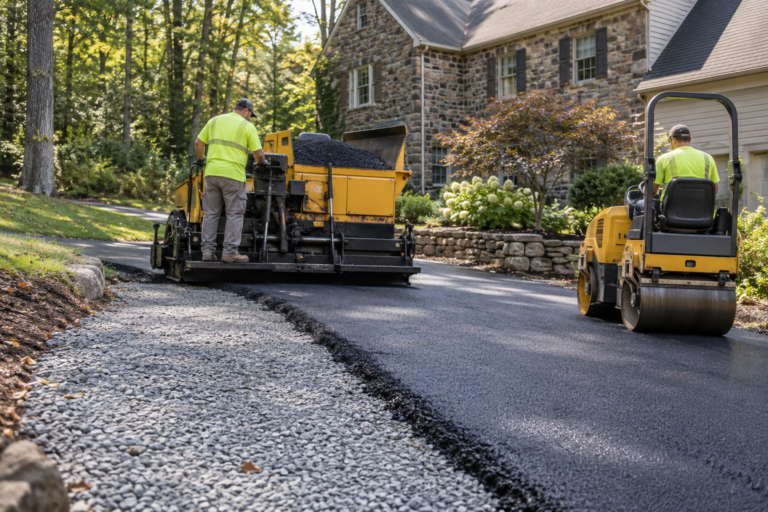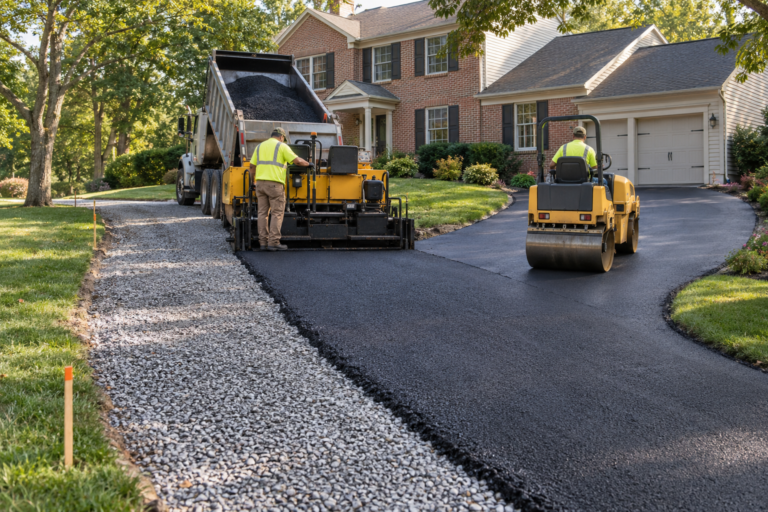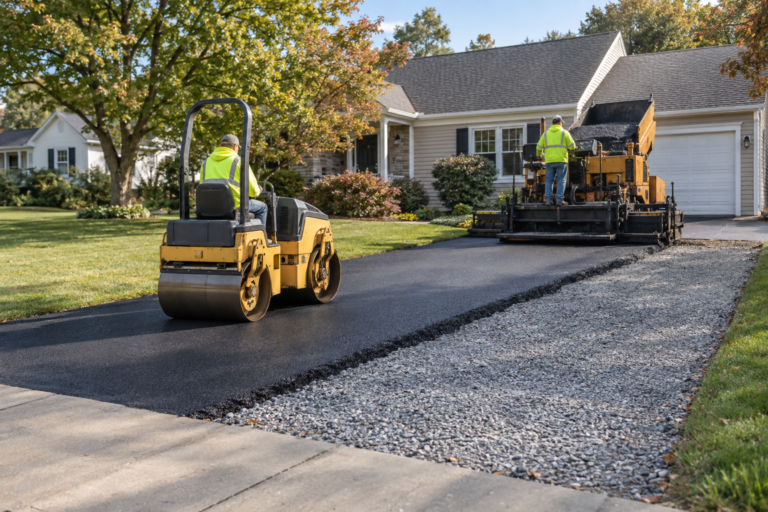
A durable asphalt surface depends on much more than the visible pavement. Excavation, base preparation, grading, drainage, asphalt depth and compaction all influence how the finished surface performs.
American Paving & Concrete provides professional asphalt installation in Eagleville, Pennsylvania, for homeowners, businesses and property managers. Our services include new driveways, parking lots, private roads, driveway extensions, gravel-to-asphalt conversions and complete pavement replacement.
We inspect the property before recommending an installation method. This allows us to account for soil conditions, existing pavement, vehicle use, water movement, access and adjoining surfaces.
Learn more about our complete asphalt installation services or call (610) 477-3553 to request an assessment.
Asphalt Installation Services in Eagleville
Asphalt can provide a practical surface for residential and commercial properties when the pavement structure is designed for its intended use.
Our Eagleville asphalt installation services may include:
- New asphalt driveway installation
- Existing driveway replacement
- Gravel-to-asphalt conversion
- Driveway extensions
- Additional parking areas
- Commercial parking lot installation
- Private road and access-lane paving
- Asphalt aprons and transitions
- Old pavement removal
- Excavation and grading
- Aggregate-base installation
- Drainage correction
- Asphalt placement and compaction
The work required depends on the site. A stable gravel driveway may need less excavation than a deteriorated paved surface with deep settlement or extensive base failure.
Residential Asphalt Driveway Installation
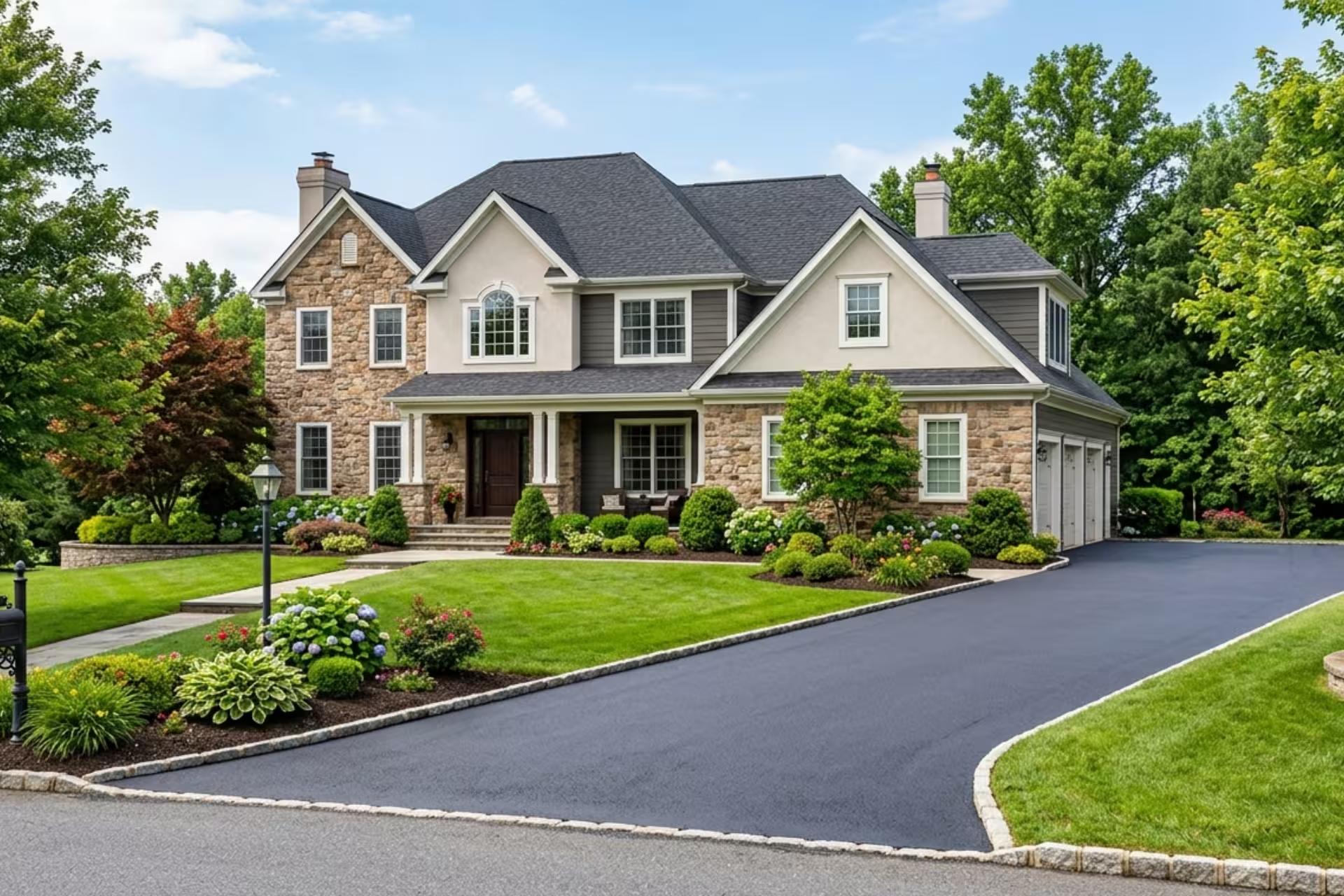
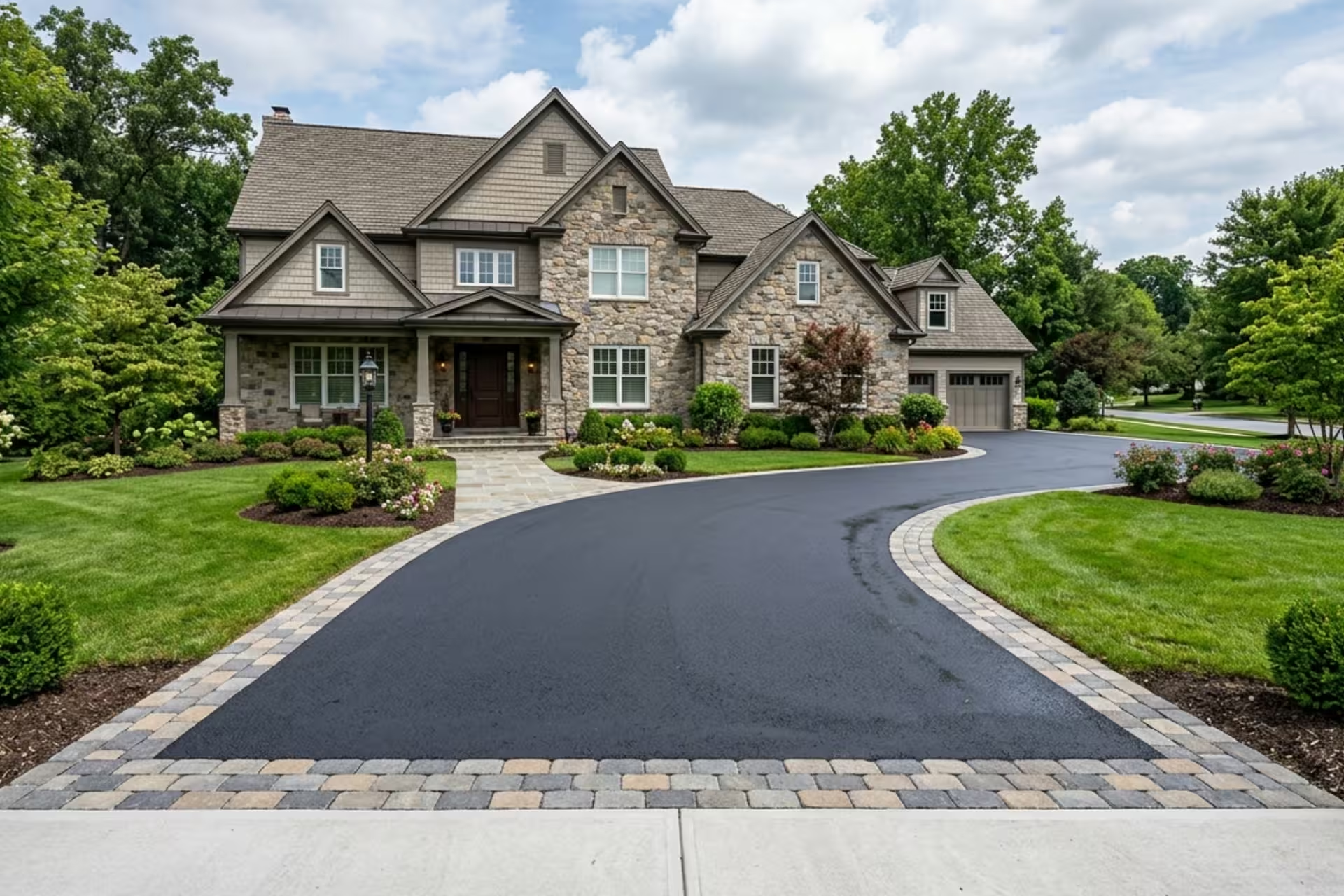
A new asphalt driveway can create a smoother entrance, improve usable parking space and provide a defined surface between the public road and the home.
Professional driveway paving may be appropriate for:
- Newly constructed homes
- Gravel or stone driveways
- Severely deteriorated pavement
- Driveway extensions
- Additional vehicle parking
- Private residential lanes
- Driveways with recurring settlement
- Surfaces that are no longer suitable for isolated repairs
Before installation, the contractor should inspect the driveway’s slope, soil stability, garage entrance, road connection, pavement edges and water flow.
The expected vehicles also matter. A driveway that regularly supports work trucks, trailers or recreational vehicles may require a different pavement structure from one used only by passenger cars.
Commercial Asphalt Installation
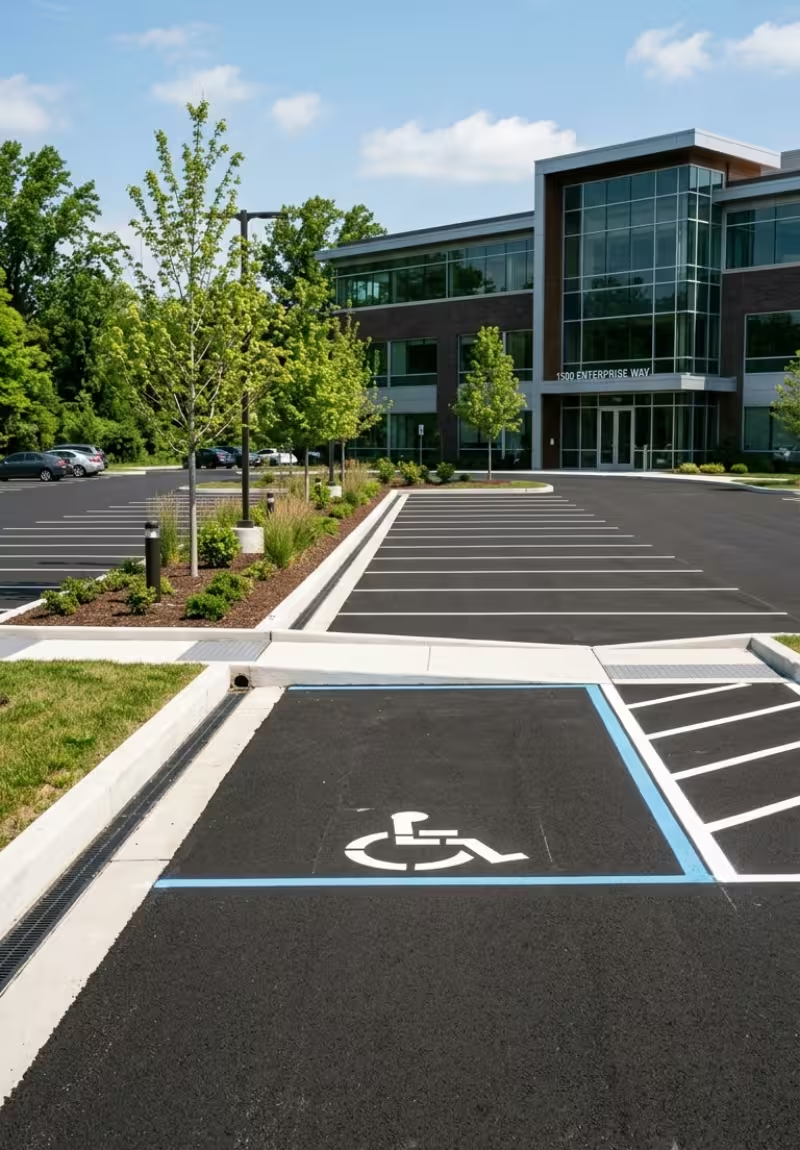
Commercial pavement may experience frequent traffic, delivery vehicles, waste-removal trucks, snowplows and repeated turning or braking. These demands should be considered before construction begins.
Professional parking lot paving may be used for:
- Retail properties
- Offices
- Apartment communities
- Medical facilities
- Churches
- Schools
- Warehouses
- Restaurants
- Industrial properties
- Commercial access roads
- Loading and delivery areas
Commercial projects may also require traffic planning, phased closures, concrete transitions, drainage improvements and preparation for pavement markings.
The appropriate base and asphalt depth should be selected according to traffic volume, vehicle weight and site conditions rather than applying one specification to every property.
New Installation, Resurfacing or Repair?
Not every worn asphalt surface requires complete replacement. The condition of the pavement and its supporting base determines the appropriate approach.
New installation
New installation constructs a pavement system where no suitable asphalt surface currently exists. It commonly includes excavation, grading, aggregate-base preparation and asphalt placement.
Full replacement
Replacement removes deteriorated asphalt and, when necessary, unstable underlying material. The area is rebuilt before new asphalt is installed.
Resurfacing
Resurfacing places a new asphalt layer over a stable existing pavement. It may be suitable when the base remains sound and drainage problems are limited.
Asphalt repair
Localized asphalt repair addresses problems such as potholes, failed sections or isolated cracking. Repairs generally do not reconstruct the entire paved area.
A site inspection helps prevent structurally failed pavement from being covered with an overlay that cannot correct the underlying problem.
Why Base Preparation Matters
The aggregate base supports the asphalt and distributes vehicle loads. If it is soft, wet, uneven or poorly compacted, the finished pavement may settle or crack prematurely.
Base preparation may include:
- Removing old asphalt or unsuitable material
- Excavating soft soil
- Establishing the required pavement depth
- Installing graded aggregate
- Compacting the material in appropriate lifts
- Correcting unstable areas
- Creating the planned surface slope
- Preparing edges and transitions
Base depth should be based on soil conditions, drainage and expected traffic. Simply placing new asphalt over unstable material does not resolve a structural problem.
Grading and Drainage
Water should move away from buildings and across or beside the pavement without collecting in low areas.
Before asphalt installation, the contractor may evaluate:
- Existing surface elevations
- Garage and building entrances
- Road and sidewalk connections
- Pavement slope
- Downspout discharge
- Low spots
- Adjacent landscaping
- Catch basins or drainage channels
- Water entering from neighboring areas
- Pavement-edge drainage
Poor drainage can contribute to standing water, base erosion, settlement, cracking and winter ice. Drainage limitations should therefore be identified before the final asphalt surface determines the new elevations.
The Asphalt Installation Process
Although every site is different, a complete installation commonly follows these stages.
1. Site assessment
The existing surface, soil, drainage, intended traffic and equipment access are evaluated.
2. Project planning
The contractor establishes the proposed pavement area, removal requirements, grades, base preparation and asphalt structure.
3. Excavation or removal
Old pavement, unstable aggregate or unsuitable soil is removed where required.
4. Subgrade preparation
Soft areas are corrected, and the exposed subgrade is shaped and compacted.
5. Aggregate-base installation
Crushed aggregate is placed, graded and compacted to create a stable foundation.
6. Drainage and elevation adjustment
The base is shaped to move water toward the intended drainage points and away from vulnerable structures.
7. Asphalt placement
Hot asphalt is delivered, spread and shaped while its temperature permits effective installation.
8. Compaction
Rollers compact the pavement to improve density, stability and surface uniformity.
9. Edge and transition finishing
Connections at roads, garages, walkways, concrete aprons and adjoining pavement are completed.
10. Final review
The completed surface, drainage path and transitions are reviewed, and the property owner receives initial care instructions.
Gravel-to-Asphalt Conversion
An existing gravel driveway may sometimes provide part of the supporting structure for asphalt, but it must first be inspected.
The contractor should determine whether the gravel is:
- Deep enough for the intended traffic
- Made from suitable aggregate
- Stable under vehicle loads
- Properly graded
- Adequately compacted
- Free from soft or pumping areas
- Capable of supporting drainage requirements
Loose surface stone alone is not necessarily a suitable paving base. Additional aggregate, excavation or grading may be needed before asphalt is placed.
Asphalt Thickness and Vehicle Use
There is no single pavement design that fits every driveway or parking lot.
Important design considerations include:
- Passenger vehicles
- Work trucks
- Delivery vehicles
- Trailers
- Waste-removal trucks
- Snow-removal equipment
- Traffic frequency
- Repeated turning
- Stationary loads
- Soil and base conditions
Commercial entrances and loading areas may experience more concentrated stress than standard parking spaces. These conditions should be considered when the pavement structure is planned.
Compaction and Joint Construction
Asphalt must be placed and compacted while it remains within an appropriate working-temperature range. Proper compaction helps create a dense, stable surface.
The installer should also pay attention to:
- Longitudinal and transverse joints
- Connections with existing pavement
- Asphalt-to-concrete transitions
- Garage thresholds
- Roadway connections
- Drainage structures
- Unsupported edges
- Confined areas that require smaller equipment
Weak joints, poorly finished transitions and insufficient edge support can become early points of deterioration.
Weather and Project Scheduling
Asphalt installation depends on workable site and weather conditions. Rain, unsuitable temperatures and saturated soil can affect excavation, base preparation, asphalt placement or compaction.
A project schedule may also be influenced by:
- Surface area
- Removal requirements
- Base repairs
- Drainage work
- Equipment access
- Utility structures
- Concrete construction
- Delivery timing
- Commercial phasing
- Asphalt availability
Property owners should receive instructions regarding access and when vehicles may return to the new surface.
Caring for New Asphalt
New pavement requires time to cool and stabilize. Follow the contractor’s instructions before driving, parking or placing heavy objects on it.
Early maintenance practices include:
- Keeping vehicles off the surface for the recommended period
- Avoiding stationary tire turning
- Preventing sharp objects from concentrating weight
- Supporting vulnerable pavement edges
- Cleaning oil and fuel spills
- Preventing standing water
- Watching for drainage problems
- Repairing future cracks promptly
- Scheduling sealcoating only after the asphalt has cured
Sealcoating should not be applied immediately after installation. It is a later preventive-maintenance treatment, not part of the initial paving process.
Asphalt Installation Cost Factors
The cost of asphalt installation in Eagleville depends on the property rather than the town name alone.
Pricing factors may include:
- Total square footage
- Existing pavement removal
- Excavation depth
- Disposal requirements
- Soil stability
- Aggregate-base depth
- Asphalt thickness
- Number of asphalt layers
- Drainage correction
- Site access
- Pavement shape
- Edge construction
- Road or garage transitions
- Expected vehicle loads
- Commercial traffic control
- Project phasing
An on-site assessment provides a more reliable estimate than a generic square-foot price because two similarly sized areas may require very different preparation.
Choosing an Asphalt Contractor in Eagleville
When comparing paving proposals, ask what work is included beneath the finished asphalt.
A proposal should explain relevant items such as:
- Existing pavement removal
- Excavation
- Base material and preparation
- Compaction
- Asphalt placement
- Finished pavement depth
- Drainage and slope
- Edge treatment
- Transitions
- Property access
- Cleanup
- Initial curing guidance
An unusually low price may exclude preparation that becomes important once the existing surface is removed.
American Paving & Concrete provides licensed asphalt and concrete services and evaluates whether a property needs repair, resurfacing, replacement or new installation.
Related Asphalt Services in Eagleville
New installation is not the correct treatment for every pavement problem.
For isolated potholes, failed sections and cracking, see our Eagleville asphalt repair services.
For preventive surface protection after eligible pavement has cured, see our Eagleville sealcoating services.
Keeping these services separate helps property owners select work based on pavement condition rather than treating installation, repair and sealcoating as interchangeable.
Request an Asphalt Installation Estimate
American Paving & Concrete provides residential and commercial asphalt installation in Eagleville and other Montgomery County communities.
We can inspect the property, review drainage and access, assess the existing pavement or gravel base, and recommend an appropriate installation method.
Call: (610) 477-3553
Email: info@americanpavingandconcrete.com
Business address: 2114 Dublin Pike, Quakertown, PA 18951
Online: Request a free estimate