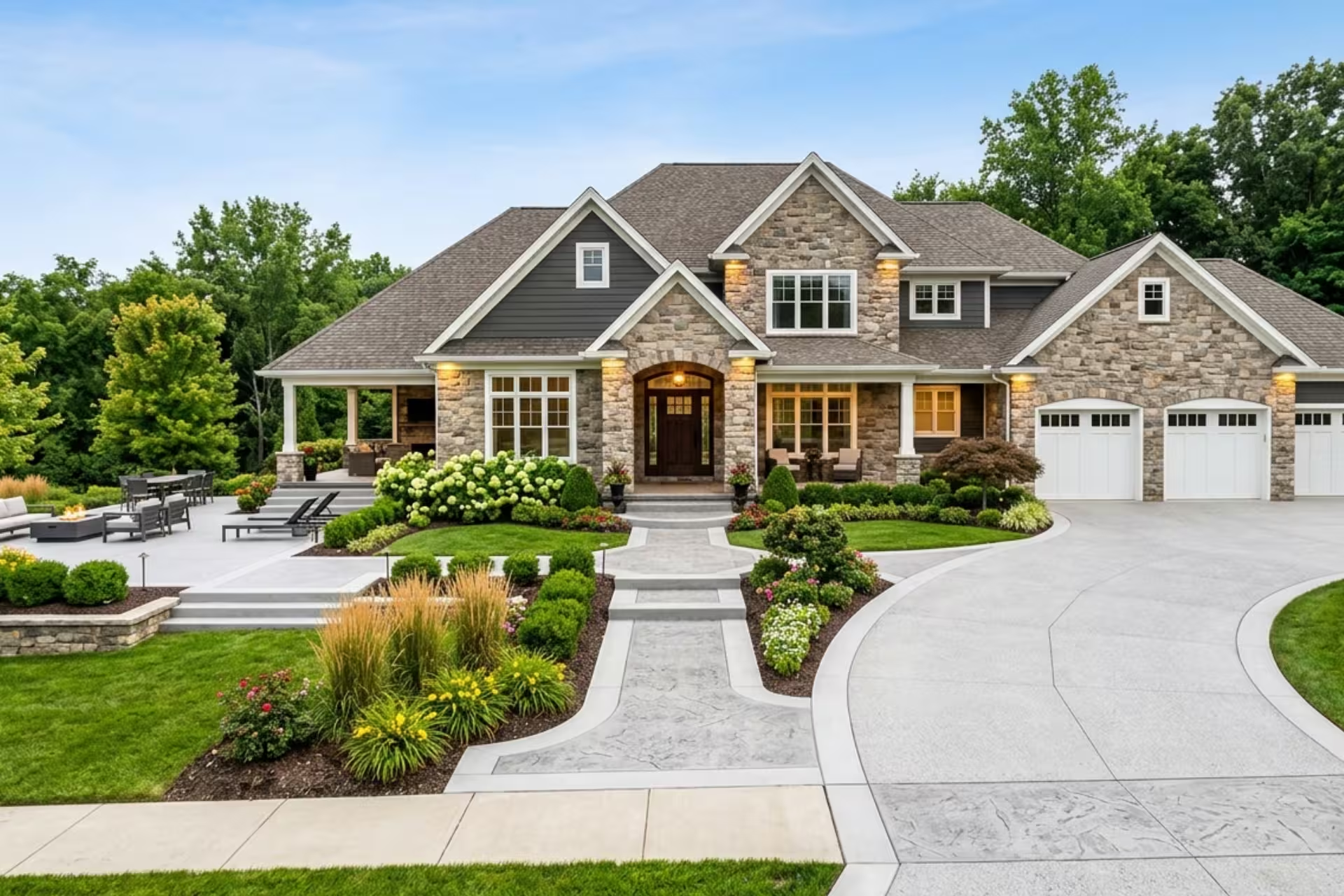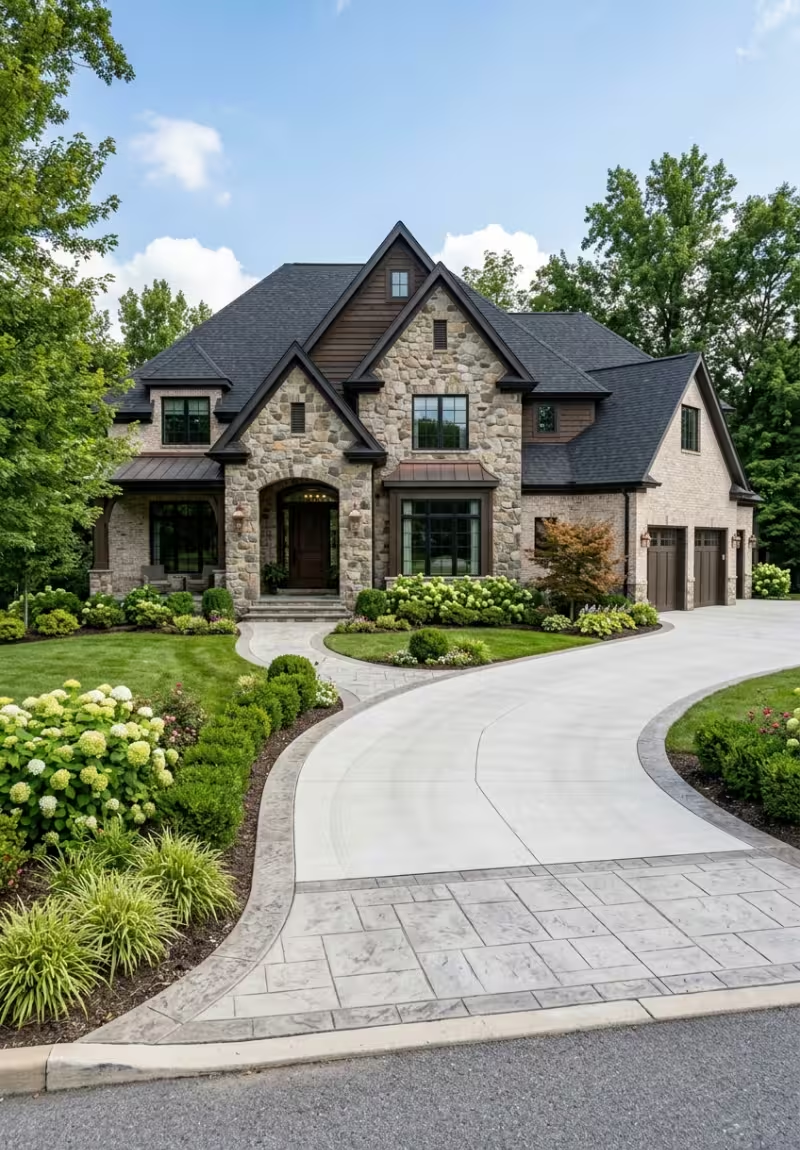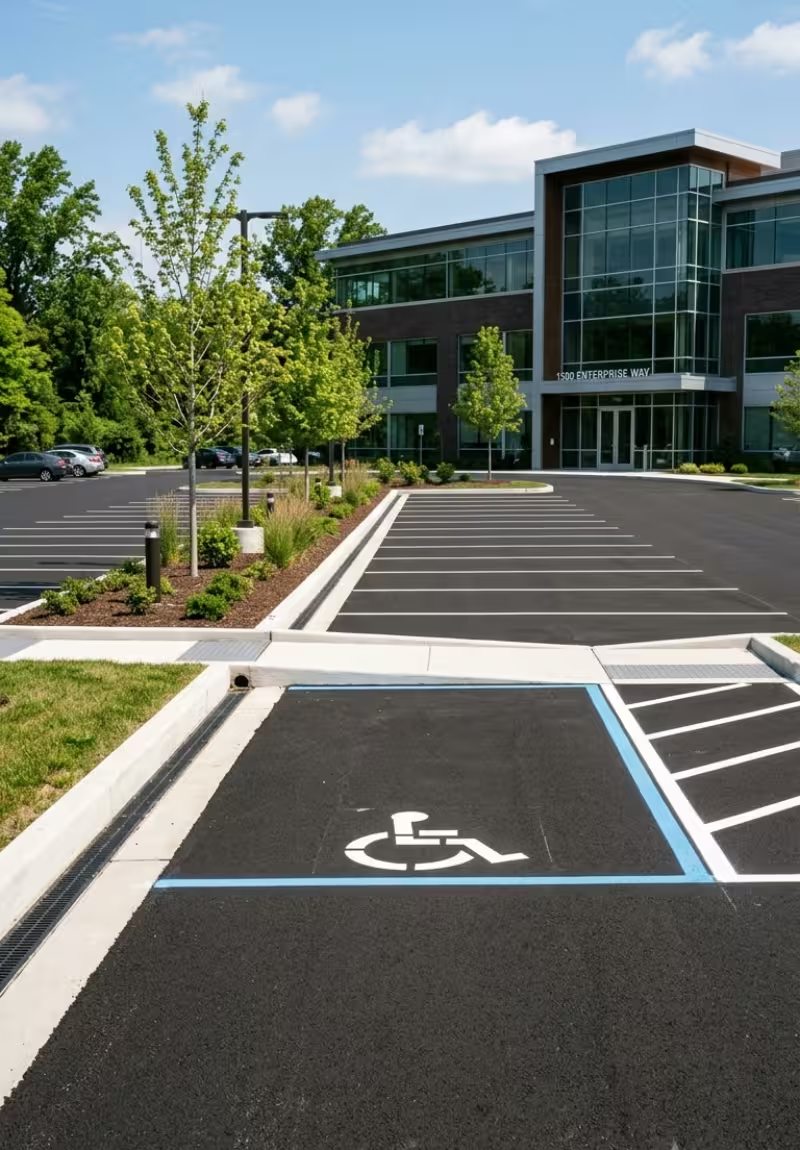
Hiring experienced concrete and asphalt contractors in Pennsylvania can make planning a driveway, parking lot or commercial paving project much easier. Asphalt and concrete are both effective paving materials, but they are designed for different applications and require different installation methods.
Some properties need only asphalt. Others benefit from concrete. Many residential and commercial projects require both materials. A home may have an asphalt driveway with a concrete garage apron, while a commercial property may use asphalt for its parking lot and concrete for sidewalks, loading areas and dumpster pads.
Working with one company that provides both concrete and asphalt services can simplify project planning, reduce coordination problems and help ensure that every paved section works together properly.
American Paving & Concrete provides asphalt paving, concrete paving, driveway installation, commercial parking lot paving, asphalt repair, resurfacing, sealcoating and pavement maintenance throughout Pennsylvania.
This guide explains what concrete and asphalt contractors do, when each material may be appropriate and why hiring one full-service paving company can benefit your property.
What Do Concrete and Asphalt Contractors Do?
Concrete and asphalt contractors install, repair and maintain paved surfaces for homes, businesses, apartment complexes, churches, schools and industrial properties.
Their services may include:
- Asphalt driveway installation
- Concrete driveway installation
- Parking lot paving
- Commercial asphalt paving
- Concrete walkways
- Garage aprons
- Loading areas
- Pavement replacement
- Asphalt resurfacing
- Pothole repair
- Crack filling
- Sealcoating
- Concrete removal and replacement
- Drainage correction
- Pavement maintenance
A full-service contractor should inspect the property and recommend the right material for each section of the project.
Understanding Asphalt Paving
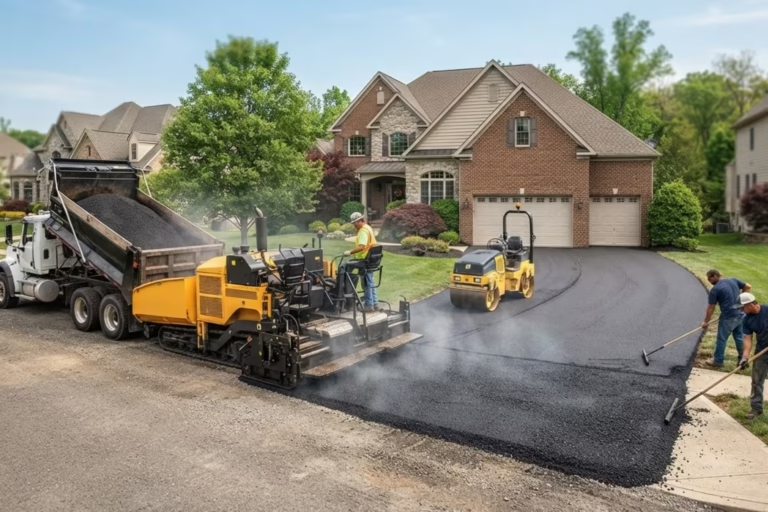
Asphalt is made from aggregates held together with asphalt binder. It is installed while hot and compacted to create a smooth blacktop surface.
Asphalt is commonly used for:
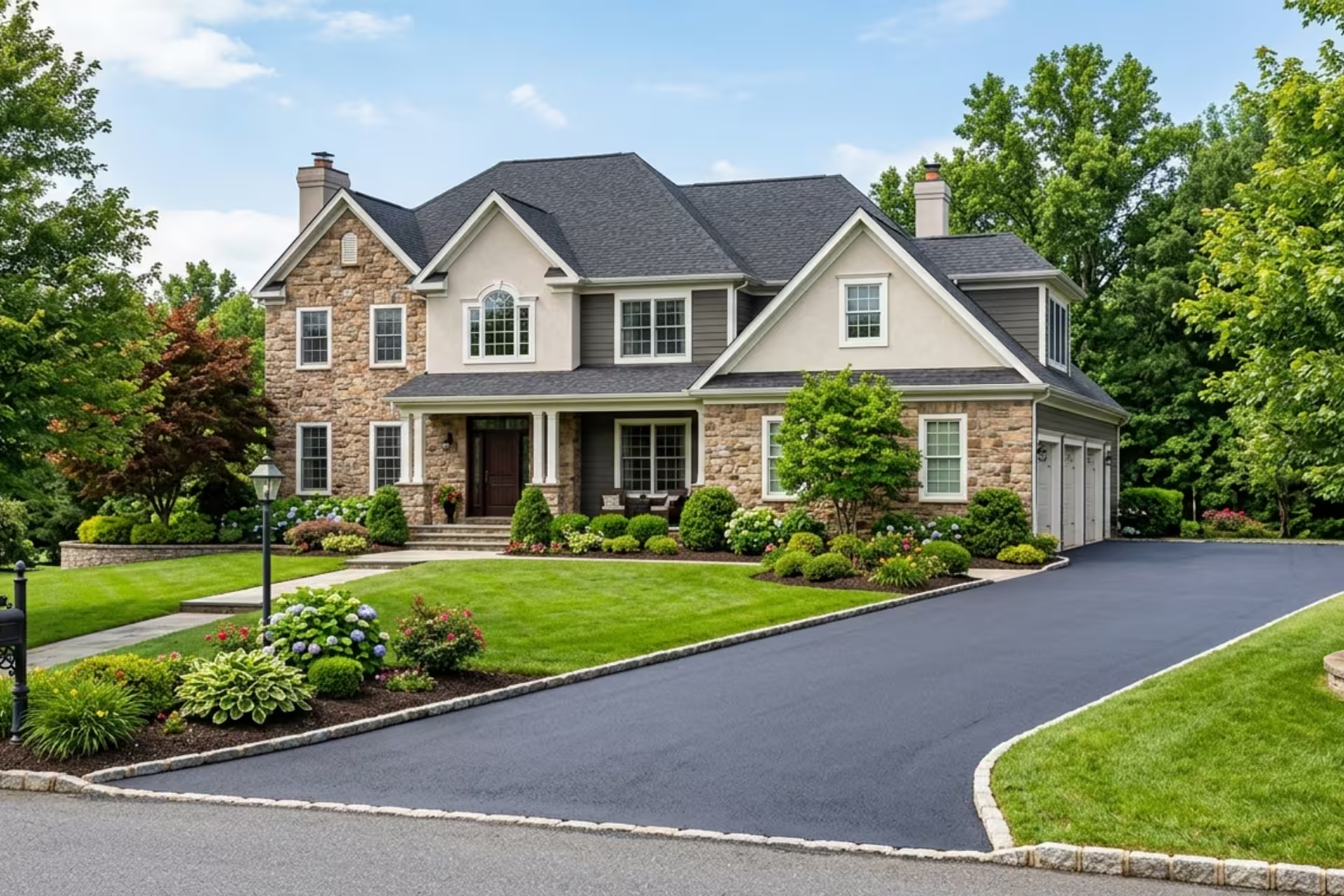
- Residential driveways
- Commercial parking lots
- Private roads
- Drive lanes
- Apartment parking areas
- Church parking lots
- School access roads
- Industrial paved areas
Asphalt is often chosen for large paved areas because it can be installed efficiently and may have a lower initial cost than concrete.
It can also be repaired, patched and resurfaced as it ages.
Understanding Concrete Paving
Concrete is made from cement, aggregates and water. It is poured into prepared forms, finished and allowed to cure into a rigid surface.
Concrete is commonly used for:
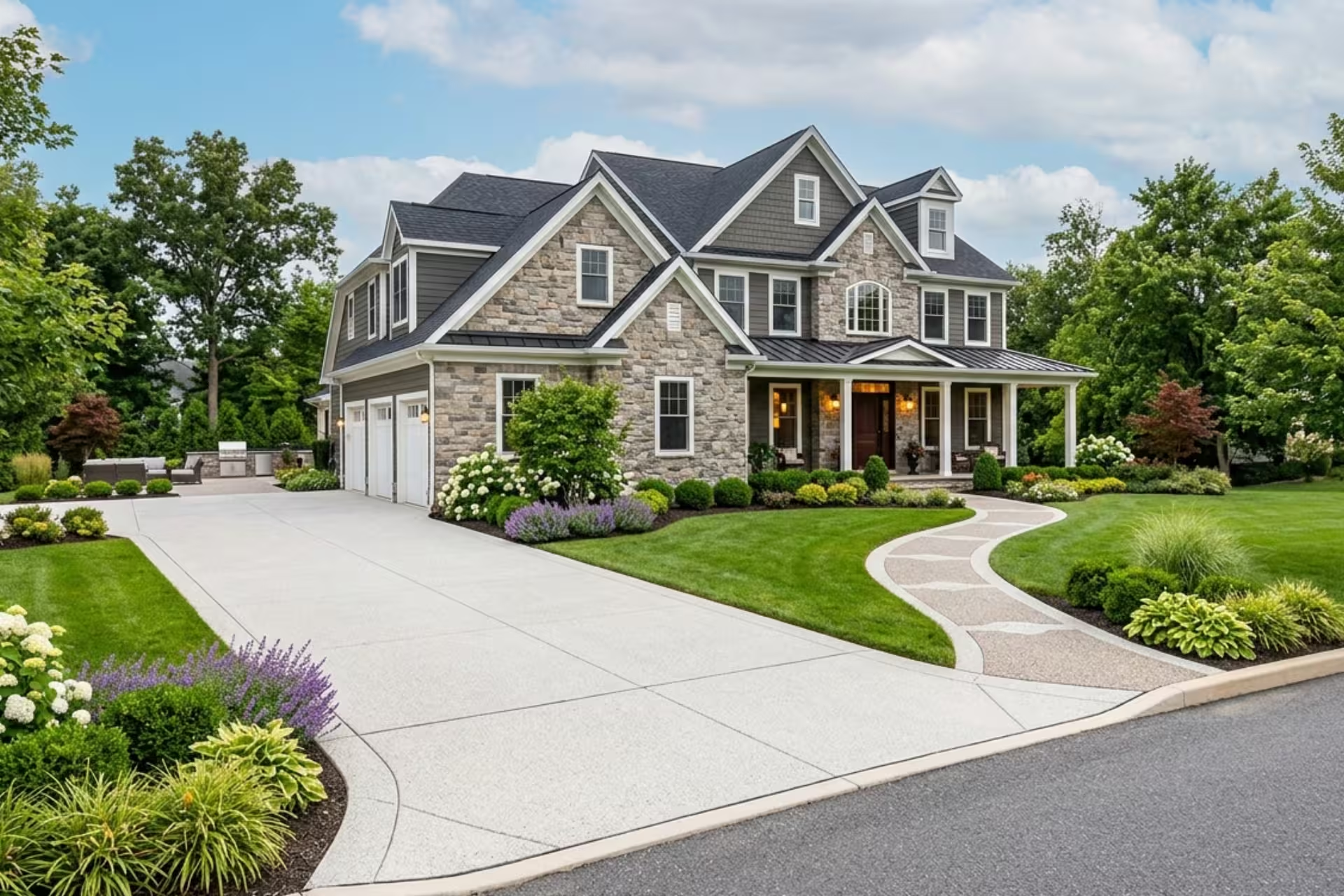
- Driveways
- Garage aprons
- Sidewalks
- Walkways
- Entrance areas
- Loading zones
- Dumpster pads
- Commercial concrete sections
- Transitions between buildings and pavement
Concrete provides a lighter, more defined appearance and may be especially suitable for smaller high-use areas.
Why Properties Often Need Both Materials
Asphalt and concrete do not always compete with each other. In many projects, they serve different purposes.
A residential property may use:
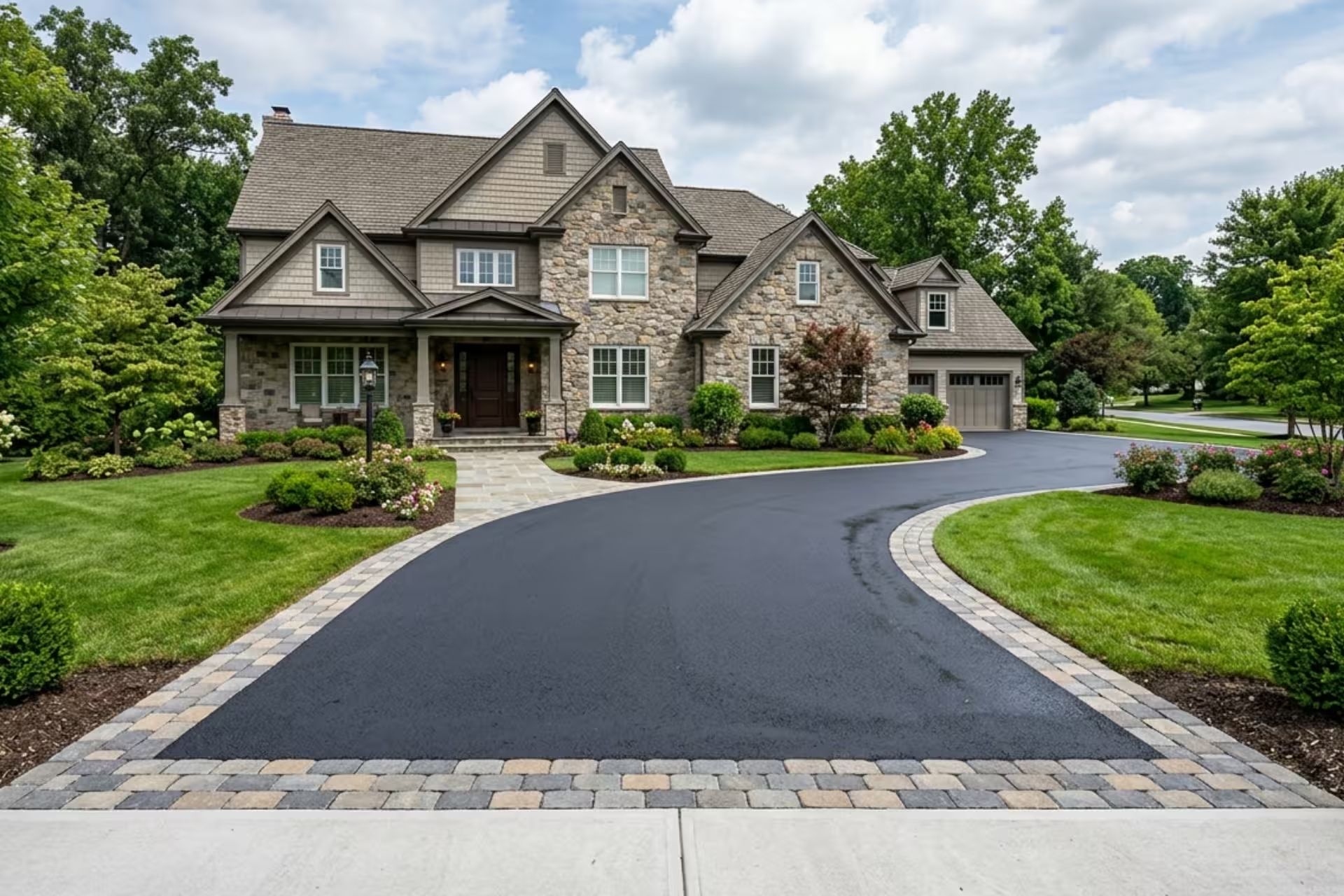
- Asphalt for the main driveway
- Concrete for the garage apron
- Concrete for the walkway
- Asphalt for an extended parking area
A commercial property may use:
- Asphalt for the parking lot
- Concrete for sidewalks
- Concrete for loading zones
- Concrete around building entrances
- Asphalt for access lanes
- Concrete for dumpster pads
Using both materials allows the property owner to match each surface to the expected traffic, appearance and function.
Benefits of Hiring One Full-Service Contractor
Working with one company for both asphalt and concrete services can provide several practical advantages.
One Point of Contact
Managing several contractors can create confusion. Each company may have different schedules, responsibilities and project requirements.
A full-service paving contractor provides one point of contact for:
- Site inspections
- Estimates
- Scheduling
- Material planning
- Drainage
- Installation
- Repairs
- Project questions
This can make communication easier throughout the project.
Better Project Coordination
Asphalt and concrete surfaces often connect to each other. For example, a driveway may meet a concrete apron, or a parking lot may connect to concrete sidewalks and entrances.
If the elevations are not coordinated correctly, the transitions may become uneven or direct water toward the wrong area.
One contractor can plan:
- Surface heights
- Transitions
- Drainage slopes
- Pavement edges
- Concrete forms
- Asphalt placement
- Construction order
Coordinated planning helps the finished surfaces work together.
Consistent Drainage Planning
Drainage is essential for both asphalt and concrete. Water should move away from buildings, garages, entrances and low areas.
Using one contractor allows the entire property to be evaluated as one drainage system rather than as several unrelated projects.
The contractor can consider:
- Driveway slope
- Parking lot grade
- Sidewalk elevation
- Garage entrances
- Building doors
- Catch basins
- Pavement edges
- Surface transitions
This reduces the risk of one paved section creating problems for another.
Simplified Scheduling
Concrete and asphalt require different installation and curing processes. Concrete usually needs time to cure before regular use, while asphalt can often be opened to traffic sooner.
A full-service contractor can schedule the project in the correct order.
For example:
- Concrete work may be completed first
- Concrete may be allowed to cure
- Asphalt may then be installed against the finished edges
- Final transitions can be checked
- Maintenance instructions can be provided
Proper scheduling helps prevent damage and unnecessary delays.
Clearer Responsibility
When several contractors work on connected surfaces, it can be difficult to determine who is responsible if a transition, drainage area or edge does not perform properly.
Using one full-service contractor creates clearer responsibility for the overall paving work.
The company can evaluate how the asphalt, concrete, drainage and base preparation work together.
Residential Concrete and Asphalt Services
Residential paving projects may involve both appearance and everyday function.
Common residential services include:
- New asphalt driveways
- Concrete driveways
- Driveway resurfacing
- Blacktop repair
- Concrete garage aprons
- Walkways
- Entrance paths
- Extended parking areas
- Pothole repair
- Crack filling
- Sealcoating
- Concrete replacement
The contractor should consider vehicle use, driveway length, slope, drainage and connection points before recommending materials.
Commercial Concrete and Asphalt Services
Commercial properties often need multiple paved surfaces designed for different uses.
Commercial services may include:
- Parking lot installation
- Asphalt resurfacing
- Commercial driveway paving
- Concrete sidewalks
- Loading areas
- Dumpster pads
- Entrance areas
- Pothole repair
- Pavement patching
- Sealcoating
- Drainage correction
- Pavement maintenance
A full-service contractor can plan these surfaces together while reducing disruption to customers, tenants and employees.
Asphalt Driveway Services
Asphalt driveways are popular because they provide a smooth surface and can be installed efficiently over larger areas.
Asphalt driveway services may include:
- New installation
- Full replacement
- Gravel driveway conversion
- Resurfacing
- Crack repair
- Pothole repair
- Edge repair
- Sealcoating
The contractor should evaluate whether the existing base can be reused or must be rebuilt.
Concrete Driveway Services
Concrete driveways provide a rigid and visually defined surface.
Concrete driveway services may include:
- New driveway installation
- Removal of old concrete
- Base preparation
- Formwork
- Reinforcement
- Joint installation
- Finishing
- Section replacement
Concrete requires proper curing before regular traffic is allowed.
Parking Lot Paving
Commercial parking lots are commonly built with asphalt because it can cover large areas and support regular vehicle use.
A parking lot paving project may include:
- Old pavement removal
- Base preparation
- Drainage grading
- Asphalt installation
- Compaction
- Concrete entrance areas
- Concrete sidewalks
- Repairs around drains
- Preparation for line striping
Heavy truck areas may require additional base strength or concrete sections.
Asphalt Repair and Resurfacing
A full-service paving company should be able to determine whether damaged asphalt needs repair, resurfacing or replacement.
Repair services may include:
- Crack filling
- Pothole repair
- Surface patching
- Full-depth patching
- Edge repair
- Low-spot correction
Resurfacing may be suitable when the base remains stable but the top layer is worn.
Full replacement may be necessary when the pavement has severe cracking, sinking or widespread base failure.
Concrete Repair and Replacement
Concrete damage may include:
- Cracking
- Settlement
- Broken corners
- Surface scaling
- Damaged joints
- Uneven sections
- Drainage-related movement
Some damage may be repaired, while severely failed sections may need to be removed and replaced.
Matching existing concrete color and texture can be difficult, so the contractor should explain how the repaired area may look.
Base Preparation for Asphalt and Concrete
Both paving materials depend on a stable base.
Base preparation may include:
- Removing old pavement
- Excavating weak soil
- Installing crushed stone
- Compacting the base
- Correcting soft areas
- Establishing grade
- Supporting edges
- Improving drainage
The required base depth depends on the soil, expected traffic and pavement type.
Poor base preparation can lead to cracks, settlement and repeated repair problems regardless of which surface material is used.
Choosing Between Asphalt and Concrete
The right choice depends on the area and how it will be used.
Asphalt may be appropriate when:
- The project covers a large area
- A blacktop appearance is preferred
- Lower initial cost is important
- Resurfacing may be needed later
- The surface will be used as a parking lot or long driveway
Concrete may be appropriate when:
- A rigid surface is preferred
- The area is a walkway, apron or pad
- A lighter appearance is desired
- The surface supports concentrated loads
- The project connects closely to a building entrance
A qualified contractor should explain why one material is recommended over the other.
Questions to Ask Concrete and Asphalt Contractors
Before hiring a contractor, ask:
- Do you install both asphalt and concrete?
- Do you provide residential and commercial paving?
- Will you inspect the property first?
- How will the base be prepared?
- How will drainage be managed?
- Which areas should use asphalt?
- Which areas should use concrete?
- How will transitions be constructed?
- Do you provide repairs and maintenance?
- Will I receive a detailed written estimate?
The answers should be specific to your property.
Warning Signs When Choosing a Contractor
Be cautious if a contractor:
- Recommends the same material for every area without explanation
- Does not inspect drainage
- Avoids discussing base preparation
- Provides a vague estimate
- Cannot explain pavement thickness
- Recommends sealcoating over major damage
- Does not discuss curing or traffic restrictions
- Pressures you to approve the project immediately
A reliable contractor should explain the complete process clearly.
Concrete and Asphalt Project Cost Factors
Project costs depend on several factors, including:
- Total square footage
- Material selected
- Existing pavement removal
- Excavation
- Base construction
- Asphalt thickness
- Concrete thickness
- Reinforcement
- Drainage work
- Surface finishing
- Site access
- Residential or commercial use
Using one full-service contractor may simplify pricing because the connected asphalt and concrete work can be evaluated together.
Concrete and Asphalt Contractors Serving Pennsylvania
American Paving & Concrete provides residential and commercial paving services throughout Pennsylvania.
Our services include:
- Asphalt driveway installation
- Concrete paving
- Commercial parking lot paving
- Driveway replacement
- Asphalt resurfacing
- Pothole repair
- Crack filling
- Sealcoating
- Concrete aprons
- Walkways
- Pavement maintenance
We serve Bucks County, Montgomery County and surrounding Pennsylvania communities, including Quakertown, Doylestown, Bensalem, North Wales, Lansdale, Norristown, Blue Bell, Jenkintown, Horsham, Abington and King of Prussia.
Schedule Concrete and Asphalt Paving Services
Whether your property requires asphalt, concrete or a combination of both materials, American Paving & Concrete can inspect the site and recommend a practical paving plan.
Call: (610) 203-4241
Email: info@americanpavingandconcrete.com
Website: goldenrod-bat-405442.hostingersite.com/