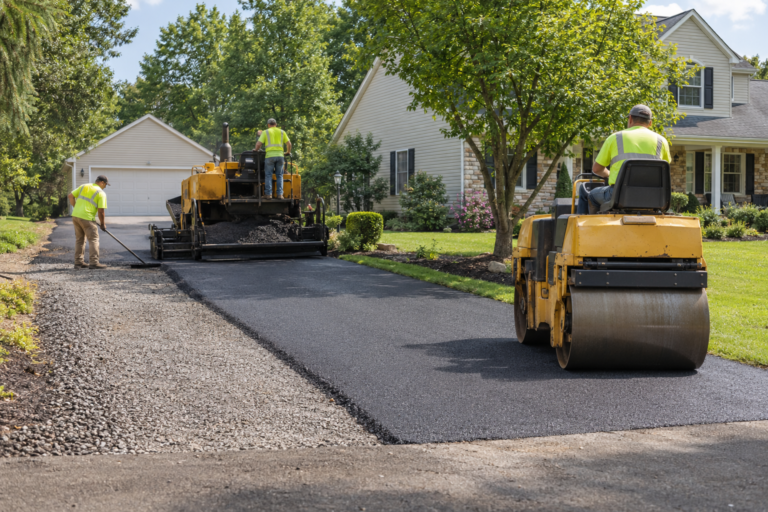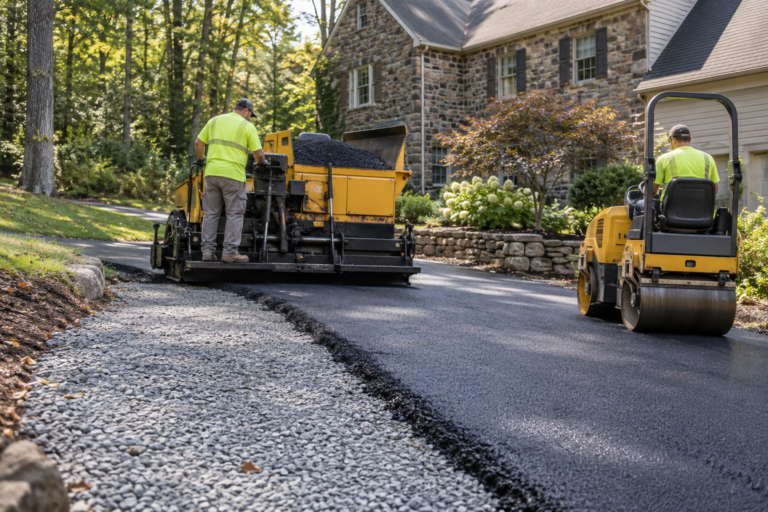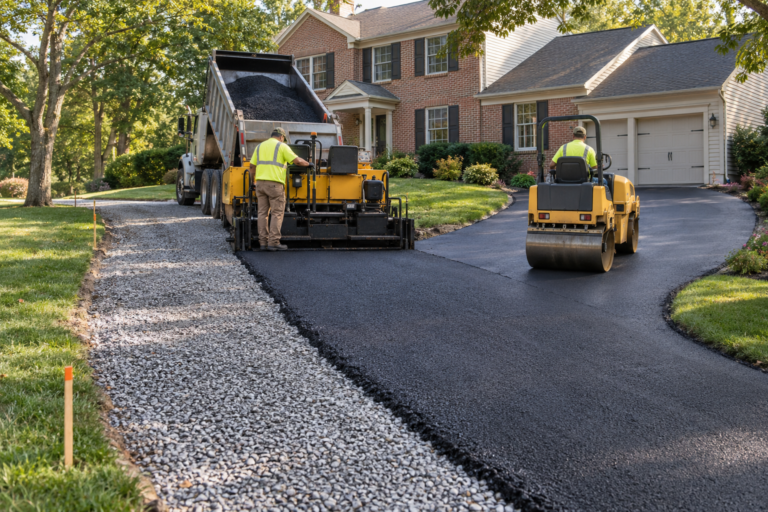
A commercial paving project may take anywhere from one or two days to several weeks. The actual timeframe depends on the pavement’s size and condition, the required construction method, drainage work, traffic demands, weather and whether the project must be completed in phases.
A relatively small parking lot that only requires resurfacing may be completed within a few working days. A large commercial property requiring pavement removal, excavation, base reconstruction, drainage improvements, asphalt installation and line striping will generally take longer.
The construction period and reopening period are also different. A paving crew may finish installing the asphalt in one day, but the pavement must cool and become stable before vehicles can return.
American Paving & Concrete provides professional commercial paving for businesses, property managers, apartment communities, retail facilities and other commercial properties throughout Bucks, Montgomery and Lehigh counties.
A site inspection is necessary before providing a dependable project schedule.
Typical Commercial Paving Timelines
The following ranges are general planning estimates rather than guaranteed completion times.
Small commercial asphalt repairs
Small potholes, utility cuts and isolated failed areas may sometimes be repaired within one day.
More time may be needed when repairs require:
- Saw cutting
- Deep excavation
- Base replacement
- Drainage correction
- Multiple asphalt layers
- Concrete work
- Restricted site access
- Traffic-control changes
Localized asphalt repair can often preserve pavement that remains structurally stable outside the damaged area.
Small parking lot resurfacing
A small parking lot with a stable foundation may sometimes be resurfaced within approximately two to four working days.
The process can include:
- Cleaning the pavement
- Milling transitions
- Repairing failed areas
- Applying a bonding material
- Installing the asphalt overlay
- Compacting the surface
- Allowing the pavement to cool
- Restoring line striping
The lot may remain restricted after paving while the surface cools and pavement markings cure.
Medium commercial parking lot
A medium-sized parking lot may require several days to approximately two weeks, depending on its condition and the project scope.
The schedule can be affected by:
- Existing asphalt removal
- Milling depth
- Base repairs
- Drainage improvements
- Concrete curbs
- Sidewalk transitions
- Asphalt thickness
- Multiple paving phases
- Business access requirements
- Striping and markings
Large parking lot replacement
A large parking lot requiring complete reconstruction may take several weeks. Extensive excavation, unsuitable soil, underground drainage, utility coordination, concrete work and phased access can extend the schedule.
A detailed construction plan should identify the work areas, traffic routes, closures and expected reopening sequence.
Commercial Paving Is More Than Asphalt Placement
The visible paving operation may be completed relatively quickly, but a commercial project begins before the asphalt is delivered.
The complete process may involve:
- Property inspection
- Pavement assessment
- Measurements and project planning
- Permit or approval coordination
- Traffic-control planning
- Existing asphalt removal or milling
- Excavation
- Base repair or construction
- Drainage correction
- Grading and compaction
- Asphalt installation
- Final rolling
- Cooling and reopening
- Line striping and pavement markings
- Final inspection
The duration of each stage depends on the property and the extent of work required.
Stage 1: Site Inspection and Project Planning
The contractor should inspect the property before recommending a schedule.
The evaluation may include:
- Total pavement area
- Existing surface condition
- Cracking patterns
- Potholes and depressions
- Base stability
- Drainage
- Catch basins
- Curbs and sidewalks
- Loading areas
- Entrances and exits
- Traffic volume
- Heavy-vehicle routes
- Pedestrian access
- Business operating hours
- Emergency access
- Equipment access
- Staging and material-delivery areas
Planning is particularly important when the property must remain operational during construction.
A realistic proposal should explain what work is included, which sections will close and when vehicles may return.
Stage 2: Traffic Control and Phasing
Commercial paving often affects customers, employees, tenants, delivery drivers and emergency services.
Traffic planning may include:
- Temporary entrances
- Alternate parking
- Delivery schedules
- Pedestrian routes
- Work-zone barriers
- Temporary directional controls
- Employee notifications
- Tenant notifications
- Emergency-access routes
- Phased parking-lot closures
Phasing allows sections of a property to remain accessible while work proceeds elsewhere. However, completing a project in several phases may require more total time than closing the entire lot.
Equipment and paving crews may need to mobilize repeatedly, and every phase requires separate transitions, traffic controls and reopening procedures.
Stage 3: Milling or Existing Pavement Removal
The existing pavement may be milled, partially removed or completely excavated.
Milling removes a planned depth of asphalt while leaving suitable underlying pavement in place. It can help:
- Maintain curb elevations
- Prepare transitions
- Remove deteriorated surface material
- Improve overlay thickness
- Preserve drainage elevations
- Create a bondable surface
Complete removal may be necessary when the asphalt is extensively cracked, settled or supported by a failed base.
The removal stage may take several hours for a small area or multiple days for a large parking lot.
Unexpectedly thick pavement, reinforced concrete, buried structures and restricted hauling access can affect progress.
Stage 4: Base Preparation and Drainage Work
The supporting foundation often has a greater effect on pavement longevity than the visible asphalt surface.
Base construction may involve:
- Removing unstable material
- Repairing soft areas
- Installing crushed aggregate
- Compacting aggregate in layers
- Correcting elevations
- Establishing drainage slopes
- Stabilizing entrances
- Rebuilding transitions
- Adjusting structures or drains
Drainage work may include rebuilding failed areas near catch basins, correcting low spots or improving the direction of surface runoff.
This stage should not be rushed. Installing new asphalt over unstable material may lead to settlement, cracking, depressions and recurring potholes.
Stage 5: Commercial Asphalt Installation
Once the base is stable, graded and compacted, the asphalt can be installed.
Professional asphalt installation may include a binder course, surface course or another pavement structure designed for the property’s traffic.
The installation schedule depends on:
- Total square footage
- Asphalt thickness
- Number of layers
- Paving width
- Truck access
- Material availability
- Distance from the asphalt plant
- Weather
- Crew and equipment coordination
- Required handwork
- Transitions and detailed areas
Large uninterrupted sections can often be paved more efficiently than small irregular areas with numerous drains, islands, curbs and confined corners.
Stage 6: Compaction and Finishing
Asphalt must be compacted while it remains within a suitable working temperature range.
Compaction helps:
- Increase pavement density
- Improve load distribution
- Reduce excessive air voids
- Limit water infiltration
- Create a smoother surface
- Support long-term durability
The crew must also finish pavement edges, joints, drains, entrances and transitions.
Complex parking lots containing many islands, loading docks and utility structures usually require more detailed work than open rectangular lots.
Stage 7: Cooling and Reopening
New asphalt must cool and become stable before vehicles return.
Passenger vehicles may sometimes be permitted after approximately 24–48 hours, but the project-specific instructions should always be followed. Hot weather, thick pavement and heavy vehicles may require a longer closure.
Heavy vehicles can include:
- Delivery trucks
- Waste-removal trucks
- Tractor-trailers
- Moving trucks
- Construction equipment
- Emergency vehicles
- Commercial vans
- Snow-removal equipment
Being open to traffic does not mean asphalt is completely cured. It continues hardening over an extended period and remains vulnerable to sharp turns and concentrated loads, particularly in hot weather.
Stage 8: Parking Lot Striping and Markings
Line striping is normally one of the final stages of parking lot paving.
Markings may include:
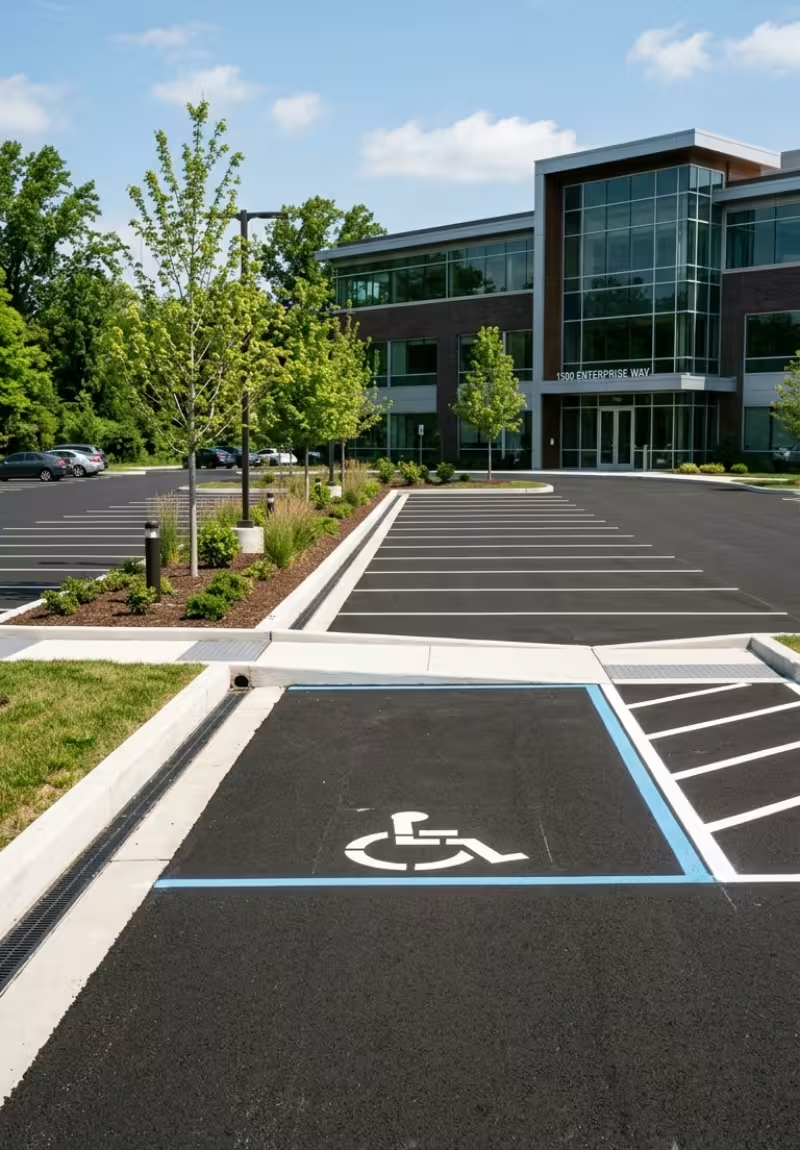
- Parking stalls
- Accessible parking spaces
- Access aisles
- Directional arrows
- Fire lanes
- Crosswalks
- Loading zones
- Pickup areas
- No-parking zones
- Numbered spaces
The asphalt surface must be suitable for the selected marking material. Weather, surface moisture, pavement temperature and paint-curing requirements can affect when striping is applied.
Vehicles should not return until the markings have dried or cured sufficiently.
Factors That Affect the Project Timeline
Size of the paved area
A larger property generally requires more removal, aggregate, asphalt, trucking, equipment time and compaction.
Square footage alone does not determine the schedule, however. A smaller site with limited access may take longer than a larger open parking lot.
Pavement condition
Resurfacing stable pavement is typically faster than rebuilding structurally failed pavement.
Widespread alligator cracking, settlement and recurring potholes may indicate base failure requiring deeper work.
Excavation depth
Deep excavation increases removal, hauling, aggregate placement and compaction requirements.
Unstable soil discovered after removal may require additional preparation that was not visible during the initial surface inspection.
Drainage improvements
Correcting elevations, catch basins, channels or low areas can extend the project but may help prevent premature deterioration.
Concrete work
New curbs, gutters, sidewalks, aprons and accessible ramps may need to be completed before the surrounding asphalt. Concrete also has separate curing requirements.
Property access
Restricted truck access, narrow entrances and limited staging areas can slow material delivery and equipment movement.
Weather conditions
Rain, extreme heat, cold temperatures and unsuitable ground conditions can delay commercial paving.
Weather affects:
- Excavation
- Base stability
- Asphalt delivery
- Placement temperature
- Compaction
- Pavement cooling
- Striping
- Concrete work
A responsible paving schedule should account for weather without promising an exact completion date that site conditions may not support.
Utility and permit coordination
Some commercial projects require municipal approvals, utility coordination, engineering plans or property-management authorization.
These administrative requirements may take longer than the physical paving work and should be addressed before scheduling construction.
How Project Phasing Reduces Business Disruption
Phased paving divides the property into separate work zones.
A phased approach may allow:
- Part of the parking lot to remain open
- Customers to reach the building
- Employees to use alternate parking
- Deliveries to continue at scheduled times
- Tenants to receive advance notice
- Emergency routes to remain accessible
A common sequence may include:
- Close and pave the first section.
- Allow the asphalt to cool.
- Reopen the completed area.
- Move traffic into that area.
- Close and pave the next section.
- Complete final striping and inspection.
The exact sequence should be tailored to the site.
Resurfacing Versus Full Replacement
The construction method has a major effect on project duration.
Asphalt resurfacing
Resurfacing installs a new asphalt layer over prepared existing pavement.
It may be appropriate when:
- The supporting base remains stable
- Cracking is moderate
- Settlement is limited
- Drainage remains functional
- Failed areas can be repaired
- Existing elevations allow an overlay
Resurfacing generally requires less excavation and hauling than complete reconstruction.
Full-depth replacement
Complete replacement may be necessary when:
- The base has failed
- Settlement is widespread
- Potholes repeatedly return
- The pavement is severely broken
- Drainage requires extensive correction
- Existing elevations must be redesigned
- The parking lot requires major reconfiguration
Replacement takes longer but allows the contractor to correct problems beneath the surface.
Can a Commercial Property Stay Open During Paving?
Many commercial properties can remain partially operational when the project is carefully phased.
Whether this is practical depends on:
- Number of entrances
- Available parking
- Building layout
- Traffic volume
- Delivery requirements
- Emergency access
- Project size
- Asphalt cooling time
- Pedestrian routes
- Neighboring access agreements
Some sites may require a short full closure because equipment cannot operate safely around public traffic.
The project schedule should clearly identify closure periods before construction begins.
How Property Managers Can Prevent Delays
Property owners and managers can help the project proceed efficiently by:
- Approving the scope promptly
- Confirming access requirements
- Identifying underground utilities
- Coordinating tenants
- Moving stored vehicles
- Relocating dumpsters when required
- Adjusting delivery schedules
- Establishing temporary parking
- Communicating closure dates
- Keeping the work area clear
- Providing access to locked areas
- Reviewing proposed striping layouts
- Responding quickly to site-condition decisions
Clear communication reduces last-minute conflicts between construction activity and property operations.
What Happens After Commercial Paving?
After reopening, property managers should monitor the surface and follow the contractor’s care instructions.
Long-term asphalt maintenance may include:
- Routine inspections
- Drainage checks
- Crack treatment
- Pothole repair
- Edge maintenance
- Cleaning vehicle-fluid spills
- Line-stripe renewal
- Localized repairs
- Resurfacing planning
- Sealcoating when appropriate
New asphalt should not receive immediate sealcoating. The pavement must cure sufficiently before a coating is considered.
How to Get an Accurate Commercial Paving Schedule
An accurate timeline requires an on-site inspection.
The contractor should determine:
- Existing pavement condition
- Recommended construction method
- Base and drainage requirements
- Asphalt structure
- Concrete requirements
- Traffic-control plan
- Number of phases
- Weather limitations
- Reopening requirements
- Striping schedule
The written proposal should define the work scope and explain any conditions that could change the schedule.
Request a Commercial Paving Estimate
American Paving & Concrete provides commercial asphalt installation, parking lot replacement, resurfacing, repairs and pavement maintenance throughout Bucks, Montgomery and Lehigh counties.
We can inspect your property, recommend an appropriate paving method and develop a project schedule designed around site access and operational requirements.
Call: (610) 477-3553
Email: info@americanpavingandconcrete.com
Address: 2114 Dublin Pike, Quakertown, PA 18951
Online: Request a free commercial paving estimate